


Nadwan, Bihar: An 80-year-old horse enthusiast travelled over 100km from Nawada, a self-styled sadhu took a train from Gopalganj, and a government school teacher came down from Begusarai. They had little in common, except for their destination: the mother-of-all weddings in Nadwan, where five-time Mokama MLA Anant Singh’s daughter Shivangi was getting married in a three-day extravaganza.
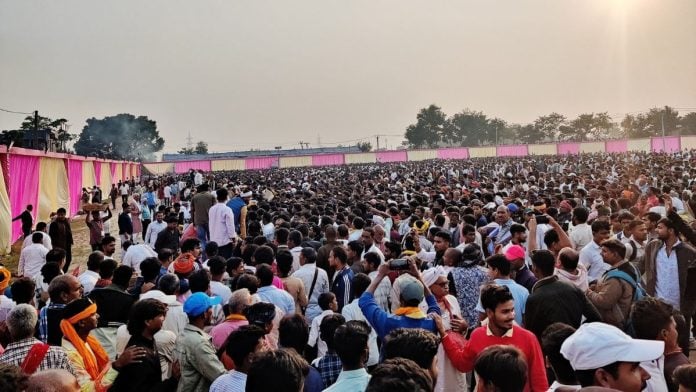
The bride and groom had the occasion; Anant Singh had the audience. More than two lakh people descended on the village, some drawn by the horse race, others by the lavish feast and Bhojpuri artists. But for many, the biggest attraction was the 65-year-old MLA himself—the man with many monikers—‘Chhote Sarkar’, ‘Vidhayak ji’ and simply ‘Dada’. Admirers travelled from across Bihar and neighbouring Uttar Pradesh by bus, train, bicycle and even skates, turning a family wedding into a public spectacle of political fandom.
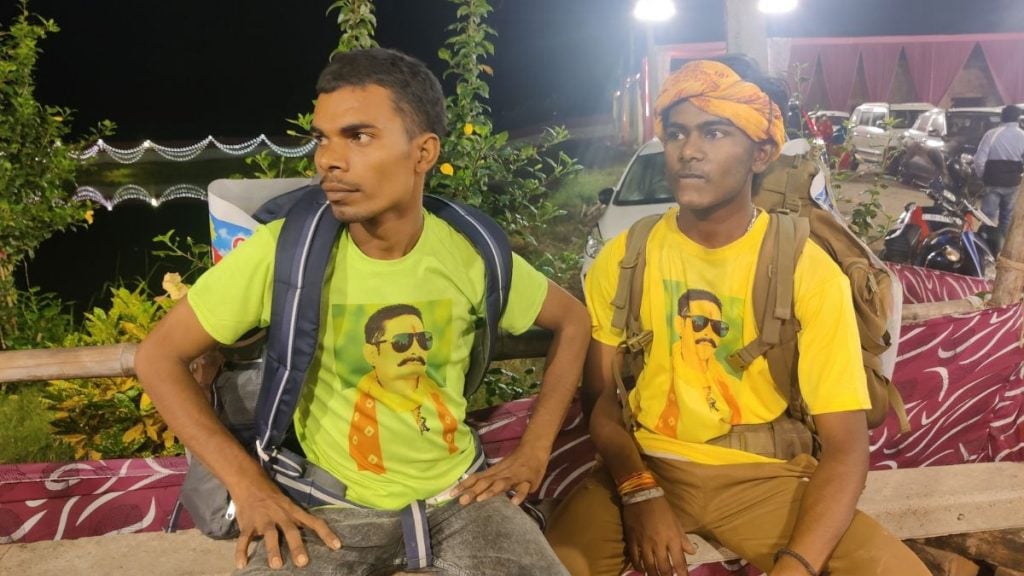
Amit and Nandan Kumar, who travelled more than 120 km from Jehanabad on skates, took five days to reach the venue.
“It’s the charisma of Dada which brought me here,” Nandan Kumar said, wearing a T-shirt printed with Singh’s photograph.
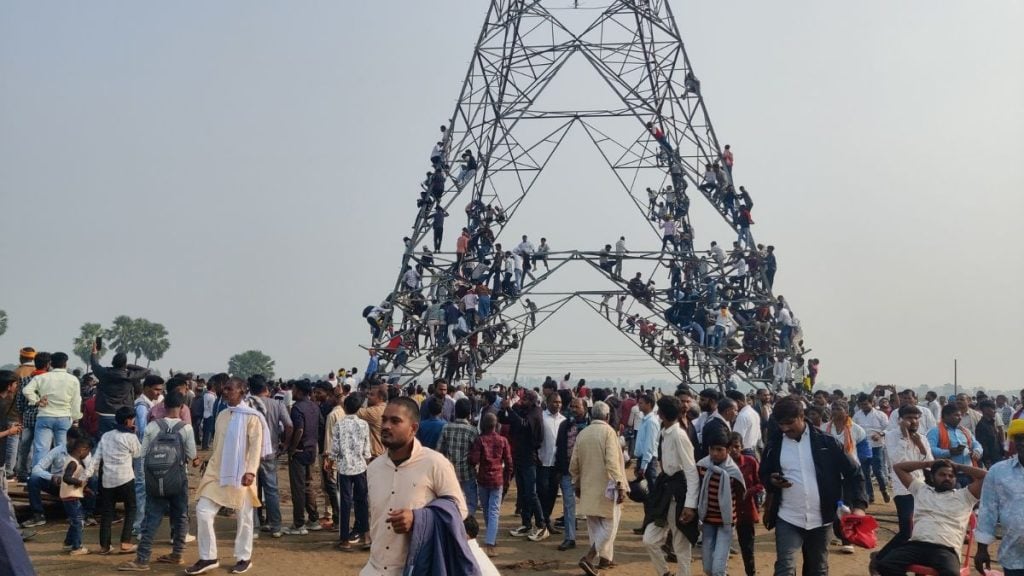
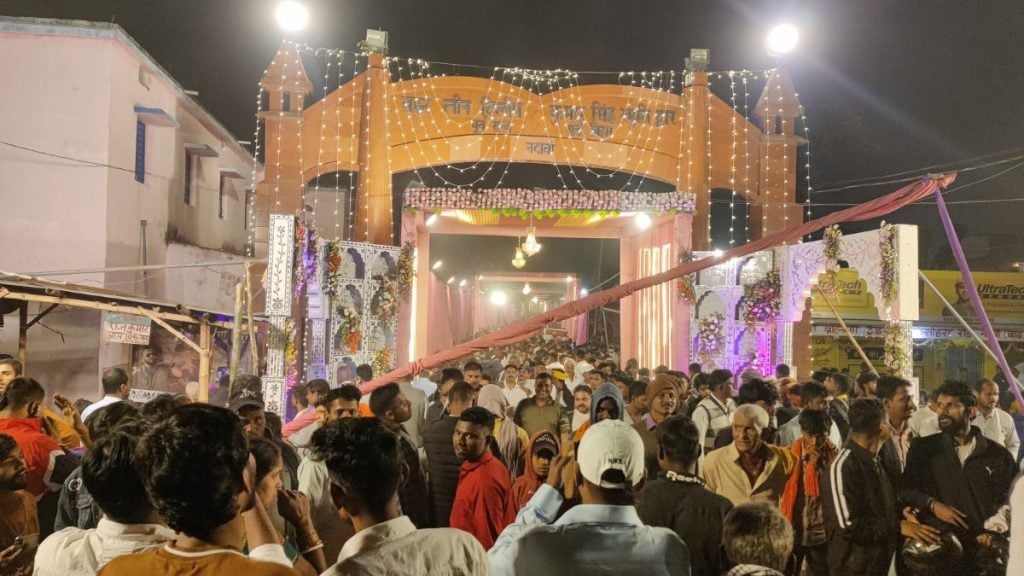
Spread across nearly 6.2 acres, the wedding grounds resembled a carnival built around one man’s larger-than-life persona: lavish pandals, elaborate food counters, a horse race with a Thar prize, a helipad, musical performances and a steady stream of visitors. Outside, a fleet of luxury cars—Land Cruisers, BMWs, Fortuners, Thars and Scorpios, many belonging to politicians across party lines—choked Nadwan’s cramped roads, causing bottlenecks for kilometres. The ebullient crowds spilled beyond the venue, with some climbing trees and electricity poles for a better view of the sheer scale of the celebrations at the home of a not-so-humble public servant. More than 200 police personnel were deployed by the district administration, but controlling the influx proved difficult.
Many admirers of the politician even measured his munificence against the weddings of India’s richest families.
“Who is Ambani compared to Chhote Sarkar? There is no one who can measure up to him. People from all walks of life—the poor, the labourers—are attending this wedding,” said Suresh Mahto, a 47-year-old farmer, who came from Samastipur. “There is no discrimination here.”
Singh has a net worth of Rs 100 crore according to his last Election Commission affidavit. Much of his wealth comes from real estate; he runs several shopping malls in Patna.
Singh oversaw the preparations, especially the horse race and helipad, but said the spectacle was nothing new for him. He had arranged a similar horse race at the wedding of his elder daughter, Raj Nandini, in 2015.
“Our arrangement is for everyone. People across the country came to attend the wedding,” he said sitting inside his rather modest-looking home. “For me, janta hi maalik hai—the public is the master.”
A feast without a guest list
At Nadwan, around 25 km from capital Patna, the wedding had become a public performance of abundance and Anant Singh was its principal showman.
The invitation card was the least important document at this wedding. Everyone had access, Singh said, and the only requirement, it seems, was to turn up hungry.
“This is not a movie that people need tickets for. Everyone is invited,” said Singh.
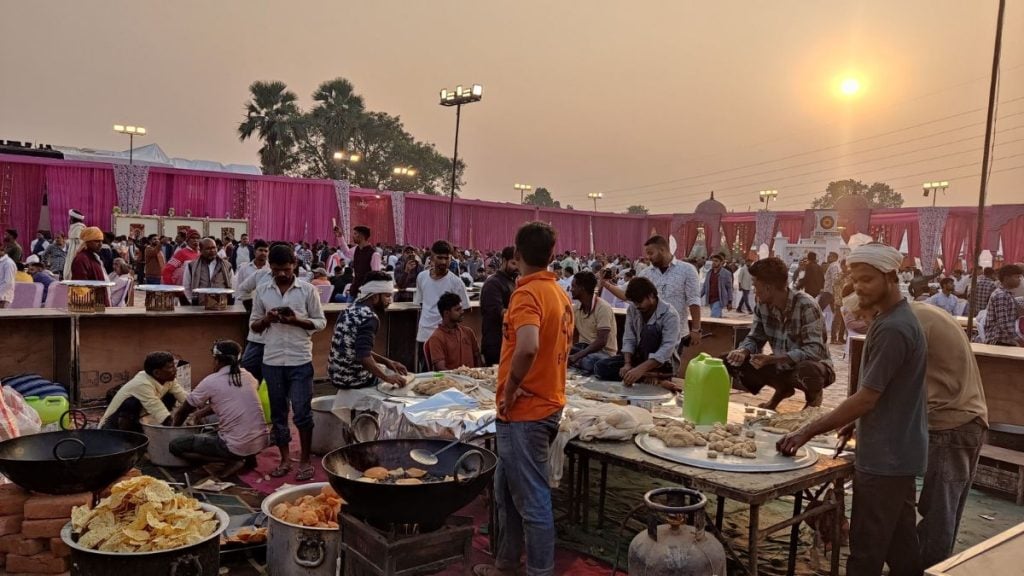
The arrangements were built for a crowd on a scale more commonly associated with political rallies or religious gatherings. Four sprawling pandals had been erected for diners, decorated with chandeliers and flowers. A team from Uttar Pradesh’s Sitapur had come in to set up tents and pandals at the venue that alone cost around Rs 4 crore.
It was a wedding menu that seemed determined not to discriminate between a guest craving the traditional litti-chokha and one looking for a burger.
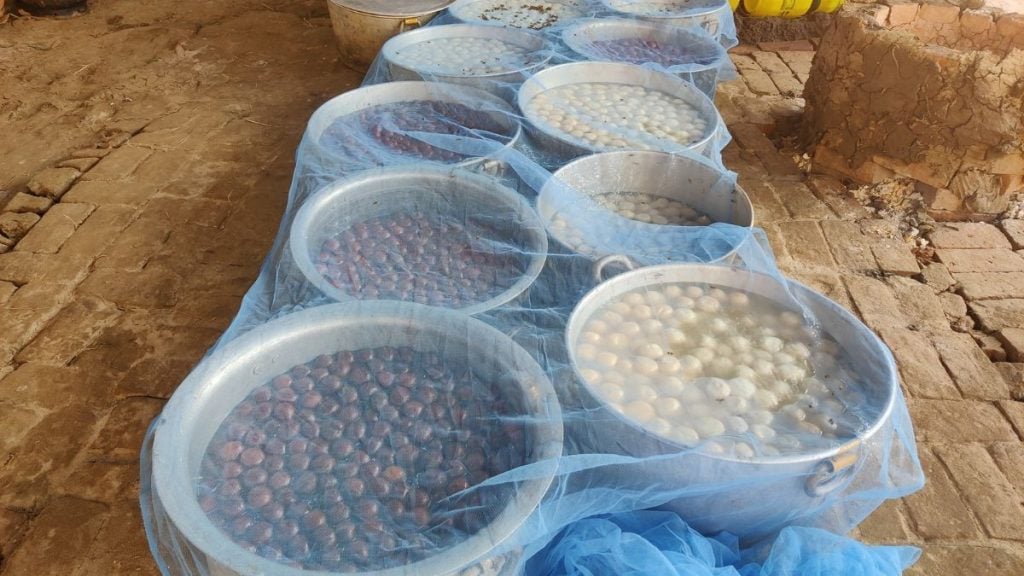
The menu moved between traditional fare and a spread of fast food and desserts. Puri-sabzi, pulao, dal, paneer, litti-chokha, curd, and rasgullas sat alongside hot fudge, mousse, pastries, cupcakes, hot dogs, sandwiches, pizza, burgers, doughnuts, puddings, cookies, and chocolate balls.
The visitors repeatedly spoke about the food. Milk tankers had been brought in for the preparation of rasgullas, while large-scale arrangements were made to feed the crowds gathering at the venue. More than 500 halwais (confectioners) were working across the kitchens, preparing food in quantities that matched the ambition of the occasion. Varanasi’s well-known Kashi Chat Bhandar was also serving chaat to visitors.
But chaos ensued at the food stalls as well. Thousands of guests struggled to get a meal as the arrangements failed to keep pace with the enormous crowd. Even that did not deter the crowd.
“Anyone can come here and eat. One can become wealthy in terms of money, but these people are wealthy at heart,” said Anand Shankar, a guest from Nawada.
Everyone had a reason to be there
The guest list was unusual even by the standards of a wedding that had thrown open its doors to practically everyone.
Srinivas Thakur, the sadhu from Gopalganj, described Anant Singh as a ‘raja aadmi’ (a kingly man).
“I come here to bless his daughter,” said Thakur, 70.
Then there was Raman Rai, a government school teacher from Begusarai, who said social media had alerted him to the wedding’s scale.
“I’m from UP’s Ghazipur and for the past three years I have been working as a teacher in Bihar. I heard about this marriage from social media, so I came here to see the grandness,” the 34-year-old said.
For Nadwan’s residents, however, the scale of the celebrations was not entirely unfamiliar. Anant Singh has organised several large events in the village over the years.
Prince Kumar, a resident, recalled that in 2015, the village had hosted a similarly elaborate celebration, when Singh’s elder daughter got married. There was a horse race back then, too, and the winner took home a car.
“The scale of the celebration is a little bigger this time. In 2015, Singh was not so popular outside Bihar and not viral on social media. But in the last few years, his popularity on social media has grown exponentially,” he said.
Horses, influencers and a touch of filmy drama
At this wedding, even the entertainment had horsepower.
Over a hundred horses arrived from Uttar Pradesh, Jharkhand, Rajasthan and different parts of Bihar for the celebrations for the race organised on the wedding day as part of the celebrations. An animal cruelty notice was swiftly slapped by the Animal Welfare Board of India to check-up on the conditions of the horses participating.
Among those drawn to the equine spectacle was Riyasat Khan, a 80-year-old horse enthusiast from Nawada, who came with his younger brother.
“I just came here to see the horse race. I’m a horse lover and also have a horse at my home,” he said. “The horse race is the biggest attraction of this wedding.”
On Wednesday afternoon, the road to Nadwan turned into a sea of people, with spectators walking shoulder to shoulder towards the village for nearly 5 km. Trains from Patna to Barh, around 70 km away, were packed with visitors. With the district administration restricting vehicle movement to ease congestion, thousands walked from Barh railway station towards Mokama.
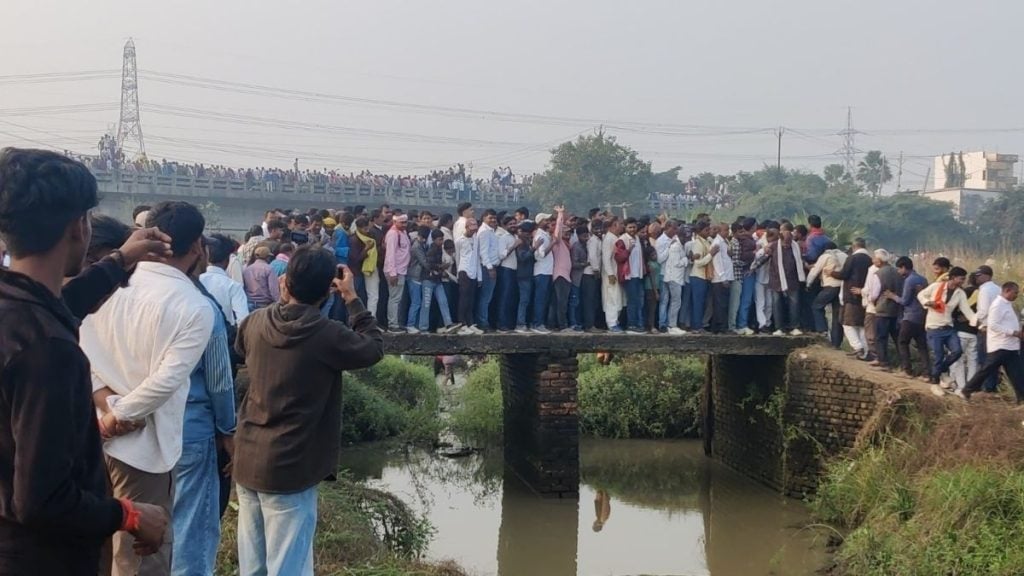
The crowd included children, youngsters, women and elderly people, many of whom had travelled at their own expense to watch the race.
“I love horse racing. So I took a train from Patna to Barh. It was an exhausting journey, but the horse race was worth it,” said Arun Yadav, a guest.
The racecourse itself was another spectacle. The expansive race track, spread across 3 acres, drew an estimated one lakh people. Over a hundred horses participated and the coveted Mahindra Thar SUV, the top prize, stood at the centre of the track. The runner-up was to receive a motorcycle and the third-place finisher a scooter.
As the horses thundered down the track, spectators cheered and chanted “Jai ho Chhote Sarkar”. A live commentator announced the horses’ names and race details, repeatedly praising Singh as a “Mahapurush” and “Mahaan Aatma”.
Commotion, obviously, followed. Spectators scrambled for vantage points, with some climbing electricity towers and others sitting on trees. Drones hovered above the gathering, capturing a crowd that had become as much a part of the spectacle as the horses themselves.
Singh repeatedly requested the crowds that had spilled on to the main race track to maintain order but it fell on deaf ears. Eventually, the final round of the race had to be postponed to Thursday.
The unprecedented gathering also brought mobile connectivity to its knees. With thousands packed into the village, mobile networks collapsed, leaving many struggling to make calls or access the internet.
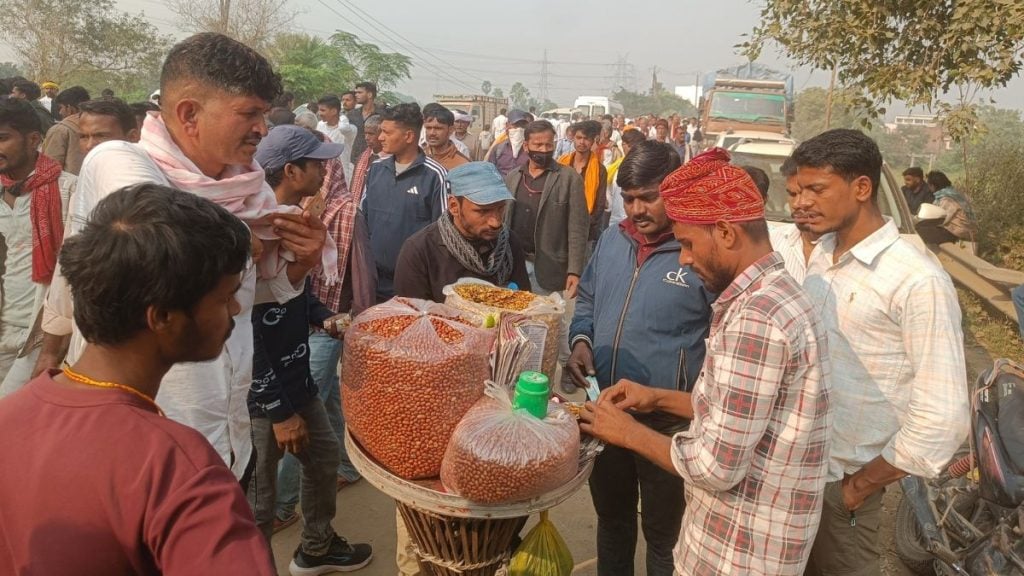
The race also created a temporary economy around the venue. Jhaalmuri (spicy puffed rice) sellers, juice stalls, and paan (betel leaf) vendors set up shop to cater to the crowds.
And if horses were not enough, two elephants were also brought to the ground to ferry Singh and his son-in-law Rishikesh Kumar during the baraat (wedding procession), adding yet another attraction to an event that appeared to have little interest in doing things by halves.
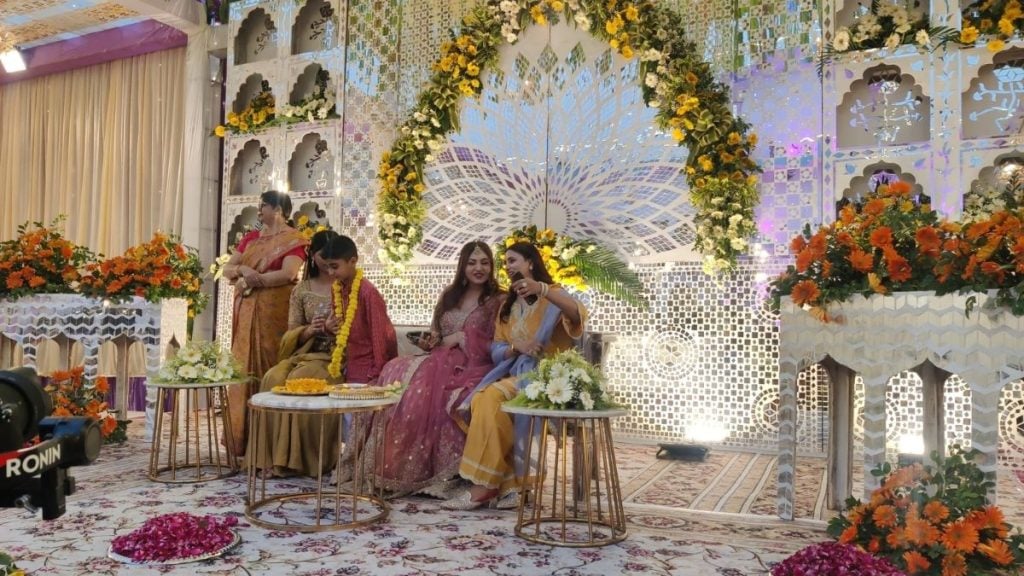
“Dada jo karte hain vo international ho jaata hai. (Whatever Dada is doing become international. This is an international marriage,” said Gunjan Singh, a well-known Bhojpuri singer, before breaking into the song “Hum Bihari hai ji” (we are Bihari). The crowd joined in, waving their gamchhaas in the air.
Wedding-cum-content factory
The grand Nadwan wedding was also being filmed, edited and uploaded—sometimes even before the next attraction had even begun.
Rajnish Rocky, a 24-year-old who runs an Instagram channel with the name RajnishRockyNews for the last seven months came to the wedding for views.
“This wedding is an opportunity to get views and become viral,” he said.
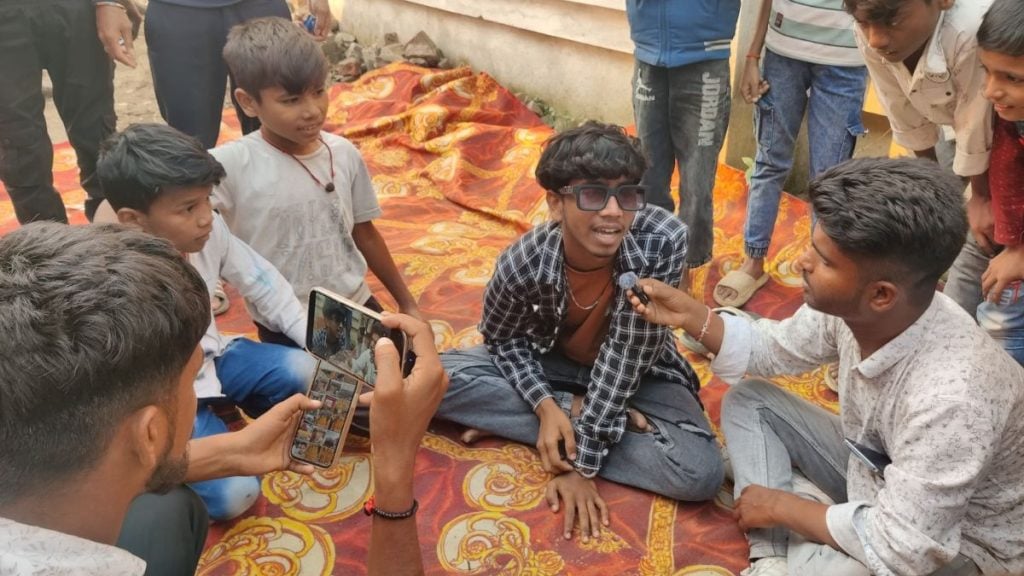
One of his videos of the tilak ceremony had received 39,000 views on Instagram. Since then, he has posted nine more videos about the wedding arrangements.
He was far from alone. More than 300 YouTubers and content creators were present at the event, recording different parts of the celebrations and uploading them online.
Puja Kumari, a creator with 33,000 Instagram followers, has also filled her timeline with videos from the wedding. Some of her Reels had received as many as half a million views.
One video featured the bride’s brother-in-law, with a caption describing him as the eldest son-in-law of “MLA Anant Singh Dada Ji” and “a very good person”.
Ankit Anand, a 19-year-old from Saran, entertained visitors with his mimicry of the man at the centre of it all.
“Lao cigarette re—get the cigarette,” he said while gesturing like Singh, drawing applause from the crowd at Singh’s residence.
Meet ‘Chhote Sarkar‘, the man at the centre of it all
The horses had their racecourse, the cooks had their kitchens and the influencers had their cameras. But the wedding had one undisputed protagonist: Anant Singh.
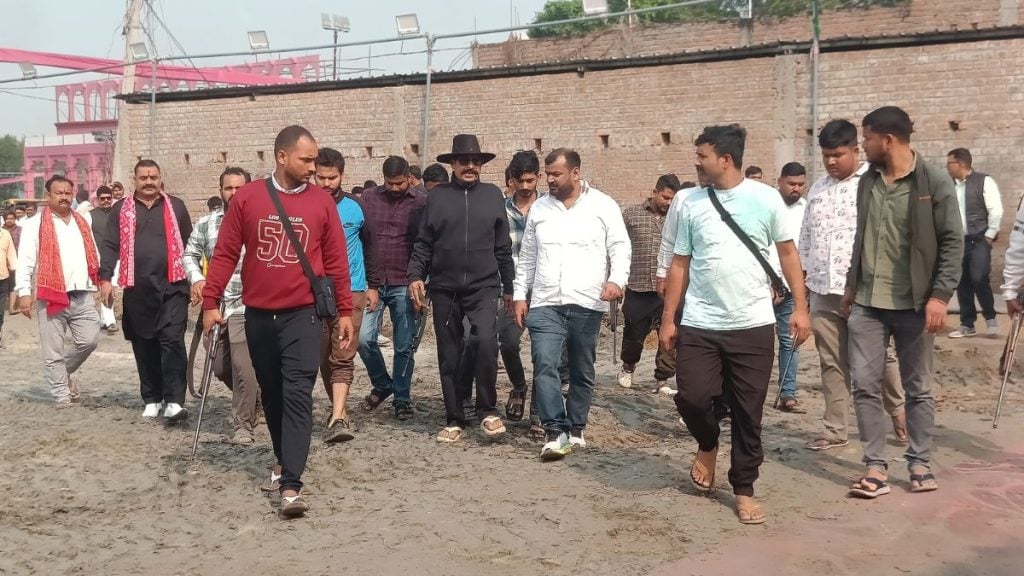
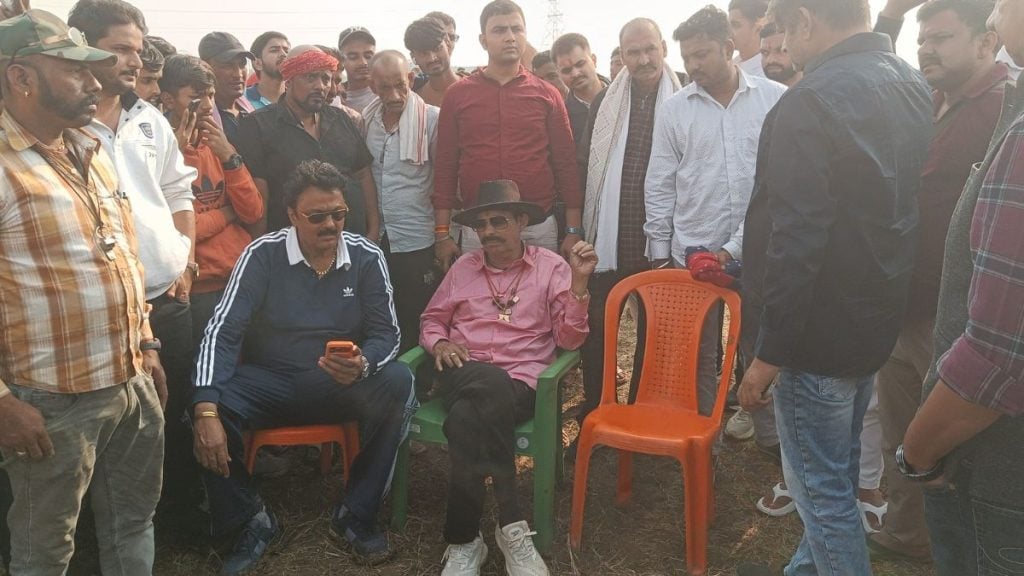
Bhojpuri dancers like Archana Tiwari performed on stage as Singh sat surrounded by armed bodyguards carrying rifles, pistols and sniper rifles. The scene had the trappings of a 1990s Bollywood film: music and celebration on stage, an imposing politician in the middle, and an armed entourage keeping watch around him.
This was no ordinary wedding host. It was Bihar’s baahubali (strongman) culture on full display. And this public display of adulation sat alongside a political career marked by criminal cases and controversy.
Singh has 52 criminal cases against him and his rise as an influential politician is rooted in the rough-and-tumble politics of Mokama, where caste equations, muscle power and political patronage have long shaped electoral fortunes. He contested elections on RJD tickets, before moving to the JD(U) from where he was expelled last year. Now he is an Independent.
For many visitors, Singh was far removed from his political image and described their ‘Chhote Sarkar’ as generous and accessible.
“Paise se koi bhi ameer ho sakta hai, lekin dil se ameer hona alag baat hai—Anyone can become rich in terms of money, but being rich at heart is a different matter altogether,” said Kishor Singh, one of the attendees.
Over the last few years, Singh’s larger-than-life style—the dark sunglasses, the handlebar moustache and his distinct Magahi accent—catapulted him to social media stardom. His fan following has steadily grown and currently has over 8.6 lakh Instagram followers. He doesn’t follow anyone on the app.
But his initial clout originated from family. Singh’s elder brother Dilip, known as ‘Bade Sarkar’, had established the family’s political dominance in Mokama after winning the Assembly election in 1990.
Singh, who initially operated in his brother’s shadow, gradually took over the reins. His association with former chief minister Nitish Kumar ahead of the 2005 elections helped propel him into electoral politics. He went on to win Mokama repeatedly, switching between the JD(U), the RJD and contesting as an Independent, while retaining his influence even through periods in jail.
The wedding also fuelled the Bhumihar caste pride. Some supporters presented Singh as an icon of the Bhumihar community, even as his admirers came from across caste lines.
“Anant Singh is the icon of Bhumihar. He will get our glory back,” said Ashutosh Singh, a resident.
Also Read: Who’s that one man not invited to the big fat Bihar wedding of Anant Singh’s daughter?
When rain played spoilsport
When the weather briefly threatened to steal the show, the rain was treated as another obstacle for the host to overcome.
An Instagram Reel titled “Anant Singh ne Indra Dev ke saath kar diya khela” played on the MLA’s efforts to salvage the wedding arrangements after persistent drizzle turned parts of the venue, including the mandap (altar), into puddles and patches of wet soil.
Singh’s associates brought in tractors carrying sand, and the ground was restored over two days.
“Only Anant Dada can do this. Everyone was concerned about how the wedding would happen,” he said. “But he even defeated the god of rain.”
(Edited by Stela Dey)