





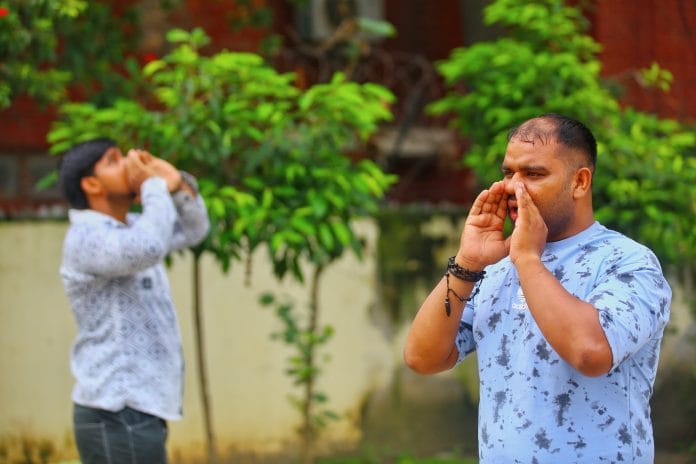

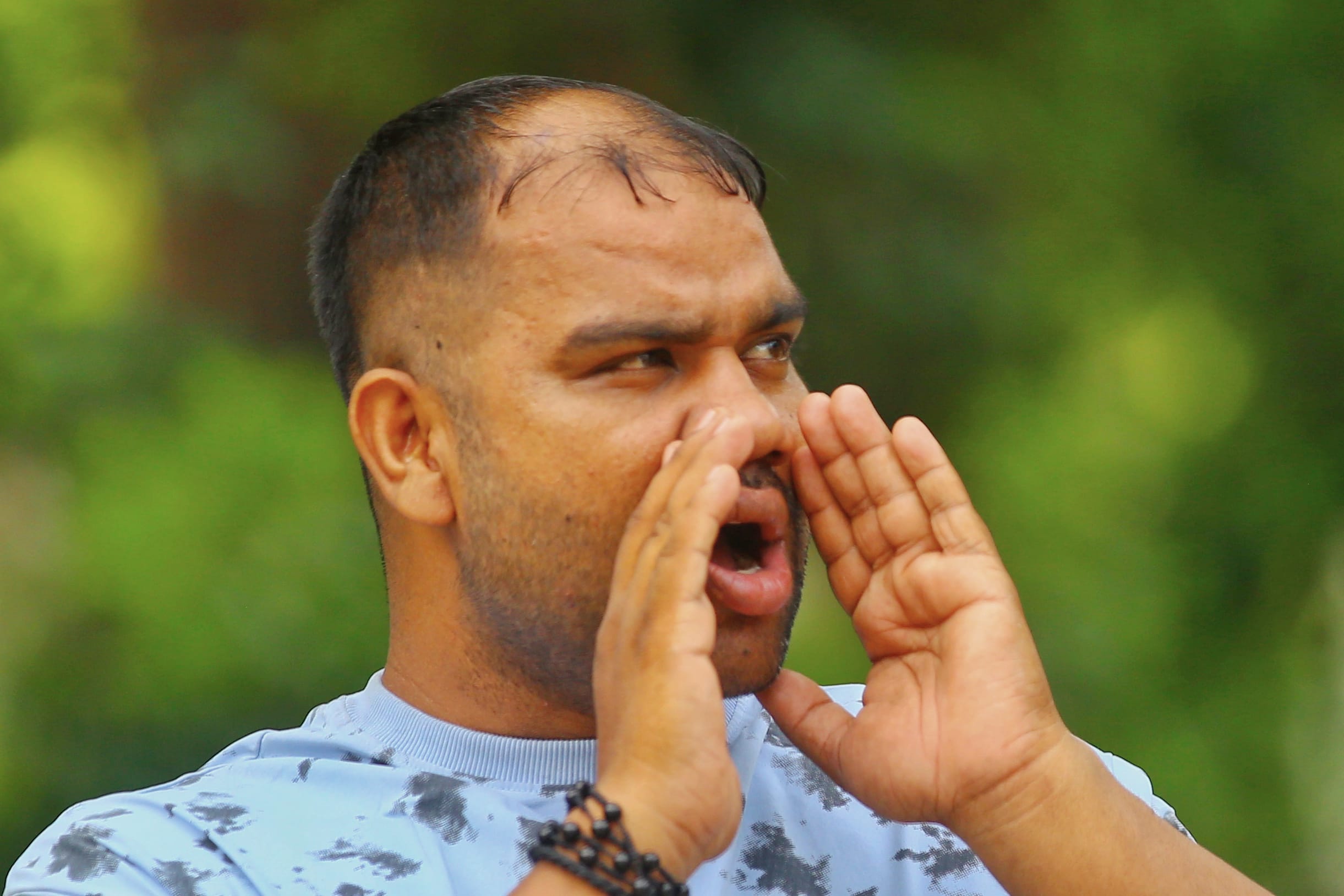
New Delhi: Shahrukh Khan and Wasim Khan imitated langur calls –“Eek-eek-eek” and “Whoop-whoop” – and the common monkeys gathered near Gurudwara Rakabganj Road quickly dispersed in different directions. A group ran along the streets to North Avenue, while another hid among the branches of jamun and neem trees. One look from the Khan brothers and the monkeys ran for their lives.
This has been Shahrukh’s job for over 15 years, though Wasim joined his cousin only in 2020. Together they help check the menace of the common monkeys, or rhesus macaques, that roam Delhi, especially Lutyens’ Delhi.
“Hum toh khandani bandar bhagane wale hai (We are a family of monkey chasers),” said Wasim, adding that at least five of his cousins are in the same ‘profession’.
The brothers do not carry a lathi or any other armor. Their voices are their biggest weapon. Armed with knowledge of monkey behaviour and the skill to imitate a collection of langur calls, they are called in when troops of common monkeys become a nuisance in the capital city’s high-security government and diplomatic enclave. They are popularly known as monkey whisperers. But, they do not whisper; in fact they do the exact opposite. They vocally mimic the warning calls of the larger, territorial and more aggressive grey langurs, that the common monkeys are inherently scared of.
The monkey whisperers are in high demand whenever Delhi hosts major events.
Most recently, they were purportedly asked to keep common monkeys at bay from the Indira Gandhi Arena, where the BWF World Championships is being hosted since 17 August so there is no disturbance during the games — a measure criticised and mocked by many, but defended by sportspersons. Badminton world champion PV Sindhu, in a post on X, recalled how a hawk is trained to scare away pigeons during Wimbledon. She said, “We all love Wimbledon, and they’ve had Rufus the hawk keeping pigeons away for years. Every major sporting event has its own local challenges.”
Monkey whisperers Irfan Khan and Abbas Khan told ThePrint that for the past four days, they have been reporting to the Indira Gandhi Stadium to chase away monkeys. ThePrint spoke to the two as they shooed away stray dogs near Gate No. 16 of the stadium.
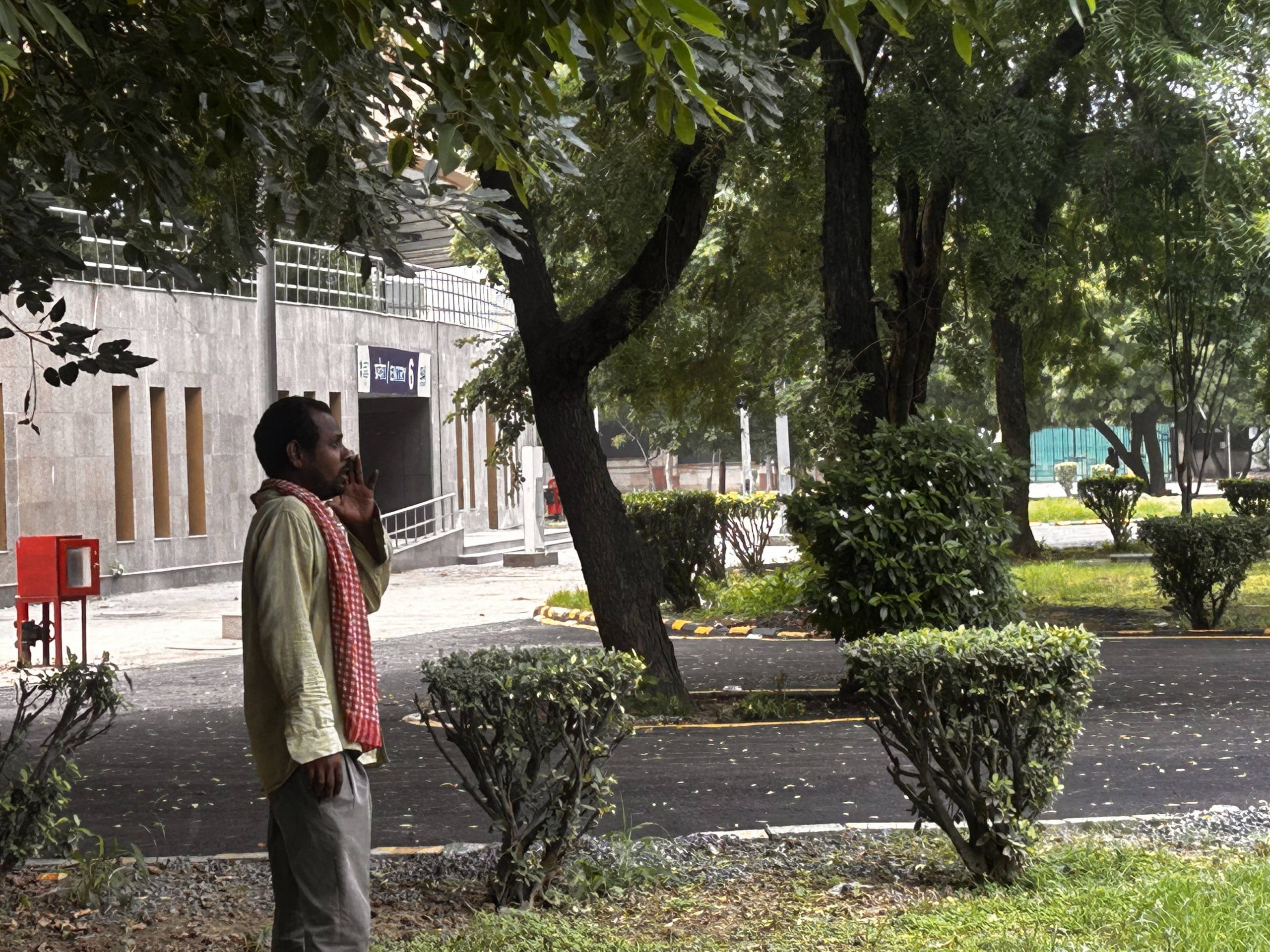
“We were sent here by the thekedar (contractor). We report for duty at the stadium at 9 am, and stay here till 5 pm. We are paid Rs 800 a day,” said Abbas.
When ThePrint tried to reach out to the Sports Authority of India and Badminton Association of India, both the bodies denied hiring monkey whisperers for the tournament.
At the India Open badminton tournament held in January, monkeys had found their way into the playing arena, while pigeon droppings fell onto the courts and briefly halted matches. From the 2010 Commonwealth Games to the 2023 G20 Summit, Delhi has repeatedly scrambled to keep its monkey menace away from high-profile events, deploying everything from live langurs to life-size cutouts and monkey whisperers.
Yet it has outlived every workaround — a strange urban conflict that keeps returning, no matter how inventive the deterrent.
Whisperers at the World Cup
Outside the Indira Gandhi Arena, Irfan and Abbas walk around the campus and keep monkeys and dogs away from the stadium.
25-year-old Irfan shifted to Delhi only four months ago, looking for a better-paying monkey whispering gig. He claimed he was earlier deployed at the Charbhagh Railway Station in Lucknow.
Irfan said that he got the job through contractors Badal and Rohit. The duo, based out of Jahangirpuri in north-west Delhi, have been working as monkey whisperers and catchers for over two decades.
“A few days before the Badminton World Cup, I received a call from Municipal Corporation of Delhi (MCD),” claimed Rohit. He added that his phone number is available on the internet and that he often receives calls from government officers looking for monkey whisperers.
ThePrint reached out to MCD’s veterinary department, which denied appointing any monkey whisperers.
“We have private catchers, who catch the monkeys and shift them to a wildlife sanctuary, which comes under Delhi government,” said Akhilesh Kamal, Deputy Director of Veterinary Services Department of the MCD.
Kamal told ThePrint that when they receive complaints about monkeys, they send private teams. “For now, we have not received any complaints of monkeys and dogs from the Indira Gandhi Stadium,” said Kamal.
Chasing away monkeys from VIP areas
At Gurdwara Rakabganj (GRG) Road, near the Parliament, Shahrukh and Wasim walked towards a bunch of monkeys sitting near a park, who realised from a distance that the Khan brothers had arrived. They dispersed that very instant. The scene felt straight out of a Kollywood movie: the hero arrives and the bad guys start running for their lives. A few monkeys climbed the tall boundary walls of legislators’ houses, while others hid behind poles, waiting to reclaim their places.
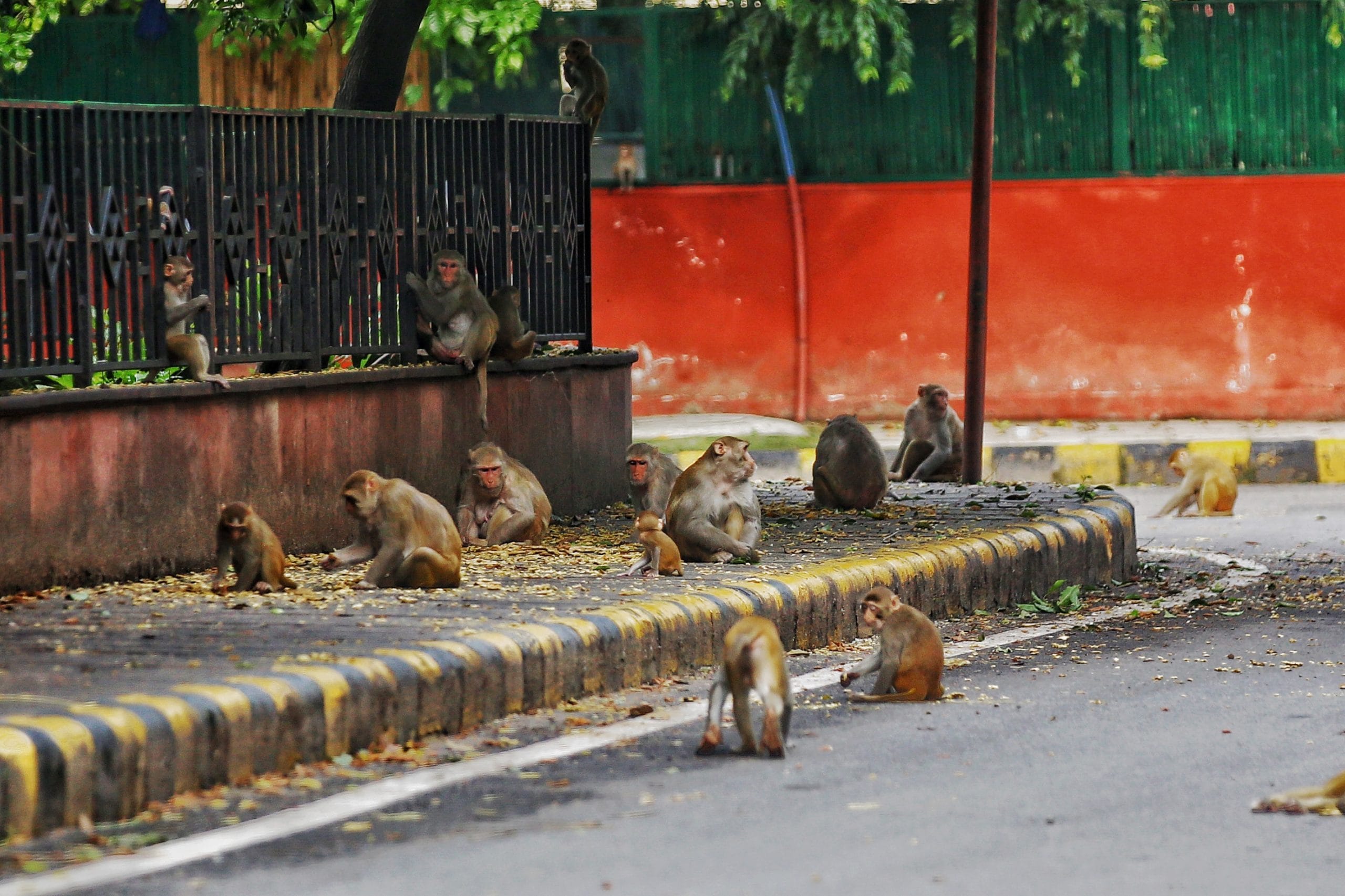
Decades in the profession have taught the brothers to read a troop like a book. They have learnt to identify the troop’s leader, their patterns, and most importantly, how they will react.
At the GRG road, the head is easy to identify—a monkey with its head tilted slightly to one side. “We try to target him first, if he leaves, others leave easily,” said Wasim.
For each sound, they have a code word. Sometimes, just conversing with them in their common tongue is also effective. “Chalo jao tum log, hum aa gye hai,” they shout, louder than the police sirens heard in the high-security area.
As they walk along the road, the brothers point to the houses of several Members of Parliament (MPs), where they were called to chase away monkeys.
“We had also chased monkeys at 10 Janpath, the residence of Congress MP Sonia Gandhi,” claimed Shahrukh. He added, “Congress, BJP, AAP, political leaders kept on changing, but we consistently kept shooing monkeys away.”
A corner house on the GRG road will soon be occupied by an MP. Shahrukh and Wasim have worked there before. Now, they are trying to make contacts so that, as soon as the next MP moves in, they can get a job there.
The brothers have made a name for themselves in this profession. Their business card features a photograph of monkeys and read, “Shahrukh, experienced monkey chaser, WM Monkey Handler.”
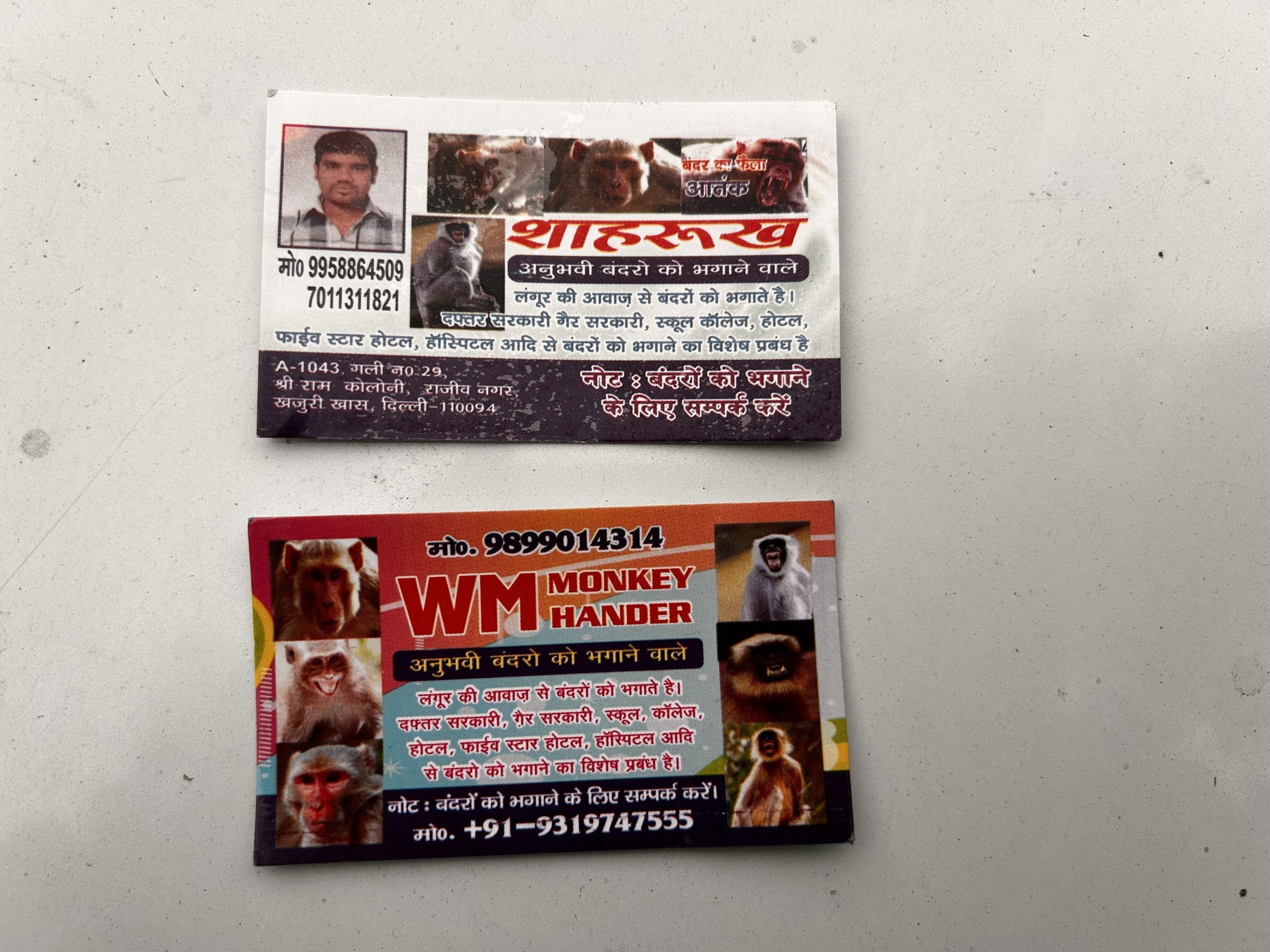
“We chase monkeys with the voice of langurs. We have special services for every office,” the card reads.
Cultivating connections is vital to the profession. For the brothers, the network-building exercise started when their father worked as a monkey chaser.
A profession that has lasted generations
For the Khan brothers, their knowledge of monkey behaviour is not part of any formal training; it has been passed down through generations.
More than 40 years ago, Shahrukh’s father Najar Ali came to Delhi from Lucknow with his family and four gray langurs. Ali roamed the streets of Lutyens’ Delhi with langurs to earn a living. He was called by the rich and posh neighbourhoods to entertain children. The langurs would perform tricks for them, and happy parents would pay Ali. But the earnings were few and far between.
During one such episode, Shahrukh recalled, his father received advice from “an officer at a big post,” who asked Ali, “Why don’t you use these langurs to chase away the common monkeys?”
And this is how Ali became a monkey chaser. “That advice not only changed my father’s life, but it also shaped our lives,” said Shahrukh. He added that policemen and residents across Central Delhi knew his father as Ali—the monkey chaser.
Shahrukh joined his father when he was 17. He said that his first job was to ward off monkeys from a Vodafone office in Okhla. After that, he worked at a dental college in Mathura, and at the Jhansi railway station.
Since childhood, Shahrukh and Wasim have spent time with the langurs. But their family faced a setback in 2012, when the government banned the commercial use and deployment of captive langurs to scare away smaller monkeys.
They had to let go of all the grey langurs and freed them near Jhandewalan, Birla Mandir and few in Lutyens’ Delhi. Shahrukh remembered having to trick their favourite langur, Heera, into leaving them.
“They were like our family but we were helpless,” said Shahrukh, showing an old photograph of Heera holding his brother’s hand.
The government offices they worked at then advised them to chase monkeys without langurs. Time spent with langurs had taught them a lot about animal behaviour. They now use this skill to chase the monkeys away.
Shahrukh, Wasim and others in his family work outside government offices for nearly eight hours a day, driving monkeys away. “From Shastri Bhawan, Krishi Bhawan, Delhi Police headquarters, Vidhan Sabha, and many government offices, our families have been chasing away monkeys in central Delhi for years,” said Shahrukh.
Like regular office goers, the brothers reported at 9 am; drove off monkeys with their signature “Eek-eek-eek” and “Whoop-whoop” calls; and rested for a while. Their work naturally increased during lunch hour.
Environmentalists are skeptical
While several viewed hiring monkey whisperers as a unique but practical solution, environmentalists were skeptical.
Dr. Iqbal Malik, a zoologist and founder of Vatavaran, argued that the problem is not limited to Lutyens Delhi and that monkey whisperers are not a permanent solution. “Any government building, any place, can easily be made monkey proof,” she told ThePrint, suggesting the use of nets.
She further said that the monkey problem started because of a series of wrong steps, that focussed on driving away monkeys instead of co-existence.
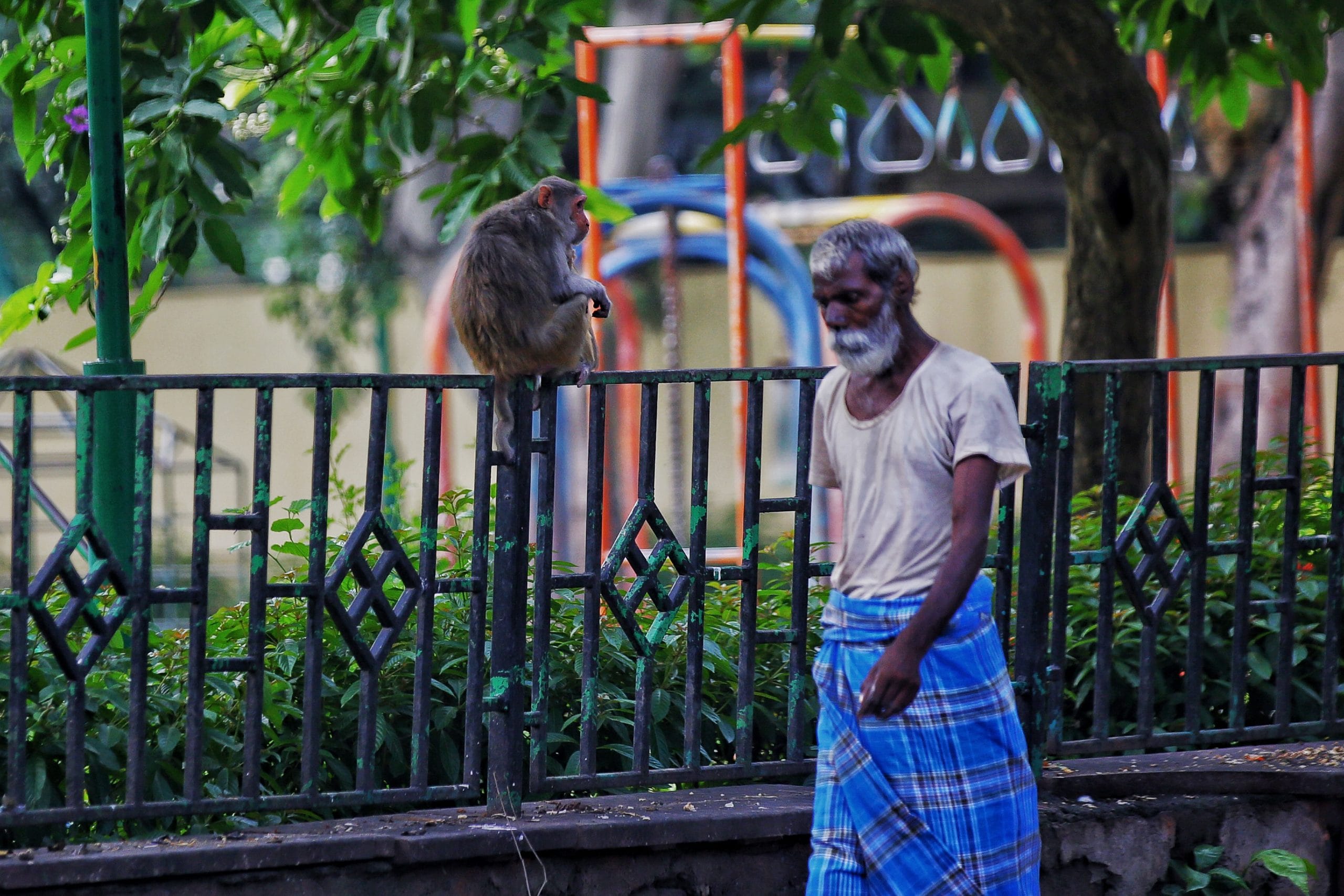
Monkeys have been a problem in Delhi for a long time. It was in 2007 when Surinder Singh Bajwa, then-deputy mayor of Delhi, fell to his death from his balcony after a monkey attacked him. After the incident, the Delhi High Court directed authorities to capture and transport monkeys to the Asola Bhatti Wildlife Sanctuary, on the outskirts of Delhi, where PVC walls would be erected and food collection points would be set up. However, unable to find adequate food, the monkeys continued to hop out of Asola Bhatti and return to the city.
Then came another complication. In 2022, rhesus macaques were removed from the protected schedules of the Wildlife (Protection) Act, shifting their management from the forest department to civic authorities. But without a clear, coordinated strategy to manage the animals, Delhi’s monkey problem persisted.
In January, the Delhi government said that it has shifted over 6,500 monkeys from residential and commercial areas to the wildlife sanctuary in the last five years.
“The monkey whisperer concept is not really effective. People have done a lot of experiments mimicking langur voices, but they do not get any effective results. It is essentially a wastage of time and money,” said Hemant Kaushik, the former acting director of MCD’s veterinary department.
Describing monkeys as “forefathers,” he told ThePrint that MCD and other organisations hire people to catch monkeys and that they are deployed in different zones.
“I do not blame the young boys, they are trying to earn a living,” Iqbal said.
The occupational bites
The brothers said that they are paid Rs 20,000 a month, earning about Rs 700–800 for working eight hours a day.
“People in the neighbourhood know us as bandar bhagane wale (monkeys chasers),” Shahrukh said, as he engaged in a brief battle with a monkey. As the monkey screeched, lunged forward, and bared its teeth, Shahrukh imitated him, coupling it with loud voices.
The monkey, without its troop, lost the two-minute-long fight and decided to leave. The occupation, like any other, comes with its own set of hazards.
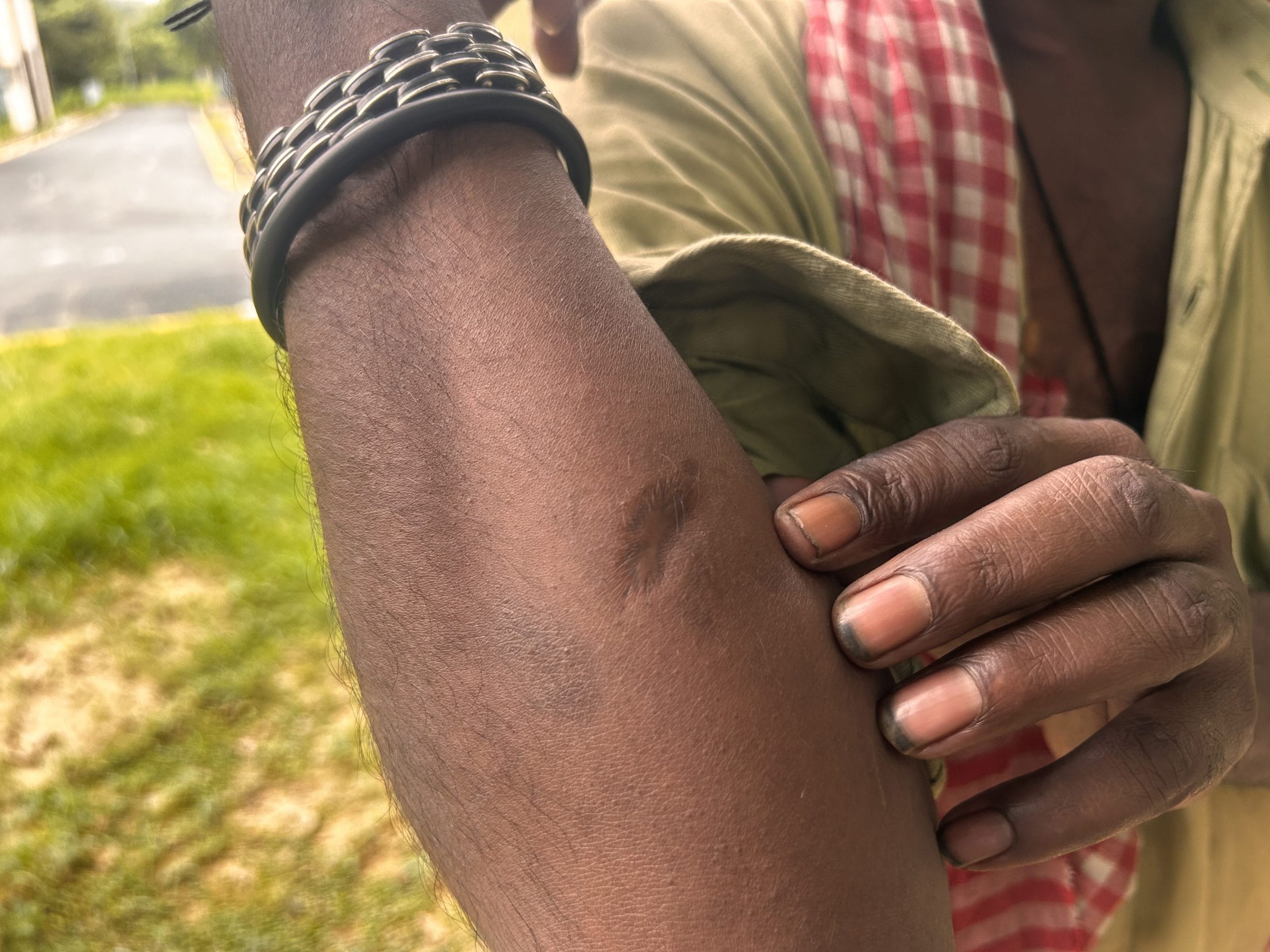
“I have been bitten by monkeys several times. Their bites can be fatal,” said Irfan as he showed marks on his arms. He said he treated them by applying chuna (calcium hydroxide). Abbas is scared too, but says he has to do it to run his household. “I will get vaccinated if I am ever bitten by a monkey,” said Abbas.
Walking for long distances, playing games with monkeys, climbing walls, running, and often putting their lives at risk — this is a monkey whisperer’s life.
Though the skill to communicate with the animal has been passed on among the men in the Khan family, the women do not go to the field with them. Shahrukh has even tried to shield his two children from the work he does. “They have seen my videos and are aware of my work, but they have not witnessed me doing this in real life,” said Shahrukh.
Wasim, who got married recently, also does not want his kids to follow his steps. “We want them to study, and not struggle like us,” said Shahrukh.
(Edited by Aakriti Handa)