



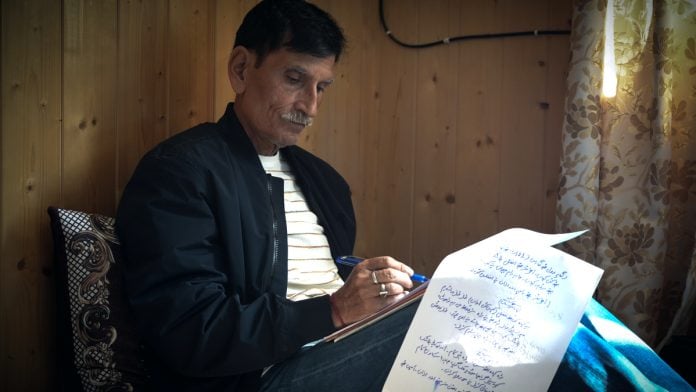
Srinagar: An unusual assignment landed at the Doordarshan office in Srinagar in 2014. Narendra Modi had just become Prime Minister and was going to address the country through a radio programme called Mann Ki Baat. It had to be translated into Kashmiri and read out for local audiences. But the Valley was simmering with tension and few wanted to take on the task.
The exception was Sohan Lal Koul, a Kashmiri Pandit, a producer at Doordarshan and now a Sahitya Akademi Award-winning novelist. He translated the Prime Minister’s address into Kashmiri and recited it himself. Since then, he has been the familiar voice behind PM Modi in Kashmir.
“It was that time when no one would come to translate and read the script live. Kashmir was boiling back then,” said 71-year-old Koul at a relative’s wood-panelled home in Srinagar. In front of him was an A4 sheet of paper — another Mann Ki Baat translation in progress. Even after retiring from Doordarshan over a decade ago, he has continued this work.
But for all his years translating Modi’s words for Kashmiris, Koul has struggled to find someone to translate his own writing, barring a couple of exceptions. His novels — such as Talash Roze Jari, Wunal and Psychiatric Ward — explore some of Kashmir’s burning themes of conflict, trauma, memory and displacement. He has been called the “alchemist of Kashmiri emotions” and celebrated for his 16 novels and their contribution to the “literature of exile”. In 2022, he even won the Sangeet Natak Akademi Award for his contribution to Indian theatre through original plays and translations. What he lacks is readers beyond a small circle of academics and language experts. Many Kashmiris can no longer read the Perso-Arabic script in which he writes.
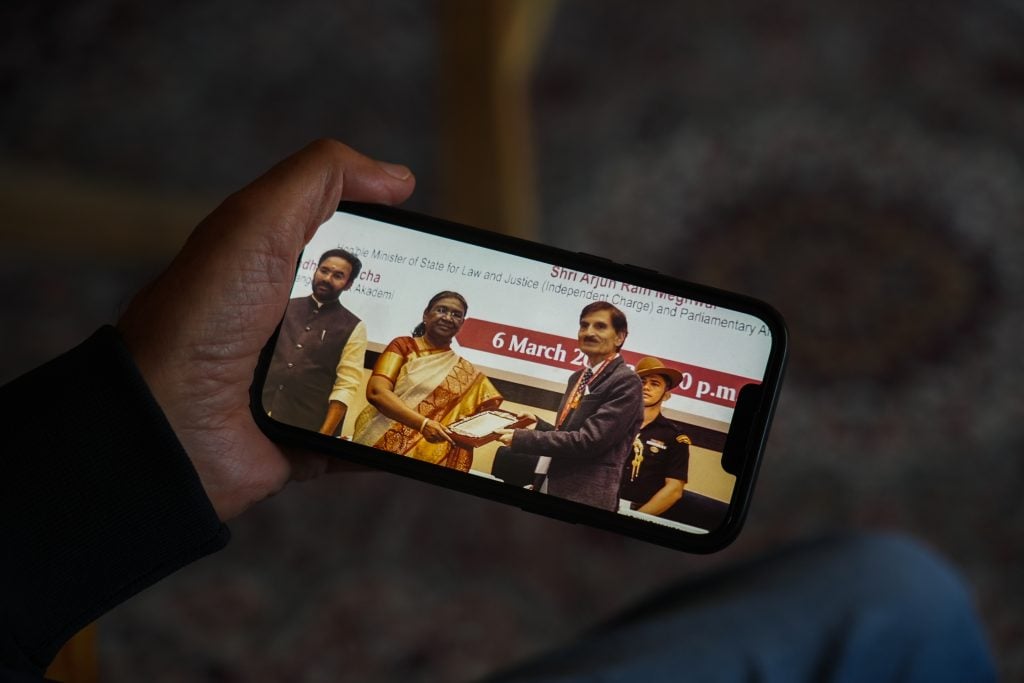
Yet, while his own voice is still waiting to be heard beyond Kashmir, Koul is no ventriloquist. He refuses to let his work with Modi restrict his identity, political agency and writing.
When Vivek Agnihotri’s The Kashmir Files came out in 2022, it was widely praised by BJP leaders, including the PM. But Koul was furious. He told his wife and friends that the movie was a dishonest portrayal of Kashmiri Pandits.
“And why should an outsider make a movie on Kashmiris and earn crores for it?” he asked.
Also Read: Punjabi Dalit fiction is reaching an English audience at last
Stuck in a language double-bind
Koul has begun recording his novel Psychiatric Ward—which won the Sahitya Akademi Award in 2024—in Kashmiri. That way, even someone who understands the language but cannot read the Perso-Arabic script might be able to help translate it.
“To translate my work, one needs to know both Kashmiri and Persian [script]. Someone knows Persian very well but not Kashmiri. Someone knows Persian and Kashmiri but not English,” said Koul. An English translation of Psychiatric Ward by writer and scholar Dr Mushtaque B Barq already exists, but Koul is keen to see his work translated afresh into more languages and to find readers beyond Kashmir.
Language and the script in which it is written are contested issues in Kashmir, and Koul is caught in a double bind. Many young Kashmiri Muslims are more familiar with written Urdu than Kashmiri, even though both use variants of the Perso-Arabic Nastaliq script. For many Kashmiri Pandits, meanwhile, the script evokes the advent of Muslim rule in Kashmir. They instead prefer Sharada and Devanagari scripts.
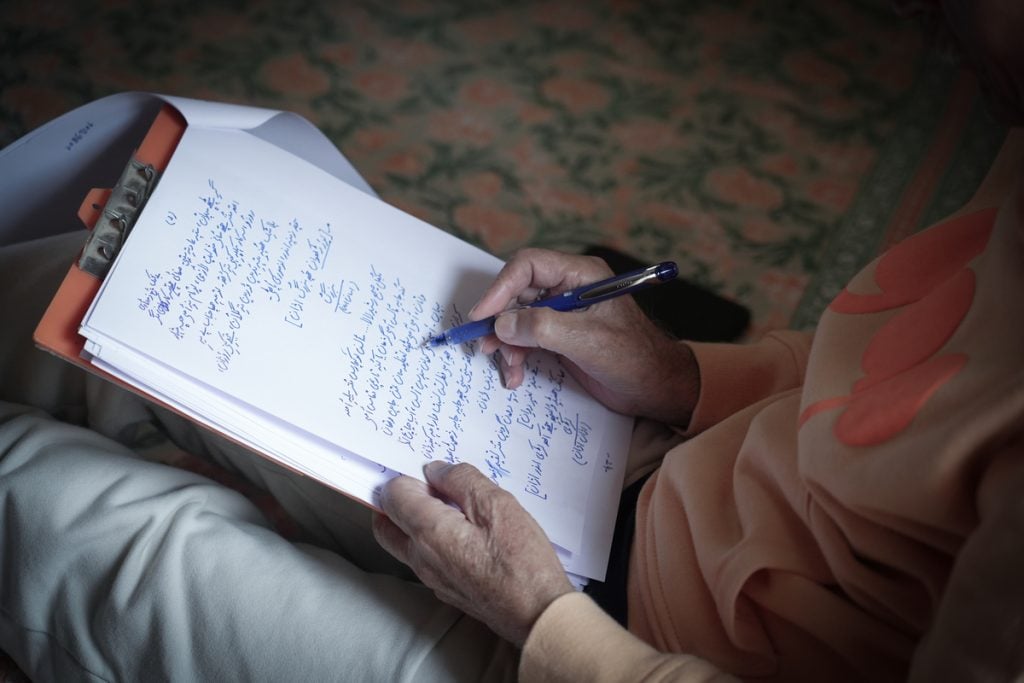
The Kashmiri in which Koul thinks, speaks and expresses himself is also changing. As the old ways of life disappear, so do the words that once described them.
“There are so many words in Kashmiri that have gone out of use since industrialisation and urbanisation,” Koul said. “Such as nalwut. In the old days, especially in villages, people built clay walls around their land or courtyards and covered them with small twigs to protect them from rain. That covering was called nalwut. Then there was tchae, a roof covered with dried hay.”
To translate my work, one needs to know both Kashmiri and Persian [script]. Someone knows Persian very well but not Kashmiri. Someone knows Persian and Kashmiri but not English
– Sohan Lal Koul
Before Persian influence took hold in the 14th century under the Shah Mir dynasty, Kashmir’s first Muslim ruling house, Sanskrit dominated the Valley’s literary culture, with texts largely written in the Sharada script. Kashmiri itself was primarily a spoken language. Over time, Persian profoundly influenced Kashmiri literature. It also gave Kashmiri the Perso-Arabic script.
“Instead of writing in their mother tongue, Kashmiri, creative writers considered it a matter of great honor, pride, and dignity to write in Persian,” wrote linguist Omkar N Koul in a 2011 article.
Kashmiri Pandits also embraced Persian.
“The Pandits used Persian to study their own Hindu religious and cultural texts such as Mahabharata, Bhagvata, Ramayana, Shivapurana, and the Bhagwat Gita,” reads an oft-cited essay by the late linguist Braj B Kachru, ‘The Dying Linguistic Heritage of the Kashmiris’.
For centuries, through the Chak, Mughal, Afghan and Sikh periods and into Dogra rule, Persian was the official language of Kashmir. It was replaced by Urdu in 1889, during the reign of Maharaja Pratap Singh. But the Persian literary tradition survived, even if in a weakened form. And it was a Kashmiri Pandit scholar, Girdhari Lal Tikku, who documented this rich tradition of Persian poetry in his 1963 book Barguzeedai Az Parsi Sarayan E Kashmir.
While the script lives on, Persian as a language has all but disappeared from the Valley.
“Persian has not been adopted by the educational system operated in India, so takers are either the older folks or the ones whose families are connected to Iran. Shia Muslims in Kashmir speak Persian but it is not so much understood by the general Kashmiris,” said Barq, who doesn’t have formal education in Persian but learnt it from his father.
One writer, two lives
On his first day at a mental hospital, a young doctor named Naveed enters the psychiatric ward with nurse Saima. He is taken aback by the number of patients.
“It is as if the whole of Kashmir has been admitted to this ward,” he says. Saima replies, “But then, the whole Kashmir is like this.”
The scene is from Koul’s novel Psychiatric Ward, the first novel to win the Sahitya Akademi Award for Kashmiri since 1989.
For Koul, Kashmiri was never just the language of the broadcast studio. Long before he began translating Modi’s addresses, he was writing novels in the language.
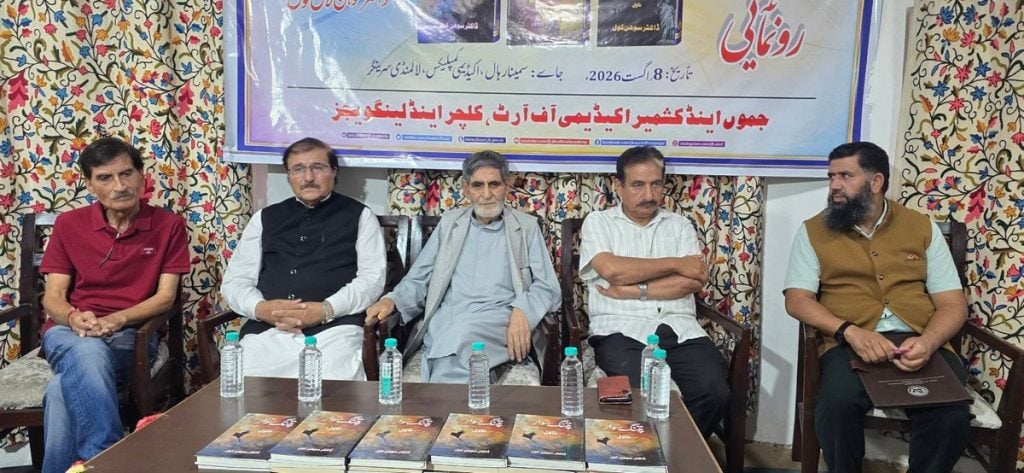
Writing in Kashmiri is also his way of bearing witness to what he has lost and what the Valley has endured: his own exodus, the suffering of Kashmiri Pandits in the camps of Jammu, and the lives of Kashmiri Muslims in the Valley.
“The most important purpose of creative fiction is to tell the story of a society or a human condition,” Koul said. “I try to tell the story of our society and its people in every novel I write.”
I have tried to understand PM Modi through his Mann Ki Baat. His words, where they come from, how they land, and what he means when he says them
– Sohan Lal Koul
His novels, such as Panien Panien Gunah (To Each His Own Sins) and Talash Roze Jari (The Search Continues), flirt with magical realism and capture the absurdities of life in a conflict zone, the search for God and the longing for a place to call home.
Kafka, Dostoevsky, Eliot, Joyce and Camus inform his literary sensibilities. Their words surface intermittently in conversation. Once, it was Eliot who returned, in a line from The Waste Land: “I will show you fear in a handful of dust.”
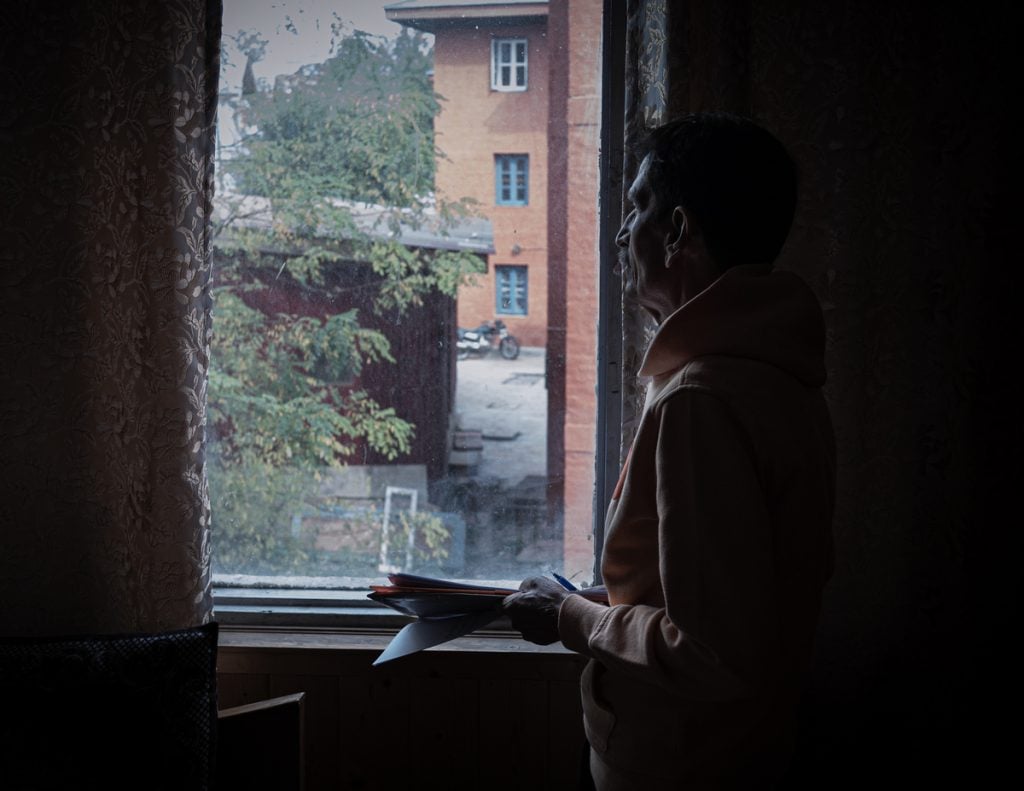
He moves seamlessly between two worlds: one as an author who deeply understands Kashmiri society and its suffering and the other as the translator for Mann Ki Baat. He says a decade of translating Modi’s speeches has helped him understand the Prime Minister better.
“I believe that his speech is a narration of what he feels for the country. It has secularism, empathy and love for the people,” Koul said.
But an agony has settled deep in his heart.
“You know, a person has to say only one thing in his entire life. Only one thing. And to say that one thing, he creates the whole mess,” Koul said, peeping out of a window in his brother-in-law’s government apartment in Srinagar. “And finally, when he says that thing. He falls silent.”
For Koul, the fear is that what he wants to say will never travel beyond the Valley. Time is running out.
‘Kashmiris have their own Sisyphus’
Psychiatric Ward did not come to Koul all at once. He spent years having conversations with the characters in his mind until, one day, they compelled him to pick up his pen and put their stories on paper.
“Let me tell you the truth. I take a lot of time in my mind. I mean, situations, characters, I live with them for a long time. Until they become a part of me,” Koul said. “And when I sit down to write, it doesn’t take me more than a week.”
Even when he is not working on a novel, Koul sits at his writing table, penning whatever comes to mind—a message, an article, a few sentences.
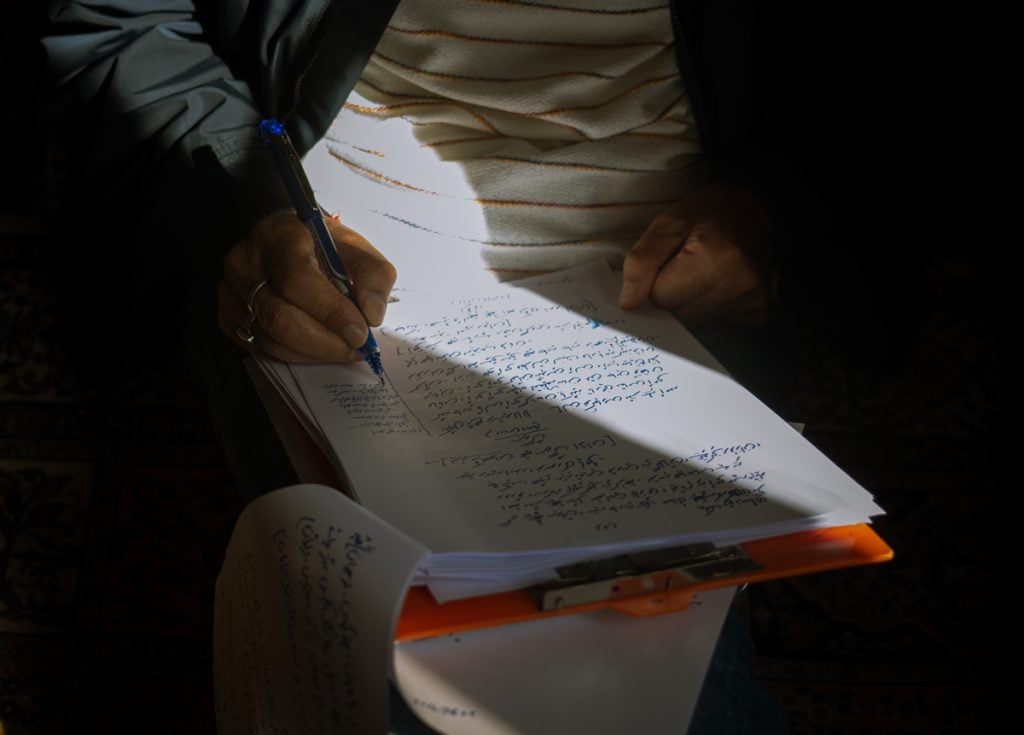
He studied Urdu, earned a PhD in it and wrote his first novel in the language during the 1970s. But it was Persian, which he never formally studied, that captured his imagination for its diversity and range of expression.
“The kind of idioms and metaphors one can find in Persian are lacking in Urdu,” he said. Kashmir has its own store of them.
Koul tells the story of Shraz, a mythical creature obsessed with the moon. It climbs a mountain to eat it, only to fall and break into pieces.
“And these pieces fight with each other. The final one climbs the mountain again to eat the moon,” Koul said. When it reaches the top, it falls again. And the cycle begins anew.
“Kashmiris have their own Sisyphus, but we don’t know about it,” he said. “We don’t know about these metaphors.”
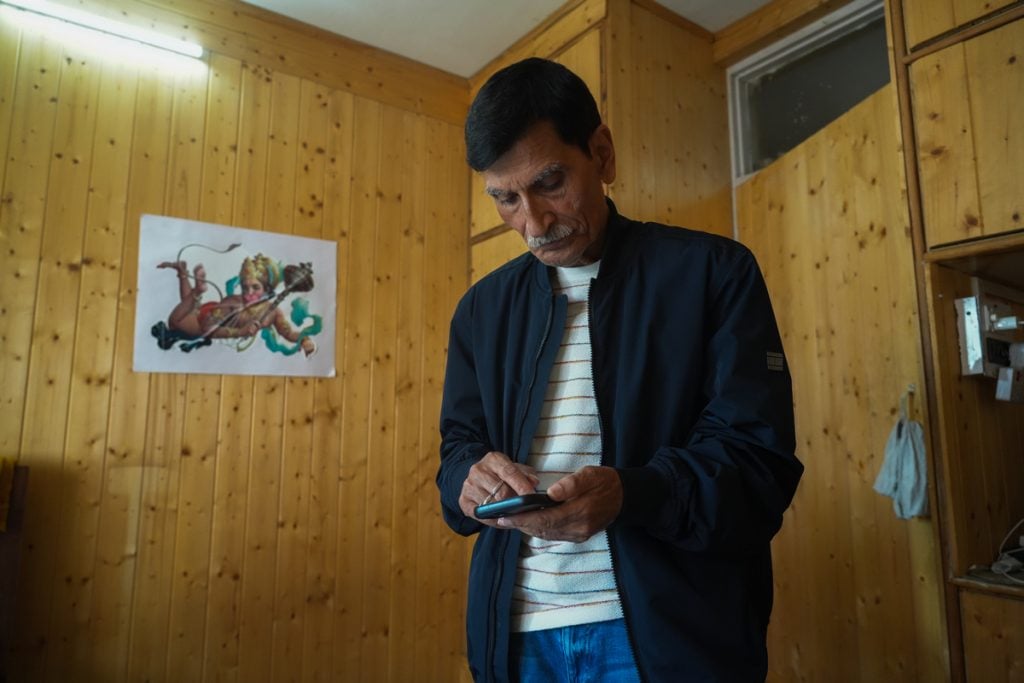
The last book Koul read was South Korean author Han Kang’s The Vegetarian, which won the 2016 International Booker for its English translation; Han won the Nobel Prize in Literature in 2024.
“I am not saying this out of pride, but I have crossed that creative level of Han Kang. The problem is that I write in Kashmiri,” he said.
Koul’s writing carries the texture of Parinwa village in Budgam, where he was born. Kashmiri was the first language he spoke. In the villages of the Valley, the spoken language is thicker in accent and richer in vocabulary. This is how Koul developed a strong linguistic character. And that inherited fluency became the foundation of his writing.
“The biggest reason for writing in Kashmiri is that this is the language of my expression. I have been speaking the language since childhood,” he said. “I don’t search for words. They are always with me.”
Also Read: Hindi literature once ruled parallel cinema. Today, it only exists on OTT
A new Mann Ki Baat mission
Koul has never really followed convention blindly. He married his wife, Rajni, after being in a relationship with her for ten years. In the 1990s, when his family wanted him to have two children, he deliberately chose to have only one.
What he calls his “first migration” was from Budgam to Srinagar.
“We rented a floor at Hari Krishan Koul’s house. He was a storyteller. He motivated and influenced me,” Koul said.
I am not saying this out of pride, but I have crossed that creative level of Han Kang. The problem is that I write in Kashmiri
– Sohan Lal Koul
He studied at Amar Singh College and was active in theatre before joining Doordarshan in 1982 in Srinagar. His first documentary was Neem Shab, inspired by the life of Franz Kafka.
“The documentary was made on 16mm film. We showed it to Delhi. They loved the film and planned to send it to the Cannes Film Festival. But they wanted subtitles,” Koul recalled. The team couldn’t add them for lack of technical capacity.
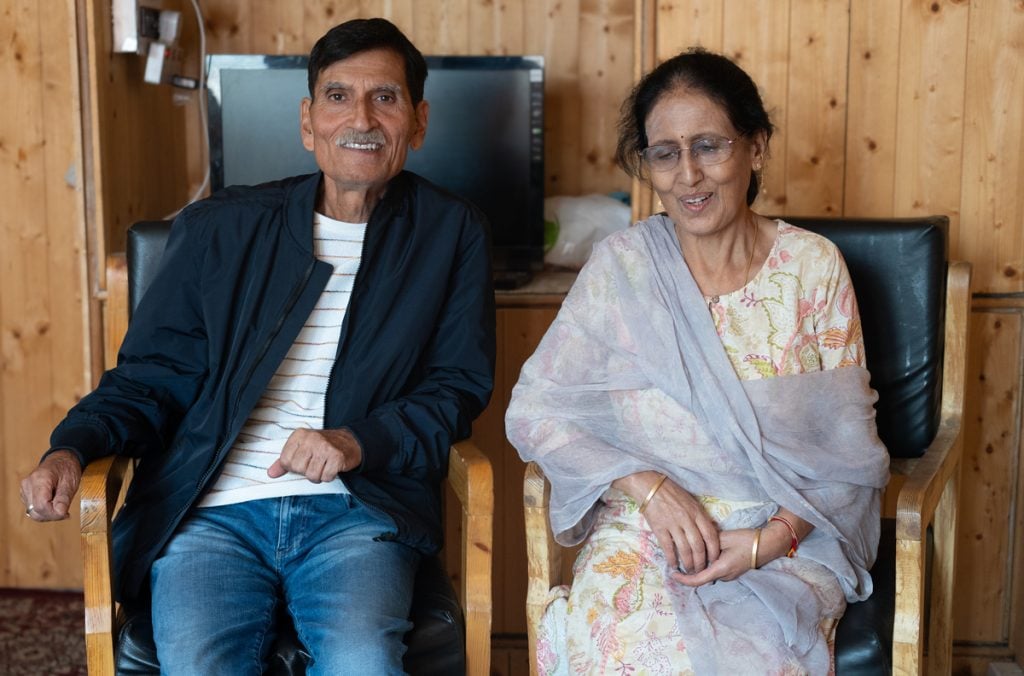
Over the next few years, Koul settled into family life in Srinagar, welcoming his daughter in 1988. Two years later came his “second migration”, this time to Jammu, as Kashmiri Pandits fled the Valley. He lived in rented accommodation until 2003, when he built his own house.
Through it all, he wrote. He would spend days in his study when he was not out on the ground as a producer. His wife managed everything at home and accepted his ways.
“He has always enjoyed living in isolation,” Rajni Koul said. Even after retirement, he meets her just three times a day: at breakfast, over tea at 4 pm and at dinner.
“The rest of the day, he spends in the study room. And I try not to disturb him,” she added.
The family’s temporary relocation to Kashmir came in 2014, after Koul requested a transfer to Srinagar.
“I wanted to retire from the land I had joined,” he said. That is how Mann Ki Baat fell into his lap. When he retired a year later, he returned to Jammu, but the show remained a constant.
Now he has another mission. After more than a decade of translating Mann Ki Baat into Kashmiri, Koul wants to write a book about the programme.
“I have tried to understand PM Modi through his Mann Ki Baat. His words, where they come from, how they land, and what he means when he says them,” Koul said.
(Edited by Asavari Singh)