





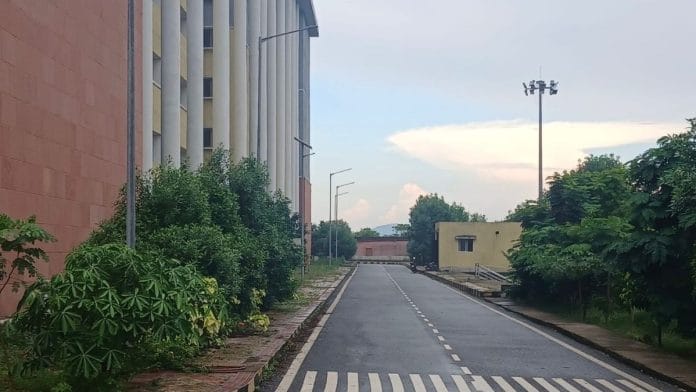


Ranchi/Hazaribagh/Dhanbad: Mantosh Bediya had just walked out of Ranchi University’s central library and was unlocking his bicycle when a chunk of concrete came crashing down on his head. The 24-year-old student died from his injuries in June 2023.
He was not supposed to be on campus that day. His academic session had already stretched beyond its scheduled end, as so many others have across Jharkhand’s state universities. Bediya was still waiting to finish a degree that should have been behind him. He had gone to the library, as he often did, to prepare for competitive examinations.
The building had been deteriorating for years, according to students and teachers. Concrete and plaster had been falling from parts of it. After Bediya’s death, students protested and demanded accountability and compensation for his family.
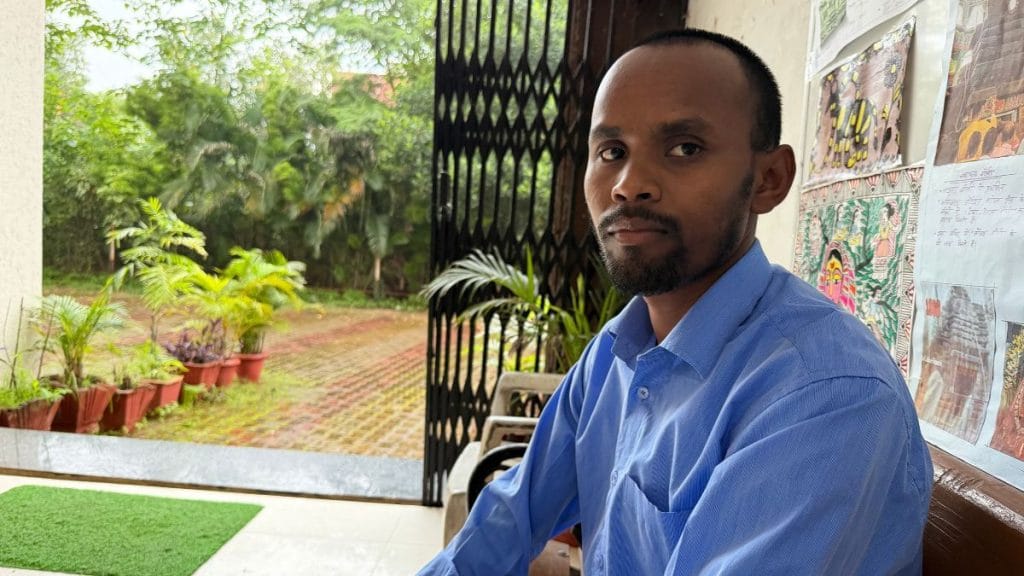
Today, his younger brother Abhishek Bediya works as a contractual employee at Ranchi University; a job given to him as part of the compensation. He still has to enter the building where his brother died.
“I don’t like going there. I don’t go there unless it is very urgent,” he said. “My brother was very intelligent and was preparing for JPSC. We both used to study in this college. I left and he stayed.”
Bediya’s death was not the beginning of Jharkhand’s higher-education crisis. Nor did the protests over government recruitment examinations that have consumed Ranchi in recent weeks begin with the JPSC and JSSC.
For thousands of students, the battle starts much earlier: getting through a university course without losing semesters to delayed examinations, finding teachers to teach it, classrooms and laboratories in which to learn, libraries in which to study, and basic facilities such as drinking water and functioning toilets.
The recruitment protests are the last link in a much longer chain. Students who eventually sit for government examinations first have to become eligible to sit for them. In Jharkhand’s state universities in Ranchi, Hazaribagh and Dhanbad, students and teachers say that can itself take years.
At a review meeting with vice-chancellors in July 2025, Governor-cum-Chancellor Santosh Gangwar directed universities to adhere to academic calendars, conduct examinations on time and declare results within a month. He also flagged teacher shortages and the need to improve libraries, laboratories and other campus infrastructure.
Jharkhand’s higher-education system has also been grappling with a persistent staffing problem. Around 700 assistant professors appointed in 2008 were still awaiting their first promotions in 2025, while teachers’ associations have repeatedly raised concerns about vacancies and delays in recruitment and promotion.
The consequences are not abstract. They show up in the calendar of a 20-year-old who misses a recruitment application, in the student who studies without a library, and in the graduate who reaches a government examination years later than planned.
Teachers say the problem is not new.
“The main issue is the system’s casual approach toward education. The universities are extremely understaffed. No serious efforts have been made to solve these issues,” said Professor Kanchan Lochan, a history faculty member at Ranchi University. “Students whose sessions get delayed are unable to apply for government jobs because they become eligible only after completing graduation.”
The student who completes graduation on time applies and gets a fair shot at the government job exams.
“But a student already behind in completing graduation doesn’t get the same opportunity,” he said. “That is the first disadvantage they pay for.”
The year that never ends
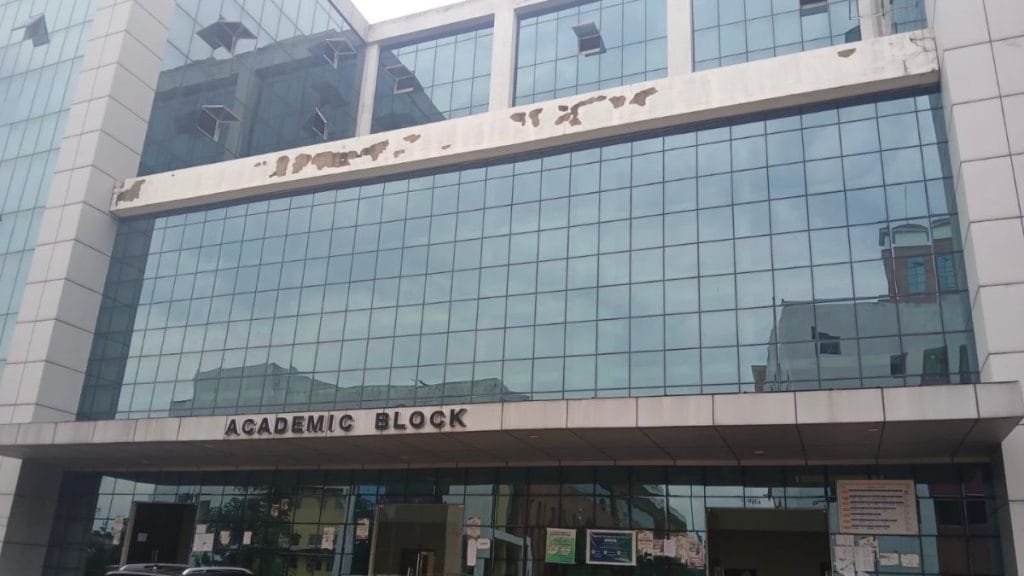
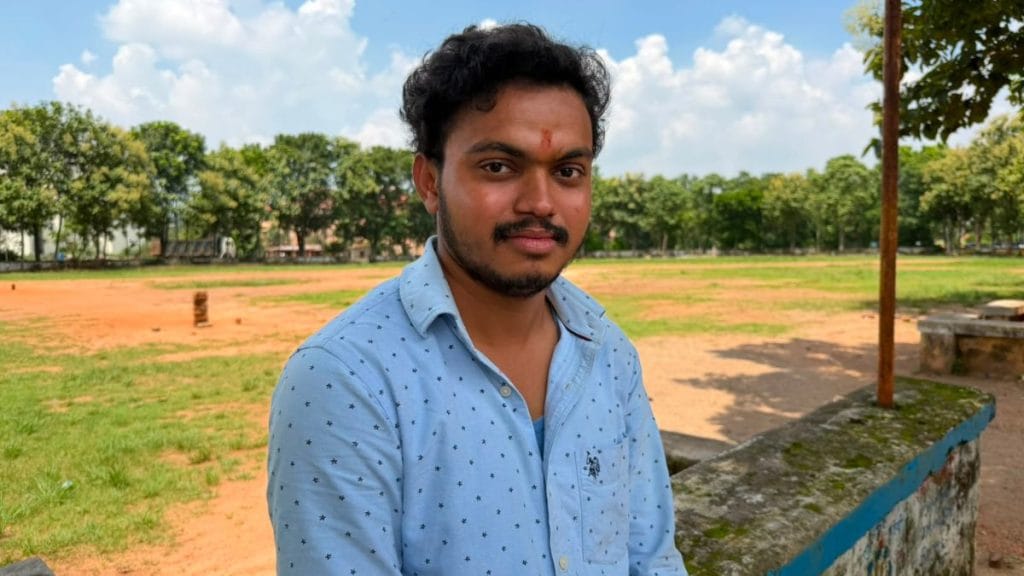
Saurabh Narayan, 20, had expected to finish his History degree on schedule. This year, he could have filled the form for the Staff Selection Commission Combined Graduate Level (SSC CGL) examination. He couldn’t because his course at Markham College, affiliated to Vinoba Bhave University in Hazaribagh, is still incomplete.
“Now I will have to wait a whole year. Because the university couldn’t conduct the exam on time, I have to wait the whole year to fill the form,” said Narayan, standing disappointed on the university campus.
The university’s own examination notices show how batches continue to spill into one another. In January 2026, VBU conducted a special fourth-semester examination for students of the 2021–24 batch. In June, it scheduled another special third-semester examination for the same batch, even as examinations for newer batches were being conducted.
“This is very normal in Jharkhand. The courses are never completed on time,” said Narayan.
For a student hoping to enter government service, the delay has a second cost: eligibility.
Narayan has already made a calculation about his own future.
“That’s why I have decided that I am not going to apply for Jharkhand government jobs,” he said. “First, I have to fight with the education system in Jharkhand and then the government job system. Central government job exams are still better.”
His course is not the only problem.
At his college, he says, there are about 400 students enrolled in his course but only a few turn up daily. There are only four teachers in his department.
“There are 400 people in my course but hardly 10-12 come. So teachers don’t feel like teaching,” he said. “Yet they are allowed to take the exam.”
Narayan, who says he was a topper until Class 12, has struggled academically since entering university.
“I was the topper till the 12th. Now I am struggling here,” he said. “I failed in two subjects in the first year. The paper checking is different.”
A campus with crumbling basics
At VBU, 21-year-old Rahul Kushwaha has another list.
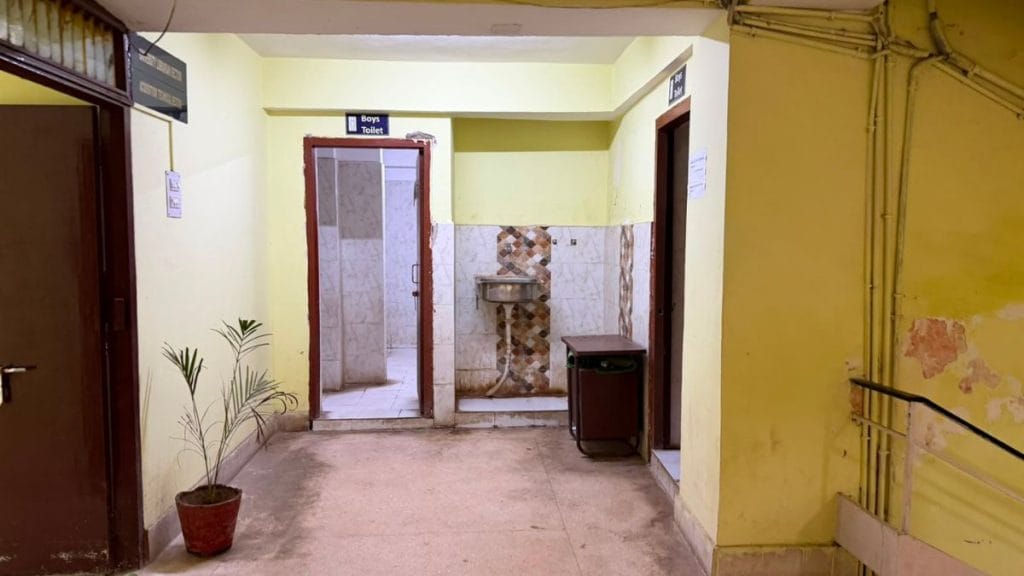
He is studying geology and says his academic session is already six months behind. He talks about drinking water, dirty washrooms, poor internet connectivity, and inadequate facilities for students.
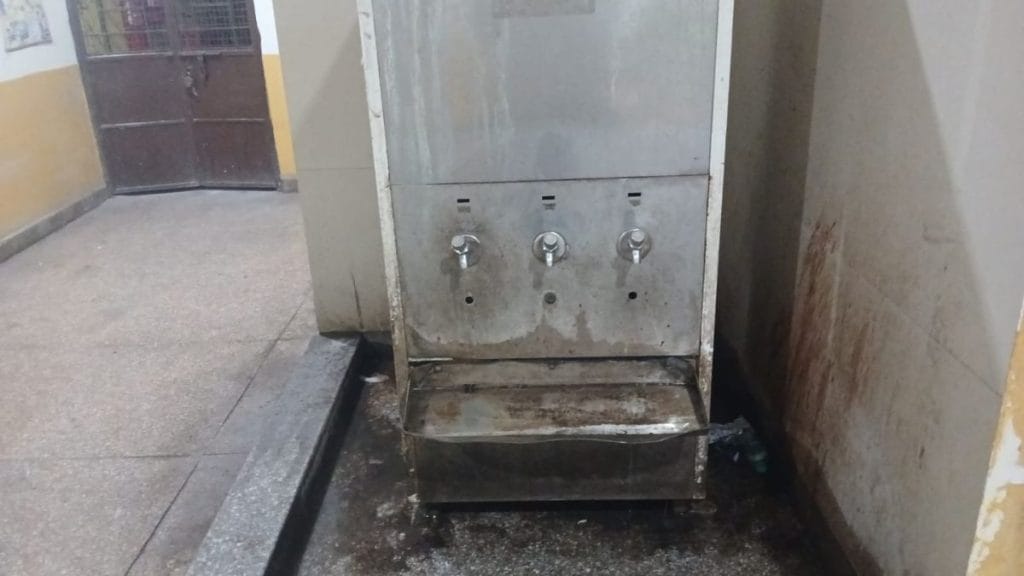
“This is the situation everywhere in Jharkhand. There is no drinking water. No RO, dirty washrooms, even good Wi-Fi isn’t available not for engineering students as well,” he said. “I curse myself everyday. Why did I join this university?”
For Manish Das, an engineering student, the frustrations are more mundane and, therefore, harder to dismiss.
He says he never found a dustbin in the VBU campus area in nearly four years. He carries wrappers in his bag. His course, he says, still relies on a decades-old syllabus and offers limited exposure to newer technology.
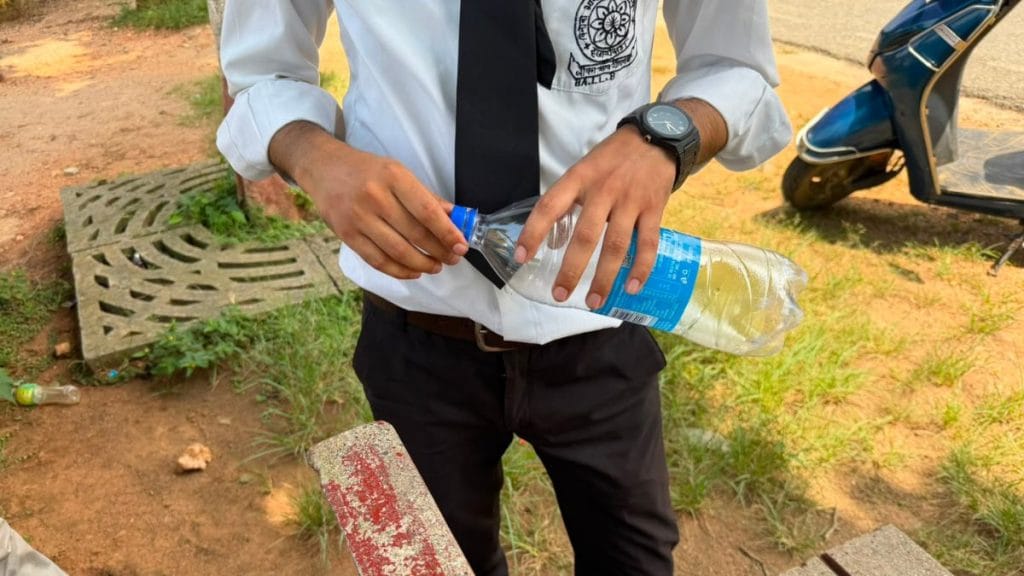
“I buy water if I feel thirsty. This should be my fourth year but I am in my third year,” Das said. “Last year they completed the whole semester in one month just to smooth out the session.”
For another student, the demands have become even more basic.
“Don’t give us water, don’t give us toilets, Wi-Fi—but at least give us a good education. That’s the bare minimum,” an engineering student at VBU said.
The library that became a symbol
Back at Ranchi University, the central library offers a more complicated picture.
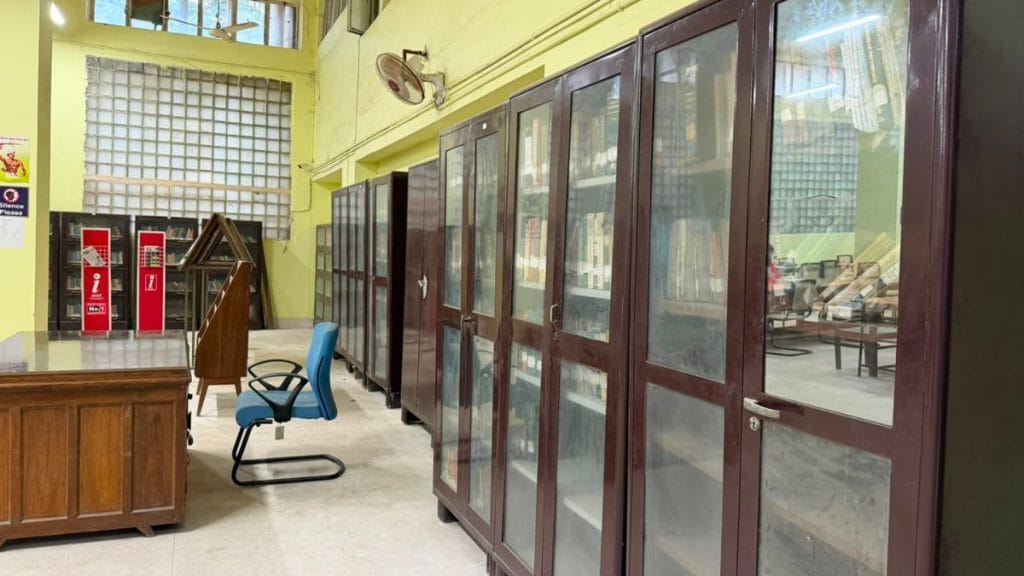
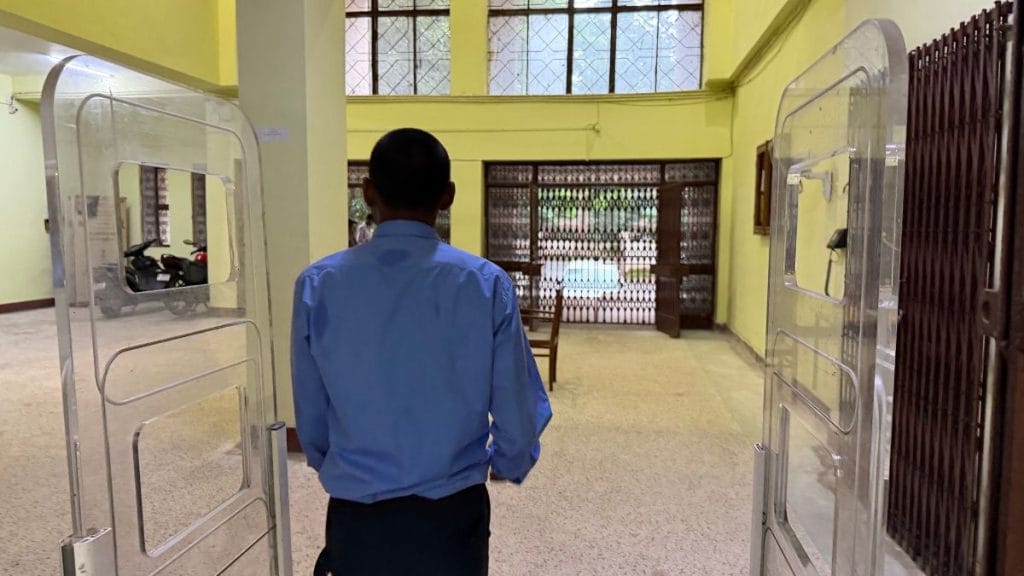
The building has been painted and refurbished since Bediya’s death after students protested for days. Tiles have been laid. The reading hall is largely clean. But students say the toilets remain dirty, staff are inadequate and some of the newer additions are more cosmetic than functional.
“They painted the entire library, put tiles and showed that everything is fine,” said Danish Khan. “But the smelly toilets, lack of staff and a dummy barcode detector tell a different story.”
The library’s transformation has left students with a grim calculation.
“The problems will always be there. But at least now we are getting something,” Khan said. “It got the makeover it needed, but it cost one student’s life.”
In academic departments, the problem is even more basic.
Professor Lochan points to the departmental library: dusty tables, piles of books, locked cabinets and a single person responsible for managing the collection.
“There is only one person for this entire library. That person has to record and oversee that none of the books get stolen. That’s not one person’s job,” he said.
Back at VBU in Hazaribagh, Kushwaha says he has visited his college library only once in three years.
“There is no proper lighting. Books are outdated, there are network issues and the Wi-Fi doesn’t work,” he said. “So I prefer reading online in my room.”
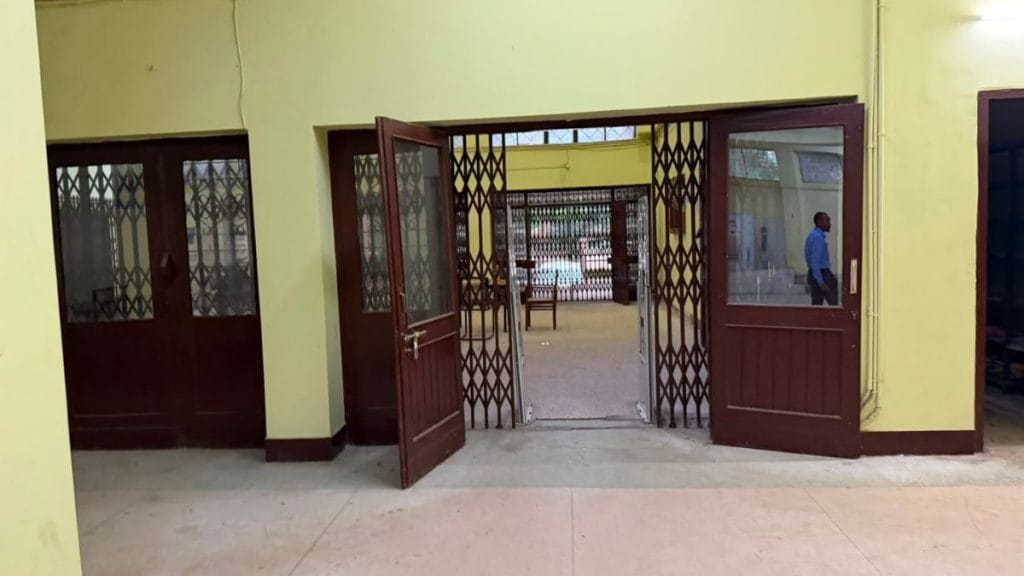
At these two universities, libraries exist. At the Binod Bihari Mahto Koyalanchal University (BBMKU) in Dhanbad, students are still waiting for one.
When complaints turn into confrontation
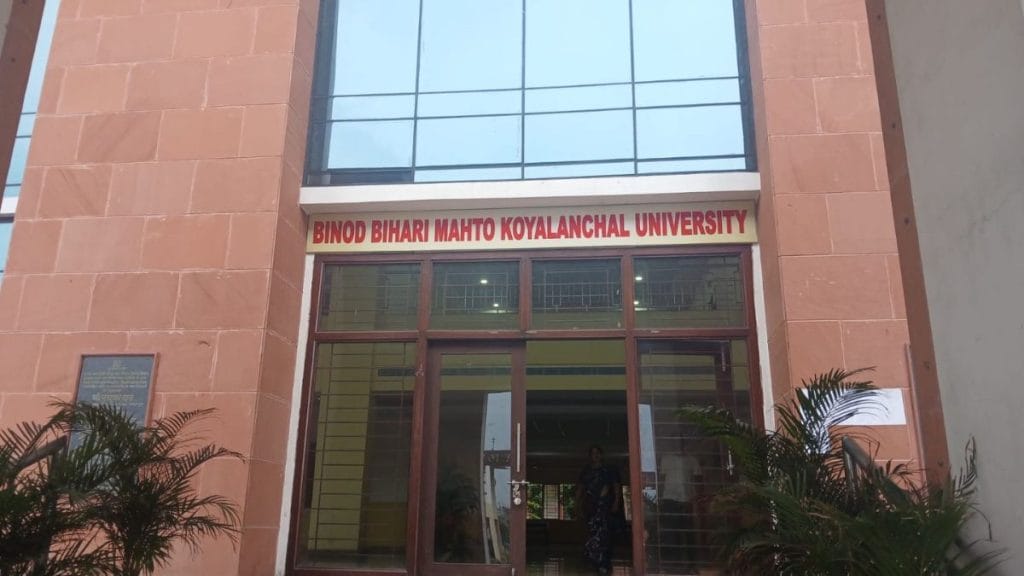
At BBMKU, students have been raising demands over the absence of a central library and laboratories, inadequate water facilities, cleaning staff, a waiting room and student elections for months.
The complaints have not appeared out of nowhere. In July, AISA activists locked down the university’s administrative building over long-pending demands. The protest ended after the vice-chancellor assured students that the administration would address their concerns in phases.
Local media reported in July that postgraduate students and research scholars at BBMKU’s main campus had been studying without a library and laboratory for three years, even though a budget of Rs 77 crore had been earmarked for the library and materials had not been purchased.
Ritesh Mishra, a fourth-year law student and AISA member, says the breaking point came when he saw a woman sitting on the floor with her two-year-old child.
“We were already raising our voice over the demands, but when I saw that woman sitting on the floor, I got furious. I blocked the entrance and started chanting slogans,” the fourth-year law student said. “They came to talk, and that’s when I asked them to sit on the floor.”
A video from the confrontation later circulated widely. In it, a student can be heard telling the vice-chancellor: “Neeche baithiye, baithiye, ehsaas kijiye“— sit down, sit down, feel what it is like.
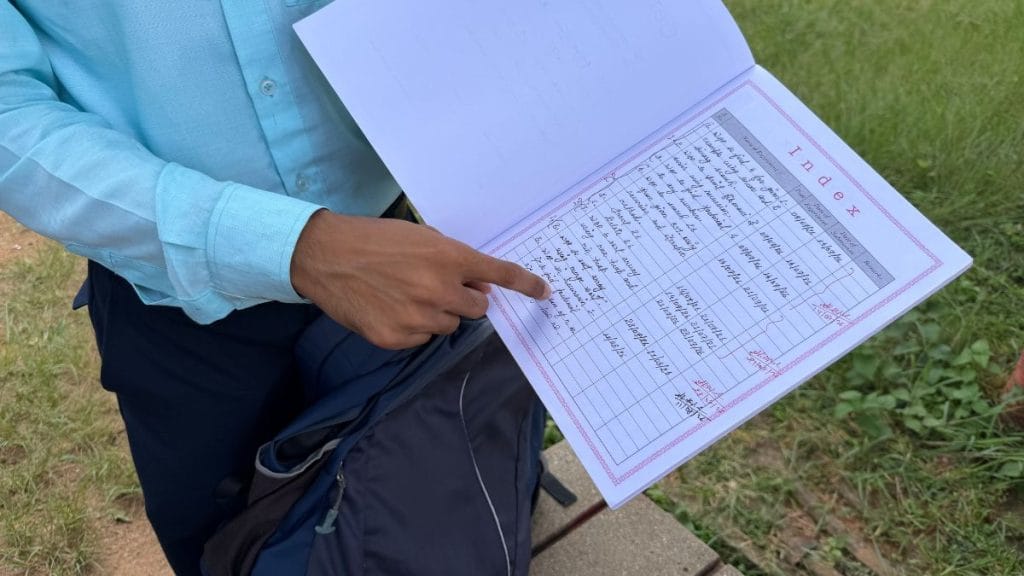
Mishra says students had tried letters, meetings and protests before the confrontation.
“There is a Rs 70-crore budget only for the library, but they never started any work on it. The money will go back because they didn’t spend it,” he claimed. “We have asked multiple times, protested and even symbolically imposed a talabhani. But it took a very aggressive approach to finally get a written assurance.”
Weeks earlier, students had gone further, writing letters in their own blood.
“We were running from one office to another. We wrote the letter with blood to tell them how frustrated we are with all this, but they kept blaming each other,” said Mishra.
Ranchi University, too, has faced repeated protests over delayed academic sessions, staff shortages and basic facilities. The university did not hold student-union elections for five years, with its last election reported in 2019.
ThePrint has reached out to registrars and vice-chancellors from all three universities. The article will be updated once they respond.
Also Read: Ranchi student protestors are still there — gamchhas soaked in blood & lathis on head
Delayed degree to delayed job
The thread connecting these campuses to the protests now filling the streets of Ranchi.
For weeks, students and job aspirants have been protesting alleged irregularities in JPSC and JSSC recruitment examinations. The agitation has escalated from demonstrations to a planned Assembly gherao, while talks with the government failed to resolve the deadlock. Three JPSC members resigned amid the crisis.
On 12 August, Chief Minister Hemant Soren announced in the state Assembly that the 14th JPSC Civil Services examination, along with two other examinations, would be cancelled. He also announced an investigation into examinations conducted by TDPL.
The immediate fight is over recruitment. Teachers say the problem cannot be reduced to poor administration inside universities.
Subodh Shivgeet, a Hindi assistant professor at VBU, says faculty shortages are among the biggest constraints.
“Vinoba Bhave University is one of the best universities in Jharkhand. The kind of infrastructure it offers, no one else does. But the lack of teachers is an issue that we are facing,” he said. “Teachers aren’t getting promotions. Naturally, if there aren’t enough teachers, it will affect education.”
The staffing problem is well beyond VBU. In 2025, university teachers said hundreds of promotions had remained pending for years, while the state moved towards creating a separate university service commission to handle recruitment and promotions.
Students continue to enter classrooms where the gap between what an institution is supposed to provide and what it actually provides can be measured in missing teachers, delayed semesters and broken amenities.
For Mantosh Bediya’s family, that gap has a face.
His younger brother Arvind had left for Chennai to earn money while Mantosh stayed back to study. The family had decided that the brighter of the two should remain in college, get a government job and improve their circumstances.
Arvind returned home in 2023, the year his brother died and took up the university job. The family received Rs 4 lakh compensation.
“I went to Chennai to earn money. I returned in 2023, and that is when my brother died,” he said. “I will never send my kids here.”
He looks towards the place where his brother was killed.
“There is no future in Jharkhand. First, we fought for a separate state,” he said. “Now we are fighting for a fair chance at a government job and a good institution to study in.”
(Edited by Stela Dey)