







New Delhi: A decade ago, the journey for an Indian track and field athlete off-the-field was almost unthrilling and anti-climactic: run fast enough and jump long enough to land a government job. A berth in the railways or in the police kept Indian athletics alive. But when Neeraj Chopra became the first Indian to win a gold medal in athletics at the 2020 Tokyo Olympic Games, it lit a spark of romance in track and field.
It showed athletes a different possibility, beyond settling down for the ultimate middle-class dream—a permanent government job. Chopra made track and field sports glamorous for others to follow and benefit from, and he had no plans to chase a job.
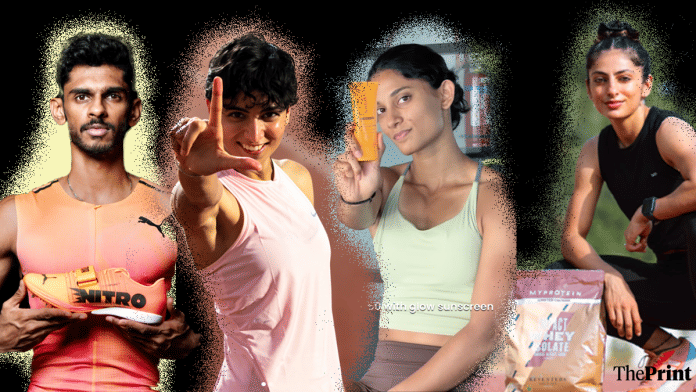
From long jumpers Murali Sreeshankar and Niharika Vashhisht to steeplechaser Avinash Sable, sprinters Jyothi Yarraji, Sakshi Chavan, Rupal Chaudhary and hurdler Tejaswin Shankar, track and field athletes are chasing something the previous generation couldn’t, a career.
For years, the sport’s most recognisable faces like P.T. Usha, Milkha Singh, Anju Bobby George were celebrated as exceptions. They were the athletes, whose achievements stood out only because the system around them offered little. Overall, track and field remained a minority sport in a country obsessed with cricket. Now, that is changing.
“Chopra’s Olympic win changed our perception. It went from just ‘participation’ to ‘we can beat those guys’,” Murali Sreeshankar told ThePrint. Sreeshankar won a silver medal in long jump at the 2022 Birmingham Commonwealth Games and another at the 2023 Hangzhou Asian Games. But, he has no plans to chase a job.
A career built on sponsorships, endorsement deals, the strange new economy of Instagram reels and brand collaborations has found its way to the track. Money has started to flow into a sport that, for decades, ran on two ‘Ds’, discipline and deprivation.
After Chopra’s Olympic gold in 2020, endorsements in emerging sports saw a 46 per cent surge. By 2024, athlete endorsements in India had crossed the Rs 1,000 crore mark for the first time. Manu Bhaker’s Olympic bronze at the Paris 2024 Games added to the buzz, even as the digital revolution transformed the sporting landscape.
“The aspirations of athletes have also changed. Subconsciously, we know there is a safety net. No matter where we come from, most of us don’t have to worry about money,” said Sreeshankar.
From what you win to what you post
Sprinter Sakshi Chavan’s Instagram account stayed private until 2022. But, a string of injuries had pushed her career onto the back foot. With nothing else to do but train and recover, Chavan started “randomly posting” videos of her sessions. A few of them went viral, racking up views in lakhs. Brands took notice. First came barter deals, offering products in exchange for a mention. A year later, paid collaborations followed.
“I gifted my parents a gold ring on their anniversary from the money I made through social media. I have started to give money at home,” said Chavan, who has an elder and a younger brother.
For an athlete without an Olympic medal, social media became an effective source of additional income. Chavan, now a bOAt athlete who has also worked with brands like Giva, Nykaa, and Lakme, credits this shift entirely to her online visibility.
“People read (or watch) more on social media than newspapers. If you don’t post on social media, people don’t know you. If you are not coming on their feed again and again, they will forget,” said Chavan, who has over two lakh followers on Instagram. The recognition, she says, now precedes her results. At a recent championship, she recalled, people approached her to get their pictures clicked with her.
That shift, from being known for what you win to being known for what you post, in many ways has become the backbone of the new track and field economy. For athletes, a strong social media presence has become a safety net.
Chavan, for instance, enjoys quite some popularity among sunscreen brands. Her videos usually open to a shot of her running on the track, and narrating how she spends most of her hours under the sun.
View this post on Instagram
“Just like I don’t skip my training, I don’t skip sunscreen,” she says in a video, which is in collaboration with Nykaa, where she promotes not one but five brands of sunscreens.
Building their brand
Athlete influencers like Chavan are different from the mainstream influencers when it comes to script writing. They don’t create scenarios, they simply weave the product in their day-to-day lives making the collaboration more credible.
It is a way to build a personal brand, attract sponsors, and sustain a livelihood which is independent of results on any given day. It has also helped athletes stay financially afloat through the lean patches such as injuries, off-seasons, or near-misses, which at one point meant a complete dry spell in earnings.
The social media success of Neeraj Chopra, sprinter Hima Das, Jyothi Yarraji and Niharika Vashisht, have also given the young athletes a template.
Social media didn’t create Chopra’s stardom though. His gold medal at the 2020 Tokyo Olympics did that. But social media has been the engine that converted Chopra’s career-defining moment into a sustained commercial empire. He currently has 9.1 million followers on Instagram. His brand value has surged to $40 million (or Rs 330 crore), backed by a portfolio comprising two dozen endorsements that include Under Armour, Omega, Gillette, CRED, Samsung and Visa.
But Hima Das was among the first track athletes to command commercial interest. Her gold at the 2018 IAAF World U-20 Championship in Finland helped her build an Instagram following of over 4 lakh. She became the face of Adidas the same year, and her endorsement fee reportedly doubled to around Rs 65 lakh annually as her medal tally grew.
Yarraji has followed a similar arc. Roughly 5 lakh followers and an Arjuna Award later, her hurdling success has translated into a steady stream of visibility and sponsor interest.
Gurindervir Singh, who became the first Indian to breach the 10.10-second barrier in the 100m sprint, enjoys over 4.5 lakh followers on Instagram. He recently collaborated with Bollywood actor Alia Bhatt for promoting her film Alpha.
The video opens with Bhatt warming up for a run on the track, as a voiceover says, “In order to be first and the fastest, you need focus, dedication and hardwork.” Turns out, it was Singh’s voice.
The Instagram reel is captioned, “Here’s some Monday motivation…. Just hung out with India’s fastest alpha on the track Gurindervir Singh.” In the video, Bhatt can be seen posing some questions regarding Singh’s career and what inspired him to pursue the sport.
Another striking example is Niharika Vashisht, a national triple-jump champion who has built her entire athletic career on the back of her Instagram following. With over 2.5 lakh followers gained since the pandemic, Vashisht funds her training, supplements, and travel almost entirely through brand collaborations and content projects, without relying on government support or a corporate sponsorship deal.
For athletes like her, social media is no longer just a marketing tool. It’s a financial cushion that lets them chase a sport that, until recently, offered little beyond a government job and a fleeting moment of recognition.
An evolved ecosystem
Sreeshankar comes from a family of athletes. Both his parents competed at the state level so he has witnessed firsthand how the system has changed over the years . While his parents struggled to even fund the travel for state competitions, Sreeshankar is currently training in Poland with 30 other athletes ahead of the Commonwealth Games and Asian Games 2026.
“If you compare with the previous generation, things have changed drastically. My parents didn’t have even 5 per cent of the support we get today,” said Sreeshankar, who hails from Palakkad, a small city in Kerala.
“They didn’t even have synthetic tracks when they were pursuing the sport. Another example indicates the scale of support: we get Rs 50,000 allowance during our travels. Earlier, my parents would get Rs 200-300. We have definitely come a long way.”
He admits his parents loved the sport but in the long run, wanted a government job. Sreeshankar, however, is driven only by his passion.
“Money matters don’t worry me now. The various schemes take care of our needs,” says the athlete, who has collaborated with brands like Puma, Limca, Yardley, and Toyota Global.
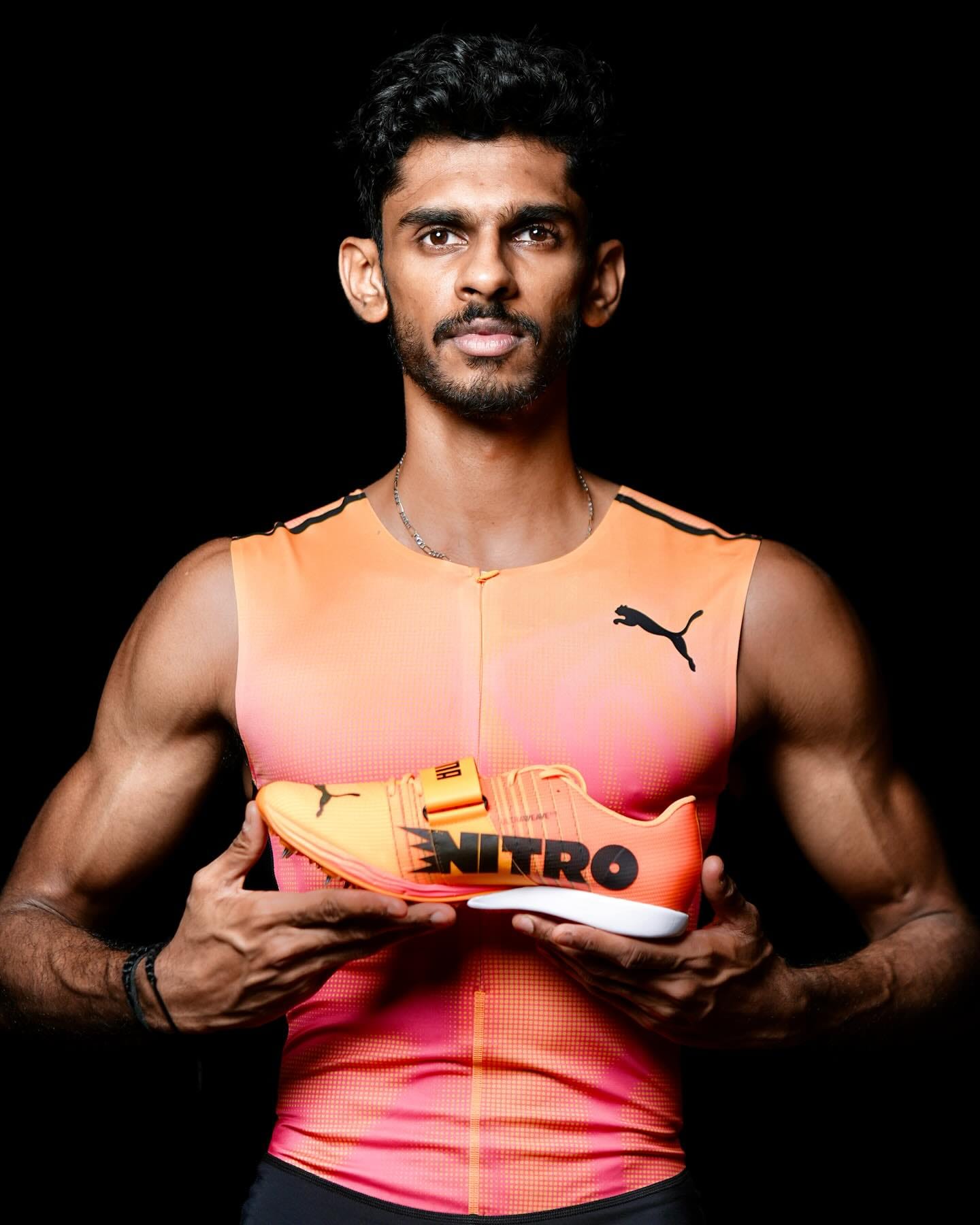
Sreeshankar is referring to the revamped Khelo India scheme, which has identified close to 3,000 athletes for a structured annual scholarship worth Rs 6.28 lakh each. The scholarship aims to cover coaching, diet, kitting, medical insurance, and an out-of-pocket allowance. The scheme has also poured money into infrastructure, setting up 23 National Centres of Excellence and hundreds of accredited academies across India. There is also the Target Olympic Podium Scheme (TOPS), launched by Ministry of Youth Affairs and Sports in 2014, and aims to provide financial support to Olympic-bound athletes.
Sreeshankar’s ongoing training camp in Poland, for instance, is jointly backed by the Athletics Federation of India and the Sports Authority of India. Such a collaboration between the sports federation and the government simply didn’t exist for his parents’ generation.
Private players boosting athletes
Private capital has filled the remaining gaps.
Reliance Foundation’s Youth Sports programme scouts and nurtures young athletic talent across India, creating a larger pool of future sportspersons. Its Athletics High Performance Centre in Bhubaneswar complements this by offering a residential, year-round system where athletes get access to coaches, physiologists, psychologists, and nutritionists. Chavan is a direct beneficiary of this centre.
Reliance Foundation scouted Chavan at a Youth National Competition in 2021, and formally inducted her in its sports wing in 2022. Since then, the foundation has been covering everything from her physiotherapy to her recovery needs, even as injuries repeatedly threatened to derail her career.
Rupal Chaudhary is another athlete who admitted that she wouldn’t have come so far in her career without the safety net provided by Reliance Foundation, Khelo India, and TOPS. Chaudhary comes from a modest household in Meerut, Uttar Pradesh where her father, a farmer growing wheat and sugarcane, remains the family’s sole breadwinner.
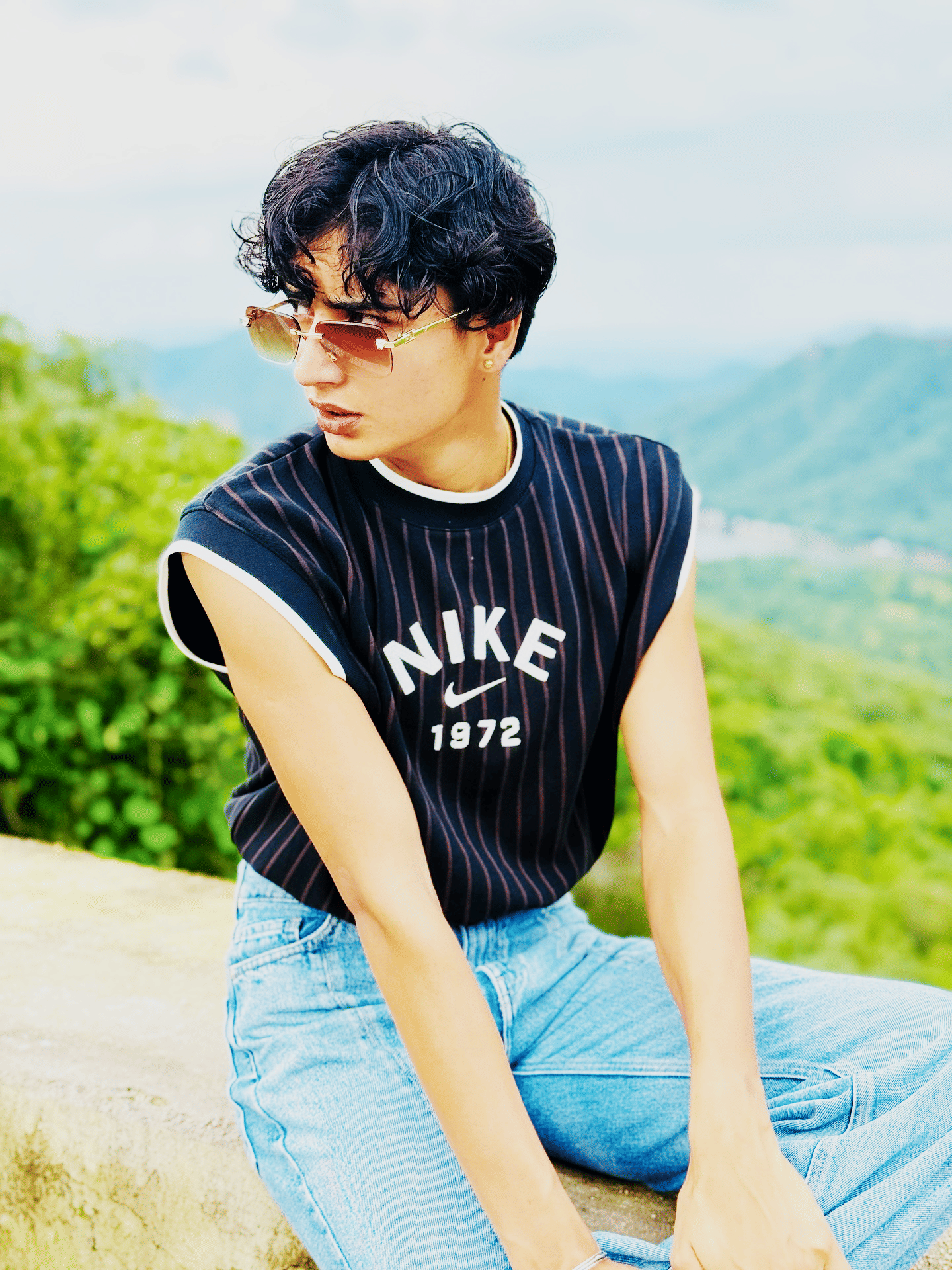
“The life of an athlete is expensive. We need proper equipment, diet, shoes, training kits, and so much more. It is difficult for our families to afford these essentials, so organisations stepping in certainly eases the load off our shoulders,” said Chaudhary, whose commitment to the track ran so deep that she left school in 2017, when she was only in Class 9, to train full-time, putting in six hours a day on the track.
That commitment wasn’t always taken seriously at home. At least, not at first.
“Initially, my dad would take my training lightly, but after I won the gold medal in the under-16 400m in the 2019 National Junior Athletics Championships, I became his first priority. He would cancel his plans for my training,” she recalled.
Unlike many of her peers, Chaudhary, hasn’t found a way to convert her 50,000-strong following into an income. Content creation, she admits, isn’t her strength.
“Mujhe bas bhagna acha lagta hai (I just like to run),” she said.
But even without an income stream of her own, the institutional support ensures her family no longer has to bear the financial weight of her sporting career.
“Once you get on the radar, once you get scouted, then you just have to focus on performing. Money, facilities, and everything else is offered to you,” Sreeshankar explained.
Support only for ‘too good or too famous’
‘Perform, get scouted, and stop worrying about finances’ might sound like the perfect pitch. But the journey, Chavan is quick to point out, is far more complicated than that. She doesn’t shy away from breaking the bubble.
While her own path may look close to a dream run, she is careful to speak for the many who haven’t had it as smooth.
“If you are a great athlete, you will get scouted. But not everyone is a great athlete, some need support to become one,” she said, calling it one of the biggest flaws in the system. “We don’t give support to those who need it. We support athletes who are either too good or too famous.”
Chavan insists that India has no shortage of talent but the opportunities rarely reach those who need them most. This is why she constantly urges young athletes to build a social media presence of their own.
“There are so many good sprinters. But no one knows about them because they refuse to make an account on social media and post their training,” she said.
Sreeshankar, on the other hand, points to a different and more structural gap. One that comes up at the end of every Olympic cycle: why does India consistently struggle to get medals on the biggest sports stages?
At the 2020 Tokyo Olympics, India’s athletics contingent won a total of seven medals, including Neeraj Chopra’s gold, which placed India 48th in the medal tally. But that momentum didn’t carry over to the 2024 Paris Olympics, where India’s tally fell to six medals, a silver and five bronze. This pushed the country down to 71st overall, with athletics again clinching only one medal, Chopra’s silver.
“Our biggest challenge as an ecosystem is to replicate domestic performance on international platforms,” he said, pointing to a lack of exposure and experience as the real cost.
(Edited by: Aakriti Handa)
They may or may not perform on the track but they sure do perform on Insta reels.
And there’s no point blaming them. The social media pays better – brings fame and money.
Indian track athletes are Instagram superstars with millions of followers. However, the pertinent question to ask here is whether they are using their fame and celebrity status to popularise their sport and inspire youngsters to take to it. Unfortunately, the answer to that question is a big NO.
For most of them, half the day goes into digital content creation. And why wouldn’t they? It pays good – maybe even better than what they get from the govt and other services whom they represent.