



Lucknow, Chennai, Kolkata, New Delhi, Mumbai, Bengaluru, Hyderabad:
A better future is always written in the language of letting go.
The first thing Vardaan let go of was badminton. As a child, evenings were spent on the court. He travelled for district tournaments and competitions. He loved the sport enough to compete seriously. But as studies became more demanding, badminton disappeared from his routine. Next, basketball took a hit. The school band, where he played the bagpipes, followed. The hours that once belonged to hobbies, sports and aimless afternoons with friends in Lucknow’s Vikas Nagar, are now filled with coaching classes, assignments and practice papers.
Vardaan’s story reveals what children across India have given up for their ambitions. There is nothing extraordinary about him except his willingness to let go–of time, leisure, and the ordinary rhythms of being sixteen. He is one of the lakhs of students spending their teenage years in closed rooms and open books, preparing for one or another highly-competitive entrance exams — JEE, NEET, CLAT, and now increasingly, CUET. Between school, competitive exams and an incredibly fast-changing education ecosystem, India has redesigned adolescence. A teenager’s life is no longer organised around school, friends and the awkward business of growing up–but around building an admissions profile.
A game of badminton with her mother for ten minutes, after a gap of nearly a year. An outing with friends about eight months ago. A few episodes of Breaking Bad to unwind. Beyond that, Bengaluru student Tanishka K says she can’t think of anything she did for fun recently.
“Each time I put Breaking Bad on, it was for like 10 or 20 minutes. In those 2.5 months, I managed to watch just about two seasons,” she said.
The burden of expectations—both hers and her parents’—is impossible to put down. Up at 4 am to clear NEET backlogs, she catches a school bus at 7.15 am. As soon as she returns home around 3 pm, she is off to NEET coaching until 9 pm. Then it’s homework and projects until 11.30 pm, leaving barely four hours for sleep.
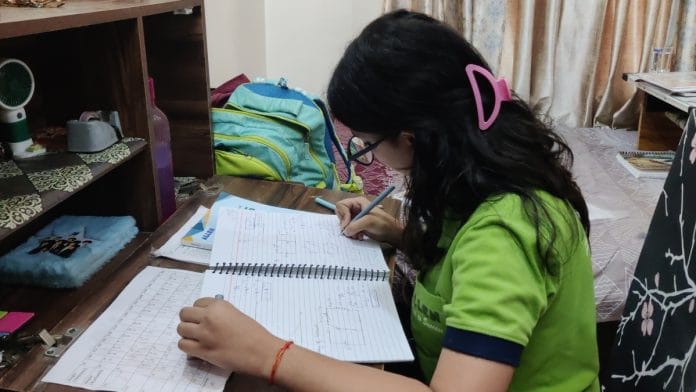
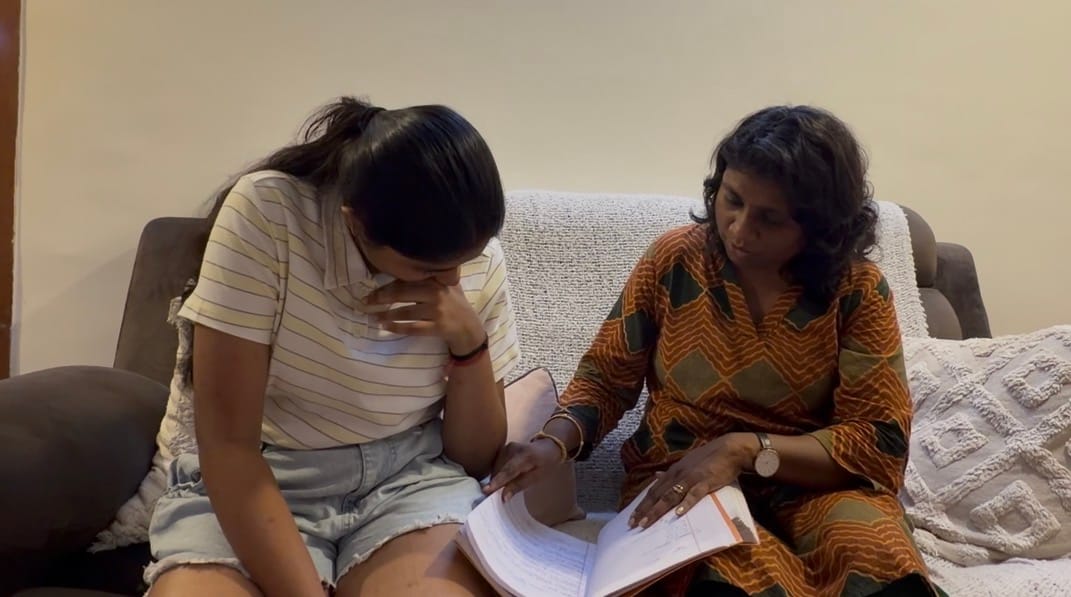
For Jahnvi, the losses are subtler. Her day starts at 6 am and ends only by 11 pm. The Class 10 student from Chennai loves to paint but finds no time for it in her 17-hour-long schedule. She struggles with Science and Mathematics and needs help from her parents and tuition classes to improve her academic performance.
It’s the same for Bengaluru’s Yukta. She describes herself as a “sporty kid” who felt compelled to give up all her extracurricular activities—badminton, tennis, yoga, and Bharatanatyam—to focus entirely on her studies.
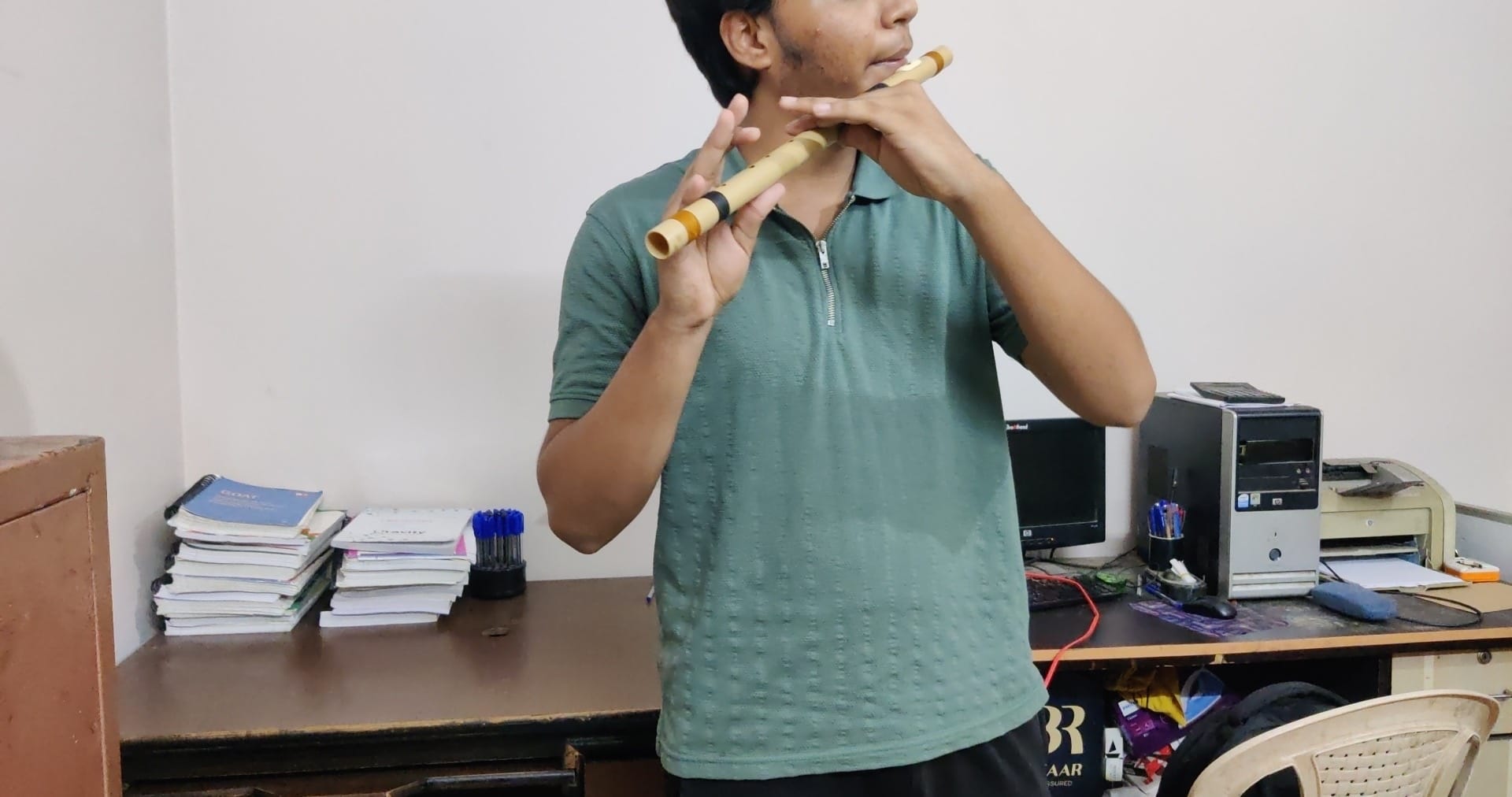
Vardaan’s study table is a reflection of his daily schedule. Thick coaching modules lie stacked beside spiral notebooks filled with calculations. Formula sheets are tucked between textbooks. But among them rests something that doesn’t belong to the world of engineering entrance examinations — a flute.
He learned to play the instrument through tutorial videos on YouTube. Whenever he can steal fifteen or twenty minutes, he looks up flute covers on YouTube and tries to catch the notes of a new Bollywood song. It’s not a hobby anymore…just something that still belongs entirely to him. He stops once he’s satisfied, puts the flute down, and returns to the physics of rotational dynamics. The sound of the tune is quickly replaced by scratching of pen on paper and the soft flipping of textbook pages beneath the ceiling fan.

Nothing about Vardaan suggests resentment. He speaks about IIT Bombay with the excitement of someone who has already imagined himself there, not just for the degree, but also the life–hostels, clubs, festivals, meeting people from across India.
In many ways, he is postponing adolescence in the hope that he will find it again in college.
“School life was till Class 10,” he says. “After that, everything changed.”
One absence, he says, has become more noticeable than he expected.
“After Class 10, I have almost zero interaction with girls,” he says. “People don’t think about it but that is also part of growing up”
The third place
The biggest thing Vardaan gave up, however, was school itself.
Today, Vardaan studies through what coaching institutes label a ‘School Integrated Programme (SIP)’, better known as a dummy school. He might officially be enrolled in a school, but his education essentially revolves around coaching classes.
The decision to join a dummy school was not forced upon him. It came after conversations at home and after watching seniors who had already taken the same path. His father had watched students score 99 per cent in board examinations but fail to clear JEE because their preparation remained centred around school rather than competitive exams.
At 7.30 am, while most 16-year-olds are rubbing sleep from their eyes or starting their day online, Nakul from Hyderabad is already out the door. His destination is not the airy Delhi Public School where he spent 10 years of his school life. For the past four months, it has been Score 99, a Joint Entrance Examination (JEE) coaching centre. The four-storeyed building, structured like a house, stands as a monument to a singular, relentless ambition: cracking the JEE and joining the famed Indian Institute of Technology.
He joined Score 99 within a week of completing his tenth grade earlier this year.
“I did not want to take a break, and I did not want to relax. I wanted to join early because there were kids who had already enjoyed the foundation course from Class 6 onwards. There would have been a lot of catch-up to do if I joined any later,” Nakul said.
But entering the elite world of the IITs requires surviving a coaching ecosystem that tests the absolute limits of a teenager’s endurance. A typical day at Score 99 starts at 8 am, and a student is not allowed into class if they are late by more than 10 minutes.
“The first two to three months were really sad,” Nakul recalls. “I didn’t want to wake up. I didn’t want to go. You are not used to focusing so much in class.”
Coming from the predictable routine of regular schooling, where weekly tests were the norm, the transition to a daily 30-minute, high-stakes test compiled from previous years’ competitive questions was a shock to the system. Physics alone has 30 chapters that cannot be memorised, only conceptually mastered — and staying at pace with everyone else is its own battle. In this 40-student classroom, the academic gap is jarring.
“A kid might be scoring single digits, and another kid in the same class might be scoring triple digits,” Nakul notes.
The psychological toll begins from day one, when teachers warn newcomers that many classmates have already spent years in foundation coaching.
Most 15-year-olds and their parents are increasingly turning to tuition or coaching as early as middle school. The reasons are consistent: fear of falling behind, gaps in school teaching, the need to clear specific entrance exams, and peer pressure. Jahnvi puts it plainly that in school and even in many tuition centres, “They only give attention to the kids who have good grades. They just don’t care about children who don’t perform so well.”
Her mother, Poornima Jeyaraj, an architect and environmental planner, describes the parental side of the same equation. Schools charge high fees yet leave gaps that families must fill with online classes, subject-wise tutors and constant revision at home. Changing a tutor, when marks dip, carries another large bill.
G Vasanthi, Jahnvi’s Mathematics tutor, sees a pattern among students like her.
“Parents, especially if both are working full time, believe that their child can study better at a tuition class as compared to home, because they cannot devote adequate time to studies. Nowadays, many parents sign up for coaching from Class 8 itself. Students have no life outside this.”
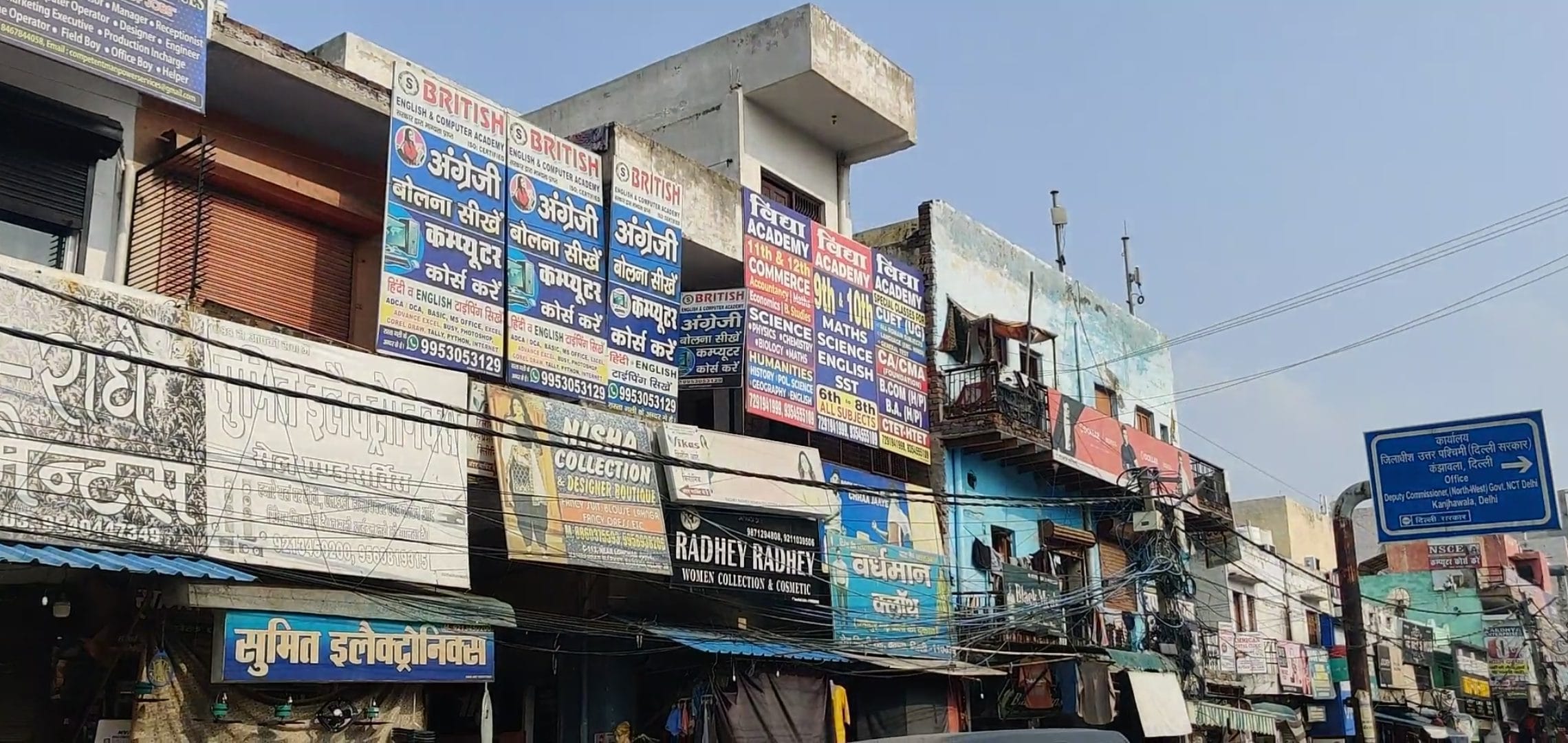
Between school, coaching and home, there is rarely anywhere else for teenagers to be. Every afternoon, thousands of students make the same journey across Lucknow. They pour into coaching hubs in Hazratganj, Gomti Nagar and Aliganj, carrying heavy school bags, unfinished homework and the exhaustion of an entire school day. By the time classes begin, teachers say, they are already exhausted.
“The class may start at 4.15 pm, but often we don’t begin immediately,” says Pawan Singh, who teaches Mathematics at Vidyamandir Classes. “You can see it on their faces. They have been in school since morning. We tell them, ‘Take ten minutes. Drink water. Settle down.’”
Coaching institutes are no longer simply a place where difficult concepts are explained. They have become a “third place”, a space outside home and school where young people spend much of their lives.
Teachers say students arrive carrying much more than doubts in academics.
“They ask us things you wouldn’t expect,” says Jaideep Vidyarthi. “They don’t come here to just learn Math—they come with doubts they can’t ask elsewhere. What is the use of Calculus? Will this chapter ever matter in real life? They are constantly trying to understand, not just the syllabus but also where their lives are headed.”
Children complain about arguments with their parents. They seek advice on taking another attempt at an exam. They wonder if engineering is really for them. Some simply want someone to hear them out.
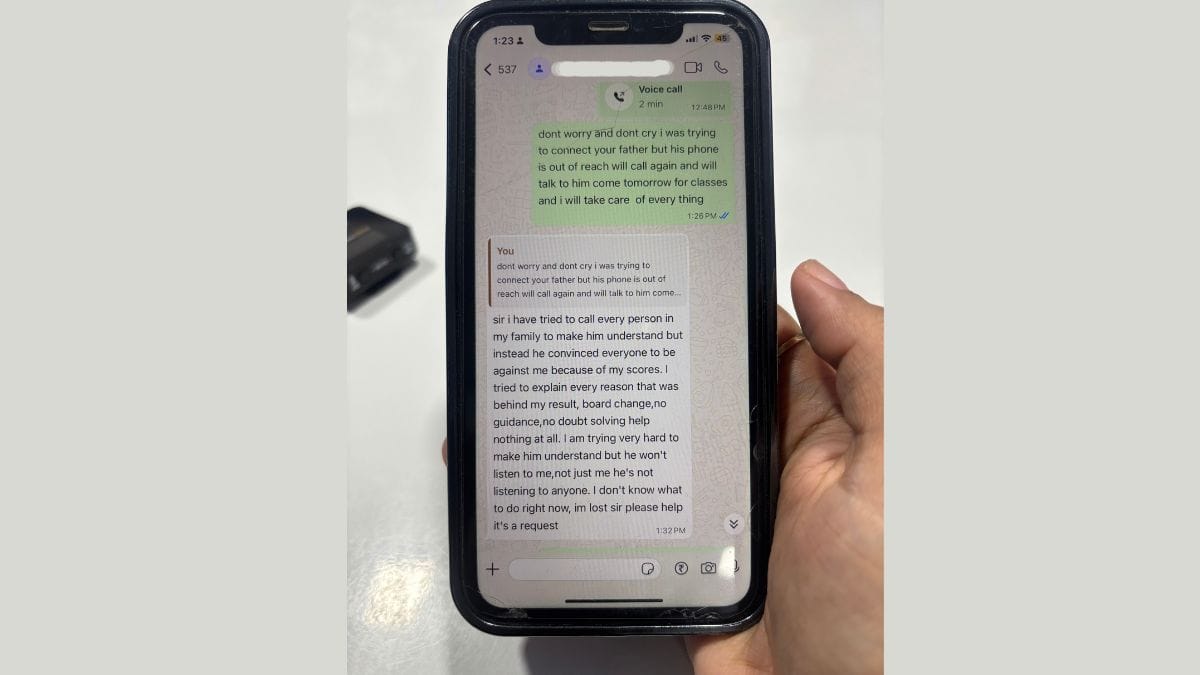
“I have students who message me saying, ‘Sir, I fought with my father today. Can you please explain it to him?’ Parents call us to understand their children. Children ask us to speak to their parents. Somewhere, we become the bridge,” says Vidyarthi, who heads the Lucknow centre. That role, he argues, has become increasingly important as parents and teenagers struggle to understand one another.
“The biggest problem today isn’t only IQ,” Vidyarthi says. “It’s EQ. Children know more than ever before, but many struggle to deal with disappointment, criticism or stress. Sometimes they don’t need another lecture. They need someone to tell them they will be okay.”
The invisible scars
For Tanishka, the consequences have become deeply physical. Her doctor has warned that the seizures she suffered as a child could be retriggered by stress, but taking it easy is not an option.
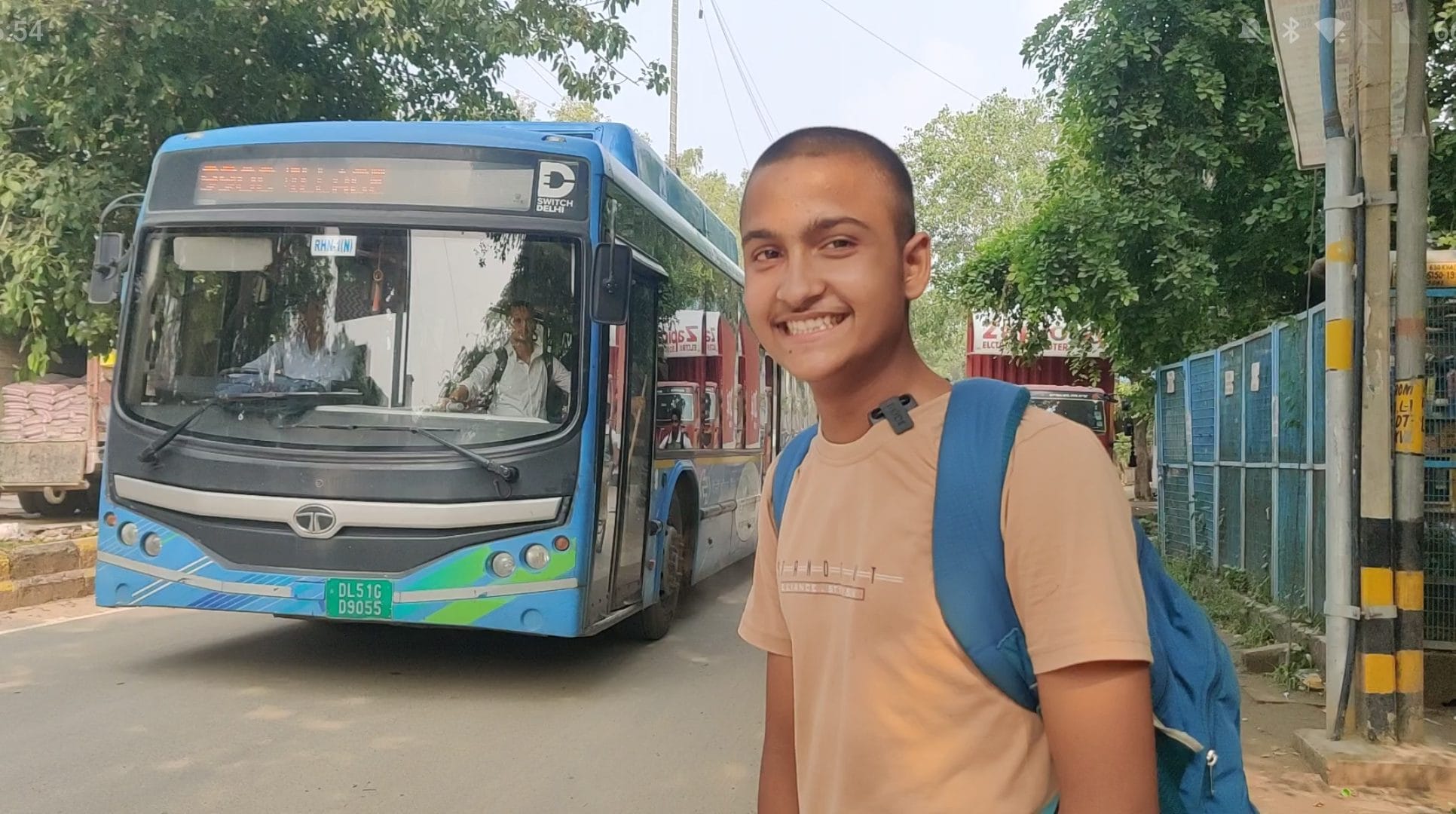
In Delhi’s Barwala village, Himanshu Dubey wakes by 4 am to study before school, then rides an overcrowded DTC bus for another four and a half hours of tuition. He manages only three hours of sleep and struggles with mood swings and trouble concentrating.
“I fear failing my family’s expectations after they have spent so much money on me,” said Dubey, clutching his school bag on the way to his afternoon tuitions.
He seeks to uplift his family’s financial status.
“My short term goal is to help my family move into a bigger house. I want to work at a government hospital for a few years,” said Dubey. “Eventually, my dream is to move back to our hometown, Sultanpur in Uttar Pradesh, and open a small charitable hospital there.”
In Kolkata, K Ganguly’s day starts at 5.30 am and runs at what she calls “2X speed”.
“Sometimes I finish my lunch on the school bus so I can sleep for a few minutes after reaching home. I want to study, sing and also have time for myself. But lately, everything feels like a race.”
Others discover that even rest comes with guilt.
To survive the 10-hour daily grind without burning out, Nakul had to learn to push back against the toxic hyper-focus of the coaching culture. Initially, he tried to mimic his peers by staying back for late-night self-study, but it led to severe exhaustion. Now, he strictly protects his weekends, using Saturdays and Sundays to completely switch off by watching movies, going to the gym, or spending time with his family.
Yet, the coaching system leaves invisible scars.
“I have a problem on weekends when I am relaxing,” Nakul confesses. “I tell myself, ‘No, I shouldn’t be doing this. Other people are studying.’”
What scares Ganguly even more than the pace of life is disappointing her parents.
“I don’t mind bad marks if I know I have done my best,” she says. “What scares me is telling my parents. I keep thinking they will be disappointed. That’s the part I can’t handle.”

Several school counsellors who spoke to ThePrint said awareness is a defining mark of the current generation. Except it hasn’t quite made coping with failure any easier.
“Students today have much greater access to information than they did a decade ago. What concerns me is resilience. Earlier, children were more resilient. Today they are growing up in a world of instant gratification, and that sometimes makes it harder for them to cope with setbacks,” said Chaitali Ghosh, a school counsellor at Garden High School in Kolkata.
The wave of NEET-linked student suicides has prompted many schools to rethink how they approach mental health. Schools are increasingly embedding counsellors into their support systems and training teachers to watch out for warning signs such as sudden drops in academic performance, social withdrawal, or temper issues.
Renu Dhotre, a senior school teacher in Mumbai’s Vile Parle, runs a WhatsApp group titled Mentorship Group with ten of her students. It functions as an unfiltered dumping ground for their fears. They use phrases like “vibe nahi aa rahi hai” or “nothing is sitting well” when they score poorly or feel overwhelmed.
She contrasts new-age parents with those from the earlier generation to argue that parents today have become much more understanding, but worries about how the dynamic has changed when it comes to kids as well.
“Parents are much more relaxed now,” she said. “But this generation has become more fragile. They can be arrogant, entitled and have a lot of ego. We need a middle ground.”
Psychologists have begun to see the larger pattern. Many who work with adolescents report that the competitive intensity has increased multifold over the past decade.
Children start feeling the pressure to decide on a professional path from Class 8. Sleep disorders and mood swings appear gradually but in extreme cases, they progress to anxiety, depression and even seizures. Vandana, a Chennai-based psychologist and counsellor, notes that parents are more understanding than before, yet peer pressure remains fierce and coping is often difficult.
“Most teachers don’t take students’ emotions into consideration. As a result, many of us feel sidelined. I think teachers should be more friendly with students. It will help build a connection and we will feel more comfortable interacting in class and clearing doubts,” says Jahnvi.
Vandana was shocked when a 14-year-old student, experiencing extreme sleep disturbances due to peer pressure to be the class topper, walked into her centre seeking mental health support from her parents.
“There is no time for students for hobbies or sports. If they do, that too becomes very competitive. Very few are active in sports. Students are unaware of other available professional courses. They develop negative self-esteem because of what they see around them. Earlier, students preparing for exams would have fewer distractions. Nowadays, students have to catch up on everything to be active in all spheres of life,” she said.
For Bengaluru’s Yukta, that catching-up came at a cost far steeper than exhaustion.
When she was in ninth grade, Yukta decided that she wanted to become a doctor, and her parents — a father in IT and a mother who is a qualified lawyer — did everything they could to make it happen.
The stress eventually triggered an autoimmune reaction, and she now has rheumatoid arthritis. She says many students in her cohort have replaced regular co-curricular activities with frequent visits to psychiatrists, therapists, doctors and counsellors, alongside weekly sick leaves “just to cope”.
“We know a lot of people who have tried to end their lives,” she said.
When the system leaks
For years, students were told that hard work was enough. Now, many of them are no longer sure.
Tanishka says the NEET paper leaks have hit her morale badly, but changing course seems impossible.
“After this paper leak, it’s more stressful and we don’t feel like studying since we cannot trust the process. But it’s not like we can jump into another career which could be far more stressful,” she said tremulously.
For Varnima from Lucknow, the student protests at Jantar Mantar in Delhi and elsewhere were never simply about one paper leak.
“This was for the youth. If someone has been on a hunger strike for so many days and the government isn’t taking accountability, then we should talk about it. We don’t want this to happen again. If papers are leaking again and again, that means there is a fault in the system. We can’t pretend everything is fine.”
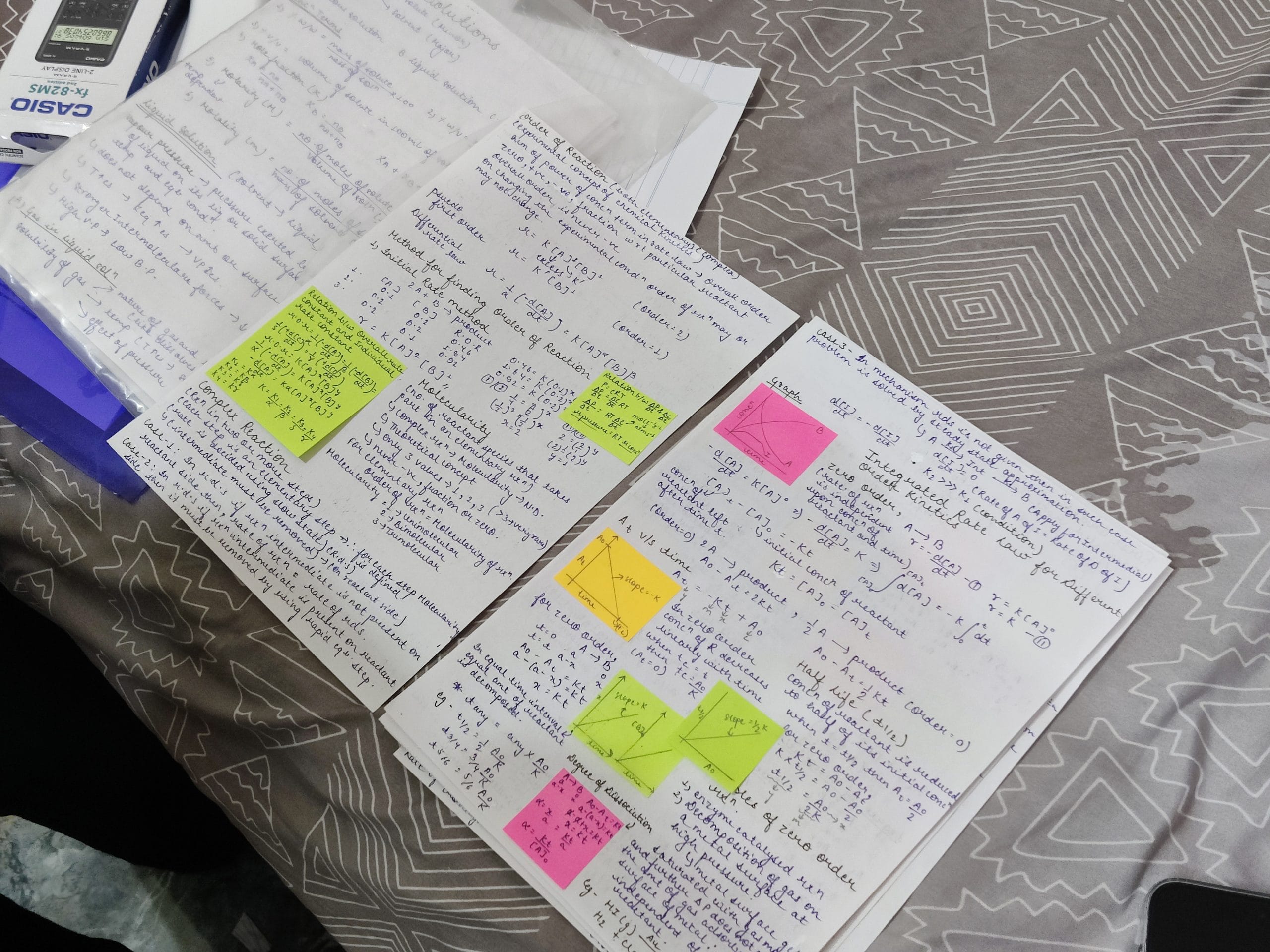
Those protests, she says, revealed something else too.
“They became a filter. I realised how differently people think. We had arguments. Some friendships changed because of those conversations.”
The issue feels personal because she knows years of preparation can ultimately depend on things outside a student’s control.
“You work for years for one examination. Then something like a paper leak happens. We students can’t control that. We can only prepare the best we can.”
The dream promised by the large billboards and toppers’ lists of coaching institutes has turned into a trap. What these hoardings fail to advertise is how many did not make it.
In Bengaluru, Yukta’s first NEET attempt was wiped out by the paper leak, forcing her into a second attempt just four weeks later. Yukta is now awaiting counselling for her NEET but the wait is just part of the same prolonged preparation.
“Counseling cutoffs are way too unpredictable, so I’m taking nothing for granted until it’s official,” she says.
Her coaching centre conducts two mock exams every week: one on Monday and another on Saturday.
But even getting burned by paper leaks isn’t always enough to shatter the NEET dream for many students or their parents.
An IT solutions architect in Bengaluru recently picked up his daughter from Vellore Institute of Technology, where she gave up her Biomedical Engineering seat barely a month after joining the course. When her re-NEET fell short, she attempted JEE and accepted a VIT seat as a compromise. Yet, she walked away from it to attempt NEET once again. Her father, who supports the decision, says children process these setbacks differently.
“I have seen life, been through the emotions, taken rash decisions. Children at this age… they have hormonal changes, different diets, late night studying, cell phones. They have their own way of dealing with pressure.”
He knows only a small percentage will ultimately succeed. Still, they are willing to try again.
The uncertainty has changed how families think. If NEET and JEE were once treated as non-negotiable, a growing number of teenagers are now drawing up backup plans. They can back themselves to trust their long hours; what they can’t trust is that the system will back them.
The unequal race
Not every 16-year-old begins the race from the same starting line.
In a 300-square-foot home at a basti in Mumbai’s Andheri West, Mansi prepares for NEET in a small patch beside her bed. Now accustomed to the din of whistling pressure cookers and children shouting in the narrow lanes outside, she sits tight in her spot for 4-5 hours every day, memorising anatomy and organic chemistry lessons.
Her family subsists on her father’s Rs 20,000 salary as a gym trainer, eating mostly potatoes and onions, while her grandfather uses his savings to pay for her coaching.
“I want to become a doctor so that I can take my family out of this basti and move into a high-rise apartment,” Mansi said.
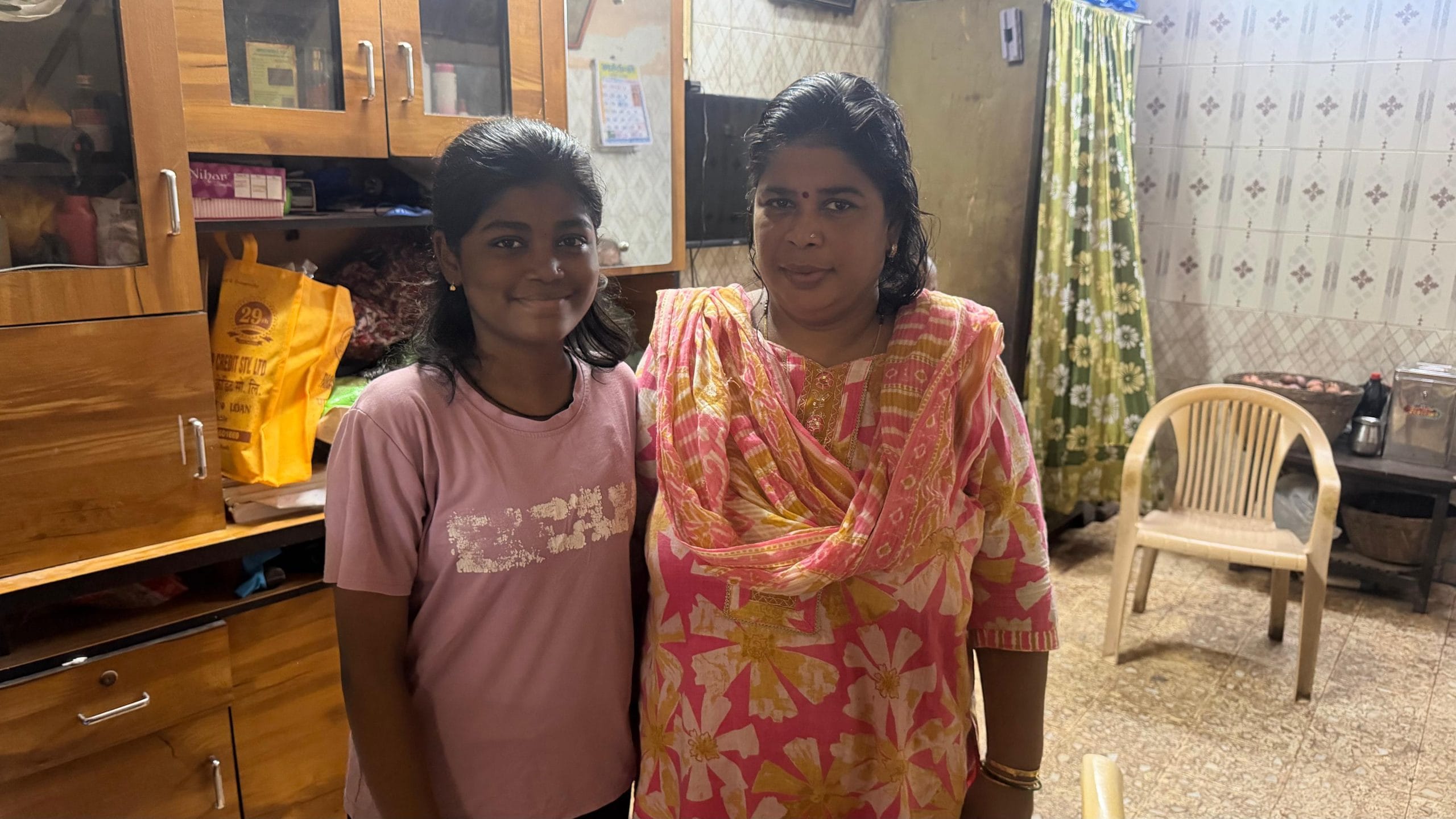
Every day, she travels 3 km to Aakash Institute, where she sits on the same benches as English-speaking, iPhone-flaunting classmates. For her, merit is still some kind of unifier, but the NEET paper leak has forced her to open her mind to other career tracks.
“Kids like me are the ones who pay the highest price when a paper leaks,” Mansi said.
With no guarantee that the exam will be fair, the family has decided that pharmacy is the next best option if NEET doesn’t work out. Others are considering nursing or allied health services.
Class often dictates what a backup plan looks like. For the privileged, there’s a soft landing—but for aspirants from disadvantaged backgrounds, turning to Plan B is a last-ditch attempt to ensure years of family sacrifice don’t end in zero.
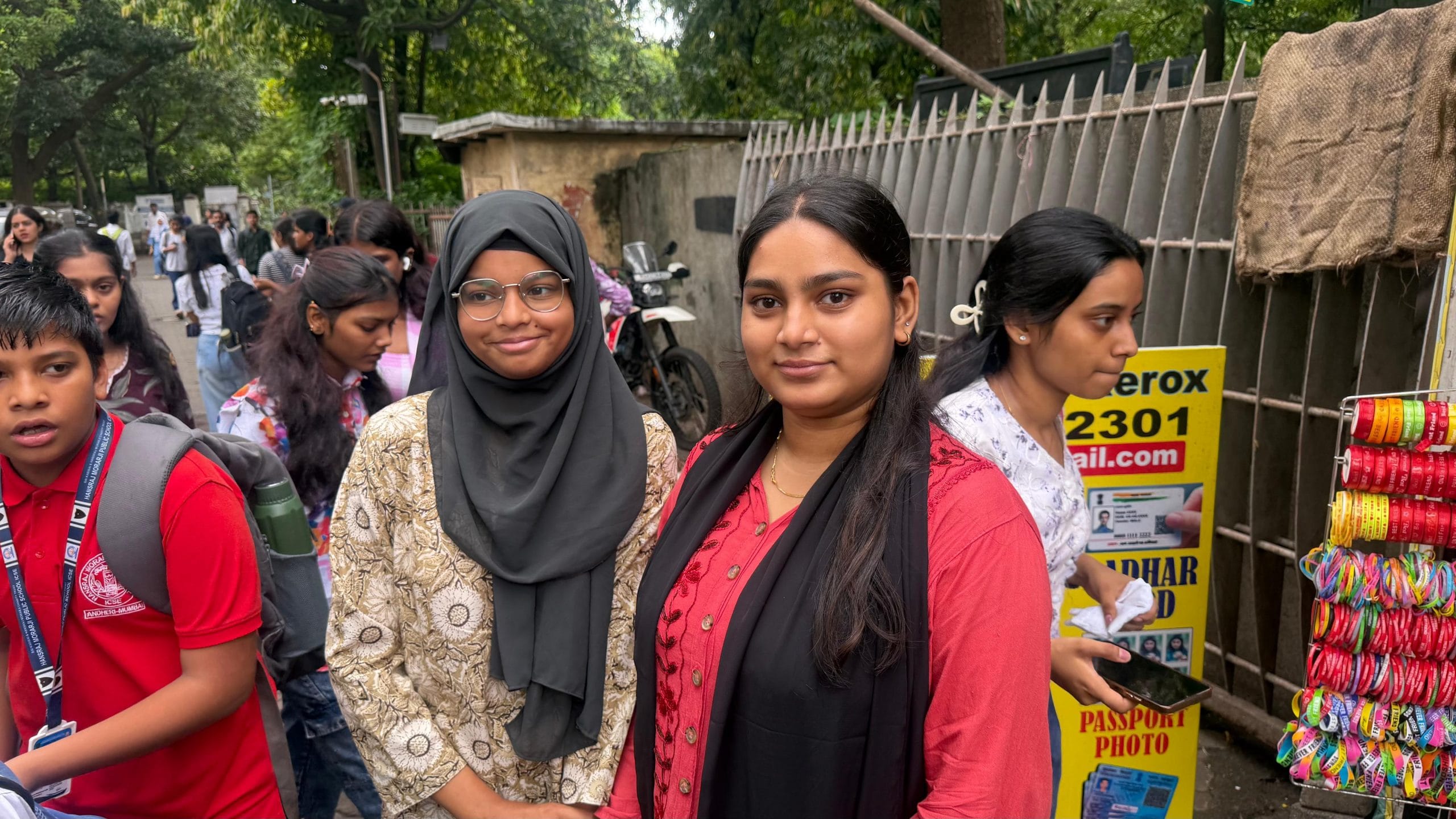
Just half an hour away from the basti, in a high-rise apartment building, Class 11 student Naseha Shaikh is preparing for JEE, but engineering is just one option out of many. Coming from an affluent business family, she walks out of Bhavan’s College hand-in-hand with her best friend, laughing, unbothered by entrance anxiety.
“If I am not able to get through, then it’s event management for me,” Shaikh said.
While parents want their children to excel in academics, they also carry the anxiety of a society that measures success in ranks and professional titles. Jahnvi’s mother, Poornima ruled out engineering for her and is open to her pursuing Political Science or Design. But, academically successful relatives and the tag of pursuing a “lesser” stream still pushes for medicine.
Priyadarshini, another government-school student, chose to not give up on her dream to be a doctor. She has taken a two-year-gap. She convinced her mother, a tailor who makes ends meet by sewing clothes for neighbours, to let her attempt the test one more time.
“The family income of Rs 20,000 per month was not going to make private coaching possible. My mother had saved Rs 50,000 for my graduation. She gave me that money for my NEET coaching,” Priyadarshini said.
She missed the first attempt by 30 marks. During the second drop year, she felt isolated as her friends went to college.
“It is painful to see others moving forward in life, getting to second year of college or posting dance and self-grooming videos, while I stand at the same place preparing for NEET,” she says, holding back her tears.
Priyadarshini described the reality of a government-school student in a coaching environment.
“I cannot talk in English fluently. I started wondering if I can even appear for NEET. This gap itself created insecurity and a sense of competing against peers whose parents can afford every resource,” she said.
With time, Priyadarshini realised roughly 85 per cent of the aspirants at coaching institutes were there because their parents coerced them to study medicine.
“Only 15 per cent said they wanted to appear for NEET out of their own interest. I understood that those were my competitors.”
While metros impose their own kind of friction, they also offer broader career horizons. The biggest difference across Tier-1, Tier-2, and Tier-3 cities lies in the consequences students associate with not clearing NEET, according to adolescent counsellor Aditya Sundaray, who has worked closely with NEET aspirants.
“Students in Tier-1 cities are generally exposed to a wider range of career pathways. They see people pursuing law, management, research, design, media, entrepreneurship and the civil services. That broader exposure doesn’t eliminate the pressure of NEET, but it often makes alternative futures easier to imagine,” he said.
Growing up in Bhilai, Sundaray recalled how he personally experienced how a restricted educational ecosystem narrows a child’s horizon.
“At the time, humanities was offered in only one senior secondary school in the city. That experience reinforced how powerfully the educational environment shapes a child’s perception of success,” he said. “The examination is the same for everyone, but the psychological meaning attached to success and failure is shaped by the opportunities, expectations, and environment in which a child grows up.”
Tamil Nadu’s case against NEET
The pressure to become a doctor or engineer is not accidental. Those two identities have been heavily branded; other pathways receive far less visibility. Students frequently discover alternative courses very late, if at all.
For 17-year-old Yugan, who studies in a government school in Chennai and does not have much financial backing from his family, the calculation is trickier. High-quality coaching is out of reach for students like him.
“After struggling with focus initially, I tried my best to score through self-study and help from my private tutor. But I soon realised that I cannot make it in medicine. State-board teaching emphasises on theory and the NEET attempt made me realise that I wasn’t prepared for application-based questions. So, I applied for engineering. The fear of wasting another year and disappointing my family, which expects me to make them proud, is constantly bothering me,” said Yugan, struggling to speak in English.
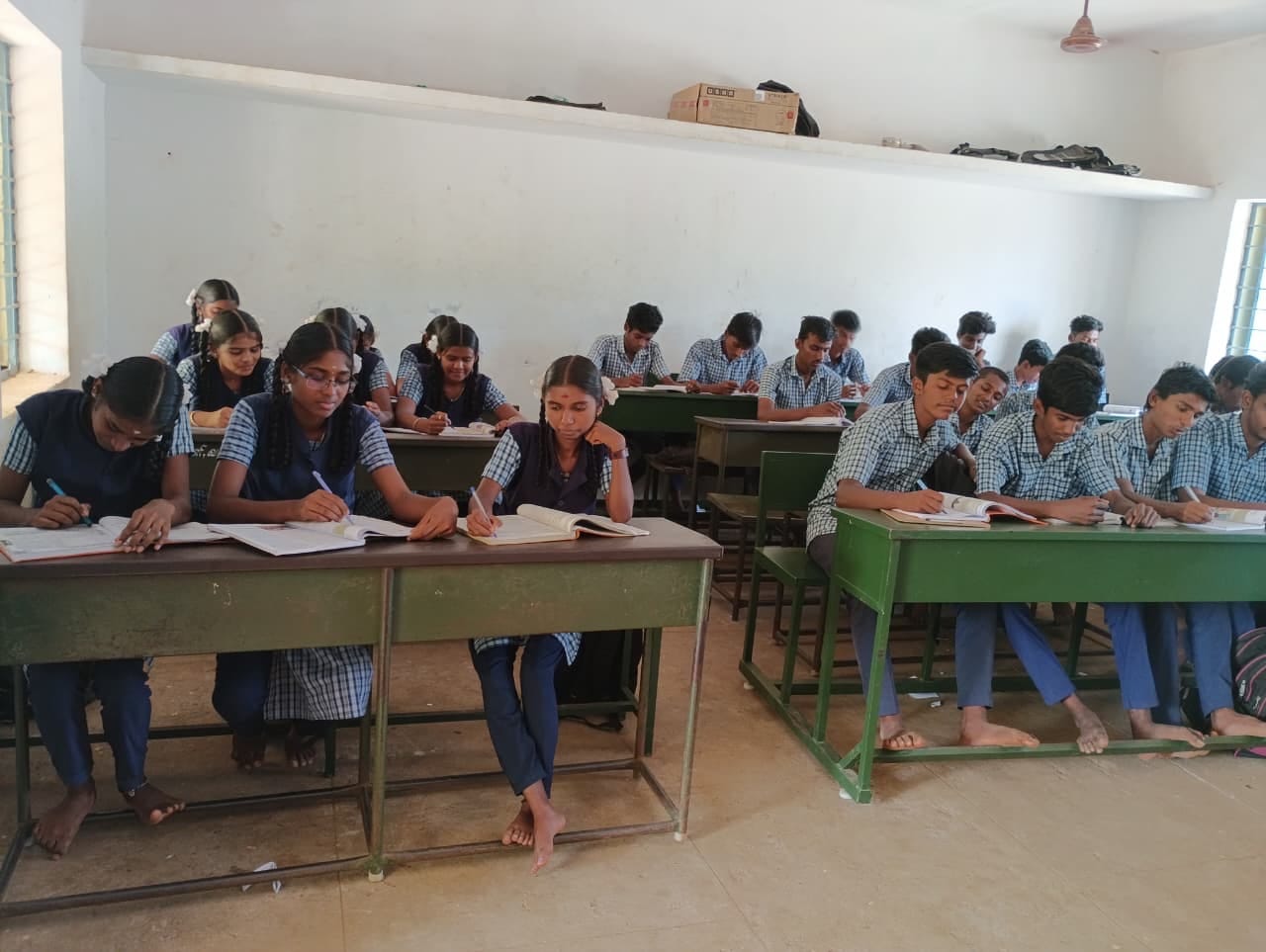
He added that the insecurity of being in a competition with students from ICSE and CBSE boards has increased the pressure.
“Entrance exams are tougher for government school students. If I don’t understand the concepts well, I can’t do anything in NEET. I can only clear NEET with coaching but my situation did not allow me to take another year for preparation,” he said.
Many who try to juggle coaching with state-board exams face burnout and drop out of school. Others, like Yugan, settle for what their circumstances allow.
Government school teachers describe a different reality. In Tamil Nadu, additional coaching is sometimes offered by the school, yet the competitive-exam syllabus draws heavily from NCERT material that state-board classrooms do not fully cover. A government-school teacher from Cuddalore observed that while coaching helps some students, the early start and the resource gap make equal competition nearly impossible.
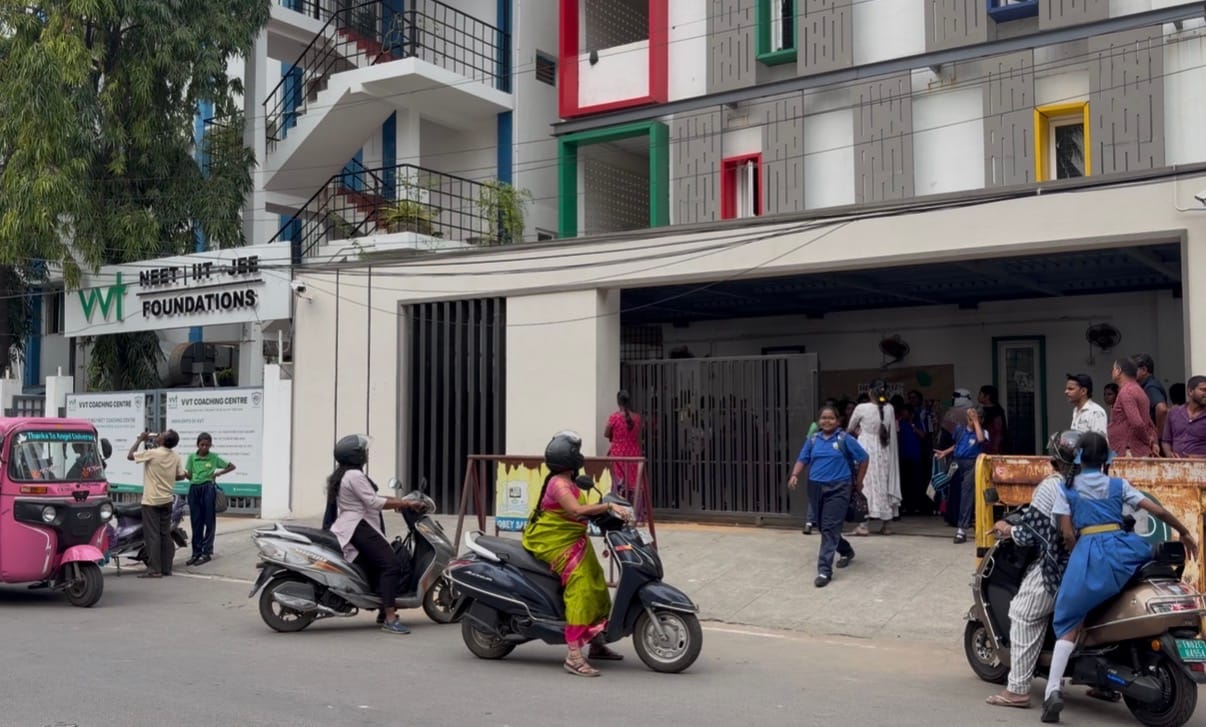
Private tutor Nityanand, who works with government-school students, puts it bluntly.
“A large number of students are first-generation learners, who do not have the support systems available to CBSE or ICSE students. I do not push children for NEET or JEE because I know that the competition is so fierce. I do not want to demoralise them but these kids cannot take a gap year because their parents cannot afford it,” he said.
That explains why the opposition to NEET runs so deep in Tamil Nadu. The exam is seen as a privilege for those who can afford years of specialised coaching and NCERT-aligned preparation. Meanwhile, state-board students, especially from rural and lower-middle-class backgrounds, start at a disadvantage.
Dravida Munnetra Kazhagam (DMK) proposed that admissions based on Class 12 board results are more equitable and better reflect academic performance than a one-day NEET test, especially now that the exam faces more scrutiny due to paper leak.
Tamilaga Vettri Kazhagam (TVK) also argued that NEET should be banned since it has fuelled a coaching industry, widened inequalities between CBSE and state board students, and reduced the representation of students from rural and underprivileged communities in medical colleges, potentially affecting the state’s public healthcare system in the long run.
The human cost has been public and private with at least 26 NEET-related deaths reported between 2017-2024. In 2017, S Anitha, a Class 12 topper from a modest family in Tamil Nadu, scored high in the state board but failed to clear NEET. She died by suicide after the Supreme Court rejected her plea to quash NEET. Her brother S Maniratnam says the family had never forced a particular profession on her.
“There is no uniformity in terms of these entrance exams and people from less privileged systems feel like they have a disadvantage even at a very young age. The coaching system has added to this pressure. NEET kills if there is a lot of pressure from society and parents.”
Stealing a few hours, at night
The textbooks are finally closed, the timetable for the day is done, and the house goes quiet. Then, in dark rooms, the screens light up.
For many teenagers, night is the only time they get to reclaim a small part of themselves. Some deliberately sacrifice sleep for something more precious: unstructured time. A chance to just slow down.
In Kolkata, 16-year-old Ritabrata Bandyopadhyay insists he goes to bed “early”, at 11 pm. But pull up his phone, and the chats with his friends run on well past 3 am.
The stereotype associated with teenagers — that they are screen-obsessed, mindlessly scrolling through Instagram Reels — misses what is actually happening in their online lives.
Many have moved away from mainstream social media to platforms like Discord. For 15-year-old Shourjashish Das, the app works like a virtual tea stall—a casual space where voice channels stay open in the background while friends grind through Physics Wallah modules, share pirated links to the latest Spider-Man movie, drop “brain rot” AI memes, or stream video games for whoever happens to be online.
“This has voice channels that I can just join, and whoever wants to talk to me can join too. People can see if I am online and playing a game. They can also join or just watch,” said Das.
These students are curious about the world and its ideas, but there is little room for that curiosity during the day. They conduct their chats in acronyms like ‘nvm’ (nevermind) and ‘ngl’ (not gonna lie), but their ideas can be expansive. Bandyopadhyay, for instance, often reads Nietzsche and Sun Tzu and follows politics before finally calling it a night.
Unlike many JEE aspirants, Varnima has refused to give up school life completely. She signs up for debating competitions whenever she can, represented her school this year in a regional declamation competition with Greta Thunberg’s speech at the UN Climate Summit, and is preparing for her first Model United Nations conference.
“I’ve always been into public speaking,” she says. “Whenever there’s a chance to speak, I just stand up. I really enjoy it.”
Those competitions have become some of the few places where she feels like herself, she says. But it is not easy to carve out those moments.
Snatched conversations offer a respite. Sometimes they are with friends; sometimes they happen online or with AI.
“There is so much to keep up with. My friends and I don’t just talk about homework or school anymore. We discuss books beyond our syllabus, feminism, protests, reservations, atheism, anything that interests us. To be part of those conversations, I have to keep reading and learning. Most of that happens online or through AI,” Ganguly said.
Even on this relentless treadmill, they find time to develop opinions and satisfy their curiosity, usually online. The Cockroach Janta Party protests, for one, have riveted many of these Gen Alphas.
“The CJP shows the power of collective efforts. The way the youngsters took the courage to protest is remarkable. But everything has a downfall. I think the CJP has lived full circle. It came into existence because of satire, took a serious turn, and protested with wit and humour that gave them serious results,” said Bandyopadhyay.
The wall of expectation
For a lot of students preparing for entrance examinations, the burden of carrying the family’s expectations is often unsaid.
“Students can clearly see how much money is being spent on coaching, books, and school fees,” says Dhruv Samvadi, a Physics instructor at several coaching institutions in Delhi. “No matter how much the child studies, in their mind, they always think, ‘I am not doing enough.’ That guilt is greater than any examination-related anxiety.”
The fear of watching their children fail, or in some cases the guilt of pushing them deeper into the race, is forcing parents to reckon with the burden of years spent saving, borrowing, sacrificing and hoping.
When news of student suicides began appearing on television, Mansi’s parents panicked.
They couldn’t bring themselves to use the word “suicide”, so they pointed to the television and said: “Don’t make this mistake, beta. You remember Aamir Khan’s film 3 Idiots, na?”
This parental backing comes with its own implicit strain. Many insist they want to shield their children from stress, yet their own heavy investment in the exam builds an inescapable wall of expectation.
In Mumbai, Tanvi attends Aakash Institute—one of over 2,50,000 students enrolled across its 300 centres nationwide. Her father, Manish Shinde, works as a peon earning Rs 35,000 a month.
“Exams or marks don’t matter. Our child matters more… whether it’s a paper leak or anything else, isn’t in her hands,” he said.
Yet, the NEET aspiration is a profound badge of honour for the family.
“She is the first child in my entire family to even prepare for NEET,” he said proudly.
In Bengaluru, Geeshna K, a senior executive at a multinational corporation, similarly tries to maintain a buffer for her Class 11 daughter.
“At home it’s a zero-pressure environment. We already know the stress some of these students are going through in this competitive environment. The less the stress, the better she can perform,” she said. But she too acknowledges the intensity will spike next year.
Ganguly has found a ‘friend’ to take notes from whenever she has something to tell her parents: ChatGPT. One time, she wanted to tell her father that marks do not define success in the long run. She typed everything she had thought of and sent the prompt with a simple question: “How should I tell this to my parents?”
The chatbot responded: “Choose a calm time to talk. Tell them you are trying your best and that one examination cannot define your future. Listen to their concerns while explaining how the pressure is affecting your mental health.”
(Edited by Asavari Singh, Aakriti Handa and Prashant Dixit)
Only GC students generally go thru this level of grind.
Such a shame that these youngsters are having to put in a hard slog for their merit. They should be encouraged to enjoy life at 16 and then blame the government for their lack of academic and career progression.
After watching GenZ protests, they would be relieved to discover that protesting can also be a career. Join some protests, get some money and wait till joining the next protest.
The writers are forgetting that this slog – for a year or two – gives a sense of discipline to the young mind. It also encourages ambition and the habit of organising oneself for a schedule and then sticking to it.
Teenagers the world over have to work hard. Hey, if you don’t work hard now, you will get paid in low amounts for the rest of your life.