



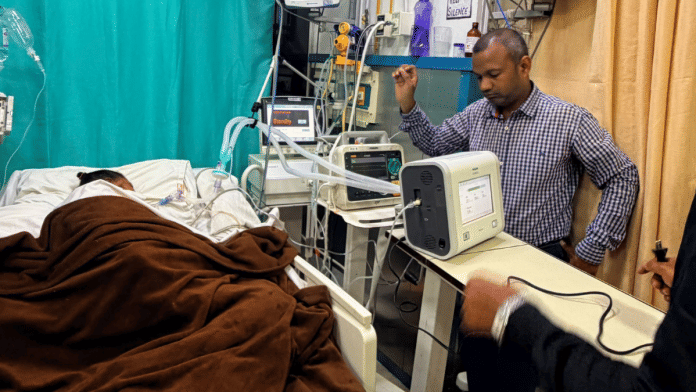
New Delhi: Every morning at a private hospital in Ghaziabad, the billing counter demanded payment before continuing the treatment that kept Abir Bazaz’s mother alive. He spent around Rs 1.5 lakh a day when his mother was on a ventilator, while also facing bills marred by discrepancies and double counting.
“When I finally decided to shift her, it was because I was so fed up with the system, the lack of regulation. Even then, it took them a day to actually release her,” said Bazaz, a professor at Ashoka University.
However, bringing a critically ill patient home in India does not mean stepping away from the intensive care unit. It means building one from scratch in your own home.
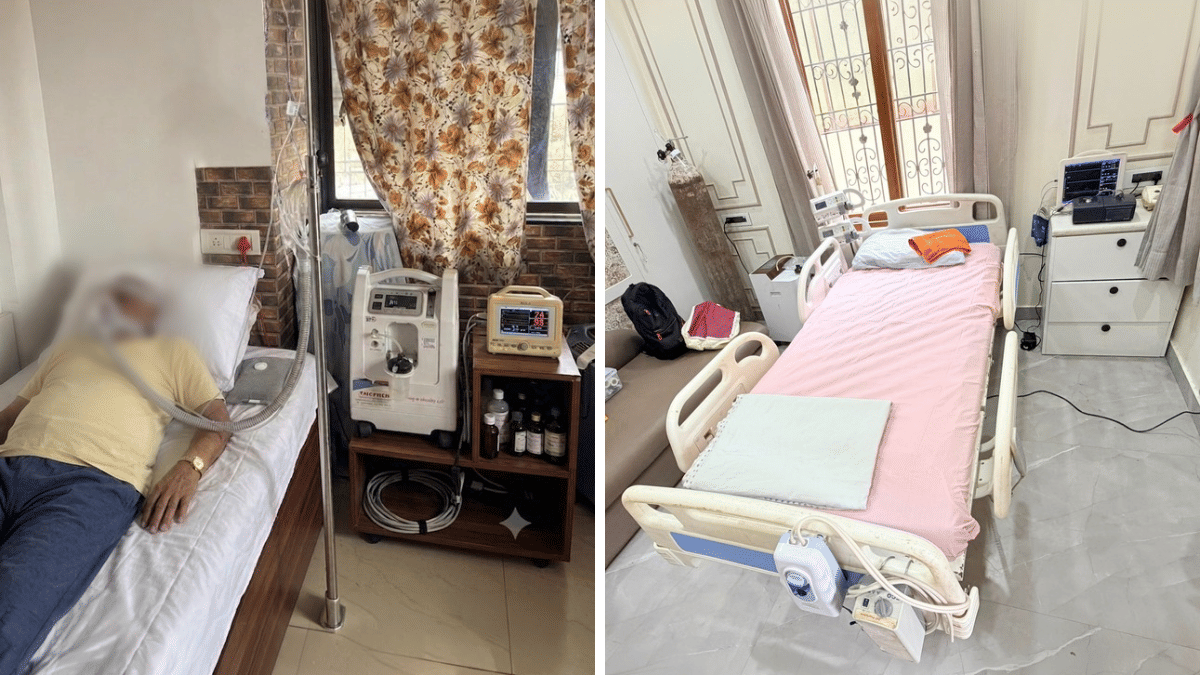
The dreaded and prohibitively expensive three letters in the Indian middle-class mind — ICU — are now undergoing a change. Several healthcare startups in metropolitan cities across the country are offering a kinder, gentler ICU at patients’ homes. In homes across Delhi, Mumbai, Bengaluru, and Dehradun, families are turning bedrooms into clinical wards, with full ICU setups, including monitors, oxygen tanks, and suction machines. Some use dedicated home healthcare services, which gained prominence during the COVID pandemic, and cut costs by 30-50 per cent compared to hospitals. While others buy equipment directly from vendors, the reasons remain the same: prolonged hospital ICU stays break the bank, increase infection risk, and limit recovery. And families wish to spend more quality time with their elderly members during their illness as opposed to rationed visitor slots in a cold, impersonal environment.
India’s home healthcare industry is valued at $11 billion, driven by a growing elderly population and an overburdened hospital healthcare system. Yet, home ICU care isn’t a revolution yet. The promises of dignity, infection control and massive cost savings by home ICU services often hinge on practical concerns such as well-trained nurses and transparent payment plans.
“Our idea is that money should not be an entry barrier to access to healthcare. Five years from now, I hope no household in India loses a loved one because they don’t have money for care,” said Rammohan Sundaram, founder and CEO of Kokoro Bharat, a home healthcare company based in Gurgaon.
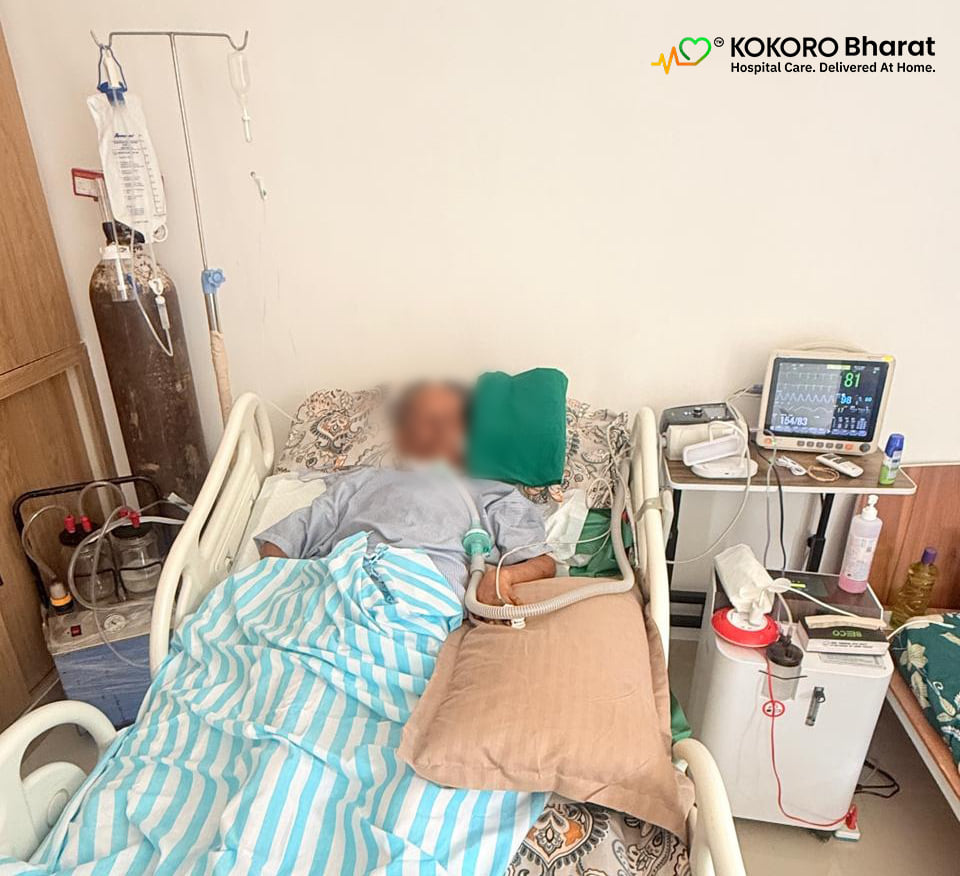
Launched in August 2025, with an 18-person team, the startup installs residential ICUs for as low as Rs 5,000 a day. Sundaram, a digital marketing professional and entrepreneur, pivoted to healthcare after his family exhausted their savings for his mother-in-law’s hospital bills.
Sundaram is not the only one: India’s home healthcare sector is led not just by doctors, but also corporate executives and engineers. From IT professionals such as Shivang Dwivedi, the founder of Care Health Nurses, to IIT alumna such as Vipin Pathak, founder of Care24, non-clinical founders are betting on building supply chains to provide critical care in India.
The ICU assembly line
When Tanuja Singh’s father had a brain haemorrhage in Dehradun in December 2023, he was restricted to the ICU for almost a month. The charges were not as expensive as in a private hospital in Delhi or Bangalore, where per-day costs are between Rs 30,000 and Rs 70,000, but Dehradun’s hospitals had limited neurology specialists.
“But we decided to take him home mainly because of infection risks. The doctors themselves told us that keeping him longer in the ICU would not be good for his recovery,” recalled Singh.
Then began her real struggle. Singh, 55, who herself works in the healthcare sector, soon figured out the semantics of at-home ICU services and nurses in Dehradun and eventually in Bangalore, where she shifted with her father. Initially, she relied on a large multi-speciality hospital chain’s home healthcare service, getting both the equipment and the nurse.
“But then I realised that large chains don’t just have equipment lying around for at-home services. They also rent it from vendors. I decided to skip the middleman and approach the vendors myself,” she explained.
Unlike in a hospital where ICUs have fixed setups and equipment, at home they differ based on the patient’s needs. Common equipment includes beds, ventilators for breathing assistance, infusion pumps for delivering fluids into the body, BiPAP machines for air pressure, DVT pumps for preventing blood clots, and monitors for displaying important parameters.
However, unlike hospital ICUs, at-home services offer privacy and dignity of care, prioritised by many patients and their families.
“No one ever wants to experience a hospital ICU. It’s usually 10 beds in one room, and there are patients at differing levels of severity,” explained Sundaram, who founded Kokoro Bharat in 2025.
“It is an emotional turmoil, not to mention a financial one.”
Independent at-home healthcare services such as Portea and Healthcare At Home (HCAH) and hospital-based services like Apollo HomeCare and Max@Home offer tiered packages for ICU patients, depending on their needs. Portea, a 13-year-old home healthcare company, offers a Critical Care package for ICU patients that includes a ventilator, two ICU-trained nurses, two nursing assistants, weekly audits, as well as doctor consultations.
Then they have the Step Down package, which has a BiPAP machine instead of the ventilator, for patients at a higher stage of recovery.
Currently, an ICU room costs between Rs 50,000 and Rs 1 lakh per day in private hospitals such as Max and Apollo in Delhi. Whereas, at-home service by the same hospitals starts at Rs 13,000, but can go up to Rs 50,000, depending on the amount of equipment and number of nursing staff hired.
According to Vikram Verma, the head of Max@Home, the main objective of providing at-home healthcare services is to aid the patient in their recovery journey. Max’s pricing pegs home ICUs as 30-50 per cent cheaper than hospitals, because of the difference in infrastructure.
“The patients whom we recommend for home ICU setups are out of immediate danger and require fewer machines. Also, there is no room rent when the ICU is at home,” said Verma.
However, Singh still found that renting equipment directly from third-party vendors was cheaper than the overall cost of hospital ICU services.
“Renting directly from vendors provides you with the same grade of equipment, at cheaper costs,” said Singh, who found independent vendors in Dehradun for her father. Her required at-home care for three months, after which they moved to Bangalore.
In Bangalore, too, her father requires constant support; Singh eventually bought a hospital bed, a BiPAP machine, an oxygen concentrator and other essential equipment.
Also Read: Healthcare affordability: House panel urges caps on hospital charges, upfront estimates of treatment
Buying equipment directly
Like Singh, Ali had to learn the wholesale mechanics of the biomedical equipment market in New Delhi after his father suffered a stroke. After keeping him at the Holy Family Hospital for a month, he decided to bring him back home on the doctor’s advice, to aid with his recovery.
“My father is a neurological patient, and the doctor’s advice was to talk to him, spend time with him, as he can hear us. But in the hospital ICU, we only get limited time to meet him. Now he’s at home with us,” said Ali.
But after employing a private home healthcare service for a few weeks, Ali realised that things were not working out. While his father’s vitals were stable, he still needed constant monitoring and was at risk of fits, warranting the need for long-term equipment.
Ali soon learned that an ECG monitor cost Rs 26,000 to buy outright, versus Rs 4,000 a month on rent; a suction machine was Rs 4,400 off the shelf vs the Rs 2500 monthly rent, and purchasing saline injections himself bypassed the 70 per cent markup slapped on hospital bills.
In the end, he spent almost Rs 2 lakh to turn his bedroom into a private ICU, as opposed to the Rs 1.25 lakh he was paying private companies monthly for the same set-up. Five months later, his father is still using this set-up.
“But the equipment is not the most challenging part of a home ICU set-up. It is the nurse,” said Ali.
The lack of properly trained nurses
Across cities, years and experiences, Ali, Bazaz and Singh echo the same sentiment: a good nurse can make or break a home ICU set-up.
The hardware and equipment can be rented or bought, but the entire apparatus hinges on the person standing beside the bed.
When Bazaz first handed over the daily care of his mother to a Delhi-based home healthcare agency, their work looked immaculate on paper. They offered sterilisation services, full equipment, and a trained nurse available 24×7, all necessary for her recovery and health.
But the execution of care left a lot to be desired. The assigned nurse was unable to detect pneumonia and major clinical signs such as fluid pooling in his mother’s lungs.
“My mother’s condition actually worsened once coming home; she contracted sepsis, and I had to re-admit her to the hospital,” said Bazaz.
Ali too had a similar experience with his father, as the nurse that came with the home healthcare company was unable to meet their standards. When Ali went and bought his own equipment for his father, he also spent a considerable amount of time searching for a suitable nurse who was ICU-trained.
“We need someone who understands the machines, the needs of the patient. Someone that doesn’t freeze or get scared during emergencies,” he explained.
For many, this systemic vulnerability across the sector is an open-secret bait-and-switch tactic. Startups routinely market their packages around “ICU-trained critical-care nurses” — professionals holding General Nursing and Midwifery or B.Sc. credentials with bedside experience.
However, more often than not, they send general-duty assistants, who are trained in bathing and cleaning, but freeze when they see sudden drops in blood pressure, mucus plugs in tracheostomy tubes, or erratic telemetry spikes.
While searching for a nurse for her father, Singh also realised that large hospital chains often do not send their best nurses for at-home services, reserving them for the hospital patients. She eventually had to go through her own route and find reliable, trained nurses independently for attending to her father. The cost was once again a huge barrier.
“Whether it is Dehradun or Bangalore, the biggest challenge is finding a qualified nurse. They’re rare and very expensive,” said Singh. “The cost also differs from city to city. In Dehradun, a 24×7 nurse was more expensive than a 12-hour nurse, but in Bangalore they charged roughly the same,” she added.
Her struggle points to a structural fault line running through India’s healthcare system: the country simply does not have enough trained nurses to staff its hospital wards, let alone private living rooms. According to the World Health Organisation (WHO) benchmarks, a functioning health system requires at least three nurses per 1,000 people; India operates with roughly 2.2, leaving a deficit of over two million nurses.
The challenge is also echoed by founders of home healthcare companies, who struggle to find good nurses to employ. Dwivedi, who founded Care Health Nurses in 2016, said that companies have to be really careful in choosing the nursing colleges they hire from, and ensuring candidates have the relevant experience.
“There are many nursing colleges which do not provide any real training to students, and just conduct a final-year exam and give degrees,” said Dwivedi. “How would these nurses be able to handle the pressure of real-time ICUs, at home or otherwise?”
Also Read: 336 beds, no patients. Why Delhi’s Sarita Vihar hospital remains shut
Challenges on both ends
Home ICU setups provide closer proximity to family members and relatively lower costs, but also include the added responsibilities of running a clinical ward from home – managing sterilisation, finding and housing equipped nurses, and coordinating with doctors for the patient’s health.
It isn’t all bleak news. The industry continues to better itself with newer technologies and start-ups coming up.
When Bazaz finally found a good home healthcare company, Siman Healthcare Services, on his second try bringing his mother home, he witnessed how seamless coordination works.
“They were a very professional company; a nurse met us at the hospital to help transport my mother back home. The attendants were well trained, and the company also made a WhatsApp group with the nurses, the doctor, and me to share regular updates,” recalled Bazaz.
Admittedly, both Siman and the previous healthcare company were equally expensive, priced at around Rs 10,000 to Rs 15,000 a day. Bazaz said that he did not mind spending the money, as long as he gets good care and professional service.
But even for an organised corporate giant such as Max Hospitals, running an intensive-care unit inside an uncontrolled domestic setting presents some hurdles — from fumigating the equipment and beds, to disinfecting patient rooms, to coordinating between hospital doctors and at-home nurses.
Even the people considered eligible or viable for at-home care are selected meticulously, keeping the patient’s health in mind.
“Once we know the patient is on the path to recovery, and we know it can happen at home, then we recommend that they shift. But we cannot replicate the hospital ICU at home. It is always a stepped-down version of the hospital,” explained Verma.
Meanwhile, for healthcare companies such as Kokoro Bharat, the challenge lies in expanding these services to remote areas. Within a year of setting up operations, Kokoro has serviced more than 1,200 homes with healthcare facilities, including ICUs, and is available in 100 cities across India.
“We have reached places like Jammu and Jeolikote with nursing care, but currently ICU set-ups are restricted to cities. We build partnerships in different regions, find technicians and well-trained staff to deploy to remote locations too. It will take time,” said Sundaram.
He explained that the company has a target of 10 million homes in the next three years, while maintaining their current promise of setting up within two to four hours. Sundaram also claimed that their company is currently the most affordable in the market for home ICU set-ups.
“We provide ICU setups beginning at just Rs 5000 a day, which is the cheapest in the market, and is a fraction of the Rs 75,000 people charge in hospital. And we’re still running on a 23 per cent profit margin,” he said.
The regulatory issues in home healthcare
India’s home healthcare market functions in a large regulatory vacuum, since the Clinical Establishments (Registration and Regulation) Act, 2010 only extends to physical hospitals, not bedrooms and private houses. Without the minimum safety standards of this Act, at-home ICUs and other services are basically outside state inspection frameworks.
A 2026 study titled “Home Health Care Management & Practice”, found how the sector remains fundamentally unregulated: service providers are not mandated to follow biomedical waste protocols and often dump contaminated suction catheters and other medical waste directly into municipal household garbage. Meanwhile, the agencies shield themselves from liability by registering under the Companies Act or basic commercial trade licenses.
The study also outlined that home healthcare services are not typically covered by insurance, meaning that families need to cover these costs out of pocket. For Singh, navigating her father’s post-stroke rehabilitation in Dehradun, even government security blankets such as the Ex-Servicemen Contributory Health Scheme offered little relief.
“All of the payment has been in cash, despite having ECHS for my father. The at-home services are not covered by it,” explained Singh. “It is not an easy experience, navigating this sector.”
The study argues that an at-home ICU is a double-edged sword, democratising healthcare and removing families from the predatory corporate hospital bills, but remains fragmented and unstructured.
“The first and foremost is to recognise the ‘home’ as a place for providing healthcare and as a ‘workplace’ of care providers. This will pave the way for home healthcare to be formalised into the healthcare system,” the study read.
For the families living on this unregulated frontier, that overlap between a hospital and a private sanctuary is fraught with friction and quiet domestic exhaustion. For 29-year-old Adwait Tiwari, a corporate consultant, turning his two-BHK in Gurgaon into a full-fledged hospital room for his father was no easy feat.
“I took work-from-home after his stroke, but in these 2 months our lives have changed. The house is a mess of vials, IV drips, injections and prescriptions,” he explained.
“And every night, I’m just anxious that a machine will beep or his breathing will change.”
(Edited by Insha Jalil Waziri)