





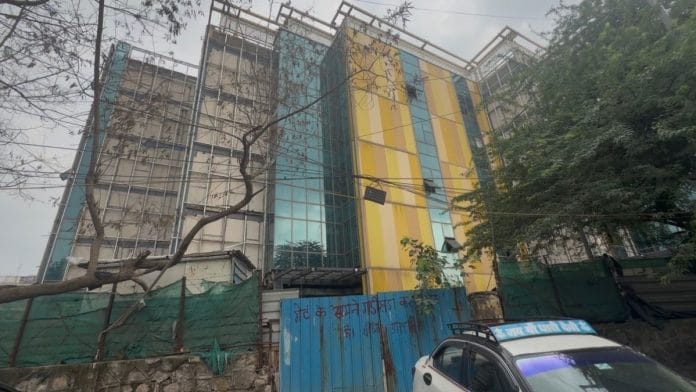

New Delhi: A 336-bed government hospital has stood fully built but completely empty and unused for two years in Delhi’s Sarita Vihar. All because of a parking problem.
The hospital was built during the COVID-19 pandemic, when Delhi was scrambling to add critical-care capacity. The building’s glass-and-yellow facade rises several storeys above a busy stretch of road, dwarfing the low-slung government health facilities that are more common across the city. But behind its finished exterior, not a single patient has been admitted because there is nowhere for their cars and ambulances to go.
A 25 July representation submitted by the Centre for Youth Culture Law and Environment (CYCLE) to the Delhi chief secretary alleges that the hospital was built without a legally sanctioned parking facility, putting it in breach of applicable building and environmental-clearance norms. The matter is now before the courts, and the building remains shut.
For residents, however, the problem is more tangible than a legal dispute. The building stands opposite two schools. The road outside is already clogged with cars and auto-rickshaws around school hours. A functioning hospital would bring ambulances, patients and attendants to the same stretch.
“There is no provision for parking; it is a faulty layout plan. It is situated deep within the pockets of Sarita Vihar, and the entire site plan is flawed,” said Neetu Singh, BJP councillor from the south Delhi constituency. “If the hospital were to open, the situation would become dire, as the lack of parking would severely disrupt traffic flow, and would make it difficult for ambulances to enter.”
Singh added she did not know what would ultimately happen to the building. Discussions, she said, were continuing within the party leadership, but there was no solution in sight yet.
The land had itself remained vacant for years before the pandemic finally pushed the government to build a hospital on it. Now, a project meant to add hundreds of beds to Delhi’s public health system is sitting idle — vacant in a different way, but vacant all the same.
Sarita Vihar is not an isolated case. Delhi today simultaneously has government land earmarked for healthcare facilities lying empty, construction work in limbo, completed buildings awaiting commissioning, and existing hospitals straining to provide enough functional beds. The Comptroller and Auditor General’s performance audit of Delhi’s public health infrastructure found that the government had never undertaken a need-based assessment to determine which parts of the city were actually deficient in healthcare facilities.
Between 2016-17 and 2020-21, Delhi government hospitals added just 1,357 beds, even as successive budgets promised thousands more. The CAG also found that 15 plots acquired between 2007 and 2015 for hospitals and dispensaries — at a combined cost of Rs 648.05 lakh — remained unused, some for as long as 15 years.
These plots are not clustered in one part of the city. They are scattered across Kutubgarh, Nijampur, Mundka, Bakkarwala, Shafipur Ranholla, Shastri Park, Gandhi Vihar, Kapashera, Rohini Extension, Dariyapur Kalan, Neb Sarai, Jhatikra, Bamnoli and Molarband — and, as of the audit, all of them were still lying empty.
The problem has continued even as the government has increased spending. Delhi’s 2025-26 Budget allocated Rs 12,893 crore for health, including Rs 3,421 crore for capital projects and Rs 1,000 crore to fast-track 10-13 new hospitals. In the 2026-27 Budget, Rs 515 crore was provided to complete the delayed Madipur, Siraspur, Hastsal and Jwalapuri hospital projects, while another Rs 150 crore was set aside for seven ICU hospitals, according to government sources.
But the government has still not provided a response on the CAG’s recommendation for a need-based assessment — a commitment the health minister had promised in December 2025.
Just a ditch
In Jhatikra, the story of one such plot is visible on the ground.
The land was acquired decades ago — elderly residents place its history around the 1970s — but no hospital was ever built. Years later, officials put up a boundary wall around the plot and then, residents said, they left it alone once again.
The village does have a dispensary, but it stands on a different plot, one residents understood was meant for a community centre. Meanwhile, the plot actually earmarked for a health facility remains empty and is marked mainly by a large, water-filled ditch.
The CAG audit attributed the failure to develop healthcare facilities on acquired land to a mix of causes: delays in deciding what kind of facility to build, poor follow-up with the agencies that hold the land, the need to find alternate sites when plots turned out to fall within green belts, and delays in securing demarcation and layout approvals. As of December 2022, the government told auditors, none of the 15 plots had changed status.
For villagers, the practical consequence is that any illness beyond what the local dispensary can handle means a long trip elsewhere. The nearest hospital, residents said, is in Jaffarpur, roughly 25 km away — a journey that means a bus to Najafgarh first, then a change for Jaffarpur.
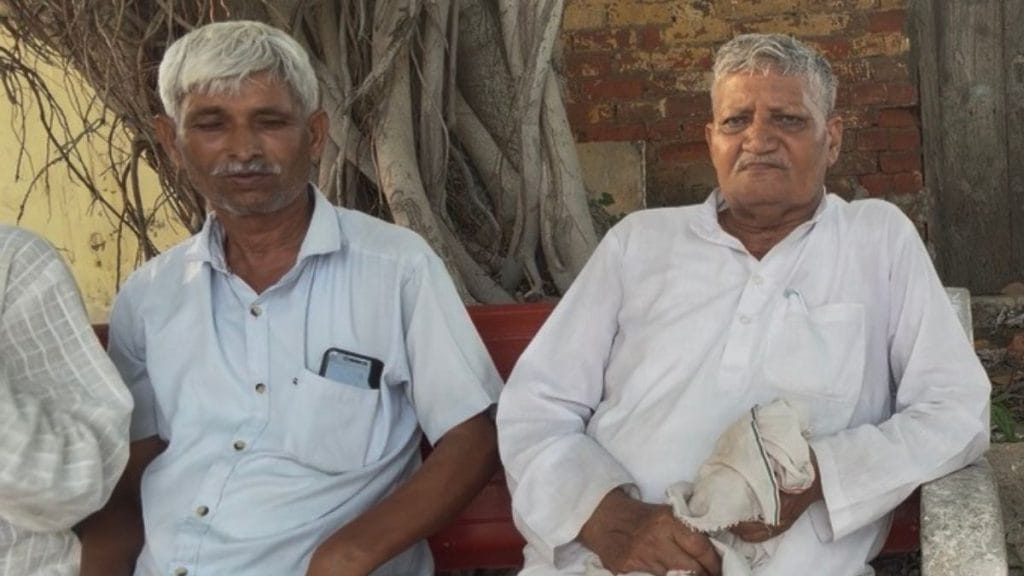
Santosh, an elderly resident, said the land was set aside for a dispensary during the consolidation of landholdings, known as ‘chakbandi’, in 1972. It stayed untouched for decades before a boundary wall finally went up around 15 years ago.
“During chakbandi, we were dispossessed from that land in 1972. A piece of it was set aside in the name of a dispensary. On the map, it is still recorded as a dispensary. About 15 years ago, they put up a boundary wall around it and left it. Nothing was done after that…it is still sanctioned in the name of a dispensary.”
Santosh said the Ayushman Arogya Mandir eventually came up on the land villagers understood was meant for a community centre, while the plot recorded for the dispensary remains untouched.
“They have opened the Ayushman Arogya Mandir, but that land is for the community centre, not the dispensary. And on the land meant for the dispensary, nothing has been done till today,” he said. “During Covid, there were announcements that a 100-bed hospital would be built there, but nobody has come here. We still have to go 25 km to Jaffarpur for a hospital,” he said.

The land is there. The healthcare isn’t
The gap between land set aside for healthcare and healthcare actually delivered is not unique to Jhatikra. Two other sites tell versions of the same story.
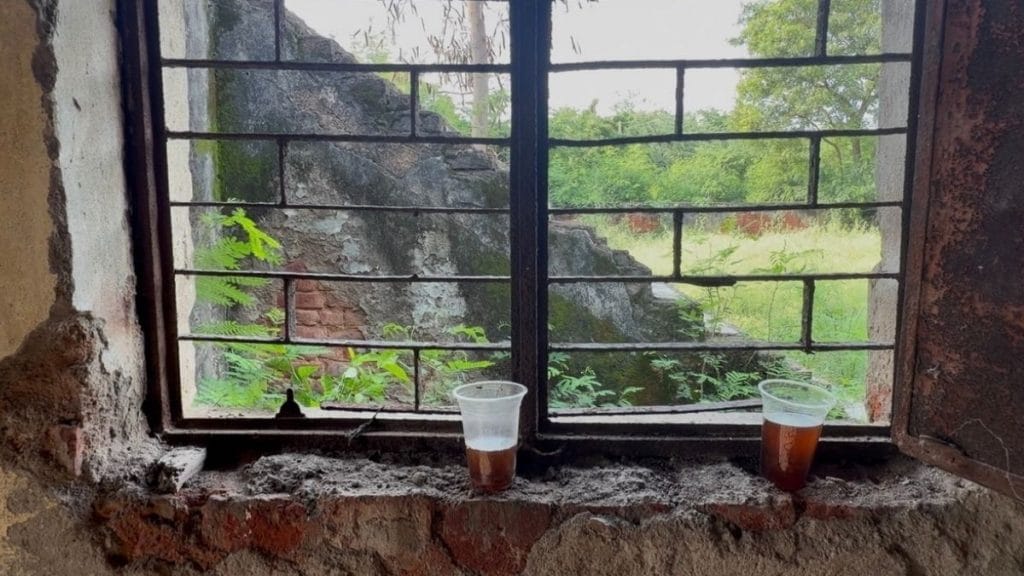
At Kanganheri, just 5 km away from Jhatikra, government-owned land lies open, with no boundary wall at all. The plot has effectively become a dumping ground, plastic wrappers and garbage scattered through knee-high, jungle-like growth. It sits right next to a government school. Residents said they’ve long known the land as government property but could not say why it was not fenced off in the first place, or what happened to the healthcare facility that was supposedly planned there. The overgrowth has become a hazard of its own: residents occasionally spot snakes, while poor lighting makes the stretch behind the school unsafe after dark.
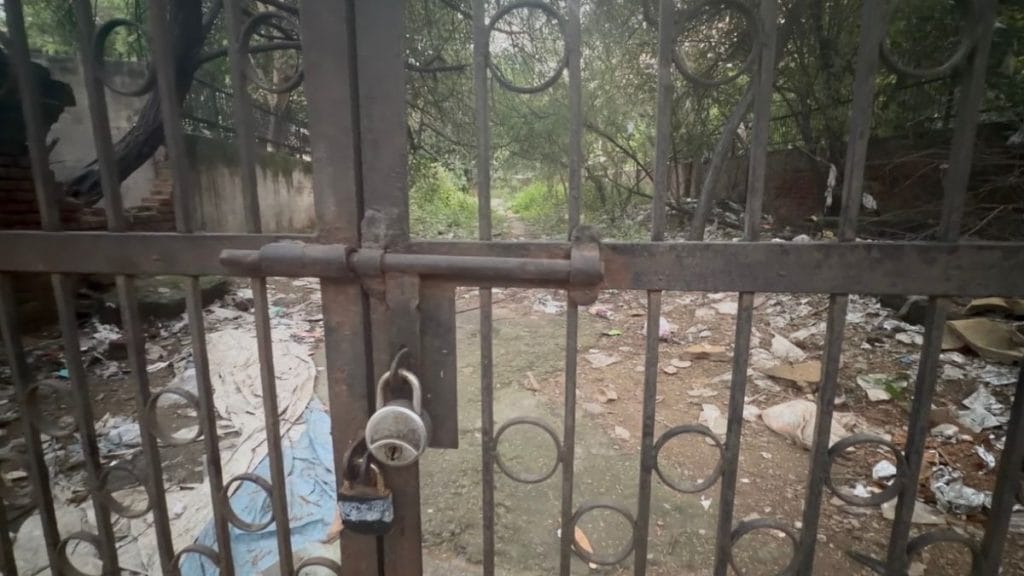
Nearly 30 km away in Naraina Vihar, a small plot next to a community centre is comparatively less neglected. It has a black iron gate and largely intact boundary walls, though part of the wall has broken down. Despite the gate staying locked, the plot has still become a dumping ground. A board identifies it as land once set aside for a daak ghar — a post office, a facility that has since been overtaken by technology but whose old signboard is a reminder of what counted as essential infrastructure in these settlements decades ago.
Naraina looks different from the other two villages: Jhatikra and Kanganheri are urban villages that have kept much of their rural character, while Naraina feels distinctly more urban. But across all three, the same question lingers, unanswered by residents or officials alike: what happened to the healthcare facilities these plots were meant to support?
According to Paras Tyagi, founder of the Centre for Youth Culture Law and Environment (CYCLE), the same organisation whose representation flagged the parking dispute at Sarita Vihar, many of these plots sit in old, urbanised villages where the Delhi Development Authority, while drawing up development plans for the area, marked out sites and got them approved on paper for construction of hospitals.
“Over the years, even as everything around them went on to be built up. The plots themselves remain vacant and unutilised, while the rest of the areas have been developed for different kinds of residential and commercial uses,” he said.
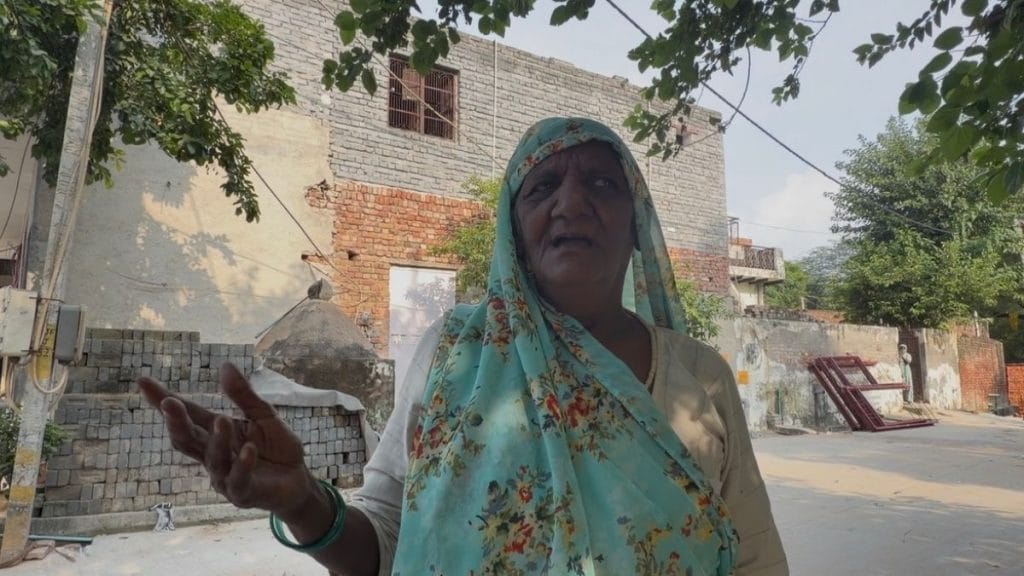
Part of the problem, Tyagi alleged, is that DDA never ran a genuine public consultation before earmarking this land. Approvals instead came “only through MLA/MP recommendations,” leaving many of the projects “incomplete works even though the matter has been of public health.”
A second wave of allotments followed a 2011 Supreme Court directive ordering that Gram Sabha land be put to use for village welfare. The Delhi government, Tyagi said, “grabbed the opportunity” — and between 2012 and 2015, allotted Gram Sabha land in villages including Jhatikra, Kanganheri, Bakoli, Chhatarpur and Molarband specifically for hospitals. Over a decade later, none of those hospitals exist.
The CAG’s audit offers a glimpse of how such plans can get trapped inside the bureaucracy. It found several instances of land allotted or acquired for healthcare getting stuck at different stages — over land status, sanctions, demarcation, layout approvals or coordination between agencies.
One such case was Harewali. Land was allotted in May 2012 for a dispensary at a cost of Rs 37.47 lakh. But the Directorate General of Health Services (DGHS) never issued a formal sanction for the project because it was still awaiting confirmation of the land’s status from the agency holding it. Officials exchanged correspondence at lower levels, but the matter never escalated. After February 2015, there was no further correspondence on record. Seven years on, there is nothing to suggest that changed.
When Covid pushed Delhi to build
For years, the problem was unused land and delayed projects. Covid-19 exposed another, more urgent weakness: Delhi could not simply assume that the beds it needed would appear where the pressure was greatest.
It wasn’t the first time this deficiency was felt. Delhi had hurriedly sanctioned hospitals way before that – without any information-based planning process.
At Safdarjung Hospital, one of Delhi’s largest government hospitals, the pressure is visible in the numbers doctors encounter every day.
Dr Rishabh Bhowmick, a Senior Resident at Safdarjung, said the hospital effectively draws patients from across the country.
“We get patients from pretty much all over India, if not, all over North India,” he said. The daily emergency census, he added, is around 3,000 to 3,500 patients — “among the highest patient loads anywhere in the country”.
Part of the pressure, he said, is structural: Safdarjung follows a no-referral policy, meaning it cannot turn patients away.
“Whatever patients come to the hospital, they have to be seen, they have to be admitted if the doctor deems so,” he said.
The result is a ward system routinely stretched well past its capacity.
“Even if there are 50 beds in a ward, the patients will eventually end up getting doubled up, So, each bed will have two patients, sometimes three patients,” he said. “Patient doubling and tripling is a very common phenomenon in the medicine and surgery wards.”
Bhowmick said the shortage cannot be attributed to a single problem. Patient volumes, the no-referral policy and an overstretched primary healthcare system all feed into it.
Patients with relatively minor ailments also end up at tertiary hospitals, he said.
“Patients with fever, diarrhea and vomiting — ailments that can be managed at home — often end up at tertiary hospitals like Safdarjung, which could have been prevented if primary healthcare would have been strengthened in the country, sparing them the trip to a big hospital,” he said.
The numbers bear out the broader shortage. Delhi’s government hospital bed-population ratio stood at just 0.68 beds per 1,000 people in 2021-22 against the National Health Policy’s target of two beds per 1,000. Of the 59,957 beds available across the city at the time of which nearly half — 29,348 — were in private hospitals and not in government institutions.
The government’s own promises make the shortfall harder to explain. Delhi had announced 10,000 additional beds in 2016-17, another 15,000 in 2017-18 and a further 7,000 in subsequent budgets. Yet the CAG found that only 1,357 beds were actually added in Delhi government hospitals, including other autonomous bodies, between 2016-17 and 2020-21.
Covid did finally push construction forward, including a set of temporary and semi-permanent ICU hospitals intended to strengthen Delhi’s capacity for the pandemic and future health emergencies.
The Sarita Vihar project was one of them.
The CAG listed the project as a 336-bed hospital, with construction beginning in September 2021 and a stipulated completion date of February 2022. But by August 2023, it had reached only 83% physical progress.
There had been no shortage of promises.
In August 2022, then chief minister Arvind Kejriwal visited the Sarita Vihar site and said the hospital would be ready within months, describing it as one of seven fully-ICU hospitals being built during the pandemic. Then deputy chief minister Manish Sisodia, during a separate visit also said the hospital would open within two to three months.
It has been four years since.
A finished building, not hospital
The Sarita Vihar hospital dispute exposes a further layer of the problem: a completed building is not a functioning hospital.
CYCLE’s representation to the Delhi chief secretary alleges that the building was constructed without complying with mandatory urban-development norms and asks the Delhi government to explain why the facility remains unused and who is responsible for the lapse.
The government has not responded to the organisation’s allegations on the parking issue.
The land itself had sat vacant for years. Residents recall former Delhi chief minister Sheila Dikshit visiting the site to inaugurate the project during the Congress government’s tenure, but construction did not actually begin until the pandemic created the urgency that finally moved the project forward.
Monty, who runs an electronics shop opposite the hospital and has lived in the area for nearly eight years, remembers the site as an empty field where children used to play. The land had already been earmarked for a hospital, he said, but construction began only after Covid and stalled roughly two years ago.
“The main issue stems from the flawed design. For instance, there is a parking problem. No parking space was allocated within the premises, so if the hospital were to be built, where would ambulances go?” he said.
Also Read: Why a Rs 300-crore housing project is empty in Delhi’s Vasant Kunj
Not just Sarita Vihar
The CAG’s findings suggest the problem runs wider than one delayed project. Of eight new hospitals under construction or taken up during the audit period, only three had been completed. Four were still in progress as of August 2023. Auditors were not given information on the status of a fifth — a planned 600-bed hospital in Ambedkar Nagar. Even the two that were completed — Indira Gandhi Hospital in Dwarka and Burari Hospital — were delayed by five to six years.
Four others — at Jwalapuri, Madipur, Siraspur and Hastsal — were behind schedule when the CAG examined them, with physical progress ranging from 39 per cent to 87 per cent. The government attributed the delays to the Covid shutdown and site constraints.
At Hastsal, the delay is still visible.
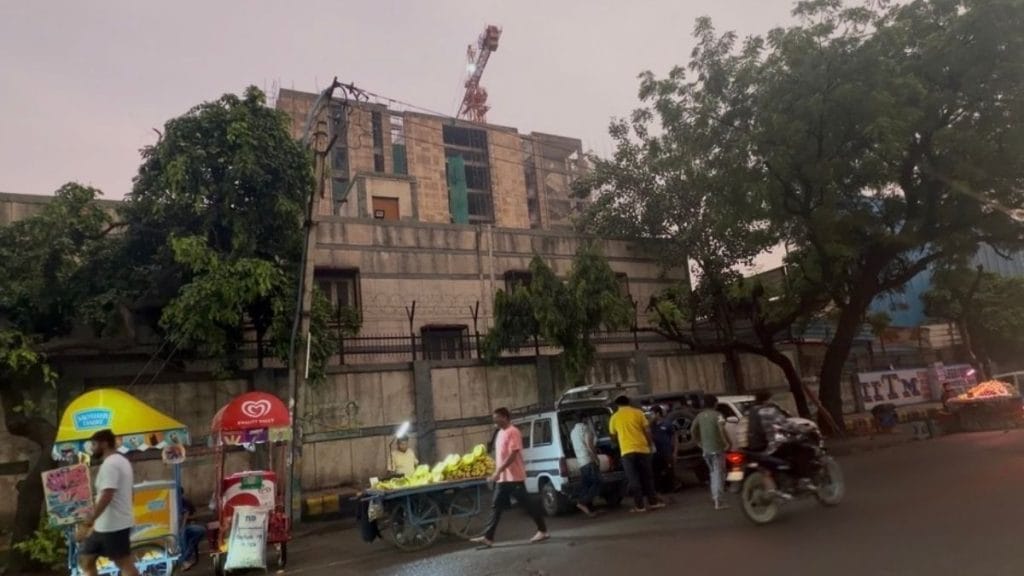
The building is nowhere close to complete. Blue tin sheeting remains wrapped around the boundary wall and heavy machinery is still working the site. The structure itself is little more than bare brick without windows.
The delays are not limited to new hospitals either. The same audit found delays in 110 of 227 sanctioned works at Lok Nayak Hospital and Maulana Azad Medical College — Delhi’s flagship government facilities, not just its newer, pandemic-era projects.
The CAG’s central recommendation was to carry out a genuine need-based assessment so healthcare infrastructure is distributed where it is actually required; for government bed availability to be raised towards the target of two beds per 1,000 people; and for projects to be completed within fixed timelines so that buildings translate into functioning beds.
For residents of Sarita Vihar, those recommendations come down to a much simpler question: When will the land, the buildings and the money finally become healthcare?
For decades the land had been waiting for a hospital and now the hospital building is waiting for a parking lot.
This article is part of a series called ‘Delhi’s Deserted Projects’. Read all articles here.
(Edited by Stela Dey)