


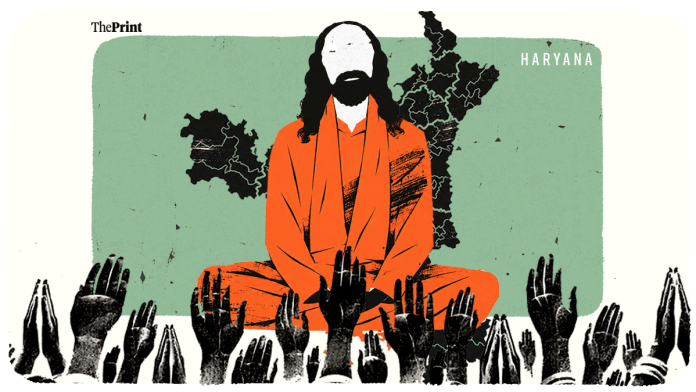
Jind: A 27-year-old self-styled godwoman, Sadhvi Kamaldeep, claims she can cure everything from arthritis to cancer just by waving a broom over people.
Twice a week, thousands of ailing and pain-stricken devotees travel to Sadhvi Kamaldeep’s dera at Pandu Pindara village in Jind district, paying Rs 51 each in the hope of a miraculous cure.
The serpentine queues outside her dera show the power of a manufactured faith, where claims of divine intervention overshadow reason, and sometimes even lead to tragic consequences.
This pakhandwaad, however, has now come under the scanner of Khap panchayats, Arya Samaj groups, and young content creators, who in their own way are challenging self-styled godmen or babas. They are campaigning to expose the exploitative tactics the deras deploy to target vulnerable people in the garb of divine acts. Their targets include jailed godmen Sant Rampal, Dera Sacha Sauda chief Gurmeet Ram Rahim Singh and other local babas.
But Haryana’s war against the babas is nothing like the rationalist movement in Maharashtra that killed Narendra Dhabolkar. Even as they question the babas’ superstitions and myth-making, they are firmly rooted in religion.
For these groups, pakhandwaad encapsulates any practice or preacher who commits fraud in the name of faith. But the babas reject this label and insist that whatever they do is rooted in seva, faith and spirituality.
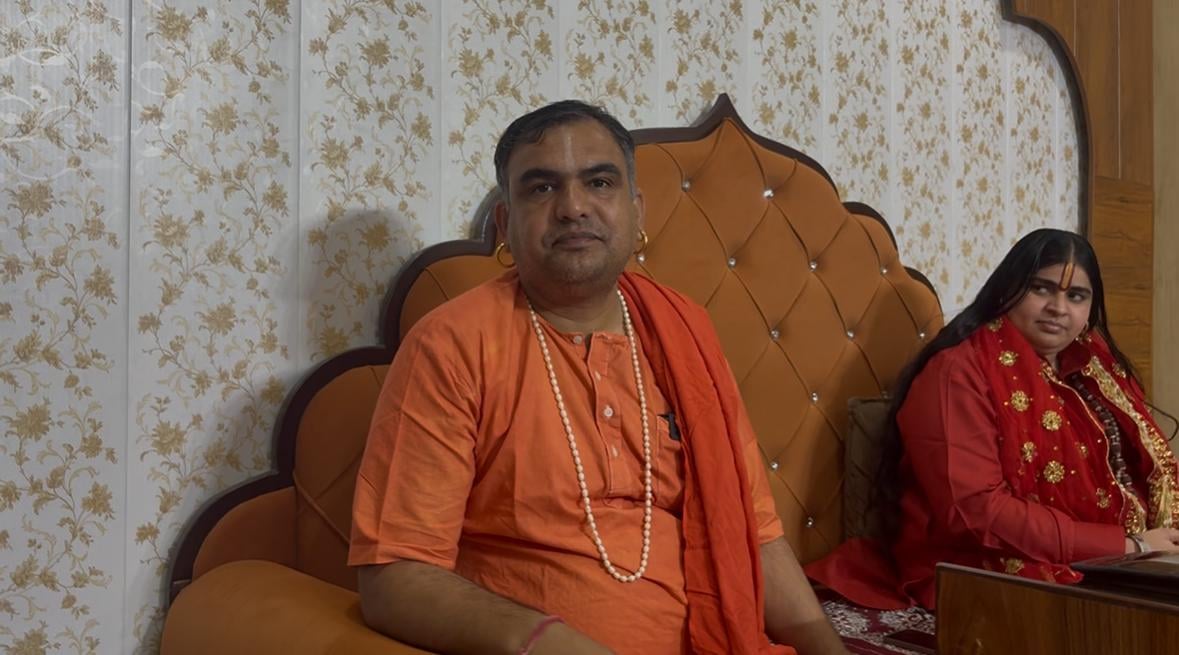
“If praying at a temple, planting a tree, wearing religious symbols, or following a practice whose logic is not immediately understood is superstition, then where do you draw the line? I am willing to debate my critics through shastrarth (a formal debate on religious scriptures), but first they need to define what exactly they are trying to stop,” said Yogendra Maharaj, a self-styled godman based in Pandu Pindara.
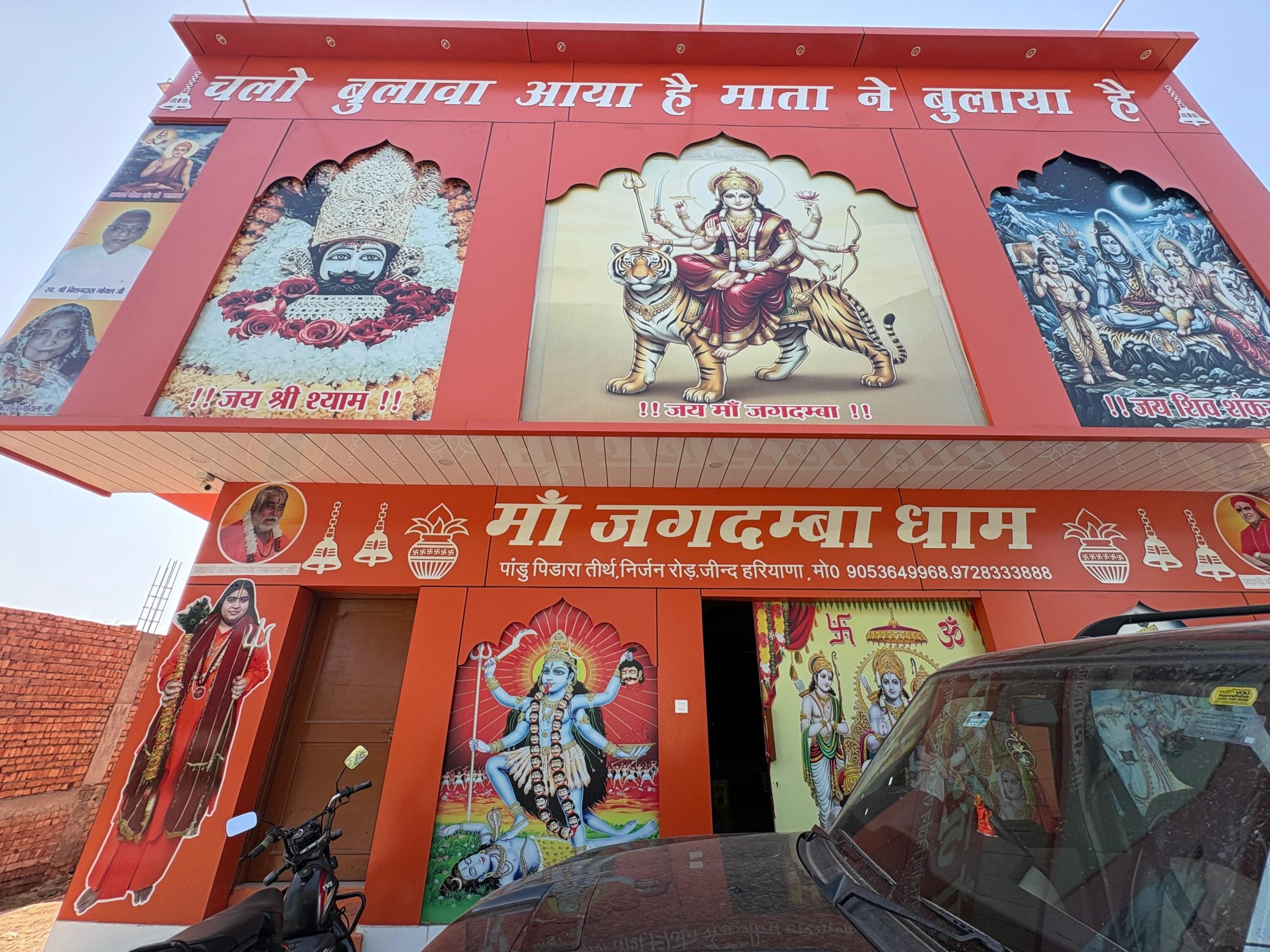
India has seen organised campaigns against superstition and godmen before. But what makes the current mobilisation in Haryana unusually striking is the convergence of ideologically disparate bodies to identify pakhandwaad and debunk it.
Khaps, for instance, are the most unexpected participants in this campaign. For decades, they have been criticised for their conservative leanings and vilified for obscurantism. But now, they are on the forefront of discrediting babas, particularly Sant Rampal.
“We thought Rampal could follow his own religion and practise what he wanted. But he is speaking against Hindu deities Ram and Krishna, our elders and the women of our society. We are completely opposed to the hypocrisy and deception he is spreading. The khaps stand against this baba and his actions,” said Hardeep Singh Ahlawat, president of the Chaurasi Khap.
Arya Samaj vs Rampal
On one end of the anti-pakhandwaad campaign are sections of the Arya Samaj. The Hindu revivalist movement has been locked in a dispute with Rampal over religious beliefs. This dispute turned violent in 2006, when Rampal’s followers clashed with Arya Samaj supporters at Karontha in Rohtak, leaving one person dead and 59 injured. Seven years later, the episode repeated and left three dead, including a policeman and injuring about 100.
In 2014, the conflict took a more serious turn at Rampal’s Satlok Ashram in Barwala, Hisar, when a police operation to arrest him turned into a days-long standoff. Five women and a child died, and around 200 people were injured. Multiple criminal cases were registered against Rampal and his followers.

For Krishnadevarya Shashtri, an Arya Samaj member in Haryana, the campaign against Rampal is only a continuation of the two-decade-old discord over Hindu scriptures, religious authority and beliefs.
Rampal’s teachings identify Kabir as the Supreme God and creator. His literature describes Ram and Krishna as revered figures but places them below Kabir. Rampal has also said that the Ram idol in Ayodhya is “only an idol, not God and immortal.”
Shashtri recounted an incident involving Rampal’s disciple named Krishna Das, who questioned him over his conduct towards a woman. The disagreement led the disciple to turn against the guru and write a book titled Saitan Bana Bhagwan.
“He is such a great liar and schemer. He exploits hundreds of people like me by promising to take them to Satlok. …God gave me the power of discernment, and I could not support your bad deeds…” Das wrote in his book.
Since late August this year, Arya Samaj groups have held public meetings across Haryana to challenge ‘religious hypocrisy and superstition’.
Rampal’s disciple defects
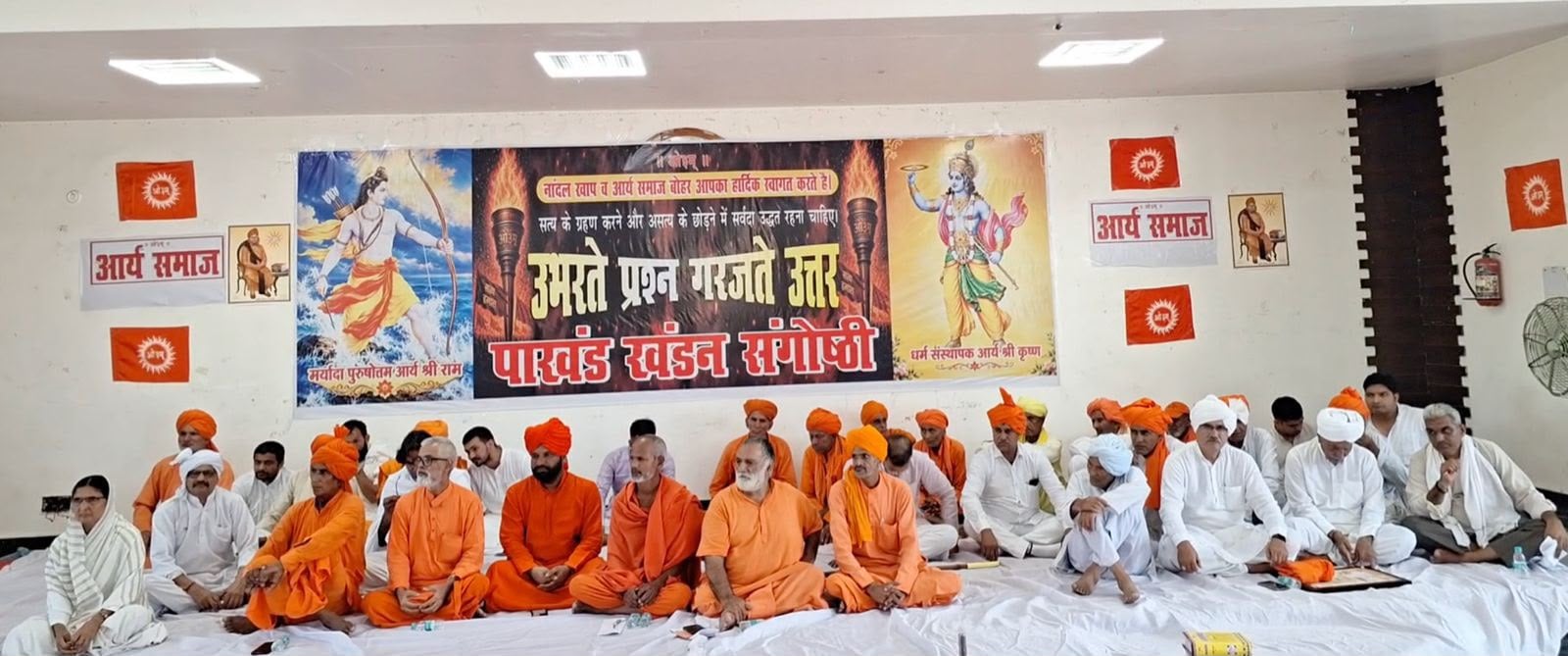
Men dressed in white and saffron sat together at an Arya Samaj event in Rohtak. A banner behind them read “Symposium on Exposing Religious Hypocrisy”, and featured illustrations of Hindu deities Ram and Krishna.
More than 200 people attended the event, including Ahlawat. He said the gathering aimed to raise awareness about the harm Rampal and other babas were causing through their teachings.
Videos circulating on YouTube show Rampal seated inside a large, box-like structure that his devotees carry. In a separate clip, he is seen flanked by two air coolers as he takes a walk in his ashram. Women bow at his feet and revere him as their God.
Rampal has also questioned stories from Hindu mythology in his videos. In one, he refers to the story of Bhasmasura, who sought a boon from Shiva that would allow him to turn anyone he touched into ashes. Rampal questions how Shiva, regarded as antaryami, could have granted such a boon without knowing Bhasmasura’s intentions. In another video, he questions why devotees regard Krishna as God because he lifted the Govardhan Hill, while the serpent Sheshnag, who is believed to support the universe, is not accorded the same status.
It is such interpretations that have fuelled his criticism from Arya Samaj members, who accuse Rampal of distorting Hindu scriptures and misleading his followers.
“If a person comes out on bail, it does not mean that he has received a certificate of approval to make remarks about great personalities or spread hatred in society. Our disagreement is ideological. We have no personal differences with Rampal Das; our differences are about his views,” said Aditya Vaish, national general secretary of the Arya Samaj’s youth wing.
He also questioned Rampal’s claims that diseases could be cured by reading his books or chanting his name.
“Look at the superstitions written in his books. He claims that a child was being electrocuted by an 11,000-volt current when Rampal arrived by air and saved the child by grabbing his arm. Now we have issued a challenge to Rampal. If he holds on to the 220-volt electricity for three minutes and remains alive, we will give him a reward of Rs 10 lakh,” said Vaish.
He also contested Rampal’s recent attempts to project himself as a social worker, pointing to his absence from relief efforts during the 1995 floods and the COVID pandemic. “His agenda is to secure bail, come out of prison and establish himself socially. But he is going about it in a very wrong direction,” said Vaish.
Anti-pakhandwaad content creators
Rampal has also been the focus of content creators, who through their short videos and folk songs, are questioning his manufactured faith and the unquestioning obedience it demands.
Sumit Bajwa, a content creator based in Gurugram, makes public-awareness videos as part of his Cancer Free India campaign. He also posts videos to debunk claims made by Rampal, his followers and superstitions in general.
“So many girls are raped, and crimes are committed. If you are truly God, then put an end to all this,” Bajwa alleged in the video, challenging Rampal’s claims of spiritual powers. He urged people to speak out against superstition, saying, “Hindu ho toh jaago aur pakhandwaad ke khilaaf bolo (If you are Hindu, wake up and speak out against religious hypocrisy).”
Bajwa, who has around 19,000 followers on Facebook, claimed his Facebook and Instagram account had been temporarily suspended and his posts deleted after he began speaking against godmen.
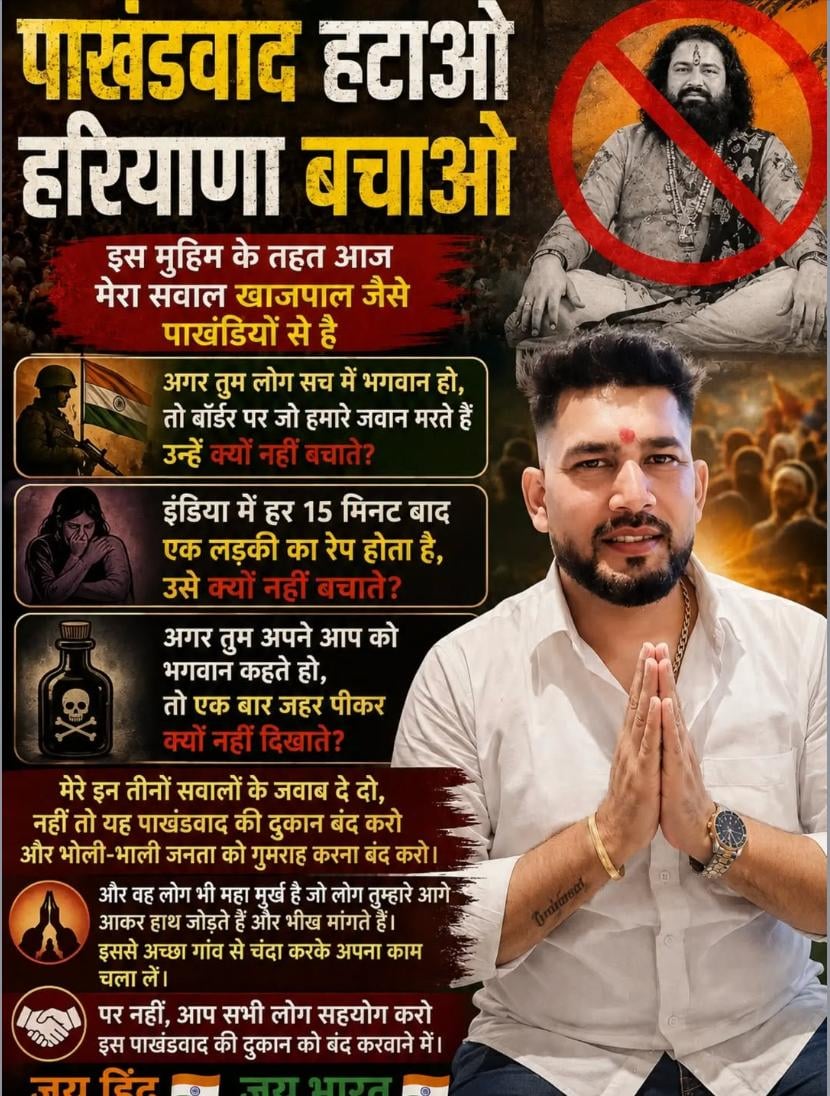
In another video, he recounted a murder case in Kurukshetra where divine possession was used to justify violence. In August, a Kurukshetra-based woman allegedly stabbed her husband multiple times. She reportedly practised jhaad-phoonk (traditional healing or exorcism) and later claimed, “Goddess Kali possessed me.”
“In almost every village, you will find a woman or a man claiming that a deity or goddess has entered their body. Countless homes have been destroyed. People should have faith in God, but they must not fall into the trap of pakhandwaad,” Bajwa said in a video.
Another social media influencer, based out of Sonipat, shared the same fate as Bajwa. 36-year-old Harsh Chhikara runs the Harsh Chhikara Jan Sewa Trust, through which he organises public service initiatives. He is a political activist who transitioned from a local fitness enthusiast and model into a widely followed digital commentator, having 3.1 million followers on Facebook.
He contested the 2024 Haryana Assembly election from Gohana as an independent candidate. His activism focuses on opposing religious superstition and the misuse of faith for money and influence.
Chhikara said a police case was filed against him after he posted a video criticising Bageshwar Dham preacher Dhirendra Krishna Shastri. In the video, he accused Shastri of caste discrimination, questioned the authenticity of his public parcha (problem-solving) sessions, and alleged that he used his religious influence to advance political interests. He also raised allegations about missing girls near Bageshwar Dham, though these claims remain unverified.
The current wave of the campaign was first stirred by Dharmender Hooda, who describes himself as a social-media activist, and currently lives in the US. He actively participated in the 2016 Jat agitation and the 2020 farmers’ protest on the outskirts of Delhi.
His confrontational approach to social activism has also extended to social practices he considers harmful. Three months ago, he issued an ultimatum to those promoting gambling through Telegram, claiming that such promotions had driven several children and students to suicide.
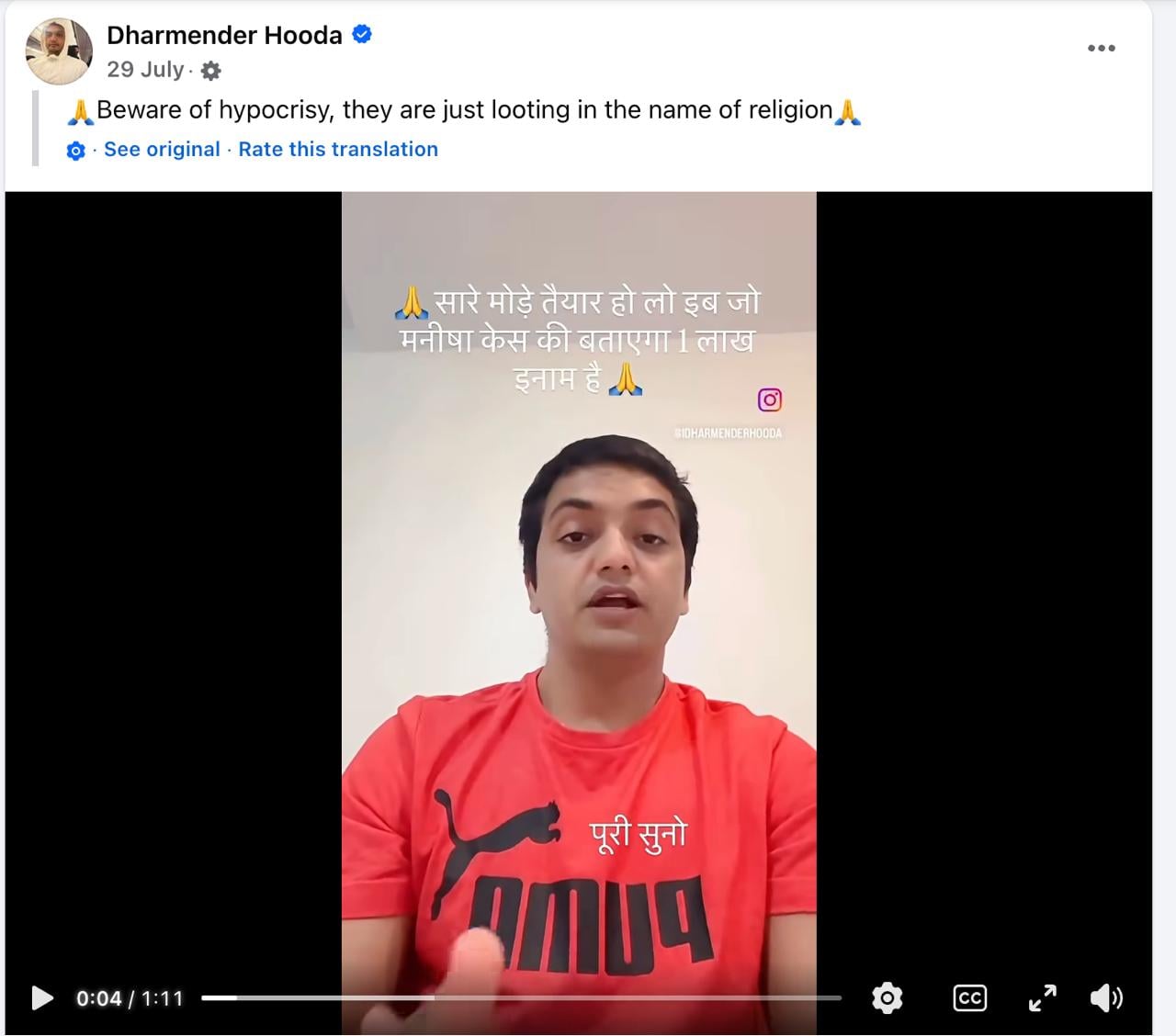
On 29 July, Hooda posted a video, targeting self-styled godmen and asking them to solve a murder case that the CBI hasn’t been able to close.
“If you are truly enlightened and possess divine powers, tell us who killed Manisha. If you cannot answer this, stop misleading people by claiming to have spiritual powers, pack your stuff and leave Haryana,” he said in the video.
18-year-old Manisha went missing from her house in Bhiwani in August last year. Her body was found two days later, triggering widespread protests in Haryana. Just last week, a Panchkula court rejected the CBI’s closure report and ordered further investigation into the matter.
In another video, he targeted a godman associated with Maa Chaugannan Dham in Meham, Rohtak. Hooda claimed he takes advance bookings online for devotees seeking an audience.
“Baba, shut down your business now. You claim to perform 200–300 exorcisms every day online, and say that if people come for free, they will not get their turn even by evening. Come out in the open and say that no one is possessed by spirits or goddesses, or we will lock up your dera. I have all your records — how many times you have been to jail for selling drugs, and where you sold CDs of blue films,” he claimed in the video.
In response, the baba posted a video saying he supported Hooda’s campaign against pakhandwaad but cautioned that the campaign against superstition could end up “suppressing the truth”.
Hooda too claims to have received threats for speaking against influential religious figures. He further claimed that people linked to ashrams as well as politicians have tried to pressurise him into withdrawing the criticism and apologising. “I refused. There can be no compromise on this issue. I will take them on,” Hooda told ThePrint.
Anti-baba songs
The fight against babas is now also playing out in songs. In Tatvadarshi, sung by Masoom Sharma and written by Harry Lather, the lyrics question the growing number of religious establishments and the influence of self-styled gurus. “Mugle barge kapti maanas ghane fire se guru bane; Jagah-jagah pe dere khul gaye, baithe se kai guru bane…” the lyrics say.
Another verse questions the conduct of religious leaders who preach salvation while facing criminal cases themselves.
“…Rape case mein fanse pade aur baat kare se veda ki
Bhaktinya ki baat kasooti, mukti to hai dera mein
Ghar ke baalak bhookhe sove, roti pove dera mein
Doodh se nahawe mustande, usi doodh te kheer bane
Prasad ke dariya khaave log, nu soche amar shareer bane”
(Caught up in rape cases, yet they preach the Vedas;
They speak of the welfare of devotees and promise salvation at their deras;
as children go hungry at home and they feast in the deras;
The strongmen bathe in milk, which is then used to make kheer;
Devotees eat it as prasad, believing that the babas are immortals.)
Lather said he wrote the song in November 2015, well before the current wave of protests against babas. The song now has 16 million views on YouTube with around 3 lakh likes, prompting the duo to release Tatvadarshi 2.
Sharma also sang The Great Warriors, which questions why people worship self-styled gurus while neglecting figures they traditionally revere. Meanwhile, Lather said that people are drawn to such figures because they promise financial help and a solution to their problems. He described followers of these godmen as “brainwashed”.
Lather too claims to have received threats from unknown callers, including international numbers, warning that he would be killed. He says, however, that has done nothing about them as threats like these were “common”, and that Hooda’s support helps him fight these scares.
‘Basesless narratives’, say followers
Rampal’s followers have rejected the allegations against him, arguing that the campaign against the sect is based on misinformation and that its critics have not adequately studied the religious practices they oppose.
Sunil Kandela, who had been associated with Rampal since his early days, rejected allegations about practices at the Barwala ashram, including claims that Rampal bathed in milk and then devotees prepared kheer using that milk meant for rituals.
He said food, including kheer, laddoos and jalebis, was served free of cost. “As far as bathing in milk is concerned, this is a baseless narrative,” he said.
He said Rampal’s teachings drew on the Vedas and the writings of Kabir, and prescribed a particular method of worship. He also defended the sect’s approach to donations, claiming that people who did not live at its ashrams were not asked to contribute, while residents gave according to their means.
“Thousands of people lived at the ashrams, with centres across Haryana, Rajasthan, Punjab and Madhya Pradesh. These are the places where people could eat and stay without worrying about money, and where caste did not determine how they were treated,” he said.
The followers also questioned the credentials of those leading the campaign against Rampal, including Dharmendra Hooda and Arya Samaj activists. He asked what Hooda had contributed to society and objected to Sharma using his music to criticise Rampal at public events.
Yogendra Maharaj, associated with Sadhvi Kamaldeep’s dera, rejected the suggestion that religious practices were necessarily based on blind faith. He said there was a difference between following a ritual without questioning it and practising something after receiving an explanation of its meaning.
Away from the debate, devotees continue to turn to self-styled godmen and godwomen keen to find a panacea for all their problems. An ambulance pulls up outside Sadhvi Kamaldeep’s dera, carrying a patient and his family. Kamaldeep, dressed in orange and wearing a large tilak, approached them with a trident in one hand. Several rudraksha malas hung around her neck. She picked up a broom and waved it over the patient.
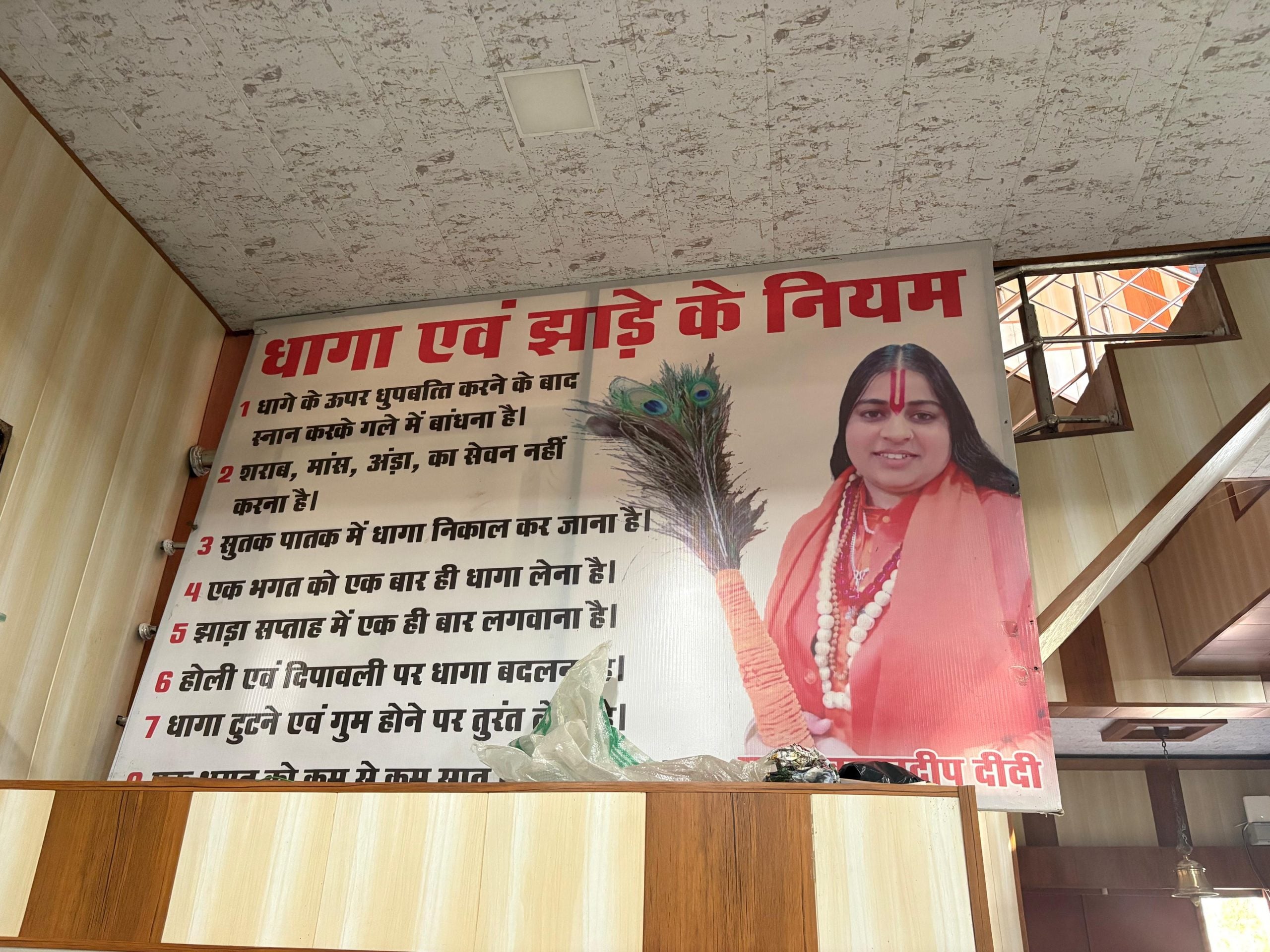
With devotees arriving in large numbers, the shrine has extended its hours and now conducts the jhaara ritual on Saturdays, Sundays and Tuesdays.
Local journalists and activists have questioned Kamaldeep about the legitimacy of her claims. She, however, offers little by way of an explanation, responding only with, “Bhagwan karta hai sab.”
She is accompanied by a young assistant, in his mid-20s, who manages her social media accounts and readily shows visitors videos that, he claims, support her testimonials of miraculous cures.
(Edited by Aakriti Handa)