



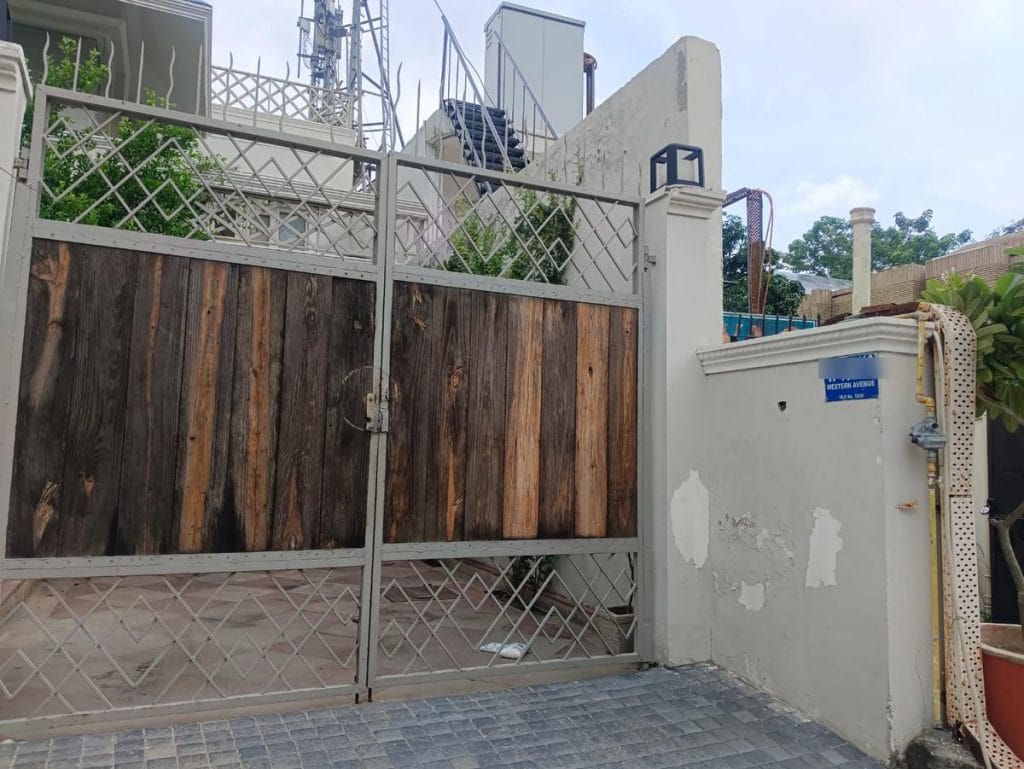
New Delhi: Fortuners, Scorpios, Thars and Mercedes disappear behind the fortress-like gates of Sainik Farm’s mansions. For a second, an open gate offers a glimpse of a manicured lawn or a swimming pool before swinging shut. There are no public parks, no children playing, no residents peeping out of balconies or strolling the bylanes. A hush hangs over the neighbourhood of high walls.
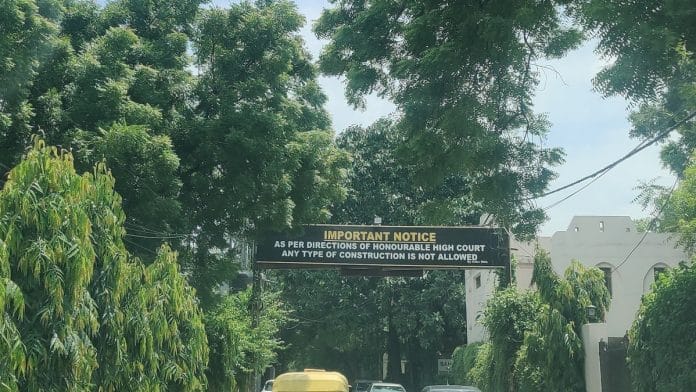
But at every entry point, large ‘Important Notice’ boards are rude reminders of the reality: construction is banned here. Beyond these entryways, the lanes are narrow and riddled with potholes, with water tankers just about squeezing through with daily supplies.
Sainik Farms is a lot of things to a lot of people. Money, secret lives of farmhouses and the old Rajiv Gandhi-era elite. But at its heart, all the wealth comes to naught. It is one of New Delhi’s largest unauthorised neighbourhoods.
“Life in Sainik Farm looks lavish and expensive from the outside, but from within, you cannot even repair a leaking pipe in your kitchen without worrying about the police,” said Karanvir Sharma, a resident of Sainik Farm.
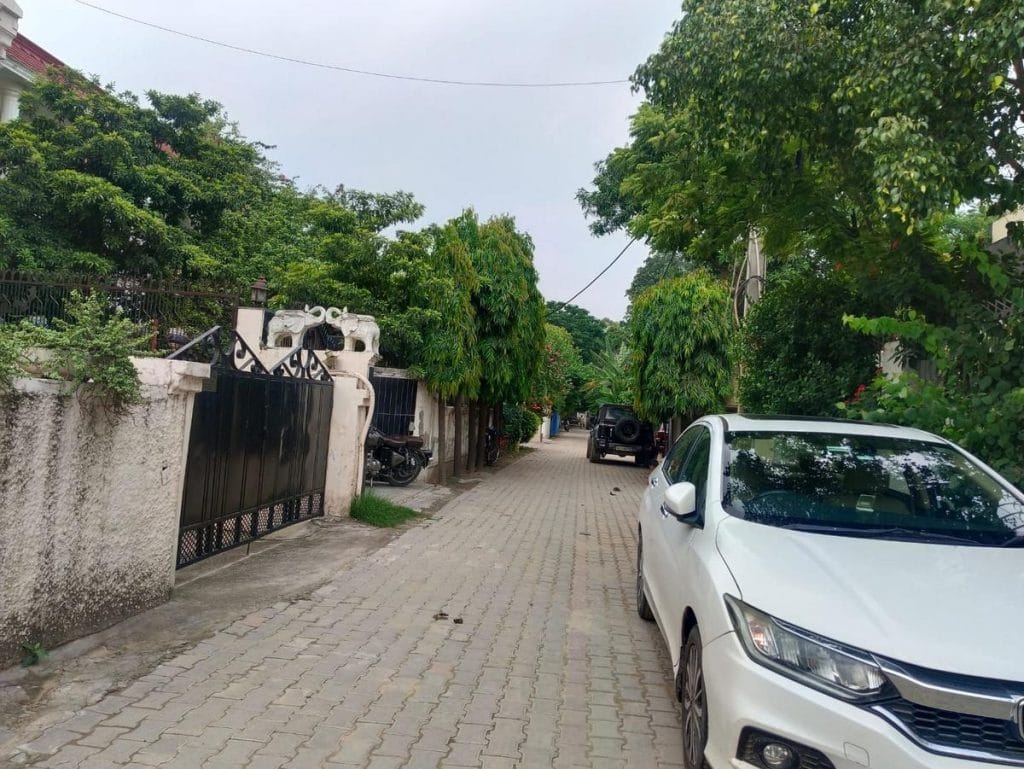
In this South Delhi enclave, sprawling farmhouses, bungalows and luxury homes worth several crores stand amid tree-lined corridors, but basic services are absent. Everything from garbage collection and road maintenance to water supply is largely organised by residents themselves through their Resident Welfare Associations (RWAs). The constant refrain among residents is that nobody in the civic authorities listens. The RWA is the de facto government here, although a weak, helpless one.
Their biggest grouse is with the label of being an elite neighbourhood. They are exhausted with the tag.
“We are living without basic necessities like a proper water supply, and when we create alternatives ourselves to meet our daily needs, we are simply labelled affluent. With the ‘affluent’ tag associated with us, nobody sees the struggles of the people living here,” said Hardeep Singh Bhalla, president of the Western Avenue Residents’ Welfare Association (WARWA), one of the RWAs in Sainik Farm.
Also Read: NCR RWAs are tired of handling complaints about beauty parlour, gym and clinic businesses
RWA to the rescue
Around a round table at the two-storey WARWA office, four members sit with a handful of residents, discussing yet another civic complaint about the crumbling speed breakers across Sainik Farm.
Should they be repaired? How much will it cost? How much money does the RWA have? Estimates are debated as residents pepper the discussion with grievances.
“Our roads are not used only by Sainik Farm residents,” said Bhalla. “Drivers travelling between Khanpur, Sangam Vihar, Neb Sarai and Chhattarpur often cut through our internal lanes to avoid traffic on the main roads. That extra traffic wears out our roads much faster, forcing us to repair them more frequently.”
The conversation soon moves to another recurring concern: security after dark. Residents talk about thefts and suspicious movement at night, while RWA members discuss installing additional CCTV cameras at key intersections and entry points. Once again, there’s a debate about cost, maintenance and how the project could be funded.
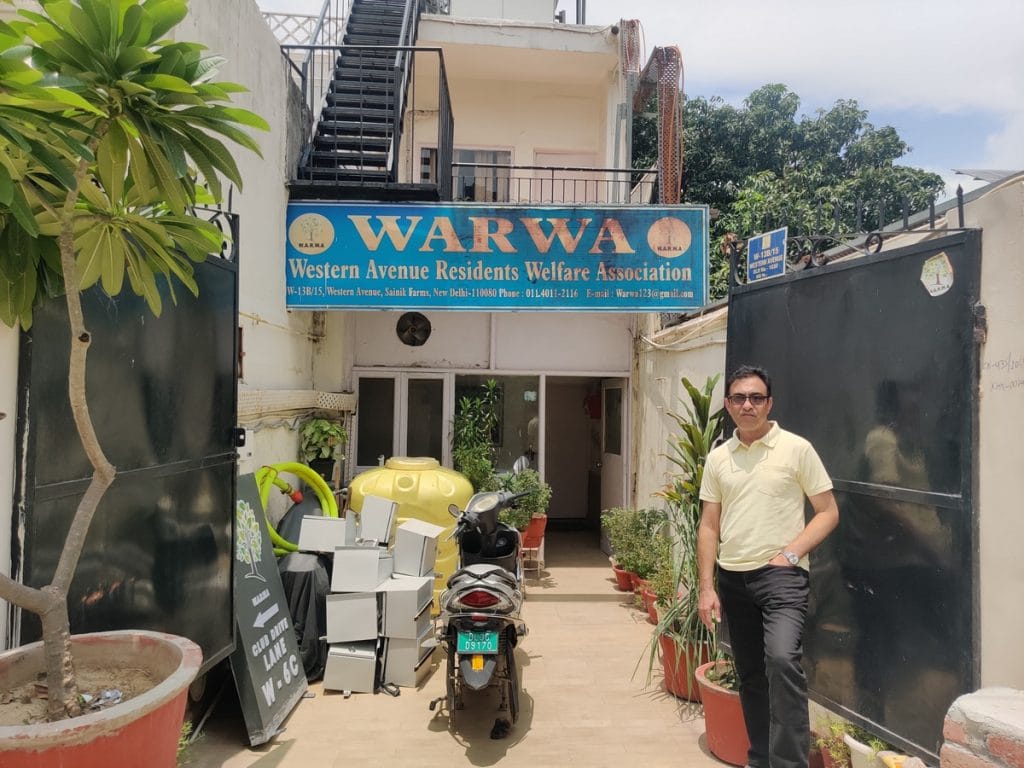
Six RWAs operate across Sainik Farm’s different blocks and adjoining localities, including Defence Services Enclave, Khidki Extension, Anupam Garden, Neb Valley, and Forest Lane. Among them, the WARWA functions as the primary Sainik Farm RWA, coordinating with residents and government authorities on civic and administrative issues.
One of the biggest battles of the Sainik Farm RWA has been with the Delhi Development Authority (DDA) over demolitions and the colony’s legal status.
If I face a problem or hear some commotion in the neighbourhood at night, my first instinct is never to call the authorities or the police. I contact the RWA because government officials rarely reach us when we need help”
– Kaveri Aggarwal, Sainik Farm resident
Encounters with government officials have often left RWA members frustrated and disappointed. Pointing to a pile of documents on the table, Bhalla said the RWA has spent years writing letters and submitting requests to the Delhi Jal Board and Municipal Corporation for basic civic facilities.
“We have met MLAs, visited every official’s office, and written countless letters and emails, but the files continue to grow while our requests remain unanswered,” said Bhalla.
Yet, despite the potholed lanes, the area still looks relatively clean and well-kept for Delhi. Residents say the credit goes to them alone.
“We are collecting our garbage ourselves. We clean the outside lanes ourselves. All we are asking from the MCD is a designated place where we can compost the waste,” said RWA member Rajeev Bhasin, recounting long and ultimately futile waits at the MCD office. With the civic body saying it cannot provide such facilities, the RWA has now even written to Delhi Chief Minister Rekha Gupta in the hope of a solution.
The neighbourhood’s origins have stacked the odds against it. Sainik Farm began in the late 1960s as a cooperative society for war widows and retired defence personnel. Over the decades, it grew into a sprawling residential colony for the rich without the necessary approvals from the DDA.
With a Delhi High Court ban on new construction since 2001, residents have fought for years to get Sainik Farm regularised, but to no avail. In August 2025, the court pulled up the Centre and Delhi government for “passing the buck” on the colony’s status.
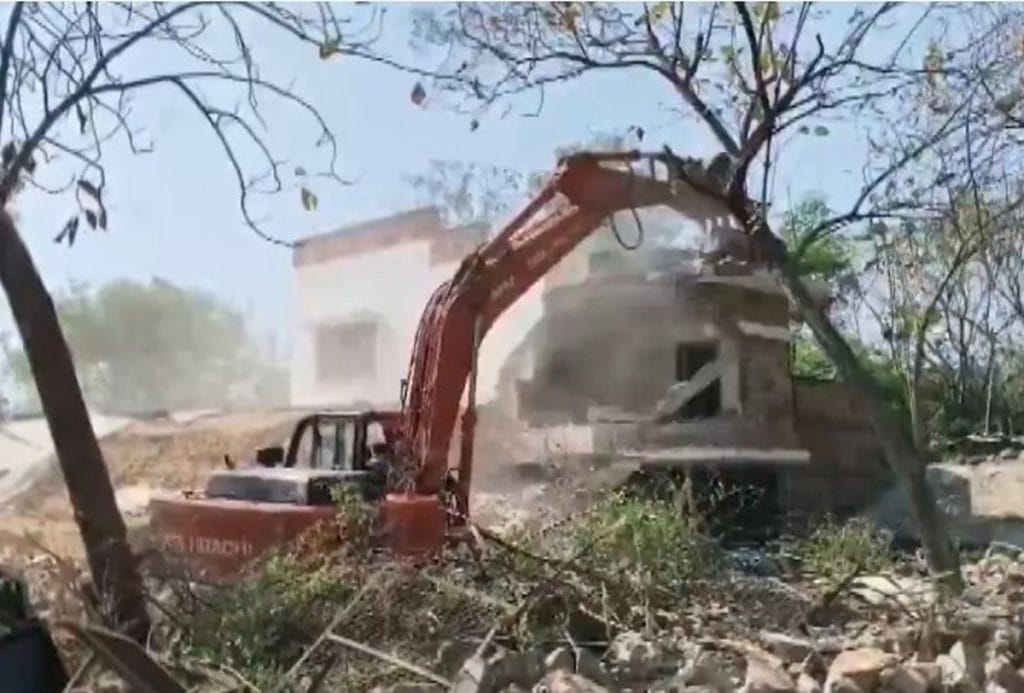
Adding another layer is the Southern Ridge, which borders parts of Sainik Farm and brings separate restrictions on forest and protected land. Demolition drives are a common occurrence. This year, the DDA razed 23 farmhouses in April, while another property was demolished and 10 sealed in June.
“The authorities never come here to listen to our problems, but they are always present to serve notices or stop even minor repair work, calling it illegal,” said Bhalla.
Band Baaja Baaraat dreams
Forty-two-year-old Karanvir Sharma invested his lifetime savings into a house in Sainik Farm in 2015. A construction-material supplier, he had been living in Gurugram’s DLF 2 but commuting for an hour or two each way to his office in Sainik Farm had tired him out. Living in the same neighbourhood promised more space, quiet for his retired parents and an escape from the traffic. Its elite trappings didn’t hurt either.
Before moving in, Sharma had only heard stories about the lavish lifestyle of Sainik Farm. He was told about the sprawling farmhouses, grand weddings, celebrity gatherings, and a sense of exclusivity. That image was also cemented in films like Band Baaja Baaraat, where Sainik Farm was portrayed as a preferred destination for extravagant weddings and high-profile celebrations.
“I had heard so much about this, and even the property dealers only showed me the grand properties and inside structures,” said Sharma, who lives in a two-storey house, barely visible through tall trees and the grand walls typical of Sainik Farm homes.
But the dream of owning a premium home in one of Delhi’s most talked-about neighbourhoods soon collided with the challenges of living in an unauthorised colony. The lack of civic services and tenuous legal status overshadowed the lifestyle he had imagined.
“For me, the house that represented a lifetime achievement soon became a reminder of the complicated reality behind Sainik Farm’s glamorous image,” he said. “I was aware of the reports about the colony’s unauthorised status and demolition drives. But I never imagined that basic necessities would become a daily struggle for me and my elderly parents.”
Sainik Farm is an unauthorised colony and it doesn’t come under MCD legally, so we don’t provide any kind of services there
-Surender Singh, MCD sanitary inspector
Water is one such pain point. Sharma said the direct supply to the area is so saline that it damages purifiers, leaving residents dependent on tankers and water stored in buckets for daily use. Residents also complain that they don’t receive MCD services.
“Sainik Farm is an unauthorised colony and it doesn’t come under MCD legally, so we don’t provide any kind of services there,” said Surender Singh, a sanitary inspector with the MCD.
Living conditions, however, have improved in the last few years with the RWA taking a more proactive role.
State steps back, RWAs step in
The Sainik Farm RWA, formed in 2004, has filled the neighbourhood’s civic vacuum for decades. But residents say its efforts redoubled after a new team led by Hardeep Singh Bhalla was elected in 2019.
Since then, it has taken on everything from fixing speed breakers to digging borewells and running security checkpoints. The RWA currently represents nearly 1,500 households.
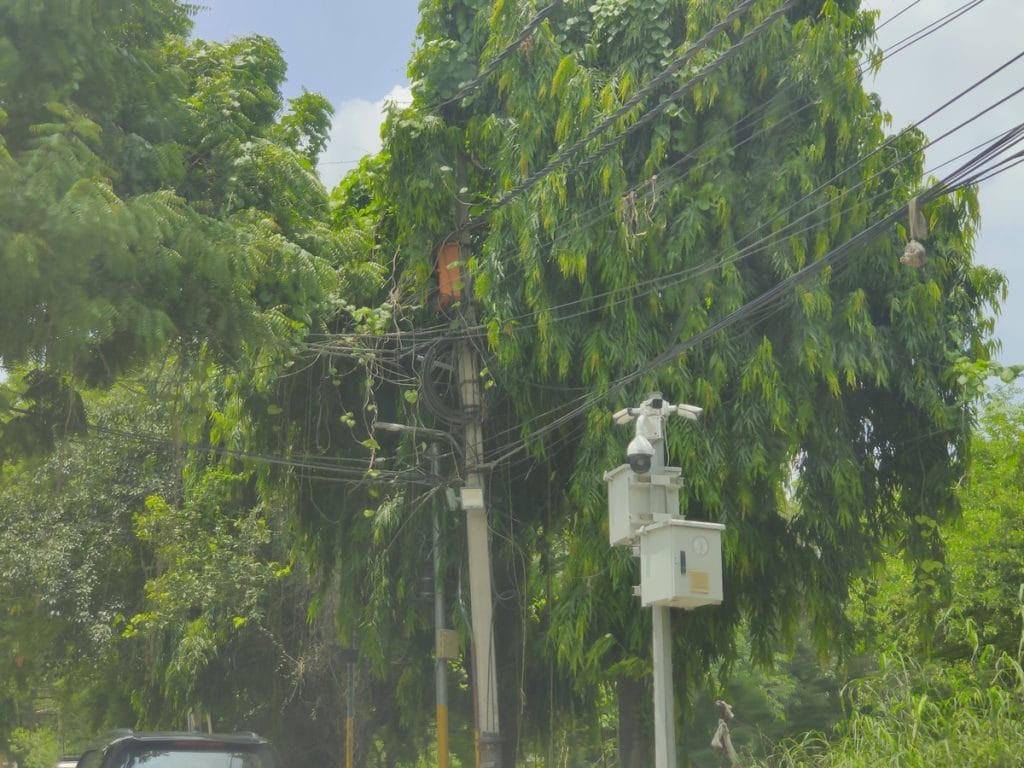
The RWA estimates that around 70 per cent of Sainik Farm’s residents are senior citizens, which has made stronger security arrangements necessary. Every entrance gate is fortressed with security guards, who are instructed to help elderly residents when needed. Security checkpoints have also been set up along internal lanes. The RWA also oversees street cleaning and routine maintenance.
“Over the past few years, we have seen a strong sense of connection develop across the entire colony. Earlier, we were simply a collection of residents, but with the RWA taking an active role, we have now become a close-knit community,” said Kaveri Aggarwal, who has been living in Sainik Farm for the past 20 years. “If there is a traffic issue, residents and RWA members come out onto the lanes to help manage and clear it. If a senior citizen needs any assistance, the RWA team steps in and gets the work started. We never had this kind of support before, but now we do.”
But a perception problem has also been haunting the RWA.
The stain of ‘affluence’
What Bhalla and many other residents are now increasingly vehement about is challenging the “affluent” label attached to Sainik Farm.
The tag even appeared in the 2006 KK Mathur Committee report, set up by the urban development ministry to examine farmhouses and unauthorised colonies. The report grouped Sainik Farm with Mahendru Enclave and Anant Ram Dairy as colonies inhabited by “affluent sections of society”; more than half the plots in the three colonies were larger than 350 square metres.
We don’t even have wide roads or infrastructure like Greater Kailash or Vasant Kunj. Sainik Farm may have some large houses, but not every home is lavish. Property prices here are also much lower than in Greater Kailash and several other parts of Delhi
-Hardeep Singh Bhalla, WARWA president
The committee recommended regularising such colonies, but only after residents paid hefty penalties and the full cost of developing civic infrastructure.
“An individual or a family can be affluent, but how can an entire locality be called affluent when people from all walks of life live here — from businessmen to corporate employees?” Bhalla said. According to him, the tag has shaped a narrative that has deprived the colony of basic civic facilities.
A look at the frequent headlines about Sainik Farm tells the plight of these so-called elites.
“DDA carries out demolition drive in Sainik Farm following L-G’s order,” said one in May 2025. This April, another announced “DDA razes Sainik Farm houses to secure green cover on government land”, while in June, it was “Delhi MC bulldozers roll into Sainik Farms.” A hint of schadenfreude is sometimes evident. “Aalishan kothiya jamidoz, Delhi ke Sainik Farm me DDA ka bulldozer (Luxurious mansions razed to the ground… DDA bulldozer at Delhi’s Sainik Farms),” declared one Jagran headline.
“Even if the demolition is happening in a nearby locality or another place, the headline will mention Sainik Farm. Everything online about Sainik Farm is negative,” said 65-year-old Rajeev Bhasin, an executive committee member and a resident of Sainik Farm since 1997.
Left behind
Originally planned as farmland with small houses, Sainik Farm expanded as plots were carved up and sold to new owners. Over time, bungalows and expansive farmhouses took over. But their inhabitants say they have been left behind even as other parts of Delhi developed.
“We don’t even have wide roads or infrastructure like Greater Kailash or Vasant Kunj. Sainik Farm may have some large houses, but not every home is lavish. Property prices here are also much lower than in Greater Kailash and several other parts of Delhi,” Bhalla said.
Beyond the civic neglect, Sainik Farm has also fought years of court battles. These have ranged from the long-running fight over regularisation to court scrutiny of rampant unauthorised construction and a 2021 case in which the High Court stopped Sainik Farm RWAs from charging entry fees to certain vehicles.
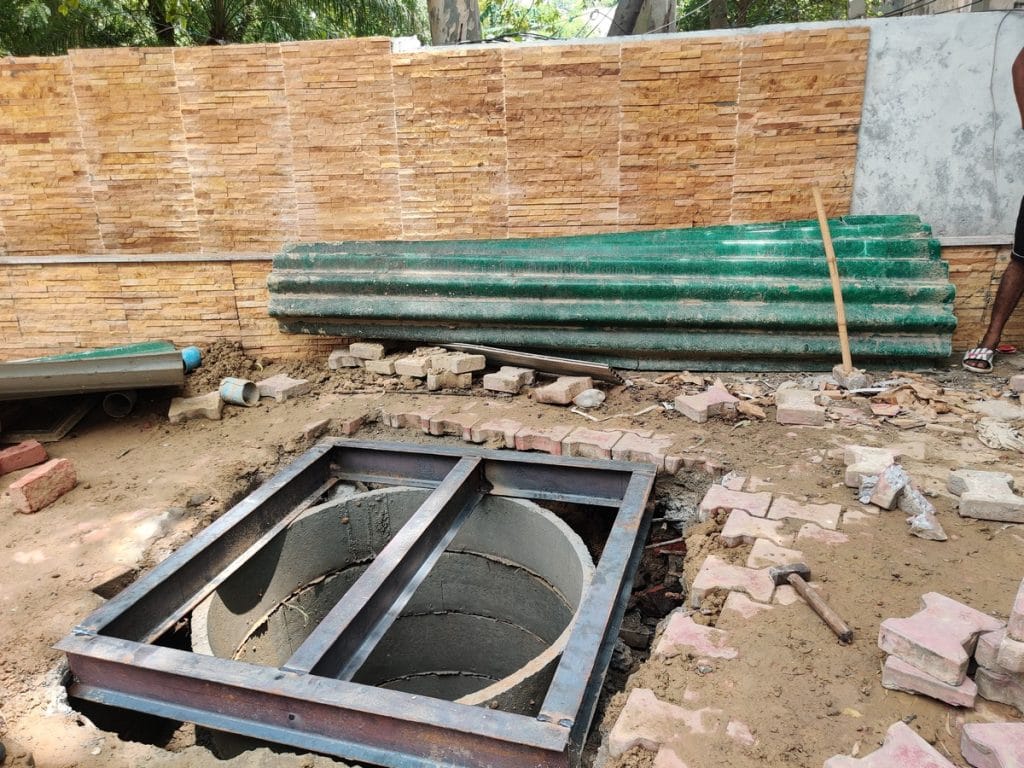
Through it all, the residents’ predicament has not gone unnoticed. In 2025, the Delhi High Court observed that residents of Sainik Farm had been “hanging fire for years without being able to lay a brick for repairs”. Even the Mathur Committee noted that “due to inadequate infrastructure, the quality of life in unauthorized colonies is very poor”.
For more than a decade after moving to Sainik Farm, Bhasin and his family relied on large generators for electricity. They got a legal power connection only in 2008 after years of meetings, letters, requests and visits by officials.
Bhasin pointed out that Sainik Farm supports the livelihoods of many people who work in and around the colony, while the RWA uses funds collected from residents for community projects.
“We have repaired the roads, which are not only used by the residents but also by vehicles from nearby areas that use these inner lanes. We charged toll only from commercial vehicles, but even that was questioned by the Delhi High Court,” he added.
Also Read: Why a Rs 300-crore luxury housing project is empty in Delhi’s Vasant Kunj
‘Who listens to us?’
In 2021, a Sainik Farm resident challenged the entry tolls charged by two RWAs, arguing that they were making it harder for ambulances, delivery vehicles and other essential services to enter during the pandemic. The SDMC and Delhi Police also told the court that the gates and tolls had been set up without informing the authorities.
The Delhi High Court was scathing.
“How can you charge entry fees during these times? Everyone is doing charity, but you are using Covid-19 to extract money… very nice,” Justice Rekha Palli told the RWAs, ordering them to stop charging the toll.
Bhalla argues that the RWA’s actual intentions had been misrepresented.
“It was never about making money. It was for safety and traffic control, and only commercial vehicles were charged a toll. But who will listen to us or see what actually happens?” he said.
No matter how much charity work we do or how much we struggle for basic necessities, the headlines only focus on the tag of an affluent area with big houses – not on our real issues”
-Rajeev Bhasin, WARWA executive committee member
RWA members insist they have only served the community, using residents’ funds for initiatives such as rainwater harvesting, which they say has helped prevent monsoon waterlogging and allowed rainwater reuse. They also point to the Covid-care facility set up during the pandemic in Sainik Farm to help domestic workers, their families and people from nearby localities. In the rainy season, they distribute raincoats and umbrellas to traffic police personnel and others who work outdoors.
“No matter how much charity work we do or how much we struggle for basic necessities, the headlines only focus on the tag of an affluent area with big houses—not on our real issues,” Bhasin added.
Residents such as Aggarwal say the RWA is the closest thing they have to a government, whether it is unpaved roads being turned into proper streets or CCTV cameras going up across the lanes.
“If I face a problem or hear some commotion in the neighbourhood at night, my first instinct is never to call the authorities or the police. I contact the RWA because government officials rarely reach us when we need help,” Aggarwal said.
Behind the iron gates, many are still waiting for a reliable water supply. Apart from the 15 community borewells shared by the six RWAs, water tankers move through the colony all day to meet residents’ needs.
“We keep requesting the authorities for a proper piped water supply, sanitation workers, and even land for a biodegradable waste management facility. But for years, all we have received is silence—or directions to approach one department after another,” Bhalla said.
(Edited by Asavari Singh)
Is the scene different in any other illegal unauthorised colony!?