



New Delhi: A senior employee of Delhi’s Department of Archaeology decided to put his grievances on paper in October 2025. His two-page complaint to the department’s secretary raised questions about the promotion of surveyor Jaspal Singh to Archaeological Engineer, arguing that the two posts belonged to entirely different wings of the department. He wanted the promotion scrutinised. What followed was a warning instead.
The employee alleged that changes to the Recruitment Rules had paved the way for Singh’s promotion and sought an investigation by either the Union Public Service Commission (UPSC) or the Administrative Reforms Department.
But the department’s response cautioned him against making allegations against senior officers without verifiable facts or documentary evidence.
“You are hereby advised to refrain from making grave allegations against senior officers without verifiable facts or documentary evidence. Any repeat of such conduct — where official machinery is diverted to investigate baseless complaints — will be treated as misconduct,” reads the response from the Art, Culture and Language (ACL) department, a copy of which ThePrint has accessed.
The Delhi Archaeology Department comes under the ACL Department, and 75 monuments are under its jurisdiction.
The exchange has since become a flashpoint in a wider dispute over recruitment and promotions within the department. Employees allege that changes to the Recruitment Rules between 2021 and 2023 for several technical posts were designed to benefit particular individuals, raising questions about how appointments and promotions are handled in the department responsible for preserving Delhi’s archaeological heritage.
The numbers tell a story of a department slowly running out of people and, with them, the capacity to do archaeology. Of the 18 sanctioned posts in Delhi’s Department of Archaeology, 13 lie vacant, including key positions such as deputy director, Archaeological Engineer (AE) and Conservation Assistant.
The department’s top leadership post has not been filled for nearly two decades. The last person to hold it was Kishan Lal, who was promoted to deputy director in 2008. Before him, archaeologist BSR Babu occupied the post. Since then, the position has remained vacant.
The shortage is so acute that the department has just one Assistant Archaeologist, hired on a contractual basis in 2023.
Indian archaeology is finding new ways to make the ancient past cool again — opening up excavation trenches to curious visitors, taking history beyond museum walls and using social media to bring long-forgotten civilisations closer to the public. In Delhi, however, the story is rather different. The state archaeology department entrusted with preserving the capital’s past appears to be struggling to find its own footing.
For a department entrusted with unearthing Delhi’s past, the city’s state archaeology department has little to show for itself: no excavation undertaken in nearly three decades and the crucial post of deputy director lying vacant for almost 20 years. The stagnation has left employees frustrated, not just by the shortage of hands and the absence of leadership, but also by what they allege is a system that has begun to work in favour of a select few.
The department’s senior officials said that their work isn’t hindered despite several posts being vacant for years.
“People are not interested in joining the State Archaeology Department; instead, they prefer the Archaeological Survey of India (ASI) because it offers various perks. We have issued advertisements to fill vacant positions several times, but we have been unsuccessful in filling them. But we are managing with the staff we currently have, and none of our work is being hindered,” K Mahesh, secretary, ACL Department, told ThePrint.
When Mohammad Nabi Khan joined the Delhi State Archaeology Department in the 1990s, he thought he was becoming part of a department with room to grow. What he encountered over the years, however, was a slow decline in its working culture, marked by staff shortages.
By the time Khan retired as a Conservation Assistant (CA) in 2021, the disappointment had only deepened. For him, the problem was no longer just about preserving monuments; it was about reviving a department that seemed to have lost its sense of purpose.
“The Delhi State Archaeology Department is in need of a fresh lease on life; otherwise, the department tasked with preserving history will itself become a piece of history,” said Khan.
Controversy over recruitment rules
The Recruitment Rules were revised as part of a proposal to restructure the Delhi State Archaeology Department and fill vacant posts. However, despite the new rules being framed, several key positions in the department remain vacant.
At the heart of the controversy is a question of who gets to occupy specialised archaeological and conservation posts — and whether the rules governing these appointments have been altered at the cost of technical expertise.
The most contentious case, employees say, is Singh’s promotion from surveyor to Archaeological Engineer (AE). The former post falls under the department’s Monument unit, while the latter belongs to its Conservation unit.
A surveyor’s work primarily involves surveying sites and preparing reports, whereas the Archaeological Engineer’s role requires a different set of technical competencies, a source in the department said.
The revised Recruitment Rules for Archaeological Engineer, however, opened the door to departmental candidates. They stipulated that a surveyor in Level 6 of the pay matrix, with five years of regular service in the grade, could be considered for the post alongside external candidates.
“The department’s administrative and technical framework has been systematically hijacked through the deliberate manipulation of Recruitment Rules, aimed at monopolising power,” a source alleged, describing Singh’s promotion as the clearest example of what employees believe is a dilution of the conservation cadre.
A document accessed by ThePrint records that, after examining the eligible candidate’s service records and educational qualifications against the prescribed Recruitment Rules, the departmental selection board recommended Singh’s appointment as Archaeological Engineer through promotion.
Previously, the post was filled through the UPSC, a source said, arguing that the process helped ensure the appointment of candidates with the requisite technical expertise.
Employees allege that allowing an internal promotion under the revised rules weakened that safeguard.
“The Recruitment Rules for a Group-B Gazetted Archaeological Engineer post were deliberately manipulated. Instead of keeping it open for highly qualified B.Tech professionals, the rules were twisted to make it a promotional post exclusively for a basic surveyor. Genuine domain experts are being kept out, and the structural conservation of Delhi’s monuments has been entirely paralysed,” said one of the officials.
Singh’s elevation from Surveyor to Archaeological Engineer post happened just a year before his retirement. But retirement did not keep him out of the department. A subordinate with no jurisdiction over conservation suddenly moved a file to hire Singh as a Professional Consultant (Conservation) against the vacancy his retirement created.
Also read: Brew TV is betting big on India’s independent cinema. It was born from a filmmaker’s struggle
A promotion followed by a consultancy
ThePrint met Singh at his office in Civil Lines, but he declined to comment on his promotion.
Mahesh, meanwhile, rejected allegations of manipulation.
“Recruitment Rules were made in a transparent manner and before that various approvals were taken. No one manipulates the Recruitment Rules,” he said.
The complaint against Singh was taken up months after his retirement in January 2026. But his departure from service did not mark the end of his association with the department. In August, he returned as a Professional Consultant (Conservation) on a one-year contract.
The controversy extends beyond the Archaeological Engineer post.
In 2022, the department revised the Recruitment Rules for Conservation Assistant (CA), prescribing qualifications that included a master’s degree in Conservation, Preservation and Heritage Management and a master’s degree in Architectural Conservation.
According to a source, the eligibility criteria raised concerns because the School of Heritage Research and Management (SHRM) was the only institution in India offering the specified course. Employees alleged that the rules, as framed, narrowed the pool of eligible applicants and gave graduates of a single institution a distinct advantage.
“This means Recruitment Rules have been changed in a manner that only students from one institution can apply for the post,” the source said, questioning why the department had adopted such narrowly defined qualifications.
ThePrint also accessed an audit report on SHRM that flagged administrative irregularities. The report observed that the institute had appointed staff over and above its sanctioned strength without approval from the finance board. It also noted that a research assistant had been promoted to the post of office superintendent in a manner that was not in accordance with the rules.
Despite its mandate to uncover and safeguard Delhi’s archaeological heritage, the department has been unable to undertake even its core work — archaeological excavations — for years, with staff shortages adding to its woes.
The last major excavations undertaken by the department date back to the 1980s and 1990s, when Babu led work at three historic sites — Mandoli in East Delhi, Bhorgarh in North Delhi and Jhatikara in West Delhi.
The discoveries at Mandoli were particularly significant. Excavations during the 1987-88 and 1988-89 field seasons revealed, for the first time in Delhi, stratified layers containing evidence of the Late Harappan and Painted Grey Ware cultures, pushing the city’s known history back to protohistoric times, around 1500 BC.
“(It pushed) back the history of Delhi to proto-historic times approximately 1500 BC,” Babu wrote in the preface to the Mandoli excavation report, underlining the importance of the findings. Yet, even this work took decades to reach the public record. The report documenting the excavation was published last year, nearly three decades after the fieldwork was completed.
“Delhi has very limited archaeological sites, and due to encroachment all are levelled up, and there is no scope for excavations now,” said Jaspal Singh.
‘Deeper failure of institutional will’
The questions over the Delhi Department of Archaeology’s functioning extend beyond staff appointments to the way it awards contracts for conserving the city’s heritage.
In July 2025, the department floated a tender worth Rs 4.59 lakh for minor conservation and development work at Kos Minar near the Northern Gateway in Badarpur. The first tender was withdrawn, and a fresh one was issued on 25 July.
The contract eventually went to Bhawani Enterprises, a Delhi-based firm run by Rahul, who holds a BA degree. Records, according to the information available, raise questions about the firm’s eligibility: it had been established barely two weeks before the tender was floated, while its Aadhaar authentication was completed months after the contract was awarded.
There was another condition the department itself had laid down. The tender notice made it clear that bidders had to demonstrate experience in archaeological or heritage conservation work undertaken during the previous three years, either independently or through a consortium, backed by supporting documents. The notice was signed by Jaspal Singh, who was then the department’s Head of Office.
Department sources alleged that the tender was extended to benefit Bhawani Enterprises, despite the firm’s lack of an established track record in monument conservation.
“The tender was given to an agency that had no prior experience of handling monuments and was registered just weeks before the tender,” a source said.
The sequence of events has raised questions about how a newly established firm qualified for a contract that explicitly required prior experience in conserving archaeological and heritage sites.
“We were given the work by the state archaeology department, and we did that. I can’t say anything about the tender process,” Rahul told ThePrint.
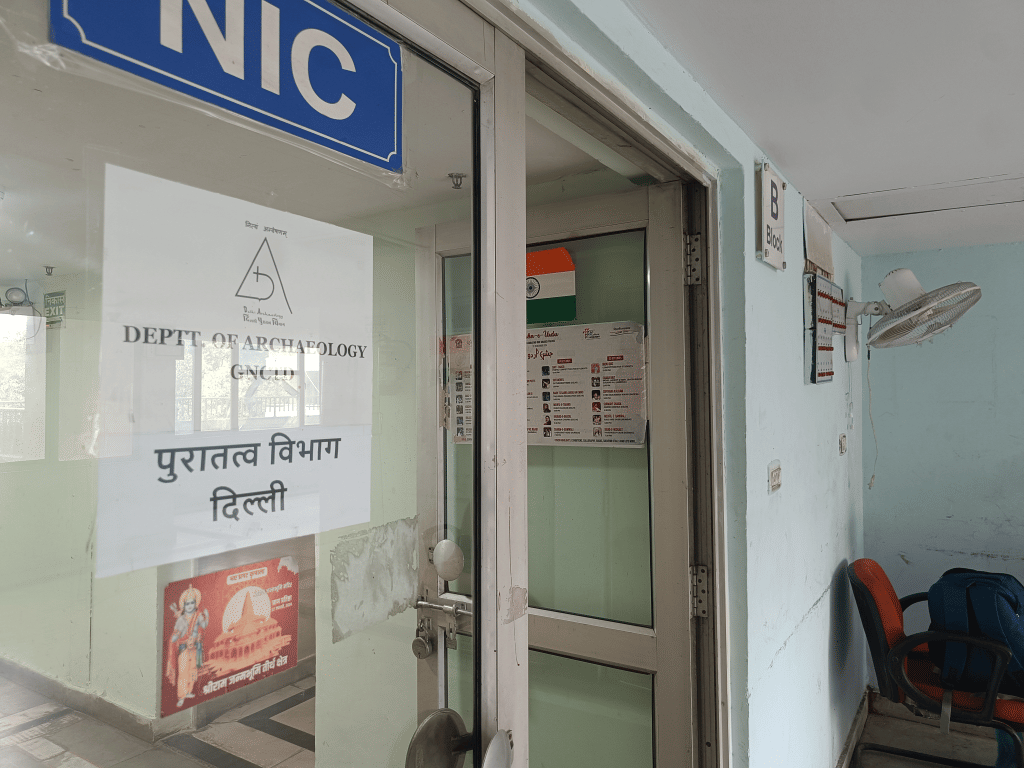
On the second floor of Vikas Bhawan in Delhi’s Civil Lines, the Archaeology Department is easy to miss. There is no signboard or plaque announcing its presence.
Only a small white sheet of paper pasted on the gate, bearing the words Puratatva Vibhag, Delhi, gives away the office’s identity. Just below it hangs a poster of the Pran Pratishtha ceremony of the Ram temple in Ayodhya, held in January 2024.
The department shares the floor with the Shahjahanabad Redevelopment Corporation, another government body that has struggled to fulfil its mandate.
The department was started in 1978, and in the last four decades, it has run from several places, including the Kashmiri Gate Bus Stand, Dara Shikoh Library, and now Vikas Bhawan in Civil Lines.
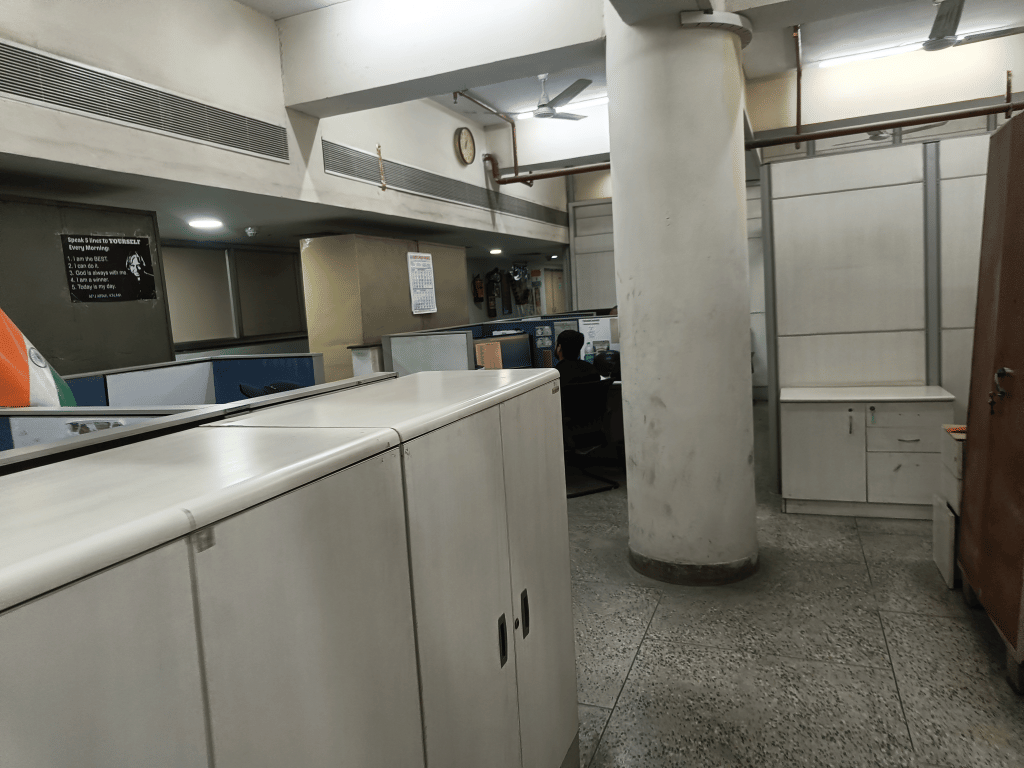
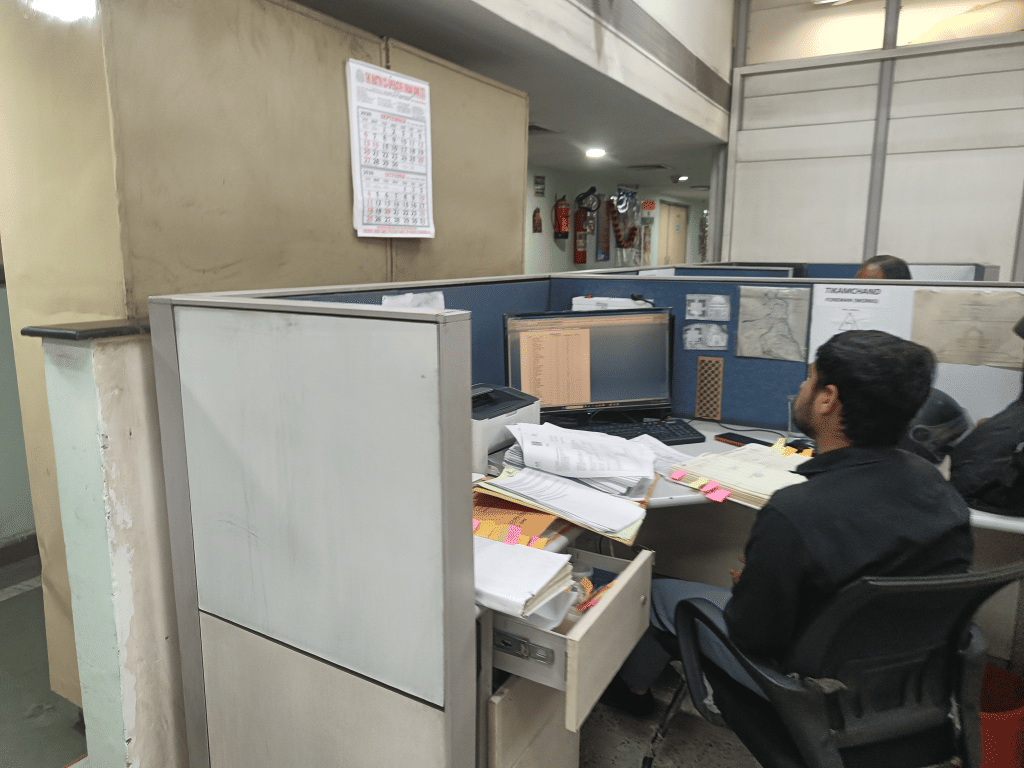
Inside, rows of bulky almirahs stuffed with old files occupy the office, while many chairs sit empty. A handful of officials go about their day as religious chants play softly in the background.
“While archaeology elsewhere is finding new ways to bring the past alive for the public, the department responsible for Delhi’s buried history is battling a crisis of its own — one that its employees say goes beyond a lack of resources to a deeper failure of institutional will,” said an ACL department official.
Also read: Delhi-NCR societies are not treating domestic workers well. No toilet, no parks, separate lifts
‘It’s time to further nurture Delhi’s heritage’
The makeover of Delhi’s archaeology department began under the Arvind Kejriwal-led AAP government, which sought to give greater attention to the capital’s historical sites and heritage infrastructure.
The idea was to move beyond the department’s traditional role of protecting monuments and make Delhi’s archaeological legacy more accessible to the public through conservation, restoration and the development of heritage sites.
The reform push became more explicit in 2019, when a proposal was moved to restructure the department and increase its staff strength. By August 2021, the government was working on amending recruitment rules, with plans to raise the department’s strength to 60 in phases.
The Delhi archaeology department has seen moments of renewed attention over the years, with governments announcing ambitious plans to restore monuments and bring the capital’s forgotten heritage back into public view.
In 2022, then deputy chief minister Manish Sisodia inspected conservation work at Azimganj Serai and promised that the monument would be restored to its original state.
“Buildings of historical importance such as Azimganj Serai have remained neglected for a long time, due to which they have suffered a lot. But the Kejriwal government is ensuring that each of them is preserved in its original state with the support of experts and best craftsmanship,” Sisodia had said.
The department even made headlines, with one newspaper announcing: 70 crore se hoga 72 smarkon ka kayakalp (72 monuments to be transformed with Rs 70 crore)
But for Khan, who has spent decades in the department, such announcements have rarely translated into any fundamental change within the institution.
“Under every government, barring a few instances, the department has run in a routine manner. It received sufficient funds, but nothing has changed inside the department,” said Khan.
The latest push has come from the Rekha Gupta government, which has launched a heritage conservation drive centred on public-private partnerships and research fellowships. Under its Our Monuments, Our Pride initiative, the government has approved two schemes allowing private entities to adopt monuments and provide financial assistance of up to Rs 2 crore for restoration work.
“Every generation of Delhi has lived this city in its own way. Some have read about these monuments in books, while others have seen them up close. Now is the time to further nurture this heritage and pass it on to the next generation,” Gupta posted on X. (link?)
The government has said private companies, public sector undertakings, trusts and non-governmental organisations will be able to adopt 75 historical monuments in Delhi for five years. Yet, even as the scheme promises to bring fresh resources and attention to the capital’s heritage, questions remain about its implementation. Jaspal Singh, an official in the department, did not disclose how many applications had been received for monument adoption.
But on the ground, the response appears to have fallen short of the enthusiasm Jaspal Singh had claimed.
According to sources in the department, only a handful of people showed interest in adopting monuments after the initial advertisement. With little response, the department was back with another notice a week ago, extending the deadline for applications — a sign that the scheme is yet to attract the interest it was hoping for.
(Edited by Saptak Datta)