



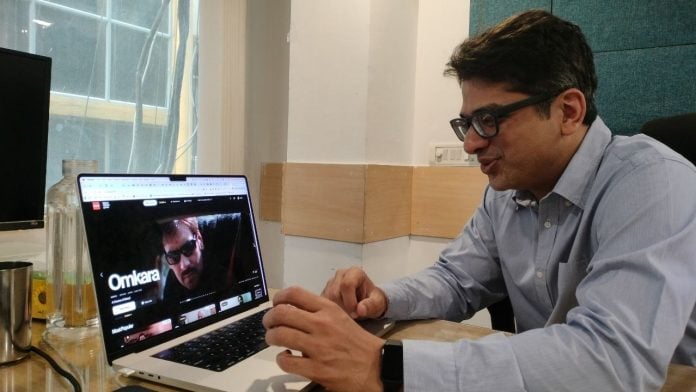
New Delhi: An indie film can travel to Cannes, win acclaim, and still struggle to find a screen in India. A new streaming platform, Brew TV, is making room for such movies that often get left behind by Netflix and the box office alike. The app is betting that India’s independent cinema has an audience; it just needs a place where viewers can find it all under one roof.
Founded by entrepreneur-turned-filmmaker Ankur Singla four months ago, Brew TV was launched with a 20-member team to solve distribution nightmares faced by indie filmmakers. Since then, it has built a catalogue of 221 feature films, ranging from Omkara (2006) to Parth Saurabh’s Pokhar Ke Dunu Paar (2026). It also hosts 77 short films, including Indian and international titles, and six web series. The platform has attracted nearly 73,000 registered users, with Singla and his team curating the catalogue in less than a year.
Indian independent cinema has a persistent problem: films are being made, but too many have nowhere to go. Brew TV’s bet is that independent cinema needs more than festival applause and sporadic theatrical screenings to survive. It needs a reliable route to audiences. The platform is building an alternative distribution network for films that struggle to secure theatrical releases or find space on mainstream OTT services, while using well-known titles to draw viewers toward lesser-known work.
“There is an audience of nearly a million people for independent films in India. They are scattered across cities and want to watch these films, but reaching them through theatres is almost impossible. The unpredictability of distribution also makes it difficult for filmmakers to continue making films. That’s when I realised there had to be another way,” Singla, 46, told ThePrint.
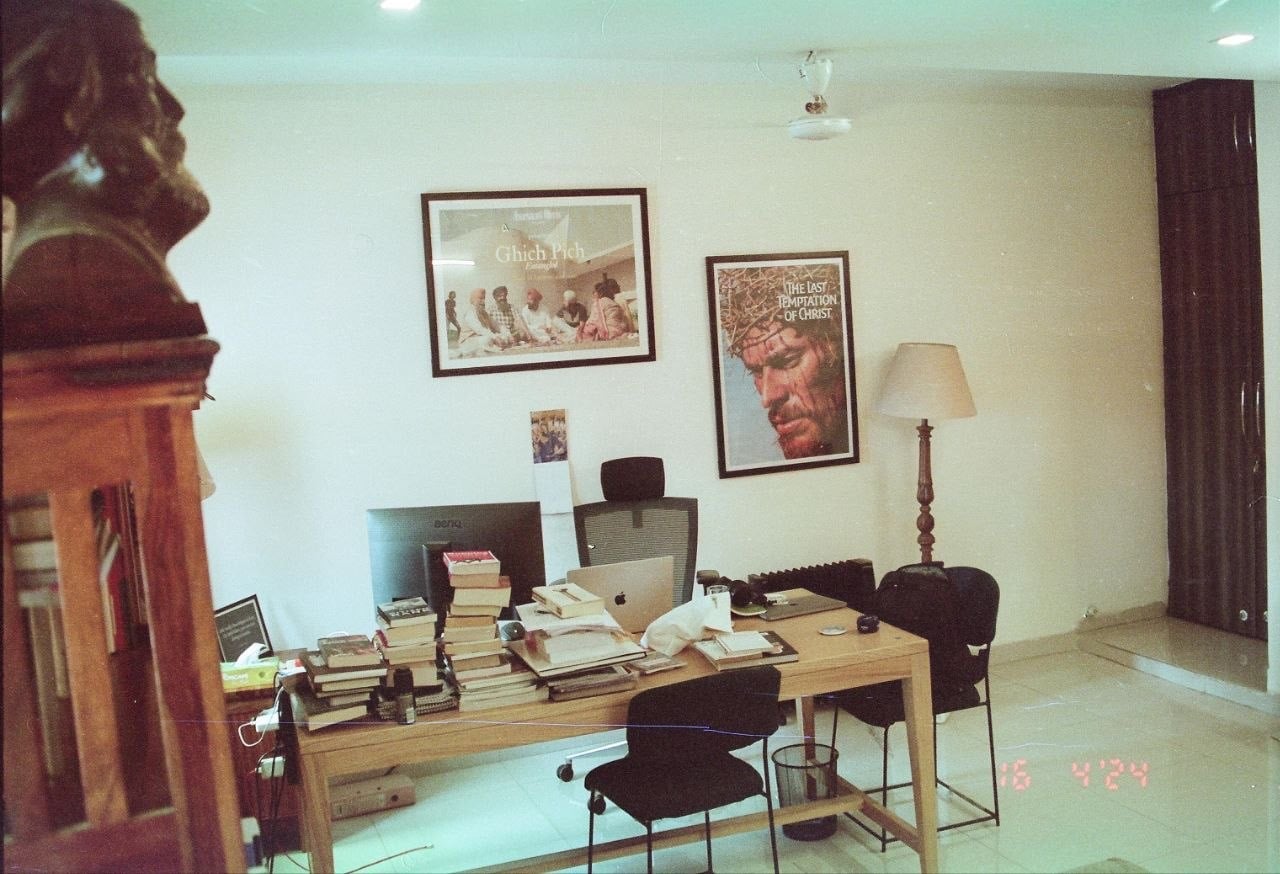
Singla’s own experience of trying to distribute his film fuelled the idea. His debut feature, Ghich Pich (2025), took nearly a year to write before filming began in early 2023. But when it was ready for release in August 2025, it got caught between the box-office success of Saiyaara and the impending release of Hrithik Roshan’s War 2.
“We were told that, ‘Brother, don’t release on 1st August because you won’t get any screen… Saiyaara is a complete hit and they have given all shows to Saiyaara,’” he recalled.
Accepting the situation, the team behind Ghich Pich stopped its marketing efforts and took a break. But when War 2 failed to perform as expected, theatre management called Singla on a Thursday, asking to reinstate the film to capitalise on the holiday weekend. The experience prompted him to rethink how independent films could reach their audiences without depending entirely on theatrical releases.
“The incident showed me that theatrical distribution is actually very random, though everyone is optimising for their own survival, but overall, it makes the entire system brutally difficult to navigate… The distribution of indie cinema needs to be done properly, and it is better done online as the primary medium, with cinemas playing a supporting role,” he said.
Building the Brew catalogue
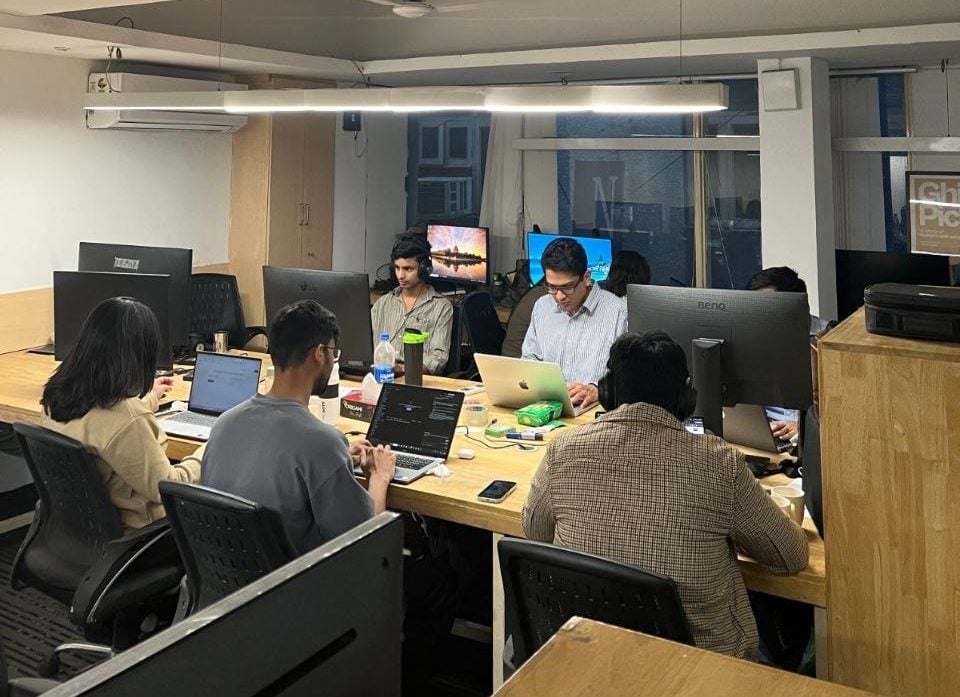
Brew TV was built by filmmakers who had run into the same distribution wall themselves. After Ghich Pich, Singla got his film crew to work on an alternative: a hybrid release model for indie films. It would involve limited theatrical screenings for core audiences, followed by immediate online availability.
“It was like filmmakers had always been facing this problem, and then finally a filmmaker or those artistic people themselves found a solution. Absolutely, absolutely, there is no other way to solve it,” said Syed Mubashshir Ali (26), creative producer at Brew TV. Ali also worked on Ghich Pich as editor and colourist.
For the first six months, while the team worked on the app’s UI/UX, Singla also started approaching catalogue owners to acquire films in bulk. To build the initial library, he travelled to Mumbai several times to meet independent filmmakers and connect with them directly.
“Initially, I used to go to all of these filmmakers to talk to them, to convince them,” Ali said.
One of the first films to stream on the platform was Nirvana Inn (2019), produced by Harsh Agrawal and starring Adil Hussain. Agrawal became instrumental in helping Brew TV build its catalogue.
“In building the catalogue, he helped by saying, ‘Talk to this person, talk to that person.’ We have three films of Harsh, and he connected us with so many people to get their films,” Ali said.
Agrawal runs the production company Uncombed Buddha with Aditya Grover, which has produced 12 films. Its films have screened at major festivals, including Cannes and Sundance, and one of its productions, Rupture, won a National Film Award in 2025.
“I had all the resources and contacts. Because of that, I coordinated with all the best filmmakers whose best films hadn’t been released yet,” Agrawal said. He lined up nearly 20 films for Brew TV within a month, without the help of a catalogue manager.
Filmmaker Parth Saurabh was among the first directors to take a bet on the platform, releasing his acclaimed film Pokhar Ke Dunu Paar, starring Abhinav Jha, as Brew TV’s inaugural “Film of the Week” in July. Saurabh is one of the leading voices of the Darbhanga New Wave, a movement of independent filmmakers creating cinema in Bihar.
“If all independent filmmakers come together to support a platform, the audience could be consolidated in one place,” Saurabh said, comparing its potential to what MUBI has done for world cinema.
“The big success stories might get on Netflix or Prime. But the rest of the films are not available to watch anywhere. In that sense, Brew TV is playing a very important role,” he added.
An entrepreneur-turned-filmmaker
Singla’s love for cinema started in law school. While studying law at the National Law School of India University in Bengaluru, he helped start the college film club, where he held screenings of European arthouse classics, such as The 400 Blows, which often attracted just four people.
“We tried hard to get people to watch European art-house cinema, but even in law school there wasn’t that much uptake for it,” Singla recalled.
The club then organised an Amitabh Bachchan festival featuring his “Angry Young Man” hits, including Zanjeer (1973) and Deewaar (1975).
“Every single film of his had a full crowd,” he said.
The experience deepened his passion for cinema and taught him early lessons in audience behaviour, though he still viewed it as a hobby. After graduating in 2007, he spent two years working as a Legal Adviser at Linklaters in London before leaving the profession to enter the startup world.
He started a legal tech company Akosha, but the model failed because of India’s reliance on local brokers. He then evolved the startup into an all-in-one app OneDirect that integrated APIs for services such as Uber, Ola, Zomato, and Swiggy, allowing users to compare prices and book services from a single platform. In 2018, he sold the startup to Amazon and went on to work at the company for three years.
Then came Covid-19, triggering an existential crisis that made Singla rethink his entire path.
“I went through a lot of mental churn in my head… what to do next, like do you want to start another company or do you want to do something creative,” he said.
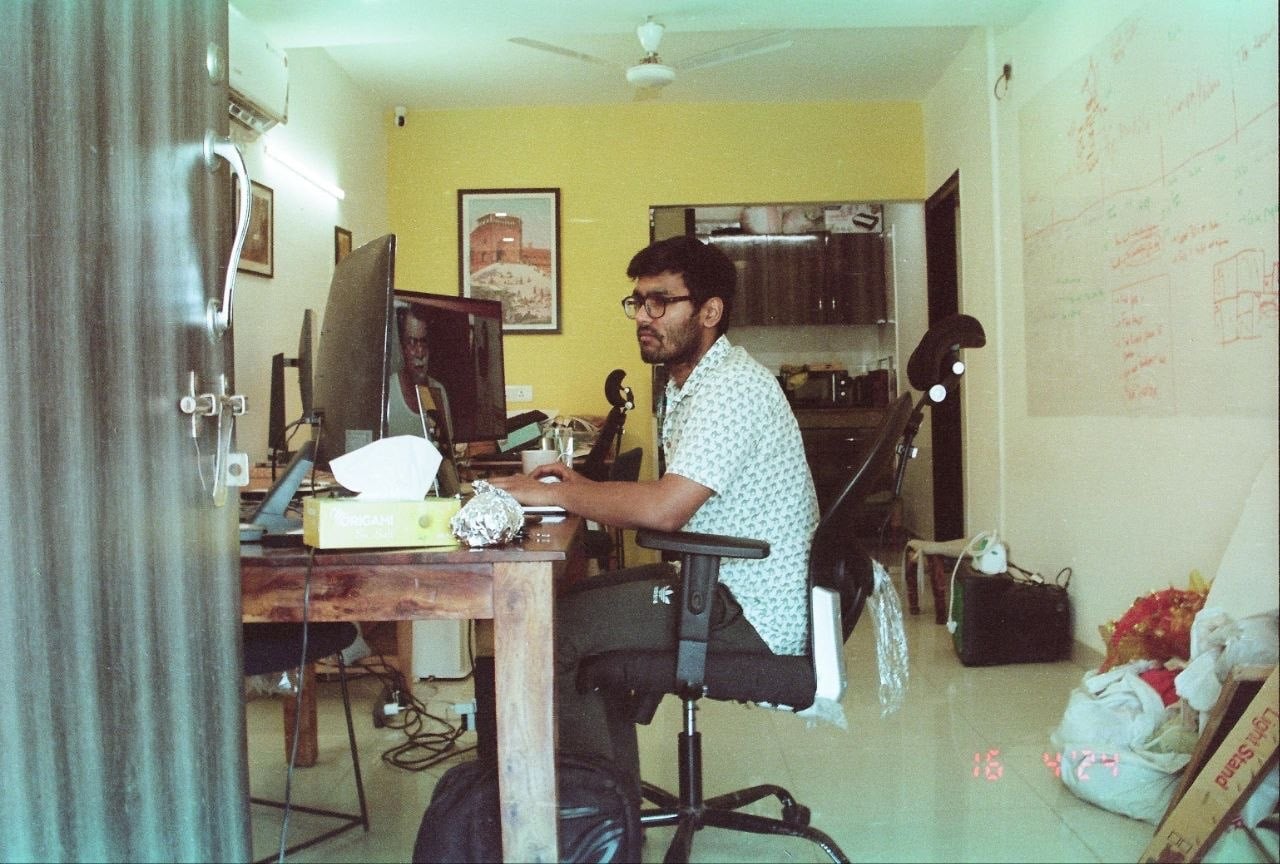
His wife Simran Dhir, a novelist, prompted him to attend a filmmaking workshop at the Institute of Moving Images in Bengaluru. After returning to Delhi, Singla set up his creative studio, Barsaati Films, named after the traditional South Delhi rooftop rooms that also served as its first office.
“We needed a name that had that Delhi vibe in it, so we named our creative studio Barsaati Films,” he added.
He made Ghich Pich under Barsaati Films.
‘Gateway films’
Brew TV does not want to bore its audience by filling the catalogue with only independent arthouse films. To build a sustainable audience that stays on the platform for longer, the team tries to strike a balance between independent and mainstream films. Its catalogue includes Vishal Bhardwaj’s Omkara, Kanu Behl’s Agra (2023), Rajat Kapoor’s Ankhon Dekhi (2013), and what they call strange picks such as Ek Chalis Ki Last Local (2007), Rahim Murge Pe Mat Ro (2008), and The Dancing Girl and The Balloon Man (2023).
“The strategic goal is to use these familiar, celebrated titles to attract everyday viewers to the platform, and then gradually funnel them toward smaller, hidden independent gems and international niche cinema,” Singla said.
He doesn’t want to build a hyperniche arthouse library. Instead, the platform aims to cater to both dedicated cinephiles and general audiences looking for substantive storytelling.
“We will integrate it in the app, it should be a seamless conversion from an Omkara to a Pride and Prejudice, and people should feel that it’s of the same quality, otherwise we aren’t doing our job properly,” Ali said.
This careful curation is exactly what sets the platform apart from other emerging regional OTTs. Saurabh noted that many festival films simply vanish after their theatrical runs, leaving audiences with no legal way to watch them.
“The curation that Brew TV is building is so good because alongside old classics and world cinema, there is our contemporary independent cinema,” Saurabh said and pointed to Agrawal’s Nirvana Inn as a prime example, noting he had seen it at the MAMI film festival years ago but couldn’t find it anywhere until Brew TV acquired it.
The future is vertical
Brew TV’s next step is to bridge the gap between Indian independent films and global audiences through ‘Brew Premiere’, which Singla describes as the platform’s saviour. The model will allow an independent filmmaker to have a standard theatrical release in India while simultaneously premiering the film on Brew TV for international audiences.
But the founders are also moving beyond the traditional film format toward vertical cinema. Singla and Ali said they do not want to produce the cheap, algorithm-driven melodramas that currently dominate the vertical entertainment landscape. They are currently producing a vertical adaptation of Jane Austen’s Pride and Prejudice (1813), set in Delhi, with a late November release in mind.
“We have to do it tastefully; we don’t have to make all that titillating content,” Ali said. The platform plans to support young creators who are already making content on their phones and bring them into the Brew TV ecosystem. Rather than launching a separate app, this vertical content will sit alongside its feature films.
(Edited by Prasanna Bachchhav)