


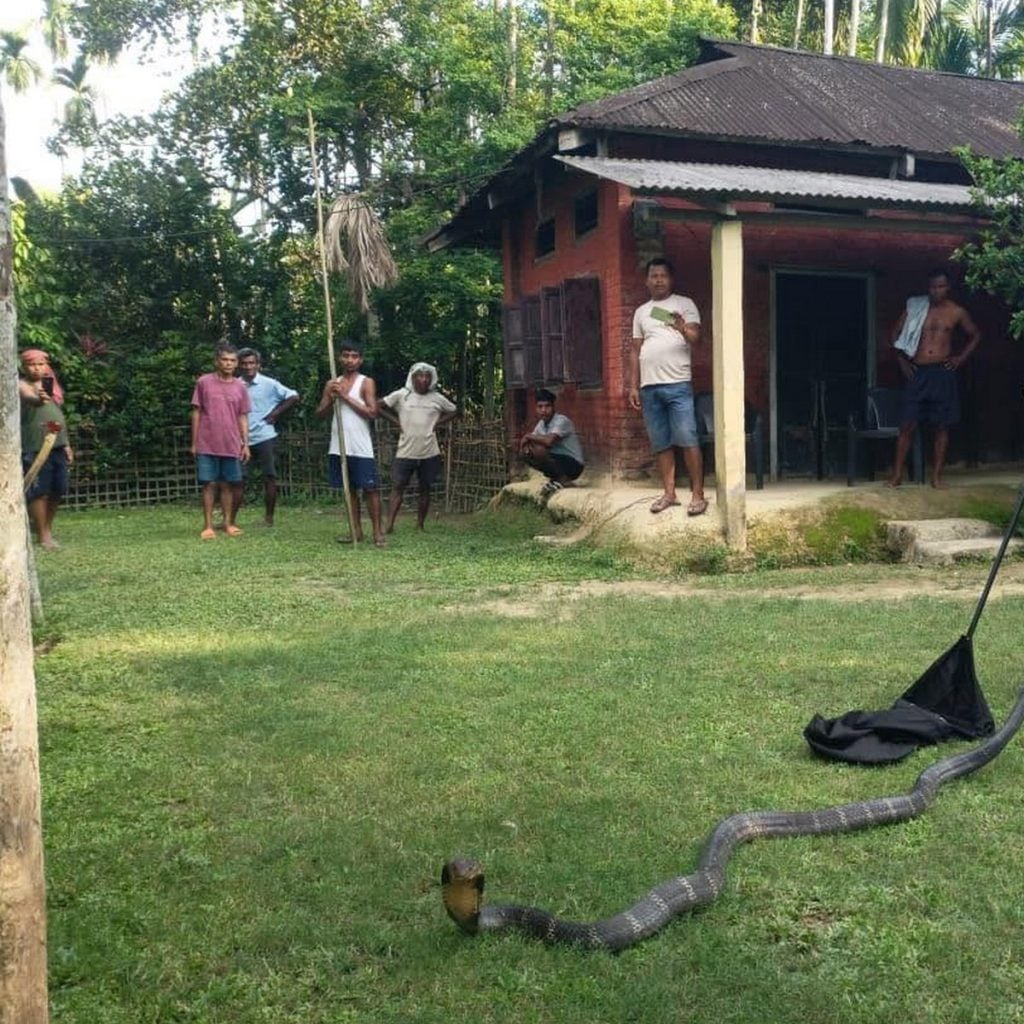
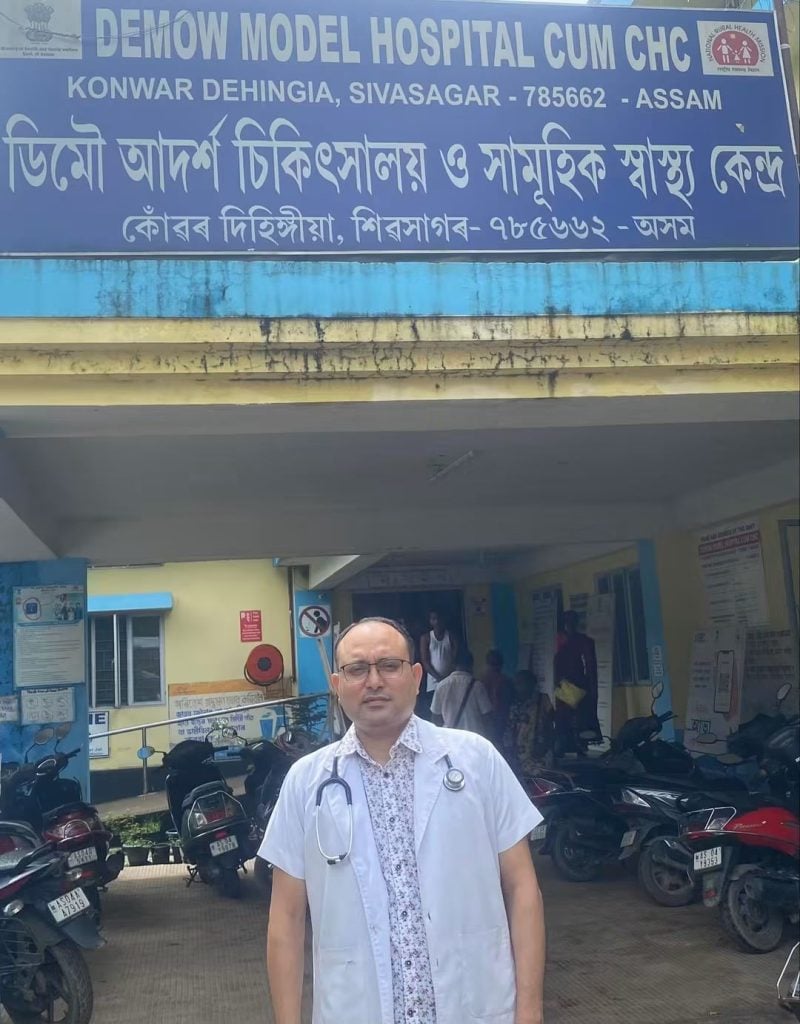
Demow, Assam: The phone call filled Dr Surajit Giri with dread. A 22-year-old woman called Barakha Dutta had been bitten by a monocled cobra in a village near Sivasagar and referred to Assam Medical College in Dibrugarh, two hours away. But this time, he knew what to do. He told the family to bring her to him instead.
“I realised Barakha would never reach Dibrugarh alive. She had a very close shave that day. In another ten minutes, venom would have blocked her neuromuscular junction and paralysed her respiratory system,” Giri told ThePrint. This incident in August 2023 was a full-circle moment for the anaesthesiologist, but not the “encore” he had feared.
In 2006, a 40-year-old mother bitten by the same kind of cobra had arrived at the private hospital where he was on duty. Giri, just 29 then, didn’t know how to save her, so he sent her to Assam Medical College in Dibrugarh. She died on the way. He made a vow that day: never again would a snakebite victim die for want of treatment under his watch. Today, Dr Surajit Giri is famous in Assam as the ‘Snake Doctor’.
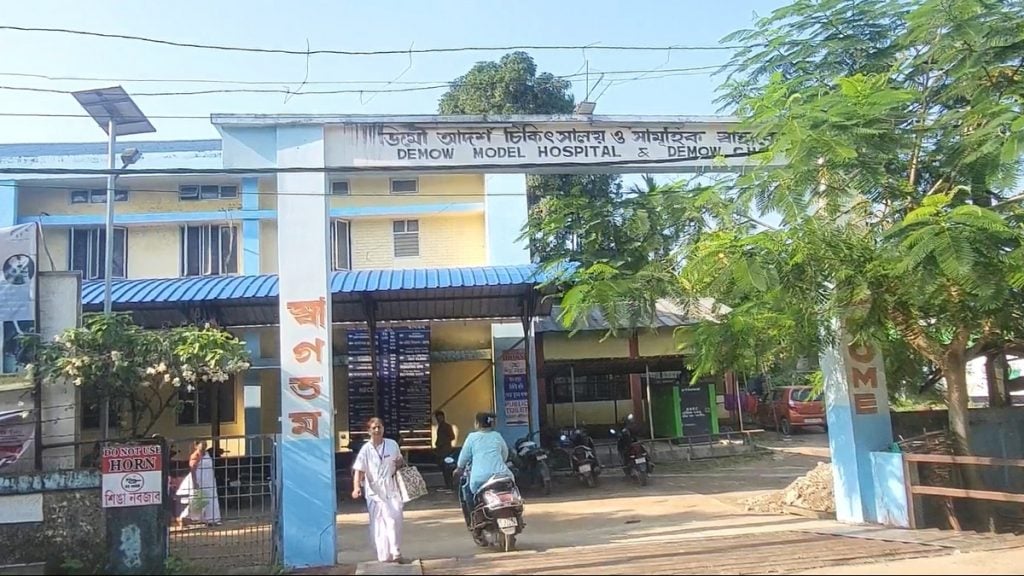
He has pioneered his own model of treatment at a rural community health centre in Demow, a hamlet surrounded by tea gardens around 20 km from Sivasagar. There’s no ICU or ventilator, but he and his team have successfully treated over 4,200 snakebite victims here since 2018. He has published in international peer-reviewed journals and his model is followed across the state. Last December, the Demow Model was selected by the Indian Council of Medical Research (ICMR) as part of a national pilot project on snakebite management.
Snakebite is a silent mass killer in India, with an estimated 1.2 million deaths between 2000 and 2019—an average of 58,000 a year. Most victims are in rural areas. Uttar Pradesh (1,53,600), Bihar (1,01,900) and Andhra Pradesh (82,900) were the worst hit between 2001 and 2014, according to the Million Death Study, a nationwide mortality survey. Assam recorded an estimated 7,300 deaths in that period.
In 2024, the Centre launched the National Action Plan for Prevention and Control of Snakebite Envenoming (NAPSE), which aims to halve snakebite deaths by 2030. The ICMR has also launched its Rs 13.5 crore Zero Snakebite Death Initiative, a four-year project studying four ‘proven’ models from across India, gunning for zero deaths. These include Maharashtra’s protective gumboots for farmers, Himachal Pradesh’s practice of administering antivenom in ambulances and Kerala’s digital system for tracking cases and coordinating treatment. Demow is the fourth.
Against this national push, Giri’s model has made an impact. Its approach rests on three engines: speed, species-specific treatment and a squad of trained volunteers.
Rather than waiting for critical patients to arrive, Giri has stitched together a ‘Venom Army’ of tea estate workers, teachers, and grassroots health workers. If someone is bitten in a nearby tea garden, they administer appropriate first aid and get the patient on the road quickly. Giri says this ground-level triage cut the average time between a snakebite and hospital admission from five hours in 2018 to just 25 minutes.
“In snakebite cases, more than the venom of the snake, it is the delay in treatment which kills the patient. Out of 4,200 patients, there has been only one death so far—in 2020, when the patient reached the hospital very late,” Giri said.
At Demow CHC, he set up a dedicated two-bed snakebite room in 2018, stocked with antivenom and emergency equipment. He claims it was the first of its kind in a rural hospital. The idea has travelled all the way to Delhi too. According to Giri, NAPSE has taken a cue from Demow.
“NAPSE has taken our idea and advised all states to have a dedicated snakebite room,” Giri said.
ICMR too is now studying the Demow Model to assess how its community-led approach can be replicated elsewhere.
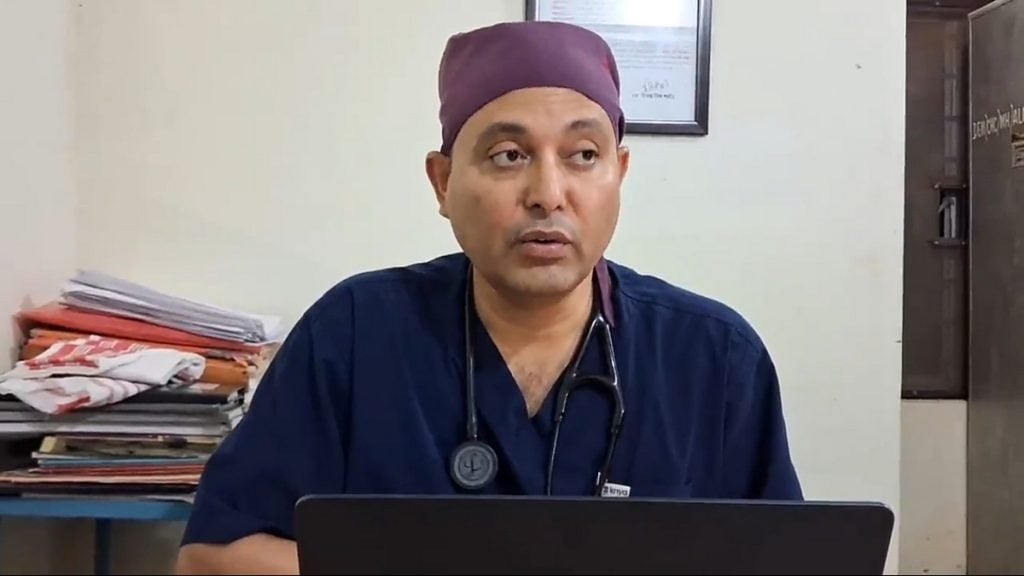
“The Demow Model has been selected as one of the key successful models to be scientifically studied and potentially scaled across India,” said Dr Rafika Yasmin, project scientist with ICMR’s Snakebite Awareness, Response, Prevention and Action (SARPA) project in Assam. “It has community volunteers as first responders, a Venom Response Team and a Fast Response Team, and a system to get patients to hospital within the golden hour. It also focuses on making people aware of the dangers of going to faith healers. We are now bringing this together with the three other state models.”
Also Read: Haryana govt doctors are quitting in big numbers. Patients are left in the lurch
‘Go and sleep with your snakes’
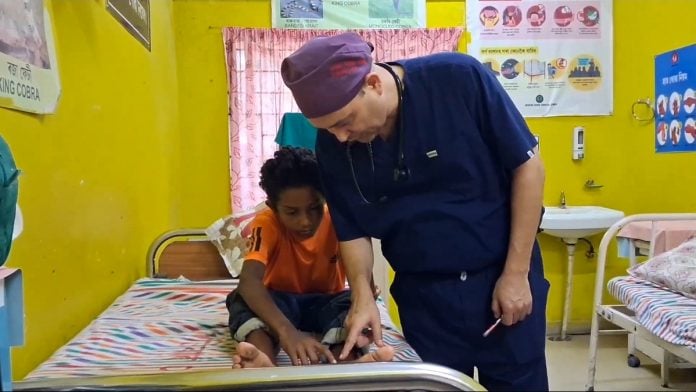
Snakebites don’t stop on Saturdays and Sundays and so Giri was busy at work at the Demow CHC on a recent weekend. He was treating a 10-year-old boy named Vicky Karmarkar from the tea garden locality of Lakwa. The Class 5 student had been admitted for five days after being bitten by a red-necked keelback.
“In the evening, I was coming from my Nani’s place when something pricked my toe. I looked down and saw a snake moving towards the bushes,” said the child.
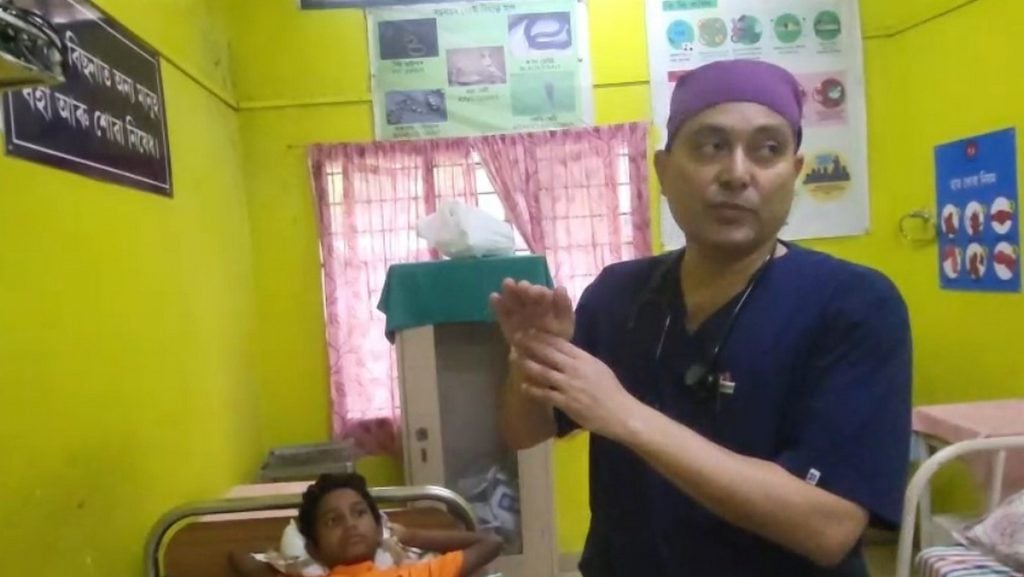
Giri said that of nearly 100 people treated for red-necked keelback bites at the clinic, only two had actually been “envenomated” or injected with venom. Vicky was one of them.
“Most of the time, these snakes can’t inject venom because their fangs are in the back of their head. Unfortunately, this boy has been envenomated and he is having symptoms like severe swelling and blood not clotting,” Giri said, adding that the boy’s condition was improving and that he would be discharged in two days.
The snakebite ward is a cheerful-looking room with bright yellow walls, pink curtains and just two beds. Some of the colourful posters, though, have a touch of menace—they display photographs of snakes, from the monocled cobra to the black krait and red-necked keelback. Others explain what to do after a bite. There are also pictures of patients who have survived snakebites here. Antivenom, medicines and Ambu bags for helping patients breathe make up the emergency equipment.
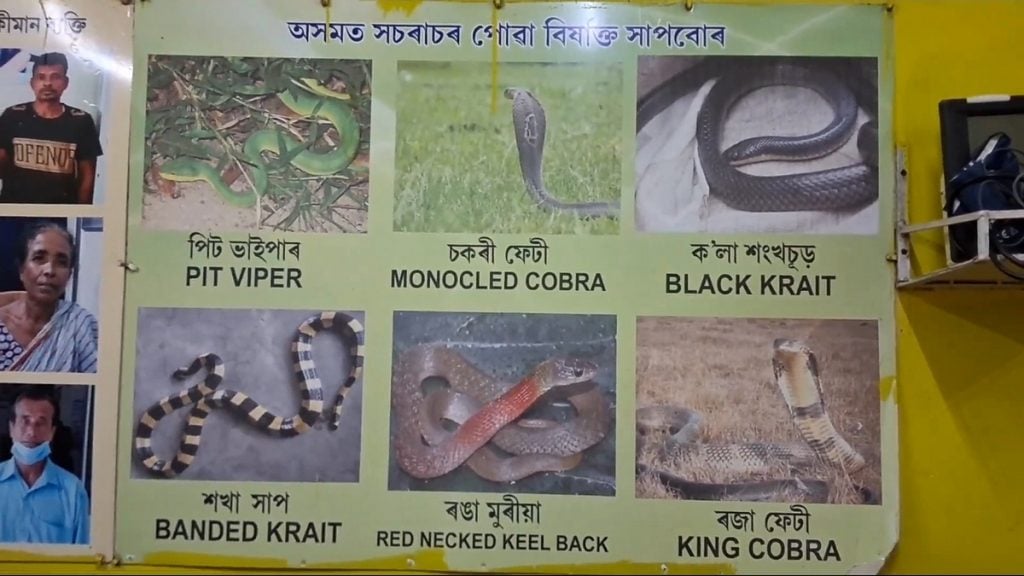
When there’s an influx of new patients, those who are already recovering are accommodated in other rooms in the 50-bed hospital.
The working day for Giri officially starts at 9.30 am and ends at 5 pm. But that’s not always how it plays out. His phone number is publicly available, and calls come from patients, anxious families and doctors across Assam at all hours. By his count, he has helped more than 32,000 patients indirectly through such consultations.
His constant availability for snakebite emergencies has occasionally caused friction at home.
“Go and sleep with your snakes, my wife would initially tell me!” Giri laughed. “But very quickly she understood the nature of my job and adapted herself. In all these years, I could hardly go for a vacation. Once we went to Singapore and there also I had to be on the phone. Now, I try to take a vacation in winter as snakebite cases are on the lower side at that time.”
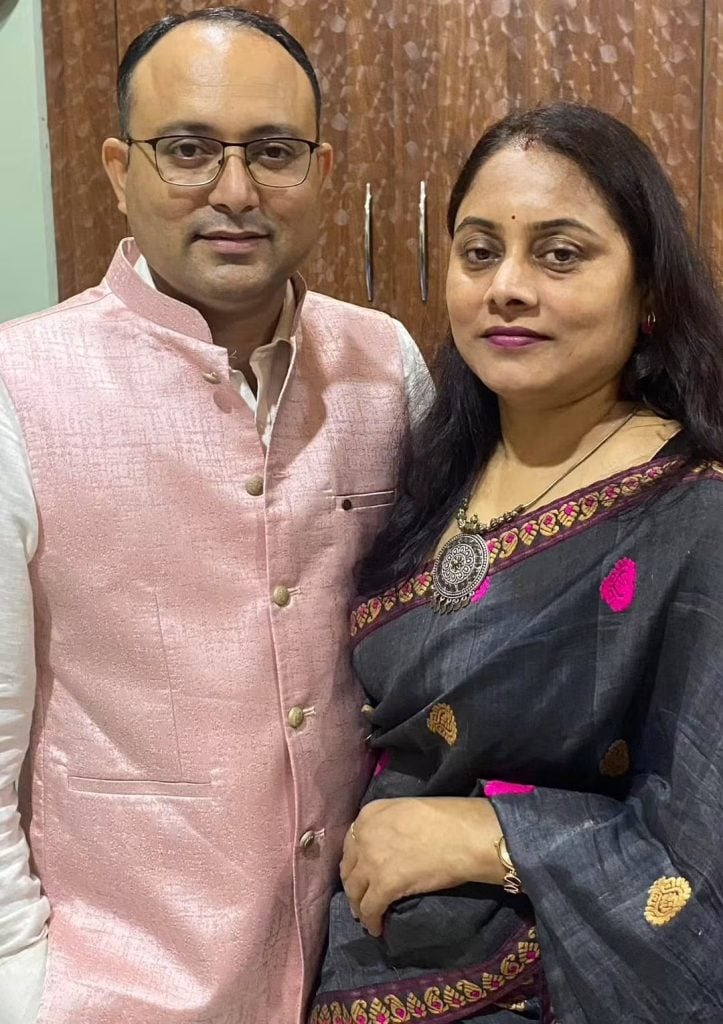
Married for 24 years, he has two children — a daughter studying BSc Nursing at North Eastern Indira Gandhi Regional Institute of Health and Medical Sciences (NEIGRIMS), Shillong and a son studying engineering at Jaipur campus of Manipal University.
His wife Dipa says a sense of pride has overridden her exasperation.
“I know that with him, nothing can be planned. A lot of times, we are going out for an outing or to attend an invitation, he gets a call from the hospital and the plan has to be cancelled. But when I see the result of his work, how he brings back smiles on the faces of anxious family members of a patient facing death, I feel proud as his wife,” she said.
Getting other doctors on board
Even when he isn’t treating patients, Giri is writing about snakes, training other doctors or helping formulate government policy on snakebite treatment. He has written two books in Assamese, Xaap aru Ami (Snakes and Us) and Venom Army. He is also a member of a national technical advisory committee on snakebite envenoming and an Assam government expert panel on snakebite treatment protocols.
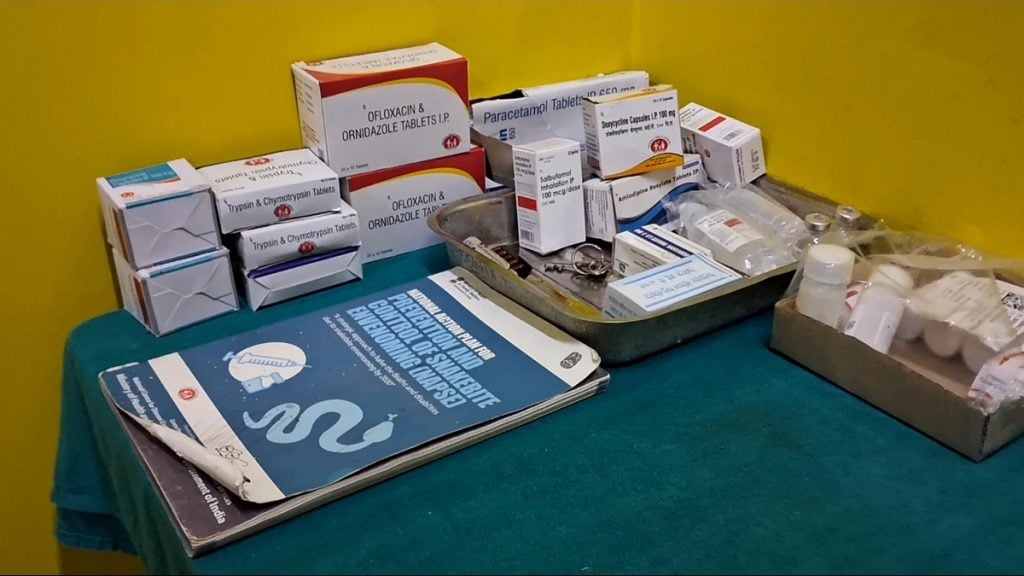
One of his biggest contributions outside Demow is training other doctors to tackle snakebites themselves.
“Apart from the patients reaching hospital late, sometimes the doctor or nurses can’t identify the symptoms properly which causes delay. So far, we have trained 5,000 doctors in the state in this regard. Now, every rural hospital in Assam is participating in snakebite management,” he said.
One doctor who took inspiration from Giri is Dr Keshav Jyoti Hazarika, posted at the 30-bed Bihpuria CHC in Lakhimpur district since 2021. His hospital began treating snakebite patients in 2024, after he underwent training with Giri.
“In 2023-24, Dr Giri had done an all-Assam tour to raise awareness about snakebite cases. At that time, I met him and decided to undergo training in this regard. Now, all seven doctors in our hospital are trained to treat snakebite cases. Annually, we get around 150 cases and in the last three years and there has been just one death.”
The govt hospital advantage
Bedanta Borah had just returned from an evening game of football when he received a panicked call from his girlfriend’s mother in August 2023. He immediately went to her house in Dehigaon, a village around 15 km from Sivasagar town. His girlfriend, 22-year-old BA student Barakha Dutta, had been bitten by a monocled cobra. The toe where the snake had struck was bleeding and had already turned black.
“She had already started vomiting and could barely breathe,” Borah recounted. A relative arranged a car and they drove to the nearest government hospital, about 15 km away.
“There was an ophthalmologist on duty who refused to treat her. He was not sure if the bite was from a venomous snake and didn’t give her antivenom. After keeping her in that state for more than three hours, he referred her to AMC in Dibrugarh,” Borah said.
By luck, someone got in touch with Giri.
“I was at my home in Sivasagar when they called. When the girl’s family informed that she had been referred to Dibrugarh, I realised this was going to be an encore of the 2006 incident,” he said.
To save time, Giri asked the family to bring her instead to Pragati Hospital, where he had worked years earlier. As soon as she arrived at around 11 pm, he gave her 20 vials of antivenom and then referred her to Demow CHC for follow-up treatment.
Borah is still shaken by how narrowly tragedy was averted.
“Surajit Giri emerged as an angel in our life,” he said.
Giri sometimes uses Pragati Hospital for emergencies, particularly when he expects a patient may need ventilator support. But for most of his work, he says, a government hospital is better suited. Rural patients can afford treatment, and doctors can keep them under observation for days— and also conduct research in the bargain— without worrying about bills racking up.
“In a private hospital, I couldn’t study the symptoms of snakebite patients because for that you need to keep the patient under observation for a few days, which poor people from villages can’t afford,” he said. “In 2008 onwards, I started working in Demow. However, it was only a decade later, we started a dedicated snakebite unit there. Here we can study the venom dynamics of different snakes and treat patients accordingly.”
The cost and availability of antivenom in private hospitals are another problem.
“One vial of antivenom costs Rs 800 minus taxes. A patient might require 20 vials which will make the treatment very costly. Private hospitals also don’t keep much stock of antivenom because they don’t get regular snakebite cases,” he added.
Different strokes for different snakes
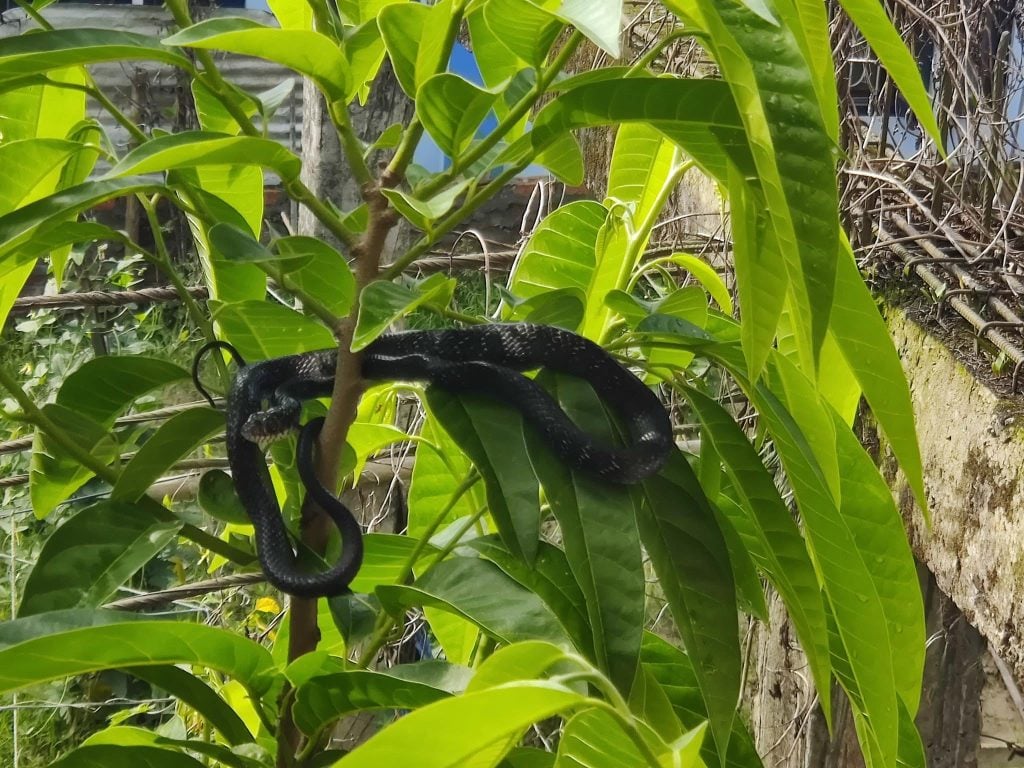
One reason for the high success rate of Giri’s interventions is the customised treatment protocols he has developed. The country’s standard antivenom is made from the venom of the “Big Four”: the spectacled cobra, common krait, Russell’s viper and saw-scaled viper. But Assam’s most common biters are monocled cobras, banded kraits and green pit vipers.
Giri’s approach takes into account that different snake venoms cause different clinical problems, and that they require tailored treatment. He has devoted years to studying Assam’s snakes and their bites.
“Cobras are one of the most common snakebites in Upper Assam districts. Cobra venom can cause progressive muscle weakness, difficulty swallowing and respiratory paralysis. We treat patients bitten by cobras, including the Indian monocled cobra, with commercial antivenom, neostigmine and glycopyrrolate. These medicines are used in managing certain neuromuscular effects,” he said.
Kraits can be even more treacherous. Their bites may not cause pain or swelling but the venom insidiously paralyses the muscles needed for breathing. These bites are treated with commercial antivenom alongside neostigmine and glycopyrrolate, but sometimes that is not enough.
“We had to refer four krait bite cases to Sivasagar as they needed ventilation assistance which we can’t provide,” Giri said.
Pit vipers, which account for about 66 per cent of venomous bites in the state, are a unique case. Research shows that Big Four antivenom does a poor job against them. When Giri treats pit viper bites, he does not use anti-venom at all.
“We devised a different method of treatment using magnesium sulphate and glycerine compression dressings for pit-viper bites. For pit-viper cases, we don’t use antivenom. We have now managed 411 clinically diagnosed pit-viper bite patients using this approach, without registering a single death,” he said.
Over the years, Giri has published his research on snakebite treatment in international scientific journals. In 2023, he co-authored a peer-reviewed study in Toxicon, the journal of the International Society on Toxinology, examining 1,011 snakebite cases treated at Demow between April 2018 and August 2022, including the pit viper protocol.
“The preventive measures and facilities adopted at the Demow Model Hospital significantly reduce snakebite death and morbidity; therefore, they can be practised across various states in India as a prototype,” the research paper said.
Another 2025 Toxicon study documented Demow’s treatment of 863 snakebite patients in 2024, including 146 venomous bites, without a single death. Giri was also among the authors of a 2026 paper on neurotoxic black krait bites published in the American Journal of Tropical Medicine and Hygiene.
Other than snakebites, Demow hospital also treats insect bites and stings, including some that left doctors baffled. Since 2018, more than 100 patients have turned up with bites from unidentified aquatic creatures. Some had severe wounds and tissue damage, and one patient died in October 2025. Among the suspects are giant water bugs and water scorpions, whose venom is still poorly understood.
The devastating floods in Sivasagar this year threw up a fresh challenge. In July alone, Demow recorded 163 cases involving insects. These included 33 bee stings, 21 spider bites, and 78 involving unidentified insects.
“Some of these insects are extremely dangerous and their bite can turn fatal. Bee stings have caused death in parts of India. Spiders can cause extensive tissue damage leading to gangrene and amputation,” Giri said.
Also Read: Snakebites kill more Indians than malaria, dengue. Blame the urban-rural divide
The snakebite squads
Under the thick, lush leaves of Assam’s tea gardens lurk some slithering surprises. Snakebites are a well-documented “occupational hazard” for tea pluckers, especially in the summer and monsoon seasons.
Exact figures are hard to come by because many snakebites go unreported. But Assam recorded around 11,000 cases in 2024, according to a study co-authored by Giri. Of these, 863 patients were treated at Demow hospital, mostly from tea-growing districts such as Sivasagar, Dibrugarh, Charaideo, Jorhat and Tinsukia. More than half were from Sivasagar alone.
Duleswar Goala, a healthcare worker at Athabari Tea Garden Hospital, around 5-6 km from Demow, is among the more than 450 members of Giri’s Venom Army WhatsApp group.
“There are around 15 tea gardens in Demow and a lot of snakebite cases happen during the plucking season,” he said. “As we don’t have antivenom in our hospital, we just do the basic first aid and refer the patient to Demow if the snake is poisonous. The WhatsApp group is beneficial because we can give the photo of the wound in the group so that the snake which caused it can be identified.”
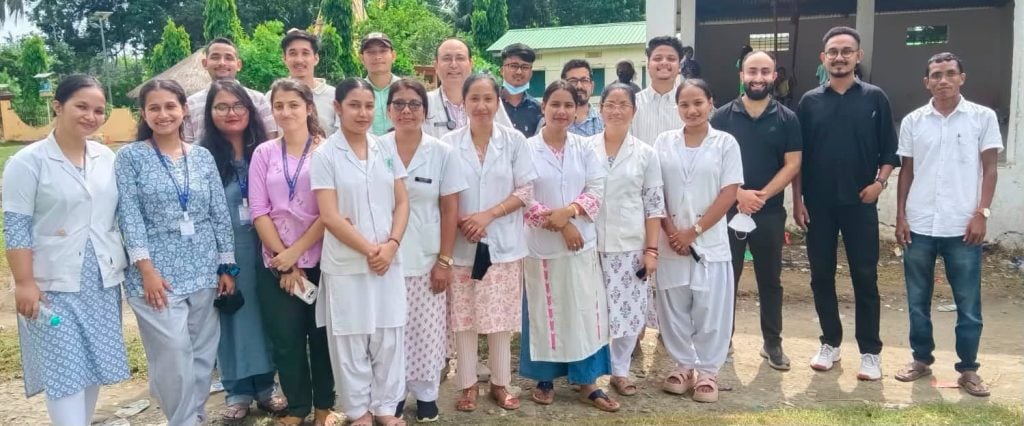
Giri’s Demow model relies on interconnected networks of community members and medical professionals.
The Venom Army’s members include tea garden workers, teachers, journalists, snake rescuers and other volunteers who help alert doctors and get victims to hospital quickly. Another WhatsApp group primarily comprises medical professionals. It helps doctors and healthcare workers consult one another and coordinate treatment.
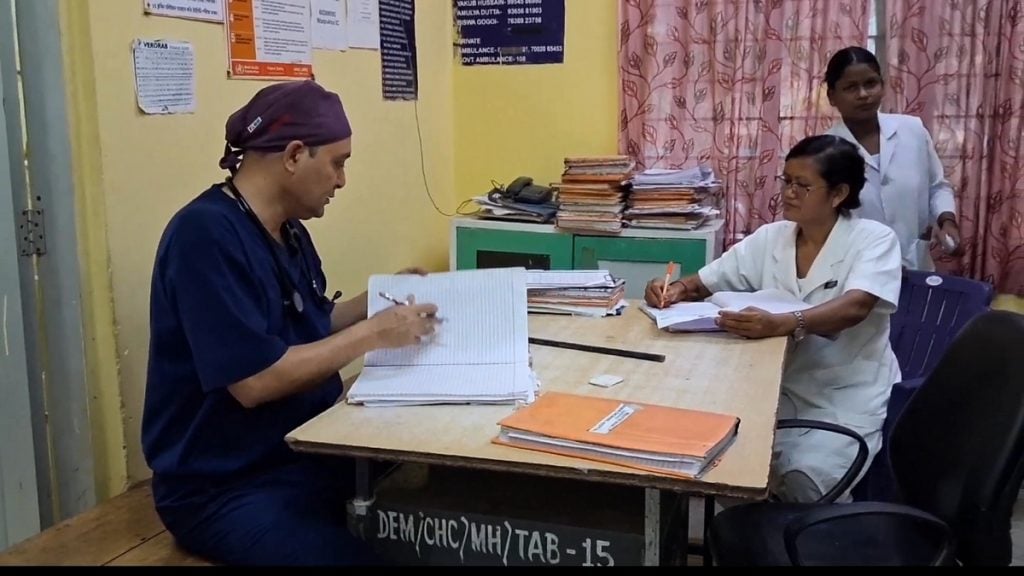
A third squad is the Fast Response Team at Demow, made up of nurses and other healthcare workers trained to recognise symptoms and begin treatment even when a doctor is unavailable.
The network is only growing. This September, Giri and the ICMR-backed SARPA team trained another 57 volunteers from village panchayats in Demow. The sessions covered warning signs, first aid, myths about snakebites and the importance of getting victims to hospital fast.
But one crucial facility is still missing at Demow: an ICU with ventilator support. Giri says that could change soon, with a medical college being built around 4-5 km away.
“Once that is complete, Demow CHC will be merged with it. We will be able to provide better treatment to snakebite victims as there will be an ICU and ventilation facility then. That should also happen before 2030,” he said.
The progress so far offers some hope. Giri said Assam recorded 36 snakebite deaths in 2024, 27 in 2025 and 23 so far this year.
“My goal is to achieve zero death in 2030,” he said.
For Giri, the impact is already visible in the changing attitudes of the people.
“Faith on faith healers has almost come down to zero. Also, we have made people aware that if a snake bites, they should bring the patient to the hospital at the earliest,” he said. “So, if they can’t arrange a car, there are instances when the patient has been brought on a bicycle.”
(Edited by Asavari Singh)