





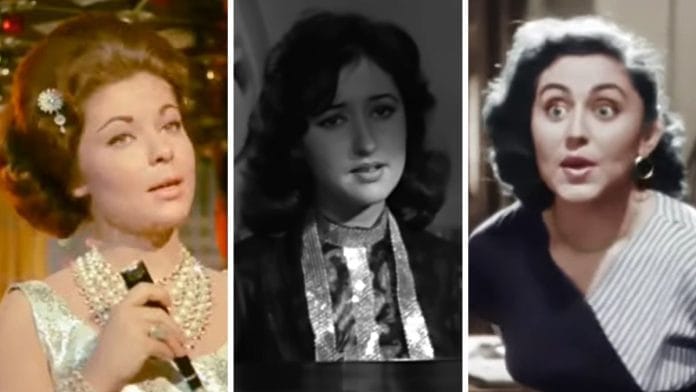

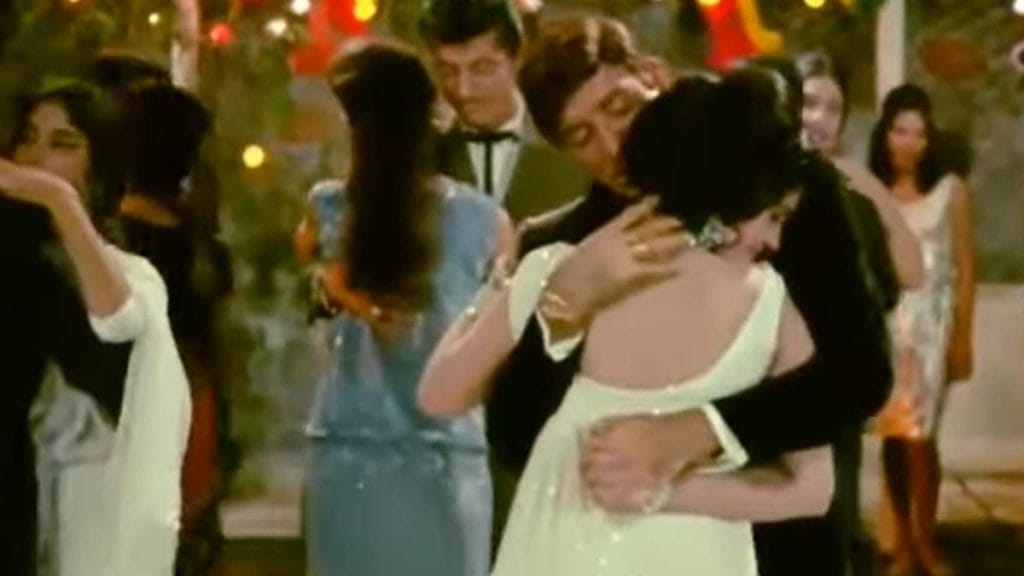
Mumbai: At a party in the 1965 film Waqt, a woman in a shimmering white gown steps up to sing while Raaj Kumar, Sadhana, Sharmila Tagore, and Sunil Dutt drift through the frame around her. It is the ultimate club song of that era. The seductive woman crooning as couples sway on the dance floor. The song was ‘Aage Bhi Jaane Na Tu’, five and a half minutes of Sahir Ludhianvi’s philosophy of now-ism and life lesson delivered by Asha Bhosle. And the woman was Erica Lal.
The song is peak Bollywood, immortalised over time — sung at every movie-crazed Indian party, picnic and antakshari. Much like the song that launched a million memories — Joh bhi hai bas yehi ek pal hai – Erica Lal too burst into the limelight one moment and then disappeared into the great unknown.
In fact, three iconic Bollywood songs featured female actors who faded into oblivion. The other two were Nivedita, from Shagoon’s ‘Tum Apna Ranj-o-Gham’ (1964), and Yasmin, from Jaane Kahan Gaya of Mr & Mrs 55 (1955).
The lyrics: “Anjaane saayo kaa raaho me deraa hai, Andekhi baaho ne ham sabako gheraa hai, Ye pal ujaalaa hai baaqi adheraa hai, Ye pal ganvaanaa na ye pal hi teraa hai. (The darkness waiting on the other side of it is inevitable, and this instant, however brief, is the only one that truly belongs to you).”
While the song still remains fresh in public memory, the twinkle-eyed, dimple-faced woman who launched the song became a one-song wonder.
None of the three charismatic female actors who gave us legacy songs built the career that should have followed. All three actors are etched in public memory in the immortalised songs. But not many know the after-life of these actors.
In an industry infamous for only celebrating heady successes, the also-rans who were not quite the failures are easily forgotten. Yet, Nivedita, Yasmin and Erica Lal defy that template too. They are remembered, loved, but still faded.
Today, a forgettable film role doesn’t have to be the end of the story. An actor can build a following on Instagram, go viral, or reinvent themselves on a streaming platform. But in the 1950s and 1960s, there was no such lifeline for Yasmin, Nivedita and Lal. They arrived at a moment when Madhubala, Nutan, Waheeda Rehman, and Sadhana had an unspoken monopoly on the era’s imagination, leaving little oxygen for anyone new.
Filmmaker Mahesh Bhatt says the film industry was once “unforgiving” toward those who didn’t come from film families.
“The film industry was run mostly by film families. It was unforgiving for people who didn’t come from that background to carve out a space for themselves,” Bhatt told ThePrint.
The earlier lot, he said, didn’t have any “attention economy”, which exists in abundance today because of alternative options like social media, advertisements and more.
Where Nivedita and Yasmin at least got a second chance, however modest, Erica Lal, an America-born Indian woman, never did.
‘Erica Lal was brought in for exotic purposes’
Lal’s song has now found an unexpected second life decades later, resurfacing in the soundtrack of Made in India: A Titan Story, sending fresh listeners back to the original on YouTube in a grand revival.
“She wasn’t a heroine material,” film historian Anjila Gugnani said. “Yes, she looked like Helen; there was a little glimpse. But unlike Helen, she didn’t have the ‘namak.’ Helen worked on every character and every item song. She brought the masala to her performance, but Lal failed to do that in the one chance she got.”
Bhatt recalls that one of the major criticisms levelled against Lal was her lip-syncing. The song was central to the film because it captured its core message. And Lal struggled to lip-sync it. He cuts her some slack, saying, “She was not Indian.”
“She was brought in for an exotic purpose…to add a certain zing to the film,” added Bhatt, recalling the song sequence in which Kumar attempts to steal the necklace.
Film critic Bhavna Somaya, however, has a different lens. She doesn’t look at it as a missed opportunity, but a role that was never meant to stand out in the first place.
Waqt, she points out, was Hindi cinema’s first true multi-starrer: Sunil Dutt, Raaj Kumar, and Shashi Kapoor, Sadhana, Sharmila Tagore, and Shashikala. What the film needed for that one party scene wasn’t an actress with a career to protect. Chopra just needed a “pretty face to hold the attention.”
“It was so typical of Yash Chopra to pick a beautiful woman who is looking partly Indian and partly western,” Somaya said.
To the film critic, Lal wasn’t miscast so much as precision-cast. She describes her as a “bombshell in the gown,” styled to look sexy, exactly the kind of aesthetic calculation Chopra was known for.
“He was too aesthetic for everything he wanted: a beautiful face and a beautiful body. But he was careful with his money, and he wasn’t throwing it around,” she said.
There is even a resemblance she flags. Lal, to her eye, looks almost like a slimmer Rakhee, a hint, Somaya suggests, of the exact type Chopra kept chasing until he finally found her, years later, in Kabhi Kabhie.
Writer Madhulika Liddle, in a blog post, discusses Waqt’s music and says Ravi and Sahir produced a “clutch of superb songs,” where “Aage Bhi Jaane Na Tu” stands out as an exception. She praises Sahir’s philosophical writing, Ravi’s composition and Asha Bhosle’s singing.
Yet, the song did not make it to Binaca Geetmala, which Bhatt describes as the gold standard, and perhaps the most reliable barometer, of a song’s popularity at the time.
But the radio charts were not the only measure of a song’s reach. Bhatt highlights two other markers of popularity: whether a song found its way into weddings and festivals, and whether tawaifs adopted and performed it.
“I was too young to visit such places, but I have heard that Walker sahab’s song, Jaane Kahan Mera Jigar, was widely sung,” he added.
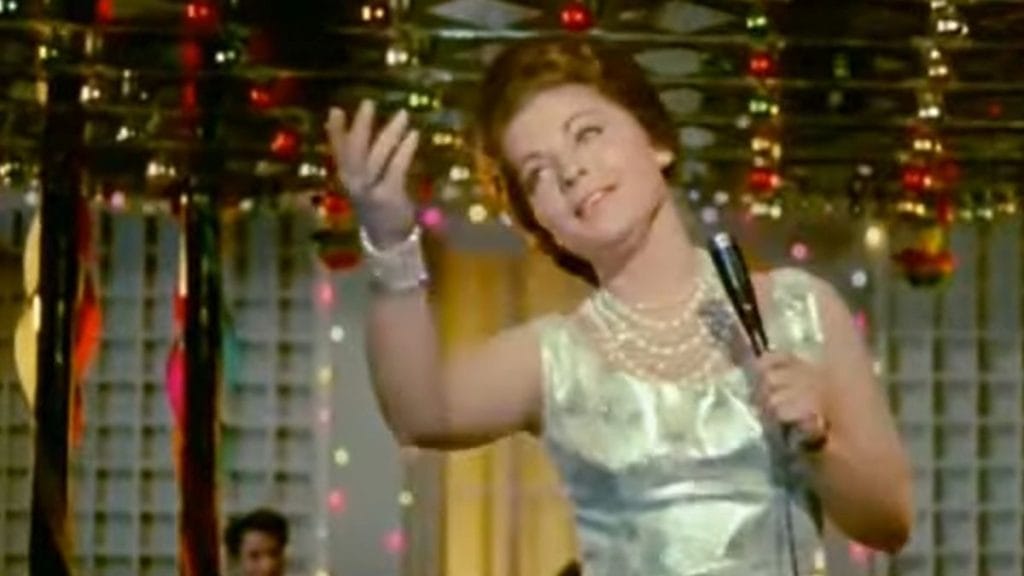
Lal faded into oblivion much like the closing lines of Aage Bhi Jaane Na Tu. Its final words, “Kal kisane dekhaa hai kal kisane jaanaa hai; Is pal se paaegaa jo tujhako paanaa hai; Jinevaale soch le yahi vaqt hai kar le puri aarazu. (Who has seen tomorrow, who knows what tomorrow will bring? This moment is all you have to find what you seek. So, while you are alive, think about it — this is the time to fulfil your desires.).”
No one seems entirely sure where she went. One whisper insists that despite marrying a Mumbaikar, she eventually moved back to America.
But her identity itself has generated its own mythology on the vintage-Bollywood blog Atul’s Song A Day.
A long-running comment thread claims that Lal was reportedly a flight attendant with Air India, her name appearing in the film’s credits alongside a specific ‘thank you’ from producer BR Chopra to the airline.
Also read: Iran women’s kabaddi team is training in Sonipat. They’re rebuilding for 2026 Asian Games
Dream debut that fizzled out
If Julie the office typist had a signature weapon, it was her eyes. In Mr & Mrs 55, Johnny Walker’s comic flirtation meets its match in Yasmin’s wide, expressive gaze. The two of them duck under desks together, dodging the watchful eyes of their co-workers as they convey their feelings through the song “Jaane Kahan Mera Jigar Gaya Ji”, sung by Mohammad Rafi and Geeta Dutt.
Guru Dutt had first spotted Yasmin at the Bangalore Amateur Dramatic Society and offered her a role on the spot, an offer she initially turned down. Years later, she made her debut, sharing frame space with Guru Dutt himself along with Madhubala and Walker.
Decades on, the song’s YouTube comment section is full of praise for Yasmin.
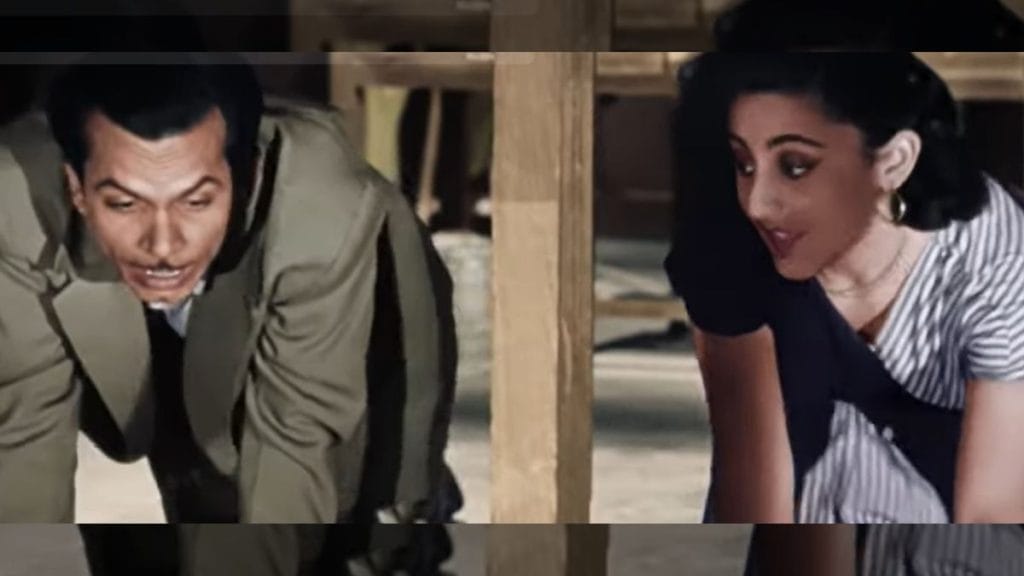
“Even the black and white colours cannot affect her beauty,” one person wrote in the comments. Another argued that Yasmin packed more expressiveness into that single song than some modern actresses manage across an entire filmography.
“Ananya Panday’s whole career doesn’t have the amount of expressions Yasmin gave in just one song,” the comment reads.
The song was described as a “frothy” number by Filmfare, “where office colleagues Johnny Walker and Yasmin are seen flirting with each other”, while more recent coverage called it an “enduring example” of OP Nayyar’s music, which continues to appeal even decades later.
The nostalgic value of the song, sung by Rafi and Geeta, gave her about as ideal a launch as any newcomer could hope for.
But, according to National Film Award-winning author and Bollywood commentator Vittal Balaji, Jane Kaha Mera Jigar Gaya Ji in the end was a “Johnny Walker song, period.” He was the lighthearted counterbalance to Guru Dutt, who played the serious guy, the social critic.
Balaji, who has co-authored ‘Gaata Rahe Mera Dil – 50 Classic Hindi Film Songs’ (among other books), says that while the track was one of the most popular ones from the film, no one spoke about Yasmin.
“She was put under the category: ‘Johnny Walker ke sath jo ladki thi. (the girl with Johnny Walker),’” Balaji said.
While Gugnani considers Yasmin’s debut “an ideal way to take off a career,” Balaji points to another reason she struggled to make an impression: the character she played in Mr and Mrs 55.
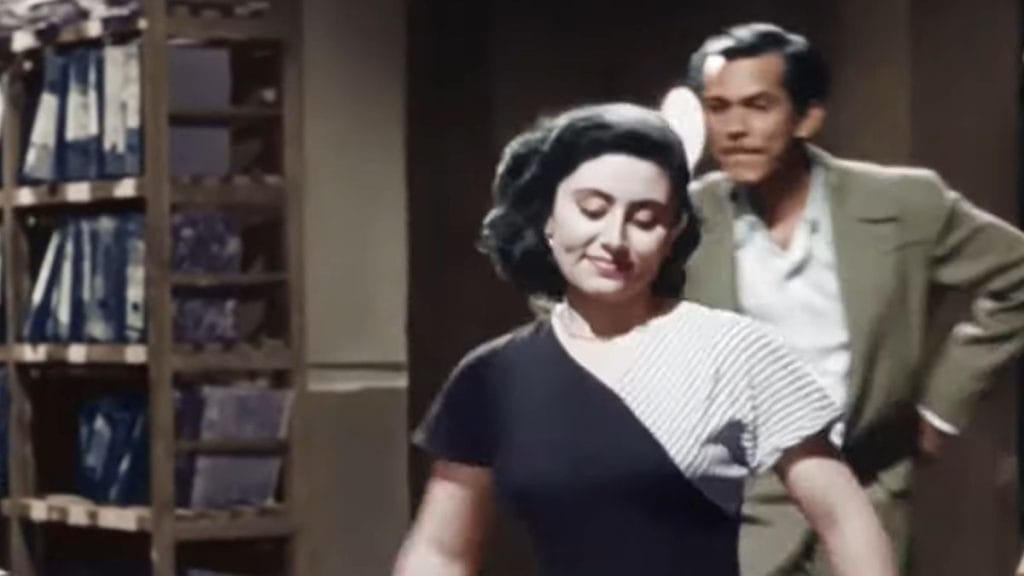
In the films of that era, the secretary or typist who would typically be a young woman from an urban, Westernised family, speaking Hindi with an accent, dressed in a frock, was often written as a familiar stereotype who occupied the margins of the plot.
“However, characters like Leena (played by Geeta Bali) in Baazi (1951) or Sheila (played by Cuckoo Moray) in Chalti Ka Naam Gaadi (1958) also belonged to the same stereotype. But Bali had a couple of successes already before Baazi, and Moray was already an established dancer,” Balaji said.
Yasmin, too, was cast squarely within that typecast mould. But she did not come into Mr and Mrs 55 with matching credentials. Nor could she capitalise on Jaane Kahan Mera thereafter either. She played yet another version of the stereotypical girl who became difficult to distinguish from the type itself.
The person who should have known her the most didn’t really stay in touch with her.
Johnny Walker’s youngest son, Nasir Khan, told ThePrint he still remembers the craze the number generated back in its day. But he added that the two families never stayed in touch after the film. Whatever bond existed between his father and his on-screen sparring partner didn’t survive the years. To this day, a question haunted many from that era: did Yasmin eventually go to Pakistan, or settle somewhere in the West?
“When father quit acting, he left the industry and didn’t stay in touch with anyone, only a handful of people like Guru Dutt, Dev Anand,” Khan said.
Yasmin’s road to that debut, though, wasn’t a straight line. According to film historian Suresh Sarvaiya, she spent her first seven years in Kashmir before being educated at a string of hill-station schools, and eventually came to Bangalore for her higher studies. It was there that she joined the Bangalore Amateur Dramatic Society and began appearing in plays, where Guru Dutt first noticed her, offering her a role in his next film and asking her to move to Bombay.
At that time, she was known as Vinita Butt, who was born in Rawalpindi in 1937. It was Guru Dutt who renamed her for Mr & Mrs 55, the name under which she is still remembered.
“Yasmin turned him down in the first go,” Gugnani added.
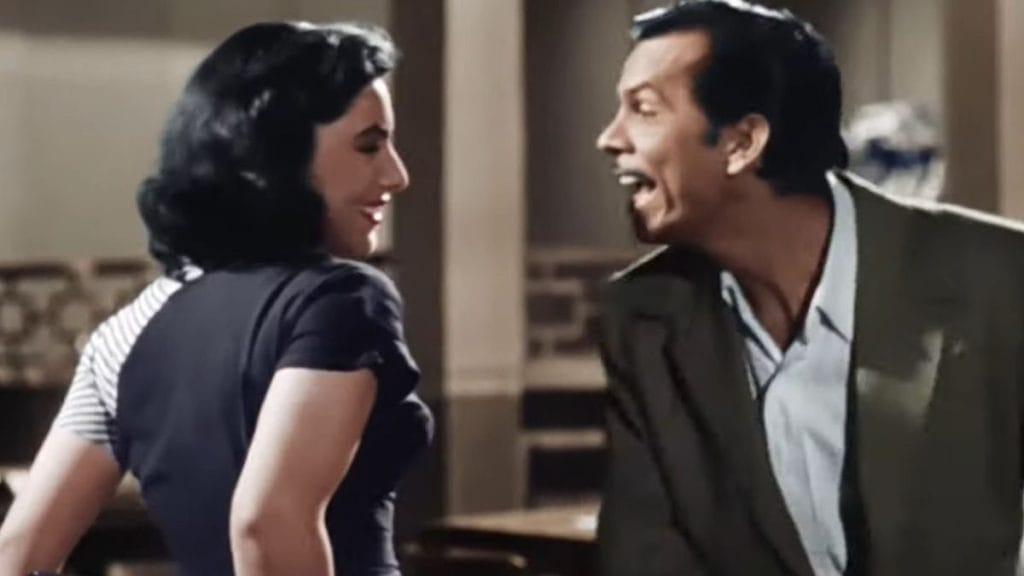
Her actual entry into the industry, as per both Sarvaiya and Gugnani’s account, came through an entirely different route. When Yasmin eventually did visit Bombay, she met Anwar Hussain, actress Nargis’s brother. The two families were friends from before.
“Hussain introduced her to Chandulal Shah, the owner of Ranjit Studio, who cast her in a small role in Utpatang (1955). The film was shot at Mehboob Studio, where, as it happened, Guru Dutt was shooting at the same time,” Gugnani said.
The two crossed paths again during a break in filming, and Dutt made his offer a second time, for a film that would become Mr & Mrs 55. This time, Yasmin couldn’t say no.
“She had pretty and very expressive eyes, and her features were those of a classic beauty. But she didn’t do much work for anyone to judge her acting skills. Maybe she could have made it big,” she said. “I would say she is a ‘lost potential’.”
After Mr & Mrs 55, at Mehboob Studios, she met Zul Vellani, who cast her as Desdemona in a Theatre Group open-air production of Othello, according to an archival Filmfare magazine, 1956 edition.
That indirectly led to her next contract: Hollywood actor Alex D’Arcy, who met her and was impressed. This is how she landed the role of Rukmini in Filmistan’s ambitious Cinemascope and Technicolour production Three Headed Cobra, originally titled Bombay Flight 417.
Filmfare’s August 1955 issue described her as someone making “a bid for stardom in this ambitious international film.”
Senior journalist Bharti Dubey has a sharper diagnosis for why that potential never converted into a real career.
Yasmin, in her assessment, had the “glamour quotient, but not the elusive X factor” needed to turn a dream debut into a lasting one.
Also read: India’s sticky problem with molasses. Old Monk that’s ‘not rum’, whisky that’s rum
Weak diction, flat expressions
While Lal didn’t get another shot in films and Yasmin became a ‘lost potential’, Nivedita, of the ‘Tum Apna Ranj-o-Gham’ fame, on the contrary, tried relentlessly to prove her worth until one day, she too gave up.
In the film Shagoon, Nivedita sits at the piano, singing to Madan (played by Kamaljit), a man who belongs to someone else. The song is a confession of love that she knows cannot be returned.
She does little beyond inhabiting the song, as mentioned in Ganesh Anantharaman’s book Bollywood Melodies: A History of the Hindi Film Song (2008). Jagjit Kaur’s voice does the singing; Sahir Ludhianvi’s words do much of the emotional work.
A 2021 remembrance of Jagjit Kaur calls “Tum Apna Ranj-o-Gham” her best-known and most popular song, saying that the song gave her an identity that lasted throughout her life.
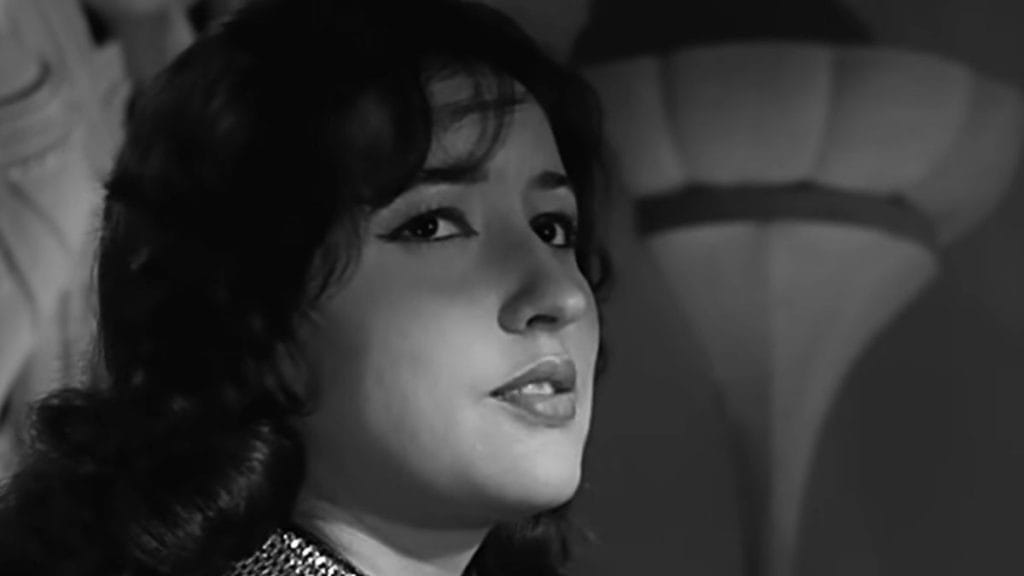
“The song offered her an identity for life. No doubt, it’s very dedicatedly sung with perfect expressions. Though the actress Nivedita is very beautiful, her face isn’t very expressive. The song perhaps expressed Kaur’s own emotions towards her husband,” reads an excerpt in the blog post by Mehfil Mein Meri.
On screen, Nivedita’s lowered eyes, a fleeting smile, and occasional glances toward Kamaljeet are enough to suggest what the character cannot say aloud. Her performance is passive. It’s the poetry which gives it an emotional life of its own.
This is precisely Somaya’s point. The great songs of that era did not necessarily require a great star or a well-known face to sell them. Because the lyricists were writing with such depth and emotional intelligence.
“A filmmaker could cast whoever the production could accommodate, and the words, music and situation would carry the moment, even if the actor’s performance was understated. Even if the actor gives bare minimum expressions, it was enough for the filmmaker,” Somaya said.
That confidence has largely disappeared from the industry. Earlier, filmmakers trusted their writers and music directors enough to believe a great song could become a star in its own right, irrespective of the person performing it.
Tum Apna Ranj-o-Gham, as per Somaya, could belong to anyone nursing a broken heart, or to anyone telling a loved one that they are willing to share the burden of their pain.
Today, even the smallest cinematic moment is expected to come with recognisable star power or a marketable face. It is, in Somaya’s words, a “pragmatic shift towards celebrity culture and within the film industry, a growing anxiety about whether a project can hold an audience without the reassurance of a familiar name.”
But that logic has its limits. The constant pursuit of visibility, she says, eventually becomes exhausting. And when the machinery of celebrity grows too large, the bubble can only stretch so far before it bursts.
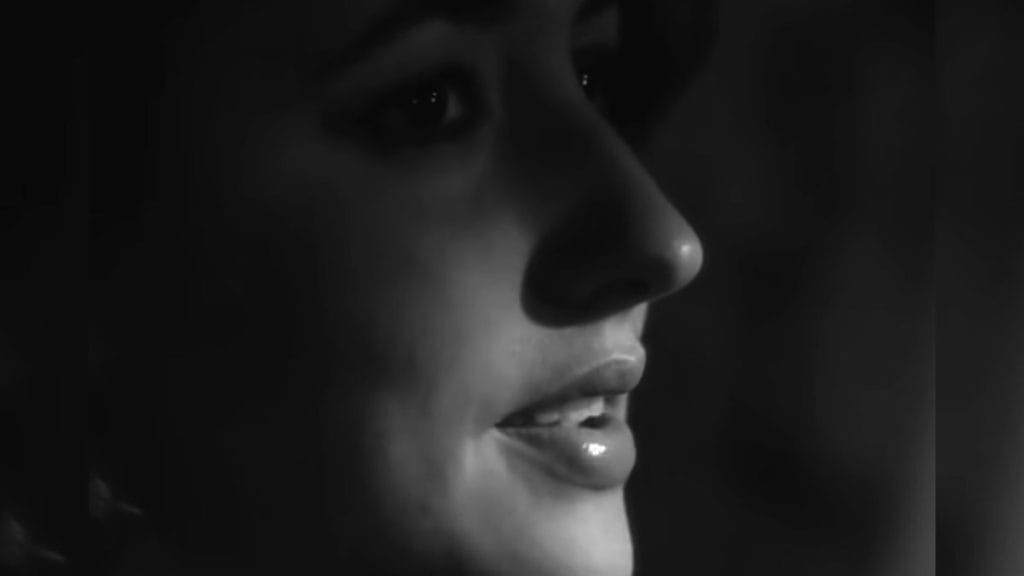
After her fleeting appearance in Shagoon, Nivedita picked up smaller roles in films like Tu Hi Meri Zindagi, Rocky Mera Naam, Dharti Kahe Pukar Ke and Bank Robbery. The kind of parts that keep an actor employed without ever making them memorable.
One film came close to changing that trajectory: the 1969 film Jyoti, directed by Dulal Guha, where Nivedita played a religious woman, Radha, who is married to an atheist, Nirmal (Sanjeev Kumar). However, the film didn’t work either.
“I don’t think she did justice to the role; she didn’t have the strength to portray the character. It was a missed opportunity,” Gugnani said.
According to Gugnani, Nivedita’s limitations went beyond a single underwhelming performance. Her diction was weak, her expressions flat, and beneath the surface-level prettiness, there simply wasn’t the range a leading role demanded.
Nivedita’s career quietly wound down in 1976, with Sabse Bada Rupaiyaa, where she played the role of Miss Bela, the stenographer.
But not many know that she tried her luck once more after almost two decades. She made a comeback. Nivedita played an uncredited role in Ajay Devgn-Twinkle Khanna-starrer Jaan (1996), after almost 20 years since her last appearance. Jaan was the last film she ever appeared in.
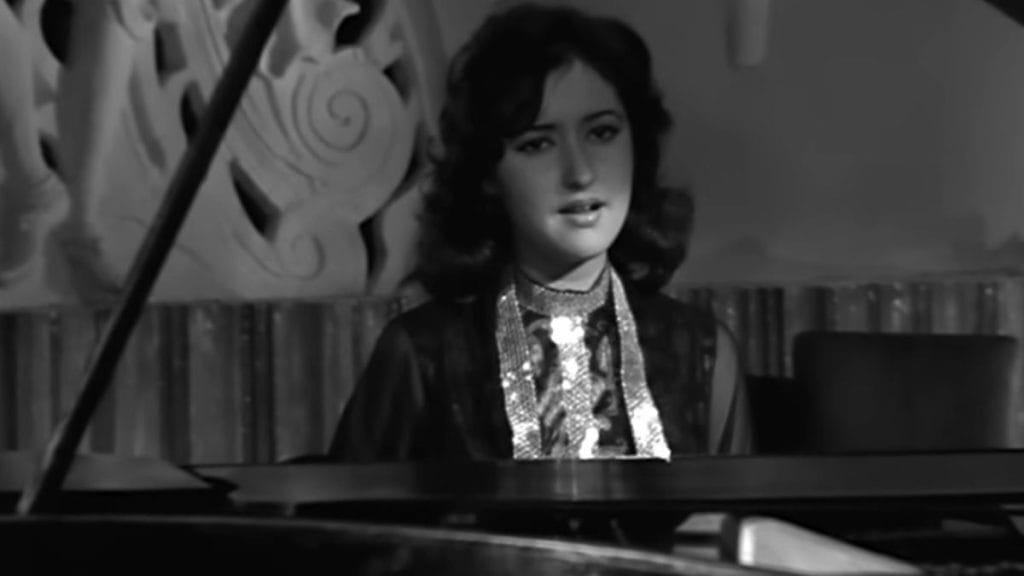
Her name itself carries its own confusion. Some remember her as Libi Rana, the credit she carried in her debut, Shagoon (1964), and again in Walait Pass (1961). Later films billed her as Nivedita instead, and it’s unclear which name came first, or why the switch happened at all. No account explains the reasoning, unlike Yasmin’s renaming.
Long after stepping away, she reflected on the industry with a mix of fondness and clear-eyed distance. IMDb quotes her from a 2006 interview: “Okay yes, I was in the movies once. It was fun but you can’t hang on unless you want to suffer on Sunset Boulevard.”
In a photo gallery published in Amar Ujala, it is cited that film critic Khalid Mohammed met Libby Rana at a bookshop in Mumbai’s Taj Hotel. Khalid immediately recognised her and tried to approach her. But Rana reportedly turned and ran away.
Recalling their meeting, Mohammed said, “When confronted, Libi ran away, saying, ‘No, you must have misunderstood.’”
She reportedly passed away in 2014, having stayed in Mumbai long after her marriage, unlike Lal and Yasmin, who both left the country.
Also read: A Rajasthan village is fighting over malpuas & mrityu bhoj. Boycotts, fines, debt
‘Marriage was a way out’
If there’s one thing that ties Lal, Nivedita, and Yasmin’s stories together, it’s marriage. All three, in their own way, vanished from the screen not long after walking down the aisle.
It’s worth remembering this was a different era; there was no comeback platform for a female star once she married or became a mother; stepping away rarely meant stepping back in.
For Yasmin, the ending came fast. On the set of Three Headed Cobra, she fell for the film’s makeup man, Jimmy Vining, and the two married in November 1955, a matter of months after her breakout in Mr & Mrs 55. She left the industry to settle abroad.
Some accounts suggest she eventually returned to Pakistan; some claim she moved to somewhere in Europe, but then there is an account which states that she settled in Valsad, Gujarat.
Sarvaiya adds one more thread to her story, though he flags it himself as unverified: that her son reportedly went on to become a pilot with SpiceJet.
Producer and film historian Viveck Vaswani sees a blunter thread running underneath it all.
“They were smaller than supporting actresses. When they found good husbands, it was a way out from the hopelessness. They realised that they could not become a heroine, so they left,” he said.
He highlights a broader pattern: Sadhana, Kalpana Kartik, Tanuja, Rakhee Gulzar, Bindiya Goswami, Mumtaz, and Kumud Chugani, among others, who married producers, directors, or businessmen, and largely walked away from acting soon after.
For Vaswani, marriage functioned as an exit ramp precisely because nothing else was on offer.
“Cinema is as easy or as difficult as it was back then. They didn’t have any alternative back then,” he said.
It’s a bleaker picture of today’s landscape than perhaps holds up entirely. Vaswani argues that even now, a large social media following is something of an illusion.
“Today, you can become a social media star, but it doesn’t translate into theatre footfalls. Even if someone has 25 million followers, 25 people don’t come to watch their film,” he said.
Vaswani’s point sits awkwardly against the careers of Kajol, Rani Mukerji, and Alia Bhatt, all of whom continue to work across films, OTT platforms, and social media simultaneously. The “no alternative”-era Vaswani describes may be more specific to the 1950s and 1960s than a fixed law of the industry.
(Edited by Saptak Datta)