





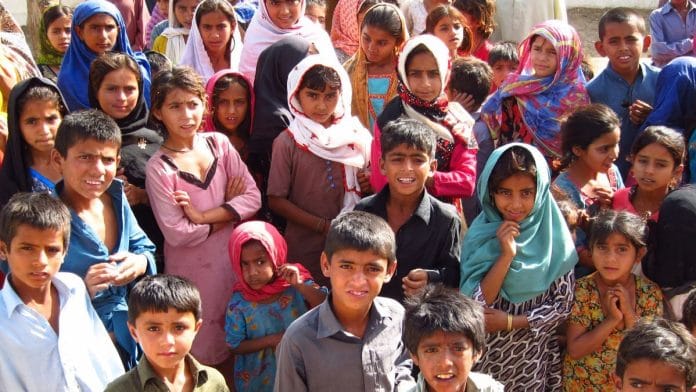


New Delhi: Sindh is introducing Hindu religious textbooks in public schools, and Pakistanis are proud of this “progressive mood.”
The provincial government of Sindh in Pakistan on Wednesday approved the introduction of Hindu religious textbooks in public schools, and said that the new curriculum will include three textbooks designed for students in Grades 3 through 5, beginning in the 2026–27 academic year, The Express Tribune reported. The decision was finalised during a meeting of the Sindh Curriculum Council’s executive committee on 20 April.
Education authorities quoted in the report described the initiative as part of a broader effort to make schooling more inclusive by allowing students from minority backgrounds to study their own religious traditions. The move was undertaken at the direction of Sindh’s Education Minister, Syed Sardar Ali Shah.
Under the plan, the Sindh Textbook Board will manage the distribution of the materials, while a Karachi-based Hindu welfare organisation, Prem Sagar Sanstha, has been authorised to publish the books for the initial rollout. Government funding for publication is expected to begin in the following academic year.
According to The Tribune, since the Sindh Textbook Board had no funds to publish religious textbooks for the current academic year, Prem Sagar Sanstha was granted permission to produce the material for Hindu students studying in public schools in Sindh for the 2026–27 academic year.
Shah said the move to offer students from diverse religious backgrounds instruction in their own faith is the government’s attempt to safeguard minority rights. He added that such a policy should have been implemented shortly after the country’s founding.
In the past, Shah noted, minority students were taught ethics courses instead of religious studies, but the government has now formally acknowledged their right to receive education aligned with their beliefs.
More than 1,29,000 Hindu students are currently enrolled in public schools across Sindh, according to official figures. The largest concentrations are in the districts of Tharparkar and Umerkot, according to the report.
Also read: US reporter says ‘used’ at Islamabad press meet. Pakistani journalist loses job as Army intervenes
‘Moving in the right direction’
Pakistanis took to social media to debate the move. While some called it progressive, others questioned it.
“This is a very progressive step. With the elimination of TLP, the criminalization of child marriages and the increasing recognition of Pakistani Christians & Hindus rights to practice their religions openly, Pakistan is moving in the direction I had envisioned for my country,” Pakistani author Muneeb Qadir wrote on X.
However, another user, Fazal, countered him: “A better step would have been to take out Islam out of studies. Why teach religion in school at all. People learn religion in homes. No need for that in schools as well.”
Sindh is home to the country’s largest Hindu population. Census data from 2023 estimates that between 4.9 million and 5.2 million Hindus live in the province, accounting for roughly 8.8 per cent of its population. The community is spread across both urban centers, including Hyderabad, and rural regions.
The announcement also unfolds against a more complex backdrop for Sindh’s Hindu community. Reports from human rights organisations have pointed to migration trends driven by security concerns, discrimination, and economic pressures.
A 2023 report by the Human Rights Commission of Pakistan noted that Hindus remain to be the country’s largest religious minority but continue to face challenges that have contributed to periodic emigration.
(Edited by Aamaan Alam Khan)