





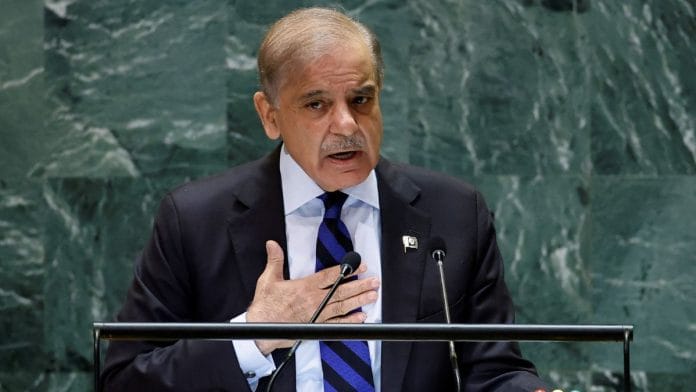

New Delhi: The Pakistan government is at loggerheads with the International Monetary Fund over contracts given to state-owned enterprises. The dispute has delayed Pakistan’s adoption of new public procurement rules, which were supposed to be approved by June, the Express Tribune reported.
The disagreement centres on contracts awarded directly to state-owned enterprises (SOEs). Pakistan wants to retain some flexibility to give government work directly to public-sector organisations. The International Monetary Fund (IMF), however, wants those exceptions to be tightly controlled, transparently justified, and publicly disclosed.
Pakistan has 212 SOEs incorporated under various legal structures. In 2025, as part of IMF-backed reforms and the finance ministry’s restructuring programme, the government placed a group of commercial and loss-making state-owned enterprises—including power distribution companies and Pakistan International Airlines—on a privatisation bid.
Pakistan’s government then launched a five-year plan to privatise or restructure 24 SOEs in three phases, with the sale of First Women Bank to a UAE company in October 2025 marking the first major step. It later sold PIA to the Arif Habib consortium.
Why the IMF wants tighter rules
Under competitive bidding, several companies compete for a government contract, with the winner generally selected according to established criteria. Pakistan’s government wants the power to allow government agencies to directly award certain contracts to state-owned organisations without going through competitive bidding.
The IMF is not completely opposed to this. But it wants direct awards only in exceptional circumstances, such as projects that are extremely time-sensitive, geographically scattered, remotely located, or clearly in the public interest.
The organisation’s concern is straightforward: a contract awarded without competition can create an opportunity for favouritism, inflated costs, or corruption.
An SOE could win a government project without competing against private companies and then outsource some of the work to private firms. The IMF wants to prevent SOEs from effectively becoming middlemen that receive contracts from the government and pass the work to private companies.
Under the IMF’s proposal, an SOE would generally have to perform the work using its own resources. If specialised work has to be outsourced, subcontracting would be capped at 40 per cent of the total project, according to the Tribune report. The IMF also wants violations of that limit to be treated as a serious procurement offense.
Also read: ‘Doors locked, fire crew stopped’, Pakistanis fume over 14 infants’ deaths at PIMS
Where does Pakistan differ?
Pakistan has accepted the 40 per cent subcontracting limit, but wants the possibility of relaxing it. Its proposed rules state that the relevant financial thresholds could be modified by the procurement authority from time to time. This worries the IMF because, in its view, such flexibility would make it easier to bypass rules designed to prevent circumvention.
There is another major disagreement. The IMF wants the head of the government agency awarding the contract to provide a written explanation of why an exceptional direct award was found necessary.
That explanation, along with an undertaking that the rules were followed, should be submitted through the government’s electronic procurement system and made publicly available.
Pakistan’s draft rules require an undertaking to be submitted electronically, but they do not clearly require the government’s determination explaining the exceptional circumstances to be publicly disclosed.
For the IMF, public disclosure is part of the safeguard. It allows journalists, watchdogs, competing businesses, and citizens to see why a contract was awarded without competition.
When the government buys roads, buildings, equipment, consulting services, or any other goods and services, billions of rupees can change hands. Competitive bidding is intended to create a basic check where the government has a better chance of getting a fair price and reducing favouritism. Direct contracting removes the competition key to the process.
Pakistan also wants to replace its 2004 public procurement rules, which officials say have become outdated, the report noted. The proposed rules would require competitive bidding for public procurements above PKR 700,000 and give federal secretaries and heads of procuring agencies explicit responsibility for overseeing procurement. They would also require additional validation and evaluation committees for very large contracts and allow authorities to blacklist bidders for up to 10 years for corrupt or fraudulent practices.
The new procurement rules were part of Pakistan’s commitments under the IMF’s Governance and Corruption Diagnostic Assessment action plan. Pakistan was expected to approve and notify the new rules by June after repealing the 2004 framework. But the disagreement over direct awards to SOEs has now added to the delay.
The government says the draft rules have been endorsed by the prime minister’s office and are now before the Cabinet Committee on Legislative Cases (CCLC), which is headed by planning minister Ahsan Iqbal.
Pakistan’s 37-month Extended Fund Facility (EFF), approved by the IMF in September 2024, is designed to strengthen the country’s economic resilience and support sustainable long-term growth, according to the IMF website. It calls for restructuring state-owned enterprises, improving public services, and strengthening the financial viability of the energy sector.
In May, Pakistan received about $1.32 billion in fresh funding from the IMF. At the time, the organisation said Pakistan’s economic reforms had made “significant progress” in stabilising the economy and restoring investor confidence, despite a difficult global environment, including the Middle East war.
(Edited by Prasanna Bachchhav)