



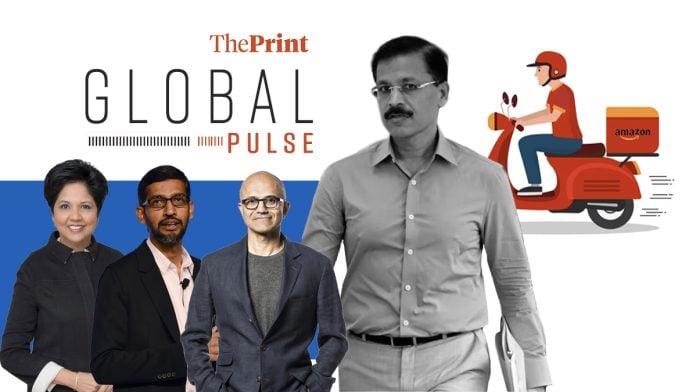
New Delhi: India is exporting workers to the world, but does the world’s largest migrant population serve India’s economy or harm it? Tej Parikh, writing in the Financial Times, looks at the pros and cons of this export.
Even as India churns out close to five million graduates each year with one million entering the workforce each month, Parikh says, India is unable to produce enough suitable jobs to employ its expanding labour force. “As a result, many Indians, often well-educated and English-speaking, move abroad to pursue careers,” he adds.
India, according to 2024 data cited by Parikh, has 18.5 million people living abroad. Recently, Indians also overtook the British to become Australia’s largest overseas population.
Under Prime Minister Narendra Modi, the column says, India has positioned its workforce as an answer to skill shortages and ageing demographics abroad. Recently, External Affairs Minister S. Jaishankar also said that the country has signed labour-mobility pacts with 26 countries.
“Such arrangements have been a central pillar of India’s bilateral trade negotiations. An Overseas Mobility Bill also aims to help Indians access the global workplace,” Parikh writes. While these migrations have their benefits, they also harm India’s interests, he adds.
Returnees and the overseas community are sources of foreign exchange, investment and knowhow for the country, he writes. The export of workers also enables the Indian government to ease pressures of economic opportunity back home.
“But there are drawbacks to the worker-export model. For example, one estimate suggests brain drain costs India between $35bn and $50bn per annum, owing in part to lost productivity growth. Many Indians end up settling abroad,” he writes.
Developed countries’ attitude towards immigrants is also a cause for worry. “Relative to native-born citizens and other migrant populations, Indian-born migrants and people of Indian heritage tend to obtain higher levels of education and earnings. Their rising prominence in public life—as chief executives, politicians and heads of prestigious organisations—can drive animosity.”
All of this, Parikh notes, provides fuel for anti-immigration policies.
As Indians migrate elsewhere in large numbers, some of the biggest global companies are coming to India to set up shop and compete with domestic brands. Amazon recently announced its entry into quick-commerce, planning the launch of 1,000 stores across India in 300 cities, Chris Kay, Andrea Rodrigues, and Krishn Kaushik write in the Financial Times.
While the giant has showed up late to the party, it is planning to invest $1 billion in the next year, and an additional $2 billion till 2030. “Customers are loving it,” chief executive Andy Jassy told the FT.
“Armies of scooter-riding gig workers have become an ubiquitous presence across India’s traffic-choked cities, ferrying groceries, snacks and an array of other products in 20 minutes or less, transforming middle-class shopping habits nationwide,” they write.
Quick commerce is changing India’s attitude towards delivery as well. Companies need to keep large inventories to fulfill consumer demands. Satish Meena, founder of consumer research firm Datum Intelligence, called it “DoorDash on steroids”. DoorDash is an American delivery service that connects users with grocery stores and restaurants for fast delivery.
“According to a recent Deloitte and Google report, the market is now worth $8bn. It is projected to reach $50bn by 2030, serving about 70mn shoppers, as the next wave of growth is generated by smaller cities,” the report says.
Domestic pioneers Zomato, Swiggy and Zepto, will now have to compete with Amazon Now and Flipkart, which is planning to extend to 1,500 warehouses.
“While only commanding a 10 percent share of the online shopping market in India, quick commerce is increasingly winning business from traditional digital platforms and the millions of kiranas, small mom-and-pop stores that are a defining feature of India’s retail landscape,” the report notes.
Meanwhile, BBC’s Nikita Yadav writes about social media star civil servant Tukaram Mundhe, and asks why some civil servants become heros for doing their job.
“Among the thousands of civil servants who keep India’s vast government machinery running, a small number become unlikely public figures every few years,” she writes.
Maharashtra’s Food and Drug Administration (FDA) chief Mundhe has led several enforcement drives since taking charge in May. Since then, Mundhe has become a social-media celebrity with internet users wishing officers like him to fix food in their states too.
As Yadav points out, Mundhe is not alone; R. S. Batth has also won praise for cracking down on illegal construction in Gurugram.
“But why are these officials treated like heroes for doing their jobs?” Yadav asks. In India, civil servants oversee many essential services, from issuing documents and maintaining law and order to food safety and healthcare. But they are also often criticised for delays, demands for bribes and forcing people to navigate cumbersome bureaucratic processes, the report says.
“So when an official appears to cut through the red tape, the response can be surprisingly enthusiastic.”
Retired civil servant Kamal Kant Jaswal told the BBC that what should have been normal, has become exceptional. “For many citizens, delays, bureaucratic hurdles and indifferent treatment have become so familiar that efficient governance now stands out as an exception,” he added.
(Edited by Viny Mishra)