







New Delhi: Narendra Modi prepares Indians for economic shock after ‘decade of disasters’, goes the headline of a Financial Times report, which delves into how India’s economy has been impacted by the US-Israeli war on Iran.
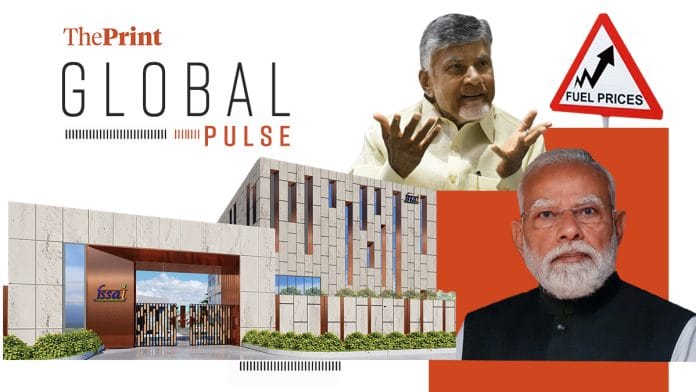
Michael Stott and Chris Kay report that India’s state-owned fuel retailers have raised petrol and diesel prices twice in less than a week, after four years of frozen prices. Officials acknowledge that shielding consumers from Gulf war-linked oil and gas disruption is no longer sustainable.
The latest hike came after Modi warned that COVID-19, conflicts, and the energy crisis had created a global “decade of disasters”. The report highlights the combined increase in retail petrol and diesel prices—less than four percent—as “modest but symbolic”.
The government, the FT reports, has been spending heavily to protect citizens from the fallout of the US-Israeli war on Iran by holding down fuel and fertiliser prices, finding alternative oil and gas suppliers, and ordering domestic plants to produce cooking gas.
However, Modi, earlier this month, asked Indians to save fuel by working from home and using public transport, avoid non-essential gold purchases, and cut foreign travel for holidays and weddings. According to India chief economist at Barclays, Aastha Gudwani, Modi is “basically setting the stage for less happy times to come”.
The pressure is also showing up in the rupee and India’s reserves. FT notes that India’s foreign currency reserves have declined by almost $20 billion to $552 billion since the start of the Gulf conflict. Citi economists now expect India’s current account deficit to hit 2 percent of GDP in 2026-27, up from an earlier estimate of 1.4 percent, the report adds.
For the BBC, Nikita Yadav looks at a different kind of pressure inside Indian homes—distrust over food safety.
In Delhi, 55-year-old Nirmal Rao has started boiling, drying, and grinding turmeric at home because she no longer trusts the turmeric sold from the market. “We shouldn’t have to do this,” Rao tells the BBC. “But you cannot trust what’s being sold in the markets anymore.”
The report—‘India has food safety laws. So why can’t it guarantee safe food?’—notes other middle-class families making paneer at home or buying grain directly from farms. Yadav writes that it is driven less by nostalgia and more by distrust.
Government data cited by the BBC shows that between 2022 and 2025, roughly one in six food samples tested by authorities failed to meet food safety standards. During the same period, authorities cancelled more than 1,100 food business licences.
India has a “modern” food safety framework under the Food Safety and Standards Authority of India (FSSAI). However, the system often acts only after complaints or suspicions arise, the BBC cites experts to emphasise. By that time, adulterated goods may have moved cities or states.
FSSAI ex-chief Pawan Agarwal says, “Bigger companies are expected to test products before they go to market—but most of the food economy does not work that way.”
For Bloomberg’s India Edition newsletter, Menaka Doshi reports on ‘an Indian state’s cash-for-babies gambit’.
Doshi writes that Andhra Pradesh Chief Minister N. Chandrababu Naidu, once associated with family planning, has now made a striking reversal.
“At one time, I worked towards family planning. But today, children themselves have become wealth,” Naidu said at a public event last week.
Andhra Pradesh will now offer Rs 30,000 to Rs 40,000 to families that have a third and fourth child. Like other southern states, Andhra Pradesh has a fertility rate below replacement level, the newsletter notes.
Doshi writes that cash-for-babies schemes may appear to leave families with a choice, but in practice the burden is likely to fall on women’s autonomy, work, and unpaid care.
She argues that Andhra Pradesh could instead address its demographic challenge by encouraging migration from younger northern states, such as Bihar and Uttar Pradesh, though it would raise questions of language, identity, political representation, and tax-sharing.
(Edited by Madhurita Goswami)
Also Read: How have India-Italy ties fared post UPA? Global media looks at reset, Modi-Meloni equation