



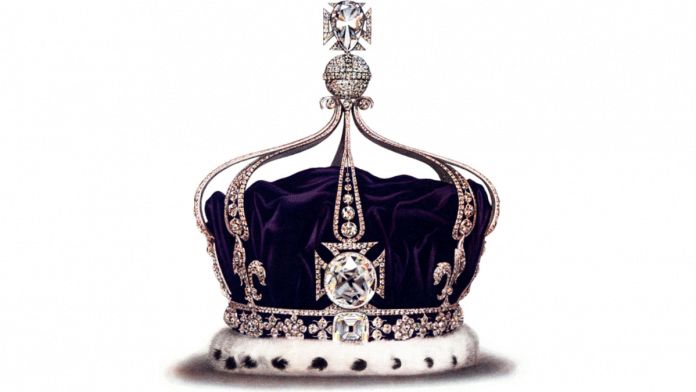
New Delhi: A day after New York City mayor Zohran Mamdani reignited the Koh-i-Noor debate, renowned historian and professor at Rutgers University, Audrey Truschke, wrote on X, how reversing colonialism’s damage isn’t simple. Truschke added, “undoing colonial harm is complicated.”
The reparation of artefacts is complex, with perennial debates over ownership and historical justice. The 1970 UNESCO convention is the cornerstone of international cultural heritage law, but its non-retroactivity voids its application.
The East India Company took the 105.6 carat diamond to Britain in 1849, more than a 100 years before the signing of the agreement.
At a press conference on 29 April, Mamdani, who has Indian roots, said he would “encourage” King Charles III to return the Koh-i-Noor to Indians while the monarch is on a state visit to the United States.
Truschke, whose work focuses on medieval South Asia, especially the Mughal Empire, had an audacious response to the statement.
“The British took the Koh-i-Noor diamond from a Sikh king of Punjab in Lahore… So, it’s not clear ‘to whom’ the British should return it.
We all wish undoing colonialism’s harms was straightforward, but it’s not. And this is a good example,” she posted.
William Dalrymple and Anita Anand in their definitive book, Koh-i-Noor: The History of the World’s Most Infamous Diamond (2019) also argueed that the diamond’s history is a “Game of Thrones-style epic” that makes modern ownership claims difficult to resolve.
The other complication is the nature of the acquisition. Article 7(b) of the treaty maintains that it deals with objects stolen from private property. The British government affirms that the diamond was surrendered under the 1849 Treaty of Lahore. Claimants from India argue that Maharaja Duleep Singh, heir of Maharaja Ranjit Singh, was a minor and under duress when signing the treaty.
The next complication is “to whom the British should return it,” as Truschke pointed out. Pakistan, Afghanistan, and the Jagannath Temple of Puri in Odisha lay separate claims to the diamond.
The debate has once again put the spotlight on other Indian artifacts now part of the British Museum or owned by several private collections.
The wine cup of Mughal emperor Shah Jahan, made of white jade, is currently housed at the Victoria and Albert Museum in London. Made in 1657, it was acquired by British Colonel Charles Guthrie, most likely in the aftermath of the Indian Rebellion of 1857. Briefly in possession of Queen Maria of Yugoslavia, it was acquired by the V&A in 1962.
BKSR Ayyangar, cultural heritage activist, in an RTI demanded that records about the efforts made for repatriation of a list of Indian artefacts, including the Koh-i-Noor and the wine cup in 2018.
No specific efforts have been made toward its repatriation, but it has been part of generic lists of repatriation demands.
Also Read: Mamdani won’t say if Kamala Harris should run for US president in 2028
Buddhist artefacts
A copper figure of Buddha is in the custody of the Birmingham Museum and Art Gallery. More than 2 metres high, this 500 kg figure from the Gupta-Pala period was discovered in Bihar’s Sultanganj in 1861. After its discovery, it was transported to the United Kingdom. According to the book, The Art and Architecture of India (1953) by Harvard University professor Rowland Benjamin, it is “the only remaining metal statue of any size” from Gupta Art.
A padyatra (foot journey) was launched by social activists in March 2023, from Sultanganj in Bhagalpur to New Delhi, to draw the attention of the Government of India to the matter.
The Amaravati Marbles, a series of sculptures and inscriptions from the Amravati Stupa, were excavated in 1845. Made from limestone, they depict stories from the Jataka Tales, illustrating the previous births of Buddha. Most of the marbles are in the Government Museum, Chennai. The remainder are at the British Museum in London.
Jasti Veeranjineyulu, Indian heritage activist and Chairman of Amaravati Development Committee wrote a letter to Prime Minister Narendra Modi in 2021 seeking an intervention to retrieve the same. It was part of the broader efforts of the Andhra Pradesh government.
Also Read: Mamdani’s ‘tax the rich’ promise now seeing action. He is starting with ultra-luxury homes
Tipu Sultan’s gold ring
The gold ring, weighing 41.2 gm, was sold to an undisclosed bidder for 145,000 by Christie’s auction house in 2014. It is inscribed with the name of the Hindu deity Ram in raised Devanagri script. It was allegedly taken from the Sultan of Mysore’s dead body, after the Battle of Srirangappattinam in 1799.
Professor S Settar from India’s National Institute of Advanced Studies had urged the Government of India to use all available avenues to recover the ring before the auction. A group named Tipu Sultan United Front also made the same appeal.
Former Lok Sabha MP, Azam Khan, had also asked Modi to repatriate the ring during the former’s visit to the UK in 2015.
(Edited by Insha Jalil Waziri)