



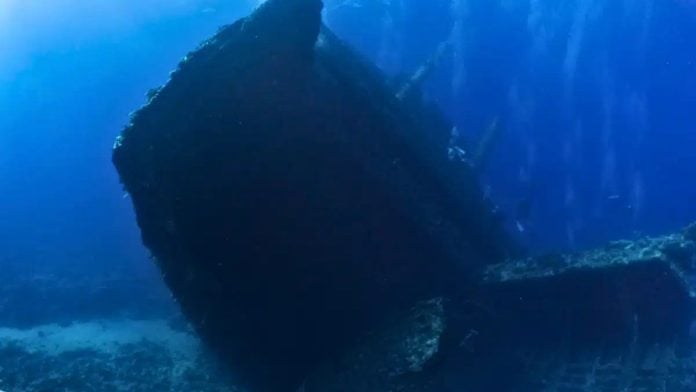
New Delhi: Archaeologists have discovered the world’s oldest known shipwreck near Kekova Island, off the southern coast of Türkiye. The wreck is believed to be between 4,400 and 4,700 years old.
Türkiye’s Culture and Tourism Minister, Mehmet Nuri Ersoy, announced the discovery on social media platform X. He said underwater excavations near Kekova Island, in the southern province of Antalya, had uncovered ancient ceramic storage jars dating back around 4,700 years.
“In the Blue Homeland, we are bringing to light the traces of the world’s oldest shipwreck,” Ersoy wrote in Turkish in a post on X, sharing a video of the discovery.
The ship is believed to have been about 10 metres long and used for trade across the Mediterranean Sea. Although its wooden structure has disappeared over time, many pottery vessels remain preserved among rocks on the seabed.
In the video shared by Ersoy, divers can be seen collecting artefacts from the seabed using underwater equipment.
The ceramic vessels, known as amphorae, were likely used to transport goods such as olive oil, wine, grain and other materials. According to Ersoy, clay analysis suggests that the vessels were made in workshops in the Jordan Valley.
One of the vessels has nine markings and two holes. Researchers believe it may have been used to make cheese or butter, suggesting that sailors might have prepared their own food during long sea journeys.
Also read: Britain wants Winnie the Pooh back. New York says no
A time capsule
Professor Hakan Öniz of Akdeniz University in Türkiye led the expedition organised by the Mediterranean Archaeology Association. He described the discovery as an important record of ancient history.
“The shipwreck is a time capsule at the bottom of the sea,” Öniz said, as reported by the BBC.
Archaeologist Karin Sowada from Macquarie University in Sydney was invited to study the artefacts after being contacted by the excavation director. She also joined Öniz’s research team to examine the ancient amphorae and other ceramic objects found at the site.
“There were two types of objects discovered during the excavation; one was a series of ceramic anchors, the second type of material was the pottery and there was quite a bit of it left,” Sowada told ABC News.
Dr Sowada used her knowledge of ancient Egypt, Bronze Age trade and ancient pottery to study more than 20 artefacts. She examined the materials to find out where and when they were made.
“[I was] trying to understand the clays, and sort of putting together this three-dimensional jigsaw puzzle, which was really quite exciting,” she added.
(Edited by Ratan Priya)