



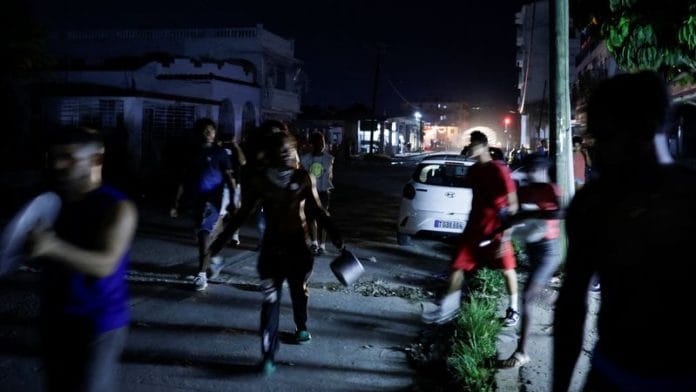
New Delhi: Cuba has run out of diesel and fuel oil—now its citizens are banging pots and pans to protest against the escalating blackouts and severe shortages as the heat led to spikes in energy demands. In a special televised appearance on 13 May, Cuban Minister of Energy and Mines Vicente de la O Levy informed the citizens about the gravity of the crisis.
“The situation is very tense, it’s becoming hotter,” the Minister announced on Cuban state-run TV. With summer months and scorching heat the demand for the electricity has shot up and US sanctions mean Cuba has no way to get fuel.
In the backdrop of severe blackouts, the official stressed on the empty oil reserves required to run the island’s beleaguered electrical grid. “We have absolutely no diesel,” the minister was quoted as saying by several media outlets.
On 13 May, protests broke across the Cuban capital of Havana. The angry residents banged pots and shouted, “Turn on the lights!” and “The people, united, will never be defeated.” It was the largest single night demonstration witnessed since the shortages rocked the country.
The fuel shortages have left the country’s hospitals in a lurch and forced schools and government offices to close. Some residents told CNN that they are unable to charge their phones and electric scooters. During the brief moments when electricity returns—even in the middle of the night—residents rush to finish basic tasks like laundry and cooking.
On 29 January, Trump signed an executive order threatening punitive tariffs on countries selling oil to Cuba. Suppliers have since cut off the country or sharply reduced their deliveries.
Cuba depends heavily on imported fuel and Venezuela is its primary source. The strategic partnership between the two countries through oil-for-doctors under Hugo Chavez and Fidel Castro had ensured that the country’s fuel needs were met. Under the scheme, Cuba sends thousands of doctors to Venezuela in exchange for oil.
In 2022, Venezuela supplied 75 per cent of Cuba’s oil imports. That dropped to 58 per cent in 2023. with Mexico emerging as another key supplier at 31 per cent. However, Venezuela’s supply fell from 46,500 barrels per day in December 2025 to zero after President Nicolas Maduro’s abduction. After the 29 January executive order, Mexico stopped its shipments.
Also read: Iran is the most instructive outcome of Trump-Xi summit
US-Cuba meet
The US restored Cuba to the list of US State sponsors of terrorism list in 2025.
“For decades, the Cuban government has fed, housed and provided medical care for murderers, bombmakers, and hijackers, while many Cubans go hungry, homeless, and without basic medicine,” said the US embassy in its release.
CIA director John Ratcliffe met his Cuban counterpart at the interior ministry meeting in the capital of Havana on 15 May. It was followed by a renewed offer from the US—$100m of aid “to ease the effects of its oil blockade.”
As per BBC, the Cuban statement said the meeting an “attempt to improve dialogue and American officials were told Havana was not a threat to US national security.”
Cuban president Miguel Diaz-Canel said that instead of aid, a blockade lift would ease the conditions faster.
“The US is prepared to seriously engage on economic and security issues, but only if Cuba makes fundamental changes,” a CIA official told CBS News.
In March, Russian government-owned crude oil tanker Anatoly Kolokdin carried an estimated 7,30,000 barrels of oil to the energy-starved island. The oil donation has depleted.
(Edited by Theres Sudeep)