



New Delhi: The buzz around the five baby orangutans found in Odisha’s Balasore district has led to a host of questions. Where are these great apes found, what makes them different from other great apes, and how did they end up in India — spoiler alert: experts say trafficking.
The great apes are divided into four genera and eight species — Orangutans, Gorillas, Chimpanzees and Bonobonos, and Humans. Among these, orangutans are the only great apes that are naturally found outside Africa and on the Southeast Asian islands of Borneo and Sumatra.
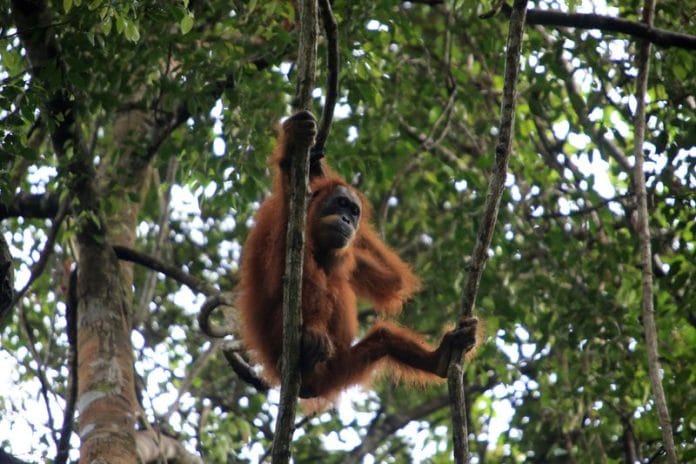
Unlike their peers, orangutans spend most of their lives in the forest canopy and are the largest arboreal mammals. Their name comes from the Indonesian and Malay words meaning “person of the forest”. Their arms can span over 2 metres, longer than their bodies, and their hands and feet have adapted to give them a better grip on branches. This is the key physical feature that makes them different from other great apes.
Also read: Orangutans didn’t just land up in Odisha. They were certainly trafficked, say wildlife experts
Semi-solitary apes
Unlike chimpanzees, bonobos, and gorillas, which are known to be social animals that live in groups, orangutans are relatively “semi-solitary”. Adult males are known to prefer their own company while females often spend several years with their young.
One explanation for this solitary behaviour is their habitat. In rainforests, food is often scattered across large areas and not concentrated enough to support a group.
Another aspect that differentiates orangutans from other apes is their long childhoods. Orangutan mothers often care for the young ones until they are nearly six to seven years old. The mother can have a child only after seven to nine years have passed since her previous one. This makes the species’ reproduction one of the slowest among mammals. When their habitat is reduced or if populations suffer a catastrophe, it can take them years to recover.
(Edited by Ratan Priya)