






Kolkata: Bangladesh Prime Minister Tarique Rahman’s recently concluded two-nation tour to Malaysia and China, during which he described Beijing as Bangladesh’s “most valued and trusted partner”, is being read in strategic circles as a major recalibration of Dhaka’s relationship with Delhi.
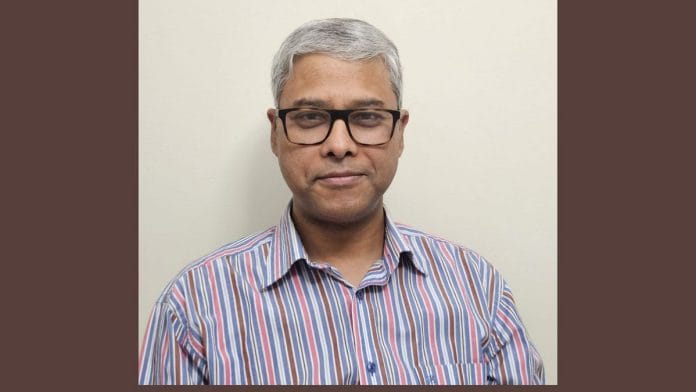
To Mohammad Harun Al Rashid, Bangladesh’s ex-ambassador to Morocco and former director-general of the Public Diplomacy Wing at the country’s Ministry of Foreign Affairs, this is a continuation of former Bangladesh premier Muhammad Yunus’s policy of looking India in the eye.
“In practice, this means answering India’s role in Bangladesh’s 1971 War of Independence with suspicion and resentment, while feeding the vanity and hostility of Islamist extremists and fundamentalists in Bangladesh,” Rashid told ThePrint in an exclusive interview from Canada.
Rashid had officially relinquished his charge in Morocco on February 27, 2025, moved to Canada, and published a Facebook post criticising the Yunus-led interim government, accusing it of giving space to radical extremism and dismantling Bangladesh’s secular foundation.
Rashid told ThePrint those fundamentalist forces in Bangladesh remain emotionally and politically tilted toward Pakistan, and have helped spread anti-India feeling so deep that the government of the day has to be seen cultivating relationships with countries inimical to India’s interests. Which is why, according to him, Tarique Rahman is trying to turn towards Beijing.
“My reading is simple: Tarique Rahman has overcalculated his foreign policy agenda. After all, the Indian government was the only visibly enthusiastic one about his homecoming after seventeen years of exile in the United Kingdom,” Rashid said.
Also Read: Tarique Rahman’s China visit shows Beijing’s charm offensive on Bangladesh
‘Pressure to build China-Pakistan-Bangladesh axis’
India showed warmth to Rahman at every symbolic moment, be it India’s External Affairs Minister S Jaishankar attending the funeral of his mother, former Prime Minister Begum Khaleda Zia, or Lok Sabha Speaker Om Birla attending Tarique Rahman’s inauguration as Prime Minister, according to Rashid. He argued that this warmth has not quite been returned.
“Prime Minister Narendra Modi was the first foreign counterpart to invite him to visit India with his family. Against such warmth and goodwill from India, Tarique Rahman’s first major foreign outreach to China sends a clear message. His Beijing visit, and his declaration that China is Bangladesh’s most valued and trusted partner, cannot be read as mere diplomatic scheduling. It is a political signal to New Delhi,” Rashid said.
He added that this is not diplomatic balance but overconfidence.
“India extended goodwill. Tarique Rahman answered by visiting China first,” he said.
On the Tarique Rahman government welcoming dialogue with Pakistan, Rashid said even the Awami League supports friendly relations with Pakistan, but the party has remained mindful of the fact that there was a war with Pakistan in 1971, which Bangladesh won and sought to become a secular and progressive country.
“There is increasing psychological pressure on Tarique Rahman to build a strategic China-Pakistan-Bangladesh axis to frighten India into submission. Not just policy wonks, there are influential academics like M. Shahiduzzaman who are relentlessly trying to make the government cosy up to Pakistan,” Rashid told ThePrint.
The Turkey factor
Rashid noted it is the same anti-Indianism that is guiding Bangladesh’s engagement with Turkey.
“It is widely believed that Bangladesh is turning to Turkey to protect the fundamentalist forces that led the 2024 movement for regime change under the guise of a quota movement. The game, therefore, is psychological. It is meant to feed a large section of Bangladeshi society whose politics are shaped by communal and religious hostility toward India,” he said.
But Rashid argued that if Dhaka wants to deepen this relationship in a meaningful manner, buying more weapons from Turkey would inevitably come at the expense of purchases from China and other suppliers and Tarique Rahman’s government does not have enough money for that kind of strategic luxury.
“In that sense, the question of dependence on India is not the most pertinent one here. So, I would not describe this primarily as an attempt to wean Bangladesh away from dependence on India. It is better understood as psychological and ideological positioning aimed at satisfying an anti-India audience,” he said.
Immigration flashpoints
Rashid does not make too much of the alleged harassment of Zahed Ur Rahman, senior adviser to Tarique Rahman, by Indian immigration authorities at Delhi airport. On June 14, Zahed Ur Rahman returned to Dhaka after he was stopped at Delhi airport by Indian immigration authorities when his name was reportedly flagged during a security check.
Bangladesh press reported Zahed Ur Rahman was subjected to “undue harassment” and Bangladesh summoned Indian Deputy High Commissioner Pawan Badhe on June 15 to lodge a formal protest.
“This is not a serious incident at all and the Tarique Rahman government is unlikely to do anything about it. If anything, it is an embarrassment for Zahed Ur Rahman,” Rashid said.
He also pointed out that Indian authorities are either unaware or not sufficiently concerned about the extent of hatred against India that Zahed Ur Rahman has spread in Bangladesh.
“That hatred that he spread along with the likes of popular Bangladeshi YouTubers like Pinaki Bhattacharya and Elias Hossain is largely based on falsehood,” Rashid said.
Another contentious issue between Delhi and Dhaka has been India’s intense deportation drive against undocumented migrants from Bangladesh. Rashid told ThePrint that both Hindus and Muslims from Bangladesh migrate to India. But the reasons are different.
“Hindus mostly migrate after being forcefully driven out by Bangladeshi Muslims. Muslims migrate mainly for economic opportunities though successive Bangladeshi governments have always denied it,” Rashid said.
On the Indian side, especially under the present BJP governments at the Centre and West Bengal, the issue is also being used to feed domestic politics, according to him.
“I believe India and Bangladesh, without the hatred for India that exists inside Bangladesh, could have been ideal neighbours. A porous border between them would have been a natural outcome of geography, history, language, trade, and human movement,” he said, but neither India nor Bangladesh has been wise enough to see beyond the lies, chicanery, and communal hatred that “anti-1971 forces have consistently spread against India”.
Equation with the US
The biggest foreign policy headache for Tarique Rahman in terms of achieving strategic autonomy is America, according to Rashid.
“After the fall of the Sheikh Hasina government in August 2024, the Yunus administration became entirely dependent for its protection on the United States and its Western allies. Prime Minister Tarique Rahman is now trying to take a more balanced approach. But whether he can succeed is a serious question,” he said.
Rashid said the US trade agreement signed under Yunus committed Bangladesh to more than $18 billion in anticipated purchases of US aircraft, agricultural, energy, and military products.
“Tarique appeared to comply with this framework almost immediately by moving ahead with the purchase of 14 Boeing aircraft, reportedly worth about $3.7 billion at list prices, soon after forming his government. So his attempt at balance is under serious strain from the very beginning,” Rashid said. “He may want to rebalance Bangladesh’s foreign policy, but the terms inherited from the Yunus period have already narrowed his room for manoeuvre.”
(Edited by Asavari Singh)