



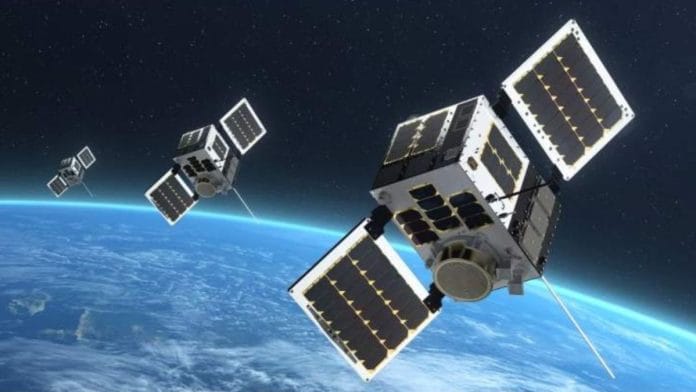

New Delhi: For its proposed constellation of 1,600 satellites, Reliance Jio has chosen an altitude of 650 km in low Earth orbit. This is likely to give their network the advantage of operating in a less-used orbital band, potentially easing coordination over orbital slots and spectrum interference.
Senior officials from IN-SPACe, the agency coordinating the project with Reliance Jio, told ThePrint that Reliance Jio is likely to go for an orbit that will be slightly above SpaceX’s Startlink satellites, which are placed at an altitude of about 550 km. The Amazon Leo constellation is placed in an orbit about 630 km high.
“The project has been granted a technical clearance. But the final plan for the constellation is yet to come to us,” the IN-SPACe official said.
The technical evaluation was carried out by officials from IN-SPACe, the Indian Space Research Organisation (ISRO), and the government’s Department of Telecommunications.
Reliance Jio is planning to launch a 1,600-satellite constellation into LEO, with the test flight scheduled around 2027. Placing these satellites at an altitude of 650 km will give the advantage of operating in a relatively less-used orbital band.
Also read: Hollywood movies on tech bros Elon Musk, Sam Altman, Mark Zuckerberg coming this October
Global competition
Reliance’s orbit is slightly higher than SpaceX’s Starlink, which currently has around 11,000 satellites in a low earth orbit of about 630 km. It is a mega-constellation, providing high-speed, low-latency global broadband internet.
Amazon Leo, which is also a network provider with an initial satellite constellation design, on the other hand, includes more than 3,000 satellites and is placed at an orbital altitude of about 630 km.
Reliance Jio’s constellation, however, will be placed considerably lower than OneWeb satellites, which are positioned in a 1200-km orbit. Being in a higher orbit, satellites can cover larger areas with fewer satellites.
This is why OneWeb’s 650-odd satellites would be able to provide similar coverage to Reliance’s 1,600 satellites.
A tradeoff for this, however, would be that Reliance might require more satellites to provide a comparable coverage, but this would also mean that the network from these satellites will take a shorter time to reach the Earth.
LEO is an orbital range closest to the Earth’s surface, typically at an altitude between 160 km and 2,000 km.
Reliance Jio initially plans to have its first test flight by 2027, begin the services in India by around 2028, place about 450-500 satellites by 2030, and establish full network coverage by 2035.
Each of these satellites are expected to provide 100-150 gbps. This means that the aggregated coverage of the constellation will be around 5 tbps over India.
(Edited by Aamaan Alam Khan)