





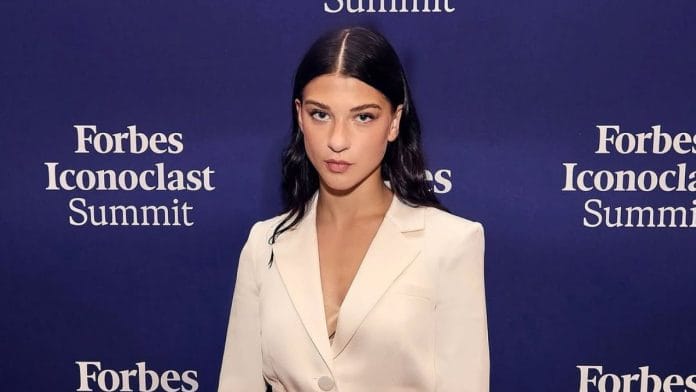


New Delhi: Phoebe Gates, the youngest daughter of Microsoft co-founder Bill Gates and philanthropist Melinda French Gates, wanted to build a company that could stand on its own, away from her parents’ legacy.
So Gates and her Stanford roommate Sophia Kianni built Phia, an AI-powered shopping assistant. Its browser extension compares prices, looks for resale options, and suggests alternatives. The company has raised more than $40 million from investors including Kleiner Perkins, Hailey Bieber, Kris Jenner, Kim Kardashian, Karlie Kloss, and Sydney Sweeney.
Now, Phia has landed in controversy over how the app generated revenue from shopping transactions. It is alleged that Phia used techniques that allowed it to claim affiliate commissions for purchases it may not have actually generated.
The passive trigger
Phia’s business model relied partly on affiliate marketing. When a shopping platform sends a customer to a retailer, the retailer can pay the platform a commission if that customer makes a purchase. A tracking cookie or referral code is generally used to establish who sent the customer.
The allegation is that Phia placed those tracking cookies even when it had not actually referred the shopper.
Reports by Bloomberg, affiliate-marketing researcher Ben Edelman, and Capital One Shopping found that Phia’s browser extension could open background tabs and insert its referral code during checkout. If that happened, Phia could receive credit for a sale that it had not meaningfully influenced.
Two features have drawn attention.
The first was a ‘passive trigger’, which could automatically place Phia cookies on websites a user had visited before. Another reportedly inserted a cookie when a shopper clicked anywhere on a checkout page containing a Phia pop-up. In some cases, a user simply closing the pop-up would trigger the cookie.
The allegations became more serious when Bloomberg reported on internal Slack messages involving Gates and Kianni. According to the report, the messages suggested the founders knew about the cookie-dropping practice as early as December 2025.
According to the string of texts, both Gates and Kianni were concerned that Phia was not dropping enough cookies automatically. “Worried this is an issue across the board,” Gates wrote on 18 December. She asked whether automatic cookie drops were live on all sites with coupons so the company could “confirm we are monetising on all [gross merchandise value].”
In another message, Kianni wrote: “Whatever we can do to keep these cookies from dropping will be amazing, thank you.”
Also read: Anti-corruption site bribes.fyi shuts down forever, says will delete all data
‘Will review transactions, return payments’
Phia initially described the problem differently. After being contacted about the issue, the company said a recent release of its code had caused incorrect attribution for some users. It said the problem had been identified and fixed.
“Within the last 24 hours, we were made aware that in a recent release our codebase was causing incorrect attribution for some users,” a company spokesperson said in a statement to Bloomberg. “Upon notification, our team worked around the clock to identify and mitigate the issue, and it has now been resolved.”
The company later said the controversial features had been removed on 7 July. It also said it would review transactions, return payments that had been wrongly attributed to Phia, and hire a head of compliance.
“We are reviewing every transaction, we are fully committed to and have already begun issuing all transaction reversals to brand partners as a result of any misattribution, and we are hiring a head of compliance to make sure something like this never happens again,” the spokesperson said.
However, the company’s initial description of the matter as a coding issue is difficult to reconcile with the reported Slack messages. The texts seemed to show Gates and Kianni discussing automatic cookie drops months before the issue became public.
The financial effect was also significant. After the features were disabled, Phia’s average daily revenue fell from about $80,000 to between $10,000 and $28,000.
During an appearance on the Call Her Daddy podcast, when Gates was asked about whether it is hard to carve her own path under the shadow of her father, she agreed.
“I think 100%… that’s difficult, but it comes with so much privilege, right… I didn’t have to fight for a scholarship in college. I knew my college was gonna be paid for. I had incredible opportunities because of my parents,” she said.
(Edited by Prasanna Bachchhav)