





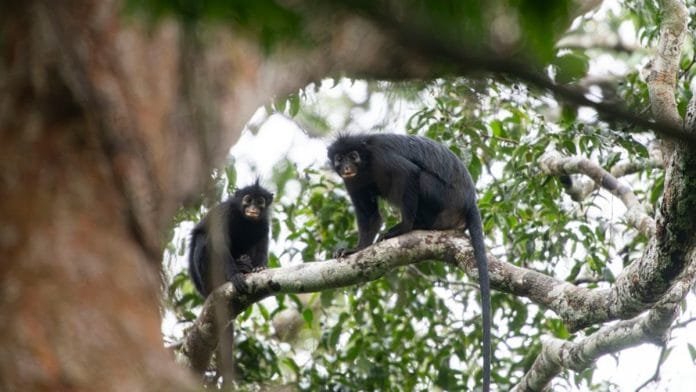


New Delhi: Scientists have discovered a new species of monkey in the forests of the Democratic Republic of Congo, distinguished by a black face and striking pinkish-orange lips.
The black-furred primate was first photographed in 2008 in the Lomami National Park in the central-eastern part of the country, nestled in high tree canopies. The animal was spotted again after 10 years by an international team of conservationists led by researchers from Florida Atlantic University.
The species is called ‘Likweli’ by the local Balanga people. The research team, comprising scientists from DRC, the US and Germany, have recommended that it remains the animals’ common name. They have given the primate the Latin name Colobus Congoensis, in recognition of the natural diversity in the country, as the species is understood to be part of a larger group of Colobus monkeys.
It is only the fifth species of African monkey to be discovered in the last 75 years and the second from the Lomami forests.
“These are really important African monkeys that don’t have thumbs,” Professor Kate Detwiler from Florida Atlantic University told the BBC.
“They are these herbivores of the canopy that are a critical part of the ecosystem. We think they have a lot to do with processing seeds and germination in the forest,” she added.
Also read: There’s a hunt for undiscovered insect species. In New York City
Unique identifiers
Researchers said that the Likweli’s unusual, bright facial markings could be a visual signal to other animals, potentially attractive to a mate or a mark to allow animals to identify each other.
These monkeys also have a distinctive roaring call. Since these are usually spotted in higher canopies, oftentimes they are not seen but heard in the forests and identified through their calls.
While not much is known about the species still, these animals are understood to be rare and restricted to a part of the forest where they can find the food and habitat they need.