



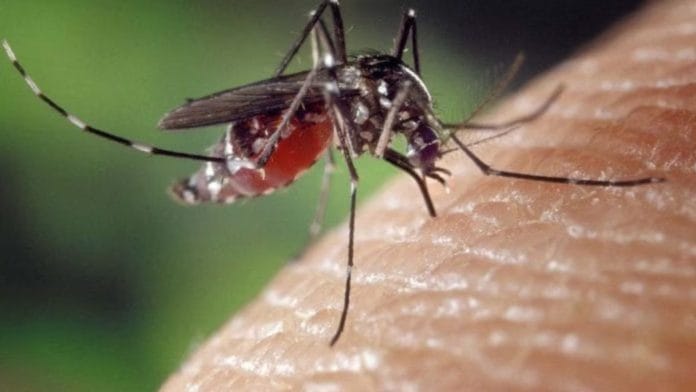

New Delhi: Diseases like Malaria may have been just as influential as climate in shaping human population structure, habitat choice, and genetic evolution across sub-Saharan Africa over the past 74,000 years, states a new study. It added that the disease acted as an invisible barrier that fragmented populations and influenced migration and interaction long before the rise of agriculture.
The report, Malaria shaped human spatial organization for the past 74 thousand years, led by an international team of archaeologists, ecologists and disease modellers, from the Max Planck Institute of Geoanthropology, Germany, and the University of Cambridge, England, is published in Science Advances.
The report suggests that Malaria—caused by Plasmodium falciparum, a Protozoan parasite of humans—didn’t just affect health; it also influenced how human groups formed, moved, and evolved. It functioned as a long-term ecological barrier that structured the human population across prehistoric Africa.
Re-thinking human evolution
Humans, as a species, were highly adaptable to different environments. Hence, considerable focus was given to climate and ecological adaptation. But it was not just them who adapted to different regions and environments; their pathogens did too.
“Malaria is a major world disease that today presents a global health problem, with 263 million cases annually,” states the study. “Critically, genetic studies also indicate that malaria was a major problem both in recent prehistory and also in the Pleistocene (most recent major ice age).”
The relevant institutions are currently taking precautionary measures to reduce the risk of infection. Similarly, evidence suggests that in primitive human cultures, various counter-measures such as the use of aromatic plants were common to repel mosquitoes (vectors of Plasmodium parasites that cause malaria).
To understand how diseases influenced human demography, the researchers reconstructed the historical distribution of malaria, which was challenging due to limited direct evidence available from such distant time periods. To overcome this challenge, the researchers used Species Distribution Models (SDMs) and a Malaria Stability Index to estimate past malaria transmission risk.
This allowed them to generate maps of malaria suitability stretching back tens of thousands of years. These maps were then compared with models of early human population distribution and expansion. The present study provides valuable context to the broader implications of other major viral diseases in human history that have shaped human interactions across the continents for thousands of years.
Also read: Delhi-NCR panics over Bengali workers going to vote en bloc. ‘Unhappy with 1-hr service apps’
Emerging pattern
“The effects of these choices shaped human demography for the last 74,000 years, and likely much earlier,” said Professor Andrea Manica of the University of Cambridge, one of the senior authors of the study.
The results led to an emerging pattern, revealing the potential risk of malaria transmission shaping the geographical organisation of homo sapiens. A barrier was created between some local populations, which is assumed to be one of the influences of malaria on human populations.
The study showcased the origin of sickle cell mutation (a survival advantage against malaria), which correlates with the rise of malaria in the ancestors of the Bantu in West Africa.
Furthermore, it was found that the prevalence of malaria predates the invention of agriculture in human society. The study also recommends caution against the link between Neolithization (the beginning of the agricultural era) and the origins of several infectious diseases.
Nishtha Modgil is a TPSJ alum, currently interning with ThePrint.
(Edited by Saptak Datta)