



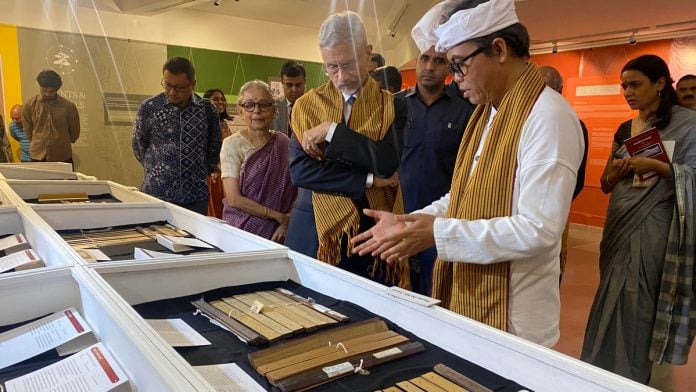
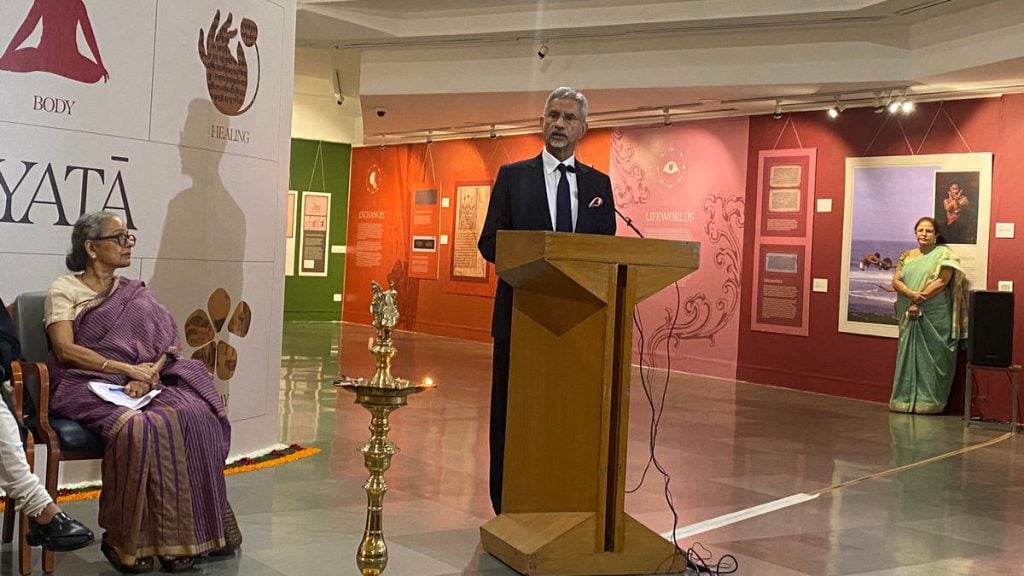
New Delhi: An exhibition of ancient South Asian manuscripts on medicine and healing could play a role in global “cultural rebalancing”, External Affairs Minister S. Jaishankar said at its inauguration in Delhi on Monday.
“For India, we are seeking in different ways to recover and communicate our civilisational heritage, our inheritance,” he said at the exhibition titled ‘Nirāmayatā: Healing and Well-being in South Asian Texts and Practices’, held at the India International Centre (IIC). He called it part of a broader project of “global rebalancing”, of which “the most vital segment is cultural rebalancing”.
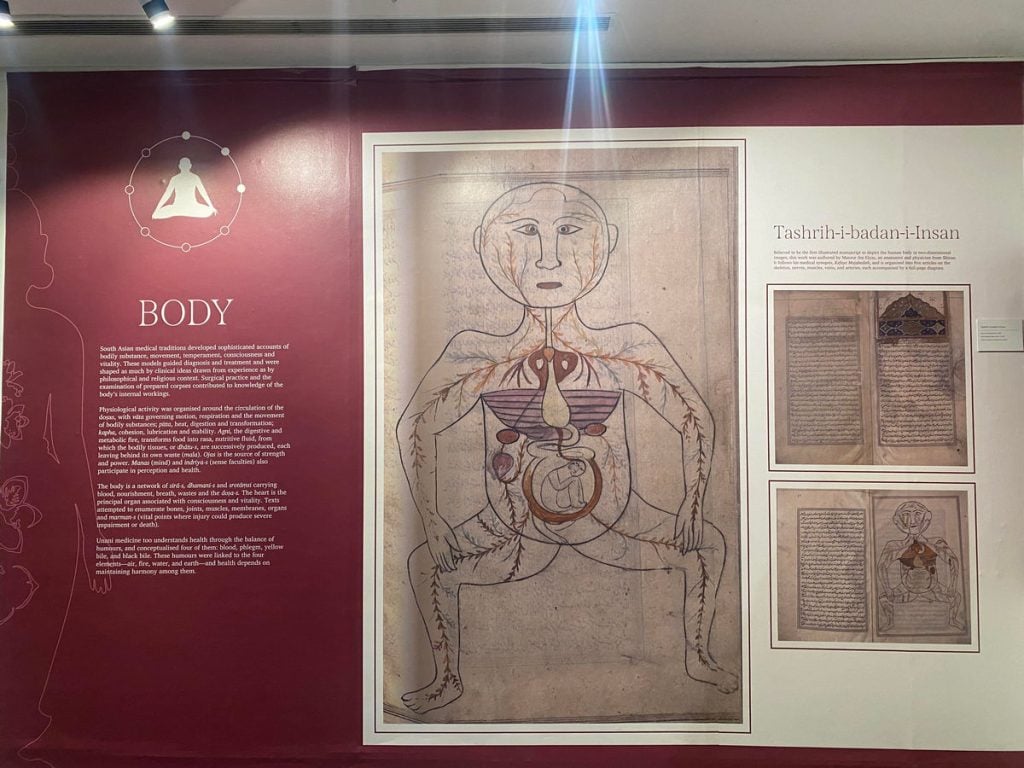
The exhibition itself doesn’t just scream ‘India’. There’s a reproduction of the Persian Tashrih-i-badan-i-Insan (Anatomy of the Human Body), featuring one of the earliest known anatomical illustrations from the Islamic world. Then there are Balinese usada manuscripts on traditional healing—the word comes from the Sanskrit aushadha, meaning medicine. There’s even a hint of a medical disagreement over Vedic practices by ancient surgeons.
Organised by the South Asian Manuscript Histories and Textual Archives (SAMHiTA), the exhibition brings together manuscripts on healing traditions dating as far back as the 9th century CE. They cover everything from Charaka and Sushruta’s four pillars of treatment to the use of music and aromatics in healing. Some even discuss animals as both sources of medicine and patients in their own right.
For Jaishankar, preserving these manuscripts is “not merely an exercise in nostalgia”.
“It is an investment in our intellectual resources because we believe that a society that understands its past more fully, is better equipped to engage with the present, to shape our future,” he added.
Nirāmayatā is the fourth edition of SAMHiTA’s annual exhibition series, with previous editions exploring cultural exchange, India’s contributions to mathematics and the world of manuscripts. What they all have in common is an effort to get more people interested in South Asian manuscripts. Monday’s audience included students, Ayurveda enthusiasts, academics and journalists, some drawn by the high-profile guest of honour.
Also Read: Indira Gandhi asked Veerappa Moily to bring Congress back to Kerala. He wasn’t up for the job
Agreements, disagreements, and cultural exchanges
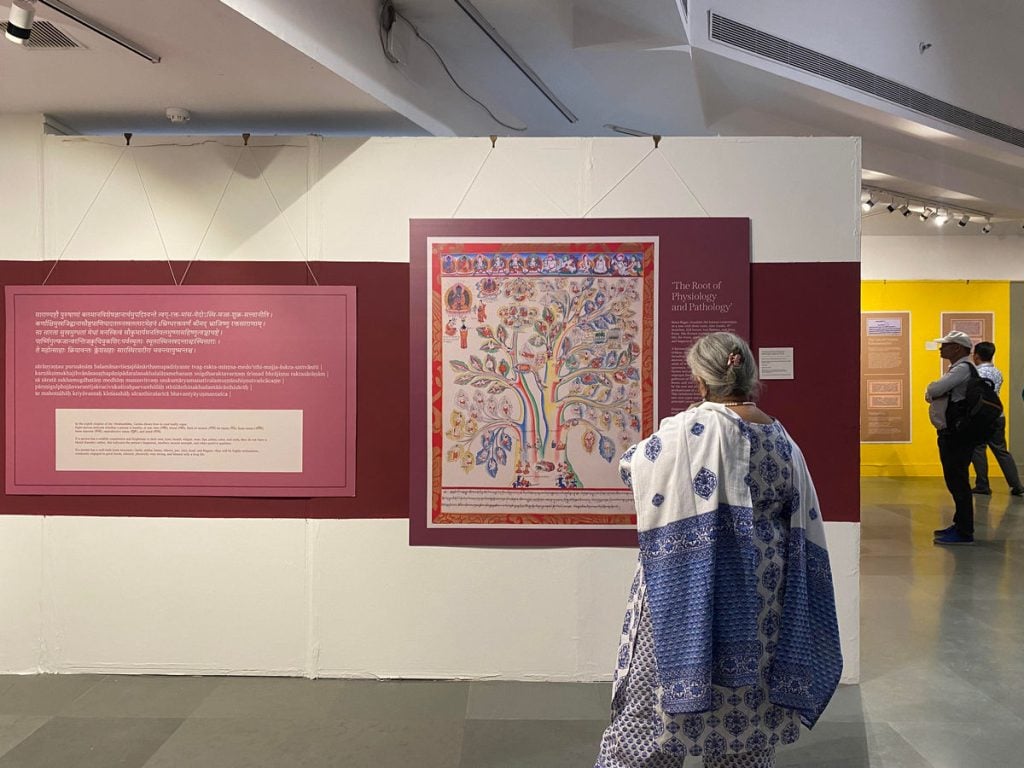
Divided into eight sections, the exhibit was laid out through floor-to-ceiling panels spread across IIC’s spacious gallery. The sections included ‘Contexts’, ‘Texts’, ‘Body’, ‘Healing’, ‘Plants and Animals’, ‘Exchanges’, ‘Lifeworlds’, and ‘Today’.
For Sudha Gopalakrishnan, project director at SAMHiTA, the idea of ‘nirāmayatā’—which means a state of no distress—was the driving force behind the curation.
She pointed out that ancient healing traditions displayed a “sophisticated understanding of the body” and did not view disease in isolation. Achieving swasthya, or mental and physical equilibrium, involved a combination of physical vitality, tranquillity, regulated conduct and environmental balance, she added.
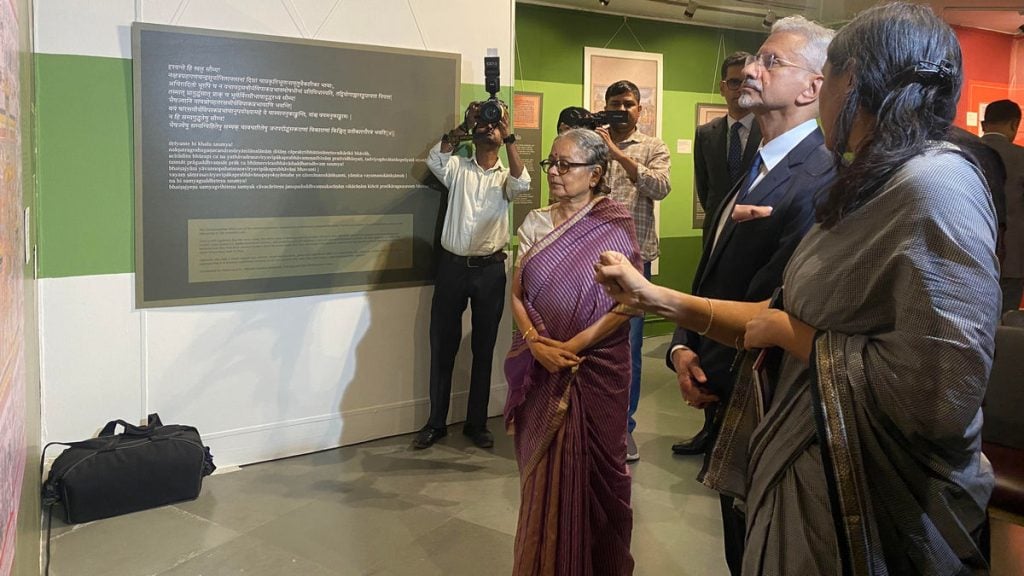
The texts on display included the Charaka Samhita, a seminal Sanskrit work on Ayurveda believed to date back to 1000 BCE, and the Tashrih-i-badan-i-Insan, a 14th-century medical treatise in Farsi.
For Niharika Gupta, project manager, SAMHiTA, the research leading up to the exhibition threw up some surprises. Yoga, for instance, took on its current emphasis on physical postures relatively late in history, she said.
“This whole asana system that we use only started in the 1400s. Before that, asana was not always an integral part of yoga,” Gupta said. Even though asanas were always part of yogic traditions, reducing yoga to them “is a myth”, she added.
Another surprising revelation was the amount of debate within the manuscript tradition. For instance, the Sushruta Samhita, a Sanskrit surgical treatise, questions some practices passed down through traditional Vedic knowledge. While Ayurveda posited that the body has three hundred and sixty bones, authors of the Sushruta Samhita argued that “the recognised number is three hundred” in surgical texts.
“Authors of the text would say that the Vedic tradition says this, but we as surgeons say this,” Gupta said.
Manuscripts from modern-day Tibet, Indonesia and as far away as Shiraz in Iran also show how medical knowledge travelled between societies, which “kept it (medical knowledge) from stagnating”, according to the curatorial note.
Also Read: How Belgian painter Balthazar Solvyns documented Hindu society of 18th-century Bengal
The AI angle
For the team which put the exhibition together, artificial intelligence made it easier to sift through heaps of material.
“We sometimes use AI to actually translate things written in Farsi– some secondary literature that we would not otherwise have access to,” Gupta said. While the team had people who knew Sanskrit and Farsi, AI helped with a “first pass translation”.
For Jaishankar, AI use aligns with India’s nationalistic ambitions.
The knowledge contained in these texts, he said, is often fragile and at risk of eroding over time.
“AI creates new possibilities both for restoration as well as access to manuscripts… Technology and tradition must work together,” he said, adding that this will help achieve India’s goals of “Vikaas bhi, virasat bhi.”
(Edited by Asavari Singh)