







New Delhi: In late May 2026, residents of Chhattisgarh’s Korba district woke up to an apocalyptic sight—hundreds of bats hanging still from trees. Dozens more had fallen on the roads. Others were found motionless beneath branches. Local reports described the animals “falling like burnt fruits” as temperatures surged during an intense heatwave sweeping northern and central India.
Then came the dead peacocks and palm civets.
Chhattisgarh’s brutal heatwave claimed the lives of another 500 bats in Kanker district. A few hundred kilometres away, in Khairagarh’s Dallikholi-Lachhna forest belt, more than 15 wild birds and animals—including peacocks, palm civets, crows, and owls were also found dead.
Across the world, veterinarians and wildlife rescuers are reporting birds collapsing from dehydration, animals suffering heatstroke, and ecosystems buckling under extreme summer temperatures.
In the searing heatwave that swept south-east Australia earlier this year, entire colonies of flying foxes fell from the trees during one of the country’s worst heatwaves since the Black Summer bushfires from 2019 to 2020. Thousands died as mothers, still clutching pups, collapsed together from branches across South Australia, Victoria, and New South Wales. The most affected were Grey-headed flying foxes, listed as vulnerable under Australia’s environment laws.
Marine heatwaves are pushing Florida’s reef-building corals into functional extinction. A 2023 heatwave led to staghorn and elkhorn corals collapsing across vast stretches of the Keys and Caribbean. In places, mortality reached 100 per cent, leaving behind a trail of dead reef skeletons. Scientists warn it is a tipping point pushing coral worlds to vanish beneath the surface.
Due to France’s early heatwave, wildlife rescue centers in the country are bracing for a wave of suffering as nesting birds begin to die under extreme rooftop and cliffside heat. Swifts, swallows, storks, and birds of prey are among the most exposed, with adults abandoning broods, eggs dying in overheated shells, chicks falling before they can fly.
Also read: Delhi’s animals dying of heat stress, thirst—dogs bleeding through their noses, cats panting
Koalas in a climate crisis
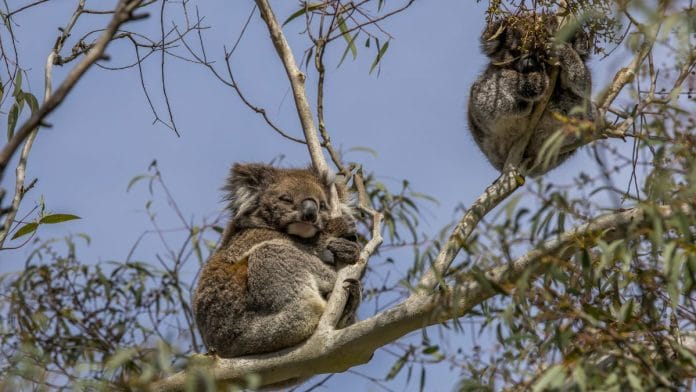
A major Australian study suggests that even koalas may be nearing their thermal limits.
The findings, published on 27 May in Biology Letters, are among the clearest pieces of evidence yet that climate change is becoming a direct survival threat to endangered koala populations.
For decades, koalas were considered highly adapted to heat. They retreat into dense foliage, hug cool tree trunks to lower body temperature, and remain inactive during the hottest parts of the day to conserve energy. They cool themselves by panting and licking their fur, but that rapidly drains water reserves, increasing dehydration risk.
The study suggests those defenses are beginning to dry up.
“Our findings reflect a broader pattern seen across wildlife globally, where extreme heat events increasingly threaten the survival of endangered species,” the researchers note in the report.
When seven-day average temperatures rise beyond 27°C, koalas begin to experience higher risk. At 30°C, deaths and emergency admissions rise by about 12–13 per cent compared with 25°C. As temperatures creep up toward 35°C and 40°C, risk rises across most admission types, with no sign of easing.
Researchers analysed more than 11,800 koala rescue admissions across New South Wales between 2000 and 2022 and found that prolonged exposure to heat sharply increased the likelihood of hospitalisation and death.
“In healthy environments, koalas can find refuge in dense, shaded forests to cool down,” the researchers wrote. “However, habitat destruction caused by deforestation, urban expansion, and land clearing reduces these essential resources.”
With climate refuges shrinking, koalas are being forced to move farther than usual in search of livable habitat. This extra movement exposes them to higher risks—road accidents and predators.
Also read: Heat stress is not a temperature. India needs to learn that
Heat stress amplifies disease
The study also found that the threat of heat amplifies pre-existing diseases.
Koalas suffering from chlamydiosis—one of the species’ most devastating infections—were significantly more likely to collapse or die during hot weather. Researchers believe heat stress suppresses immune function, worsening disease progression and weakening the animals’ ability to recover.
“Without proactive intervention, the continued rise in extreme heat events could push already vulnerable koala populations closer to extinction,” the researcher noted.
Researchers identified inland north-western New South Wales as one of the most dangerous regions for future heat exposure, with koala populations there facing repeated periods of high temperatures.
The researchers say the findings reflect a growing global pattern in which rising temperatures are becoming a direct driver of wildlife mortality.
“The combined impact of heat stress, disease and habitat destruction may accelerate population declines, making conservation efforts to mitigate these threats increasingly urgent,” the researchers urged.
(Edited by Theres Sudeep)