





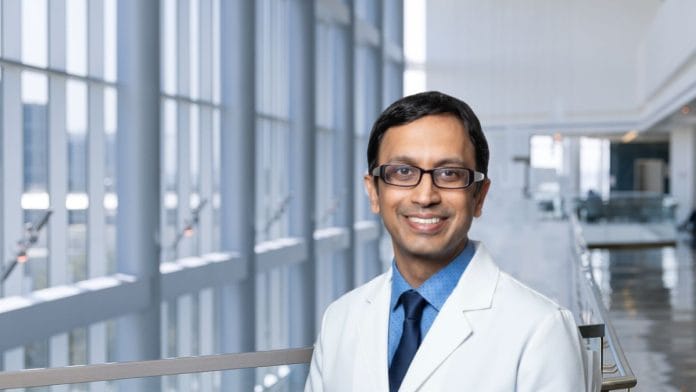

New Delhi: A group of 20 North American liver cancer specialists led by an Indian-origin scientist, Dr Amit G Singal, has developed a new framework to decide how liver cancer should be treated.
The framework, titled BEACON-HCC — Best Evidence and North American Consensus on Hepatocellular Carcinoma — was published in the journal Hepatology in August. The study highlights that such a framework became necessary since treatments for hepatocellular carcinoma (HCC) have been expanding rapidly and there is no universal system to decide how the disease should be treated.
The lead researcher, Singal, is a professor of Internal Medicine at UT Southwestern, and the chief of hepatology and medical director of the liver tumor program. Although his education and work are restricted to the US, Singal has collaborated with Indian doctors in Hyderabad, at the Tata Memorial Centre, KEM Hospital, and the Rajiv Gandhi Cancer Institute regarding treatments of HCC.
“This is a disease that continues to have a poor prognosis, and we clearly need to do better. BEACON-HCC is an important step in that direction,” Singal said in a press release.
Singal, who studied at the University of Michigan, then trained in internal medicine at the University of Washington, joined UT Southwestern in 2010. Since then, his work has focused on trying to diagnose and treat liver cancer before it becomes incurable. He has published over 400 articles in several reputed publications such as JAMA, Gastroenterology, Hepatology, Journal of Hepatology, and GUT.
Also read: Meet the men chasing monkeys with langur calls at the badminton World Cup in Delhi
BEACON-HCC
At present, treatments for HCC include surgery, liver transplantation, treatment targeting tumors, radiation, drugs, immunotherapy, and a combination of all of these treatments.
BEACON-HCC looks at a tumor differently. It suggests analysing the cancer biologically to see if it contains any hints that the cancer would respond better to some treatments. Such analysis could also be based on what doctors see on CT and MRI scans which show them how much of the liver might be affected.
BEACON-HCC advises studying whether the cancer has spread into blood vessels or not because this could significantly change how any treatment may affect the patient.
It is important to note that BEACON-HCC is not a new type of treatment, it is merely a framework that can help doctors navigate existing and emerging treatment in a better manner.
“Liver cancer can be cured a couple of different ways if it is diagnosed early enough, and patients have a very good chance for long-term survival afterward. With some patients, we can resect it, or remove the cancerous parts of the liver. We can also do what’s called radiofrequency ablation to burn the cancer and get rid of it that way. However, these curative options are only available if the cancer is found early enough. That is something that we need to work on given that most patients with liver cancer are still diagnosed at late stages,” Singal told UT Southwestern.