







Bengaluru: Science already knows sitting all day is bad for you, and that walking can help. Until now, the evidence came almost entirely from labs or small workplace pilots. Now, a new study published in the British Journal of Sports Medicine tested the effectiveness of “movement breaks” on 11,500 people going about their daily lives. All thanks to an NPR podcast.
The experiment run by Columbia University, called the Body Electric Challenge, was embedded in an NPR podcast in the US. Listeners were invited to take five-minute walking breaks throughout their day—some every 30 minutes, some every hour, some every two hours—and then report back on how they felt before and after the two weeks. Over 19,000 adults signed up, and 11,500 actually went through with it.
The findings were unambiguous. Across all three groups, fatigue dropped, mood improved, and the kind of low-level bad feeling that drags through a long workday eased off. The more frequent the breaks, the bigger the benefit. But even the group walking just once every two hours reported meaningful improvement.
The sweet spot, researchers concluded, was once an hour. Breaks every 30 minutes produced slightly better outcomes, but were harder for people to stick to consistently, and they disrupted work. Breaks every two hours were easier to manage, but delivered less. An hourly five-minute walk offered the most practical trade-off.
Also read: Humans everywhere follow this pattern when walking—they turn left
Does it affect work?
But won’t stepping away from your desk every hour tank your productivity? The data says no. Employed participants across all groups actually reported small but positive changes in their sense of engagement and performance at work. Nobody’s output suffered.
The fear of lost productivity is one of the most commonly cited reasons people don’t take breaks. Science has now made that excuse harder to defend.
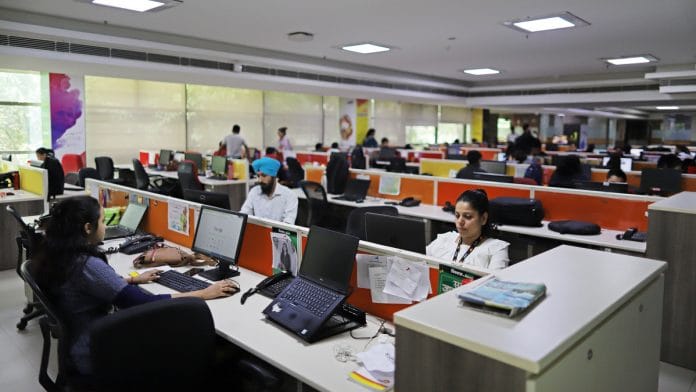
For India, that excuse is also one the country can ill afford. The prevalence of insufficient physical activity among Indian adults has nearly doubled, rising from 22.3 per cent in 2000 to 49.4 per cent in 2022. If this trend continues unchecked, 60 per cent of the Indian population could be physically unfit by 2030, according to a 2024 study in The Lancet Global Health. Much of this is driven by desk-bound, screen-heavy work that defines India’s rapidly growing IT and services workforce.
What makes the BJSM study unusual is that the intervention was deliberately minimal. There were no fitness trackers, no reminder apps, no coaches nudging people along. Participants were told what to do and then left to figure it out, across different jobs, schedules and living situations. And benefits still showed up.
The study does have limits. The two-week window is too short to say whether people kept it up or whether the effects lasted. And the health data was all self-reported.