





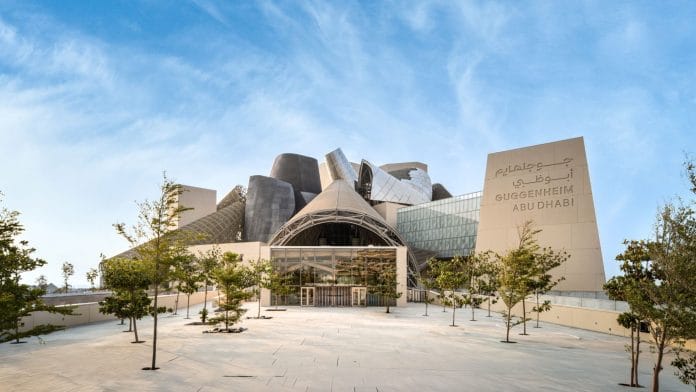


New Delhi: Abu Dhabi finally has its Guggenheim Museum after a 20-year wait. First announced by the Solomon R Guggenheim Foundation in collaboration with the city’s culture department in 2006, the museum is set to open on 11 December, the authorities have announced.
The Guggenheim constellation of museums—located in New York, Venice, and Bilbao—is known for its collection of modern and contemporary art. The Abu Dhabi site, located in Saadiyat Cultural District, will be the fifth cultural institution of its kind in the region.
Unlike traditional galleries, Guggenheim Abu Dhabi will organise its art collection thematically rather than chronologically. Its galleries are aligned along major vectors of art since 1960, such as Abstractions, Popular Culture, Land, Language, and Storytelling. The museum will display over 600 artworks collected from 2009, spanning sculpture, painting, installation, photography, moving image, and new media.
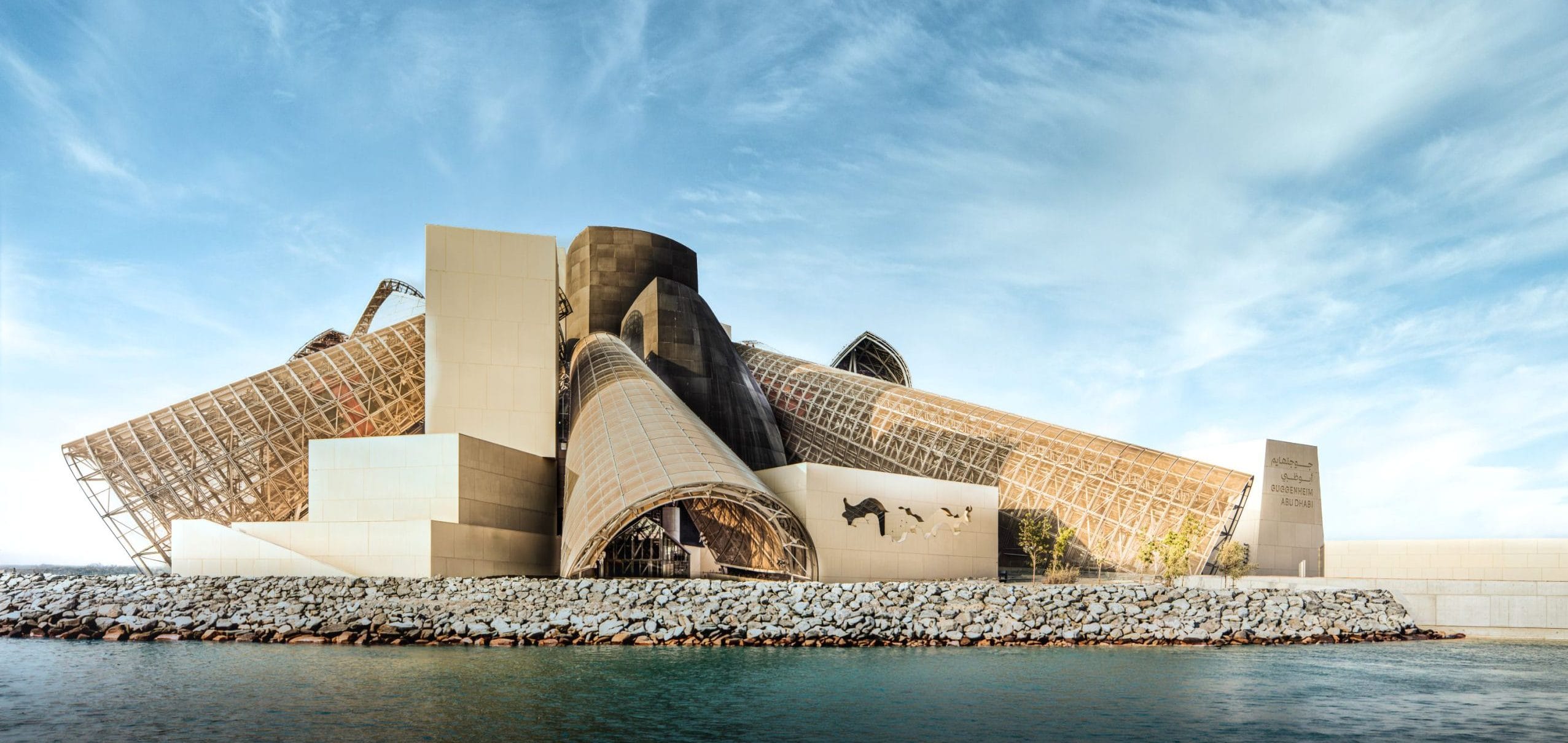
The architecture of Guggenheim Abu Dhabi
The building’s architecture is key to the visitor experience. It features 30 galleries that unfold across the interior, connected by a central atrium. Ten sculptural cones punctuate the building’s skyline: nine are clad in stainless steel mesh and one in onyx and glass.
The cones, some up to 88 metres tall, provide natural ventilation and shade, which not only creates a bold silhouette but makes the building more energy efficient.
With a total built-up area of 80,000 square metres, the museum has 11,600 square metres of interior gallery space and 23,000 square metres of outdoor exhibition areas.
It was designed by well-known Canadian-American architect Frank Gehry, and is located at a meeting point between land and sea. Gehry died on 5 December 2025, and Guggenheim Abu Dhabi is his last completed project.
The architect also designed Dar al Funoon, a major performing arts centre under construction in Saadiyat Cultural District, expected to be completed by 2030. This means the Abu Dhabi district will host both of Gehry’s final designs.
Also read: PwC latest Big Four firm caught in AI hallucination mess. KPMG, EY, Deloitte got there first