





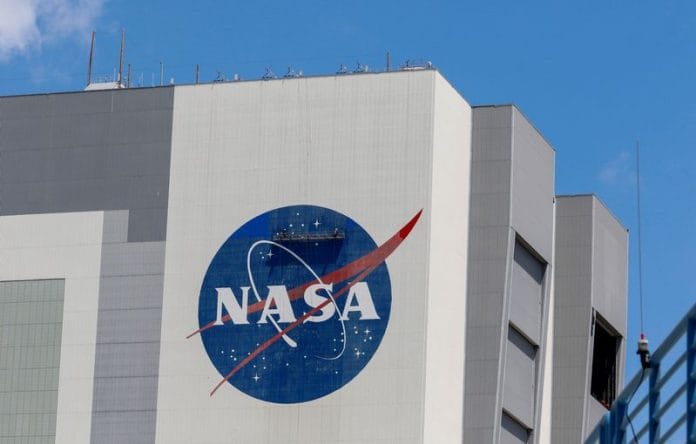


New Delhi: NASA is luring football fans to space ahead of the FIFA World Cup 2026.
The US space agency will host an exhibit at the FIFA Fan Festival in Houston from 11 June to 19 July, giving visitors a glimpse into life at the International Space Station (ISS) and future missions to the Moon under the Artemis programme. NASA officials and members of the Artemis II crew, who recently completed a mission around the Moon, will also interact with fans during the tournament.
But NASA’s connection to football is as strong as Physics is important in the realm of Science. Some of the science behind modern footballs has roots in research conducted in space. “The same physics that governs motion in space also shape the game millions watch on Earth,” read a NASA report.
In 2019, researchers working with the ISS National Laboratory used the station’s microgravity environment to study how a football’s internal mass affects its movement, stability and spin. The findings helped scientists better understand how embedded technologies, such as match-ball sensors, can influence performance during a game.
Also read: Indian-origin CEO in the US faces loss of citizenship over H-1B visa fraud
The science inside a football
That research has become increasingly relevant as modern footballs get smarter. Since 2022, Adidas has embedded electronic sensors inside official match balls used in major tournaments. These sensors track speed, position and player contact in real time, helping referees and broadcasters. However, adding electronics also changes a ball’s weight distribution, which can affect how it behaves in flight.
The space-based experiments examined exactly that: how shifting a ball’s centre of mass influences rotation and stability. The findings have contributed to studies used in the development and evaluation of footballs for major international competitions, including FIFA World Cups.
NASA has also studied football aerodynamics closer to home. Engineers at the agency’s Ames Research Center tested Adidas’s Brazuca ball, used in the 2014 World Cup, in wind tunnels to understand phenomena such as the “knuckleball” effect, where low-spin shots move unpredictably because of unstable airflow.
Researchers found that factors such as panel design, seam depth and surface texture can influence whether a ball curves, dips or travels in a straight line.
Now NASA and Adidas are bringing some of that science to football fans through demonstrations comparing how differently balanced footballs move and spin in microgravity. They’re calling it STEMonstration.