



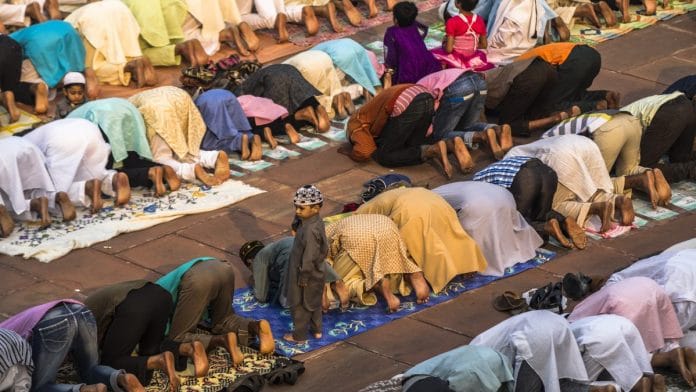
New Delhi: Denmark plans to legally ban Islamic calls to prayers—the azaan—nationwide, the country’s Immigration minister Morten Bodskov announced this week. It was a move against the growing anxieties of ‘Islamisation’ in the country.
The Left-wing politician Bodskov told the Danish news agency Ritzau that “the call to prayer should not be heard over Danish rooftops.”
“It has no place in Denmark, and you shouldn’t be in any doubt whether you’ve ended up in a suburb of Islamabad when you walk around Denmark,” he said. Bodskov has also been quoted by The Copenhagen Post, which reported that Bodskov, as the Minister for Immigration and Integration, is the third Social Democratic Integration minister to raise the issue of the Islamic prayer call. From the US press, German news outlets and several media houses across the world have carried the Danish report. The current effort is still at the review stage, not a completed policy, and officials are examining whether such a restriction would be legally possible under Denmark’s constitutional protections for religious practice.
The debate is not new. In Denmark, local noise rules have already limited loudspeaker-based prayer calls in some places, including Copenhagen. The country also tightened restrictions on public religious provocation in recent years, including a 2023 law targeting the desecration of religious texts after Quran-burning protests drew international attention.
Denmark is home to a Muslim population commonly estimated at around 270,000, with roughly 100 mosques, according to reporting cited by The Telegraph. The current controversy is part of a broader European debate over immigration, religious expression, and public order.
However, Denmark’s constitution guarantees the right to public worship, with exceptions such as preaching that undermines democracy and places restrictions on donations to outlawed organisations.
Anti-immigrant sentiment across Europe has reached an alarming high. Recently, the conversations around hijab and other Islamic practices have been re-ignited in Denmark.
“The Danish People’s Party talks and talks and talks. More foreigners who are not staying legally in Denmark must be sent out. Step by step, the government is working to ensure that happens. That is action,” Bodskov wrote in his recent Instagram post.
The Social Democrats party in Denmark is about to start its third term. Mette Frederiksen, as Prime Minister, has made several headlines for her administration’s migration policies.
Also read: How an NPR podcast helped prove that an hourly ‘movement break’ is good for you
Kudos to Danish Government for ban on azan. It reflects the supremacy of Mohammad & Islam. Azan is against the charter of humanity, respect to all faiths, none is superior.