


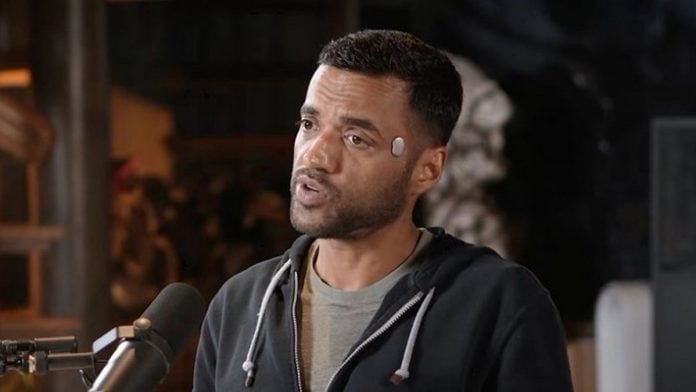
New Delhi: Billionaire Deepinder Goyal has been posting up a storm on X since Thursday to hit back at “holier-than-thou doctors” questioning the science behind his health-tracking wearable Temple, priced at Rs 85,000 and available for pre-order since 1 November. The device claims to track blood flow to the brain as well as what Goyal calls “biological entropy”, a measure of how hard the body is working.
On Friday afternoon, Goyal, who is also founder of Zomato (now Eternal Ltd) and its former CEO, posted a two-page document in which he called Temple “Humanity’s Last Personal Device”. He wrote that it is not only a health tracker but a “biologically-aware, no-screen AI companion”.
“Temple can hear the wearer without a microphone. We have motion sensors which read the vibrations your voice generates and converts it to text. I repeat – Temple doesn’t have a mic, but can still hear you,” he wrote.
Temple is an ambitious project. The team is delusional enough to think we can build this. And we will.
Here's what we are building. Join the ride. https://t.co/sZugOhdb2f pic.twitter.com/fPZSISAr6V
— Deepinder Goyal (@deepigoyal) November 6, 2026
But on the science that doctors have been questioning, particularly Temple’s ability to measure blood flow to the brain and its proposed Entropy metric, he did not offer much in the way of evidence.
“We have a number of new research breakthroughs coming up (especially Entropy), and are validating them as we speak. Will share as and when we have updates,” he wrote.
The latest post is among several Goyal has put out since Thursday, following a barrage of criticism from doctors, particularly hepatologist Dr Cyriac Abby Philips, better known on social media as The Liver Doc.
In one of his Instagram posts, Philips called Temple “the biggest health scam and wellness fraud in India” and shared a picture of the wearable with the caption: “WE GOT SCAM 2026 BEFORE GTA 6!”
Also Read: Women with a longer reproductive lifespan show less brain damage, says new study
Goyal vs doctors
Goyal has been spotted wearing the tiny device on his temple on several occasions. He has brushed aside allegations that Temple is just an expensive wellness gadget meant to make money, insisting that years of research, considerable investment and personal commitment have gone into developing it.
On Thursday, Goyal published a lengthy post on X addressing the “rage” from doctors and health experts and explaining the technology behind Temple.
“We are confident that we are building something that the world is going to be positively astonished with. We stand by our science and our methods. Each of our claims is easily verifiable by individuals and institutions alike, and you will see a lot of independent studies come up on their own when the device becomes available to use,” he wrote.
Dear Concerned Indian Doctors,
I see your rage against Temple on X. I have a few points
to make:
1. First and foremost, a business lesson: if Temple were a scam, and any of what we said weren't true, people would know it in just a few days of using Temple. We have 14-day,…
— Deepinder Goyal (@deepigoyal) November 5, 2026
Goyal pointed to Temple’s 14-day, no-questions-asked return policy and said the company had invested $30 million in the device, including $20 million of his own money. He argued that such an investment would make little sense if his intention were to scam consumers.
“Selling a few thousand devices recovers a small fraction of this investment. A scam that pays nothing is not a scam anyone would run… I left the Eternal CEO role to chase purpose with Temple. This is not about money,” he added.
In a separate post, Goyal argued that “Temple is not a medical device” but a fitness and wellness wearable, and therefore did not require validation of clinical outcomes.
Philips, meanwhile, has accused Goyal of producing a “word salad” without offering “real evidence or proof” that Temple could measure blood flow to the brain using the superficial temporal artery, a blood vessel located outside the skull. He also published a detailed takedown of Temple’s claims, accompanied by an image screaming “SCAM ALERT”.
Claims made by Science Team and founder Deepinder Goyal about their wearable – Temple Device – on their website, podcasts, media interviews and special events before the product is shipped out for 85000/- INR – and proof for those claims.
Claim1 : Real-Time Cerebral Blood Flow… pic.twitter.com/YXDOX26jG2
— TheLiverDoc™ (@theliverdoc) November 6, 2026
“Temple device can sense flushing and increased blood flow to the skin of the temple region and scalp in people who are active. THAT IS IT,” he wrote, later also sharing a meme on the alleged lack of scientific evidence.
— TheLiverDoc™ (@theliverdoc) November 6, 2026
The Liver Doc is not the only medical professional sceptical about Temple’s claims.
Dr Suvrankar Datta, a radiologist at AIIMS Delhi, publicly criticised Temple on X in January, shortly after Goyal appeared on a podcast wearing the device on his forehead.
“As a physician-scientist and one of the earliest researchers in India in Arterial Stiffness and Pulse Wave Velocity (2017), which predicts cardiovascular mortality, I can assure you that this device currently has 0 scientific standing as a useful device. Do not waste your hard-earned money buying fancy toys that billionaires can afford to waste money on. If you are one, then go ahead,” he wrote.
Also Read: India is ‘unusually positive’ about AI, says Sam Altman
The new AI front
The debate has not been limited to medical professionals. Several social media users also raised questions about Temple’s technology, website and scientific advisory board.
“I am no doctor, but I saw their site from a technical side and it looks like it was shipped in a hurry. Its advisory board page was copied from another company of Deepinder’s. Continue research. None of the eight advisors are medical doctors,” one user wrote on X.
With Goyal’s latest announcement about Temple becoming an AI companion, some are now asking whether the company is changing course. Goyal replied that he was only “expanding the vision” and there were “zero pivots”.
Another comment came from critic Dr Datta.
“So, temple is an AI companion, cool! Good luck! Will wait for the launch! We want to root for great innovation from India. As long as the evidence supports it,” he wrote.
Goyal replied that the research was “world class” but “just not peer-reviewed yet”.
(Edited by Asavari Singh)