


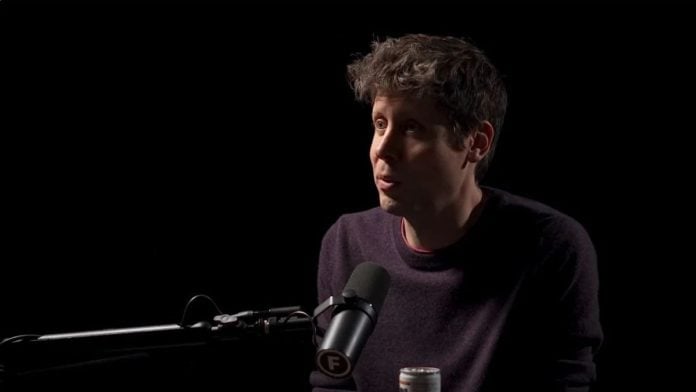
New Delhi: OpenAI CEO Sam Altman has said that developing countries such as India, where the economy is growing faster, are more welcoming of AI than developed countries.
“It is an incredible difference. India is our biggest market in the world and is growing quickly,” said Altman on Raj Shamani’s podcast Figuring Out.
He went on to say that India was “unusually positive” about AI, especially when compared to the US.
“I do think that the US, at least on expressed preference, is unusually negative on AI relative to the rest of the world. And India is maybe unusually positive,” the OpenAI CEO said.
In an hour-long conversation, Altman praised India’s optimistic outlook on artificial intelligence and said that the country will play a major role in shaping the future of AI. He also discussed decisions behind OpenAI’s development and the risks associated with AI.
“People are using AI in incredible ways to build companies,” he said, before mentioning an example from India where a school student raised funds for his school using OpenAI’s tools.
Altman described himself as a tech fan, a person curious about the world, and as someone who is confident that AI is going to touch everyone’s lives.
Talking about heading OpenAI, Shamani asked Altman whether his life had changed as a person.
“There is no way that anyone gets to build superintelligence and they not have a crazy life. But I think I’m kind of well-wired for it. Like I can deal with a lot of insanity whipping around me,” said Altman.
Altman said that a lot of people in roles like his have things go wrong because they get surrounded by too many yes-men.
“You really need the pushback,” said Altman.
“Having your old friends around is very helpful. Cultivating an environment where you reward people for pushing back is important,” he added.
Altman said things like AI happen only once. “I think a lot of people build extraordinary things. The rate of great companies being created right now, I have never seen it be so high worldwide. This is certainly the best time I have ever seen. I believe it is probably the best time in history to be able to build a new company or a creative project,” said Altman.
Altman also had a message for aspiring founders: take less advice. While there are some important principles founders should follow, he said, success ultimately comes from building, experimenting and figuring things out yourself.
“You’re not going to become a great founder by listening to the 800th podcast of advice about how to start a startup,” he said.
Also read: Google to switch off default AI access for school students
On AI fears
Altman also touched upon the events before the launch of ChatGPT. He said his teammates were not sure about it.
“I had spent so long drilling it into founders that if you are not a little embarrassed of your first version, you are waiting too long to launch because what you need is feedback,” said Altman, adding that the retention of the first version of ChatGPT was too low, at around 5 per cent.
Altman said there were several reasons behind this.
“We had better models, interfaces, but you can’t launch a product with 5 per cent retention. But those who used it liked the product,” said the CEO.
He also recalled a major decision OpenAI took after GPT-4 was trained in August 2022, months before its public release. The company decided to make a “very big bet on compute”, anticipating that larger models would continue to improve and open up new possibilities.
“We decided we would bet the company on buying up a lot of compute,” he said, describing the decision as “very crazy”.
Altman said most of the world is aware of AI now, but how people will use it is still not very well understood.
“But people at least understand AI is happening,” said Altman.
Altman said people often want to stay part of the herd, and it can be more comfortable not to do something different.
On the fears around AI, Altman identified two major concerns: humans losing control to systems that become more capable than them, and too much power accumulating in the hands of one person, company or country. He said having multiple AI companies developing systems with different approaches was better for the world.
Altman said the US is deeply sceptical of people in power, and in particular, of the enormous power that the tech industry holds.
Asked what he wanted to build next, Altman said he was excited about AI’s potential to accelerate scientific discovery, from finding new treatments for diseases to developing new energy sources and deepening humans’ understanding of physics. He said better scientific understanding had always been central to human progress, and AI could speed up that process.
(Edited by Aamaan Alam Khan)