





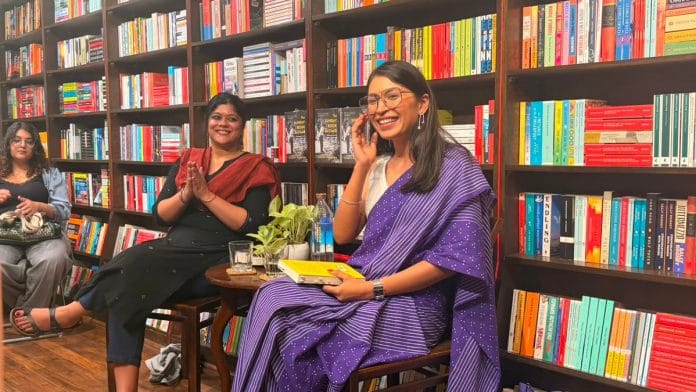


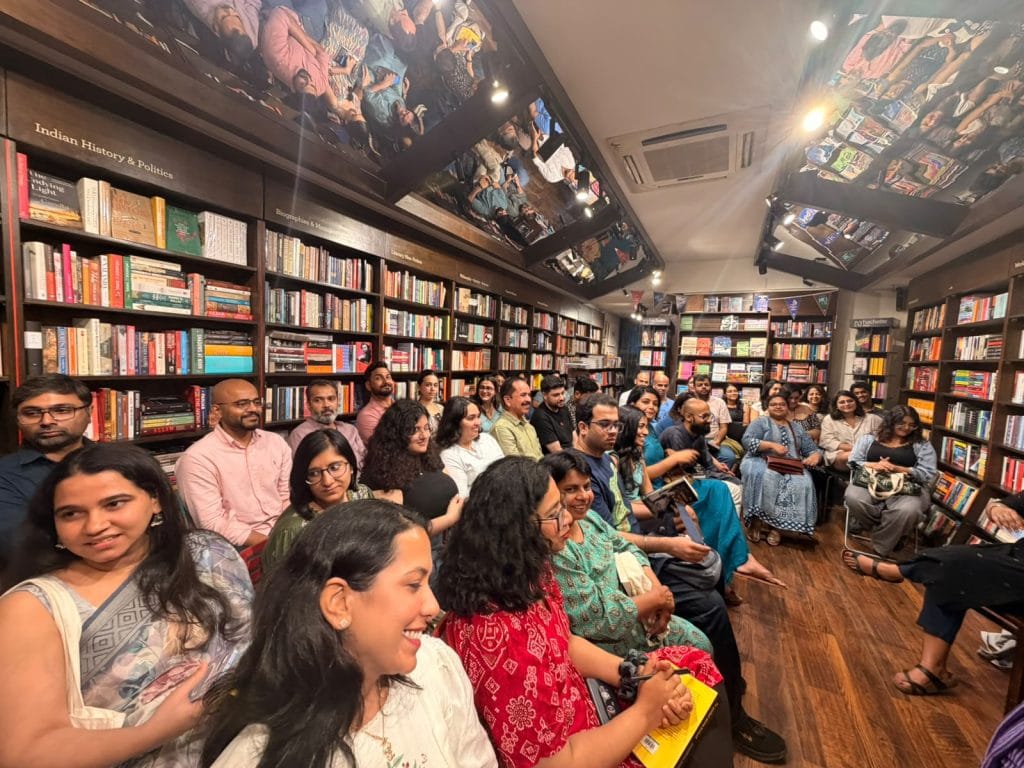
New Delhi: The shelves that usually sit in the middle of Bookshop Inc had been pushed to the sides, and in their place came rows of foldable chairs, every one of them filled. Some 40 to 50 people had gathered at the Lodhi Colony bookstore on Sunday evening to talk about a rather less orderly haven for book lovers: the pavement bazaar that once unfurled through Daryaganj every week.
The occasion was a discussion on scholar Kanupriya Dhingra’s new book, The Sunday Book Bazaar: Daryaganj and the Making of a Reading Public in Delhi. Based on conversations with more than 200 booksellers, it looks at the people who built the bazaar, the place it held in Delhi’s reading life, and its uprooting and relocation.
Dhingra, who teaches literature and cultural studies at BML Munjal University’s School of Liberal Studies, was in conversation with Aakriti Mandhwani. There was no microphone and Dhingra’s voice was soft, but the room—packed with college students and academics—stayed pin-drop quiet through most of the hour.
She said she began the project as a doctoral student at SOAS University of London. When news broke that the bazaar would be relocated, her immediate concern was how it would affect her research. But conversations with booksellers shifted the focus of her work from documenting the market to understanding why that particular stretch of Daryaganj mattered so deeply to them.
“A complete shift happened when I realised, through the booksellers, through the archives they had maintained, that they were not ready to move from these streets at all,” said Dhingra. “I had to figure out, as a researcher, as an ethnographer, as a book buyer, as a shopper myself: why these streets?”
The bazaar had been a mainstay for decades along Netaji Subhash Marg before a Delhi High Court order pushed it off the pavement in 2019 and into Mahila Haat near Delhi Gate—a move mourned by book buyers across the city.
Also Read: India’s history sits on shelves at this Delhi bookstore—from signed memoirs to first editions
The people behind the stalls
Much of the conversation turned to the ustads—senior vendors who train newcomers but are rarely acknowledged in histories or reports about the market.
Dhingra read out a passage on Ashok, a bookseller at Daryaganj for 25 years, who studied at Delhi University around the same time as a young Arun Jaitley and Sushma Swaraj.
“Jaitley waise mujhse chota bhai sa hai,” he told her — Jaitley is like a younger brother to him.
Ashok, she said, put himself through college on a rickshaw-puller’s earnings without help from anyone and later spent years balancing an office job with bookselling on the side.
Gender came up repeatedly. Of 278 officially registered vendors, only two are women, and even they hesitate to call themselves booksellers, according to Dhingra.
One told her plainly that bookselling is a man’s job. Most women who do run stalls, Dhingra noted, stepped in only after a husband could no longer manage it—“filling a space” rather than choosing the trade. Younger women fare differently. Female college students, she said, were among the market’s most visible browsers, arriving in groups and haggling over books together.
While many booksellers specialise in a particular genre, some do not. Harikarayan Giri, who also sells at another market, once spotted Dhingra taking notes there and introduced himself. He sells spiritual books in that market, but in Daryaganj he’d sell everything except spiritual books because buyers did not have an appetite for them.
Dhingra also spoke about the market’s move to Mahila Haat in 2019. Many booksellers initially refused to relocate. Then the Covid-19 lockdown emptied the city, and some never returned, leaving space for newer vendors at the relocated market.
Questions from the floor ranged from friendship and solidarity among sellers to whether Daryaganj was a peculiarly Delhi phenomenon. Dhingra cited similar markets in Hyderabad, Kolkata and even Paris. She also spoke of their informal links with the formal publishing trade — surplus and misprinted stock often reach these stalls, while pulp reprints can create fresh demand for old editions.
Asked whether the booksellers she wrote about had read the book, Dhingra said she had given them copies after it was published.
“I think they were happy. And we took photos together. It was discussed on WhatsApp… it must be something very nostalgic for them. I hope so,” she said, adding that a Hindi translation is in the works.
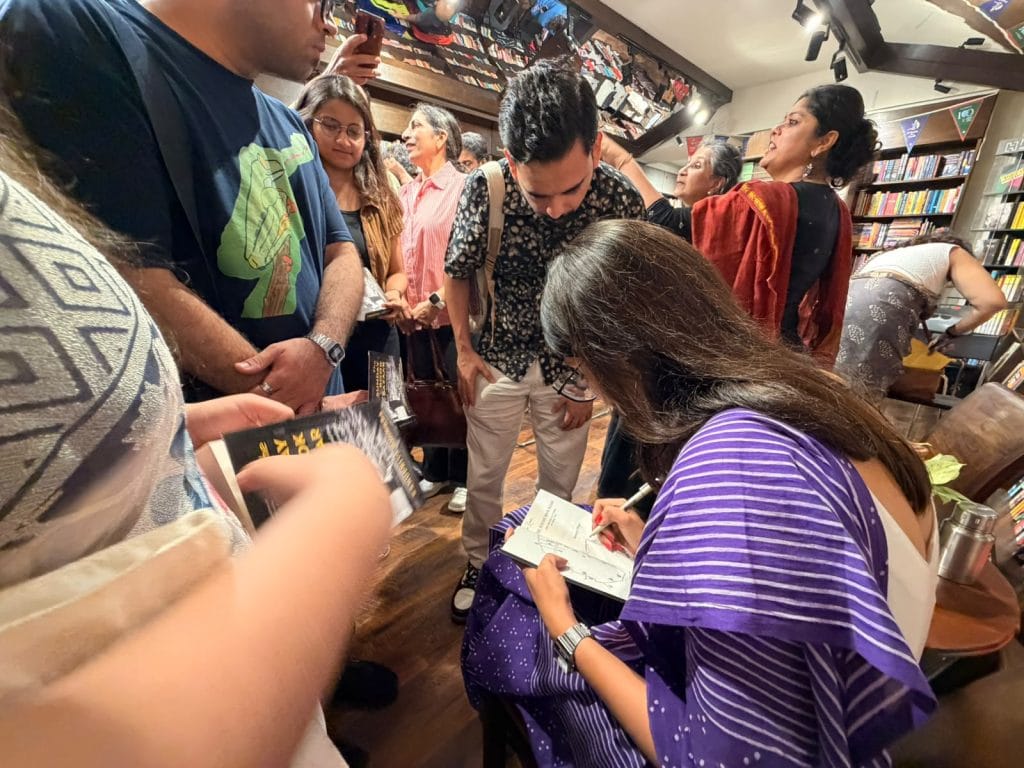
As the session wound down, the chairs were cleared away and students queued up for signed copies of the book—and perhaps one last question about a market many had grown up walking through.
(Edited by Asavari Singh)