







New Delhi: Ladakh’s centuries-old urban heritage is now facing its biggest challenge from climate change.
The elevation of inhabited places in Ladakh ranges from 9,500 to 14,500 feet and houses several significant monasteries such as Alchi Monastery, Hemis Monastery, Thiksey Monastery and Leh Palace. Due to a rise in annual rainfall, water seepage is weakening the foundations of these structures and causing cracks in buildings.
“Conserving the urban heritage is really becoming challenging. In the times to come also it is going to remain a challenge,” said Sunder Paul, Director of Conservation at the Archaeological Survey of India (ASI).
Paul was delivering a lecture titled Climate Change and Conservation Challenges for Earthen Heritage Structures in the Northwestern Himalayan Region: A Case Study of Ladakh at Delhi’s India International Centre (IIC) on July 28.
In his 45-minute lecture Paul focused on iconic sites such as Leh Palace and historic monasteries and examined the impact of increasing rainfall, flash floods, and changing weather patterns on centuries-old structures, while exploring conservation approaches that combine traditional building knowledge with modern scientific interventions to safeguard this fragile cultural legacy for future generations.
IIC director and former director general of ASI KN Shrivastava chaired the lecture which was moderated by archaeologist Pratap Bhanu Singh Sengar. ASI’s Additional Director General Janhwij Sharma and archaeologist Vasant Swarnakar were also present in the audience.
Shrivastava said the monuments are facing three problems – temperature fluctuation, tourism pressure and melting of glaciers which results in unstable slopes.
“Unprecedented rainfalls have started taking place in that area. There are flash floods and precipitation has also increased. These urban heritage structures are now under threat,” said Shrivastava, adding that in the construction of these monuments, only the local material and technology was used by the people then, such as stone, sun-dried mud brick, timber materials.
“The conservation strategy of our clergymen of India and all those who are interested in conserving those beautiful heritages have to now reset their strategy,” he said.
Also read: What is common among successful women? They laugh at patriarchy
Why urban heritage matters
With the spread of Tibetan Buddhism between the 11th and 17th centuries, Ladakh witnessed extensive construction of monasteries and stupas.
During the Namgyal dynasty, religious centres, particularly monasteries, emerged as major places of worship.
Paul said people in Ladakh traditionally build structures on hillsides that receive maximum sunlight and prefer a south-facing orientation.
Religious elements are also present in the architecture, which features a climate-responsive design capable of withstanding earthquakes. All construction materials are locally sourced.
“The urban heritage matters because it embodies centuries of traditional knowledge, sustained construction practice and cultural identity of the Himalayan community. Indigenous construction skills passed down through the generations,” said Paul.
Climate variability
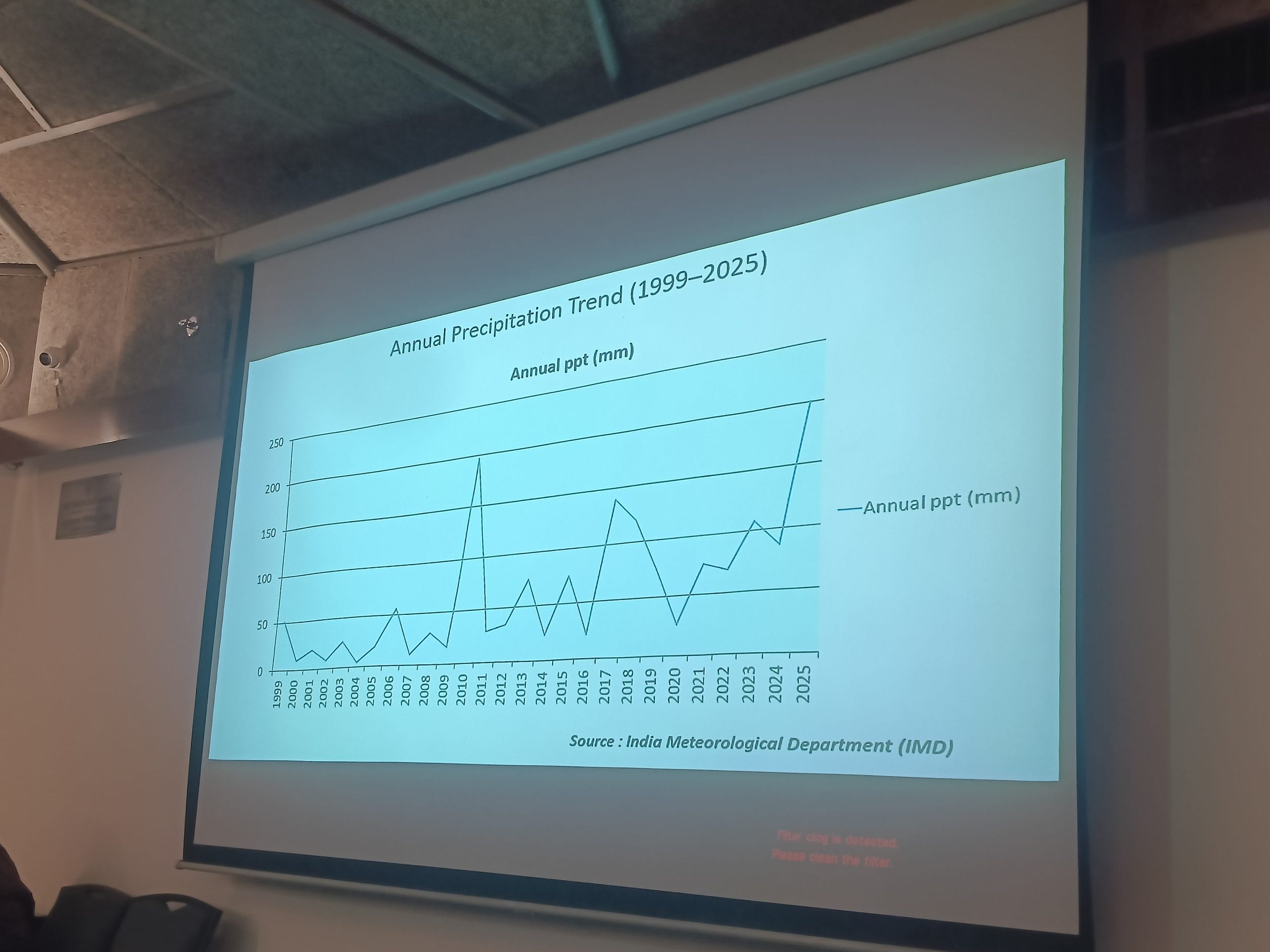
Using Indian Meteorological Department (IMD) data, Paul analysed the annual precipitation trend in Ladakh between 1999 and 2025.
“The climate and precipitation pattern is also changing. There used to be lower precipitation before that and the climate was more or less stable,” said Paul.
He said the 2010 cloudburst in Ladakh claimed about 300 lives, and that the increasing frequency of heavy rainfall events points to the influence of climate change, posing threats to Ladakh’s traditional urban heritage and infrastructure.
Paul said that between 1999 and 2007, Ladakh experienced lower annual precipitation, a relatively stable cold-arid climate, and few extreme rainfall events.
Between 2008 and 2016, Paul said there was a noticeable increase in annual precipitation, and weather patterns became less predictable compared with earlier periods.
However, between 2017 and 2025, the region witnessed an increased frequency of heavy rainfall events and greater climatic variability.
“These trends indicate an increasing influence of climate change, posing growing risks to Ladakh’s traditional earthen heritage and infrastructure,” said Paul.
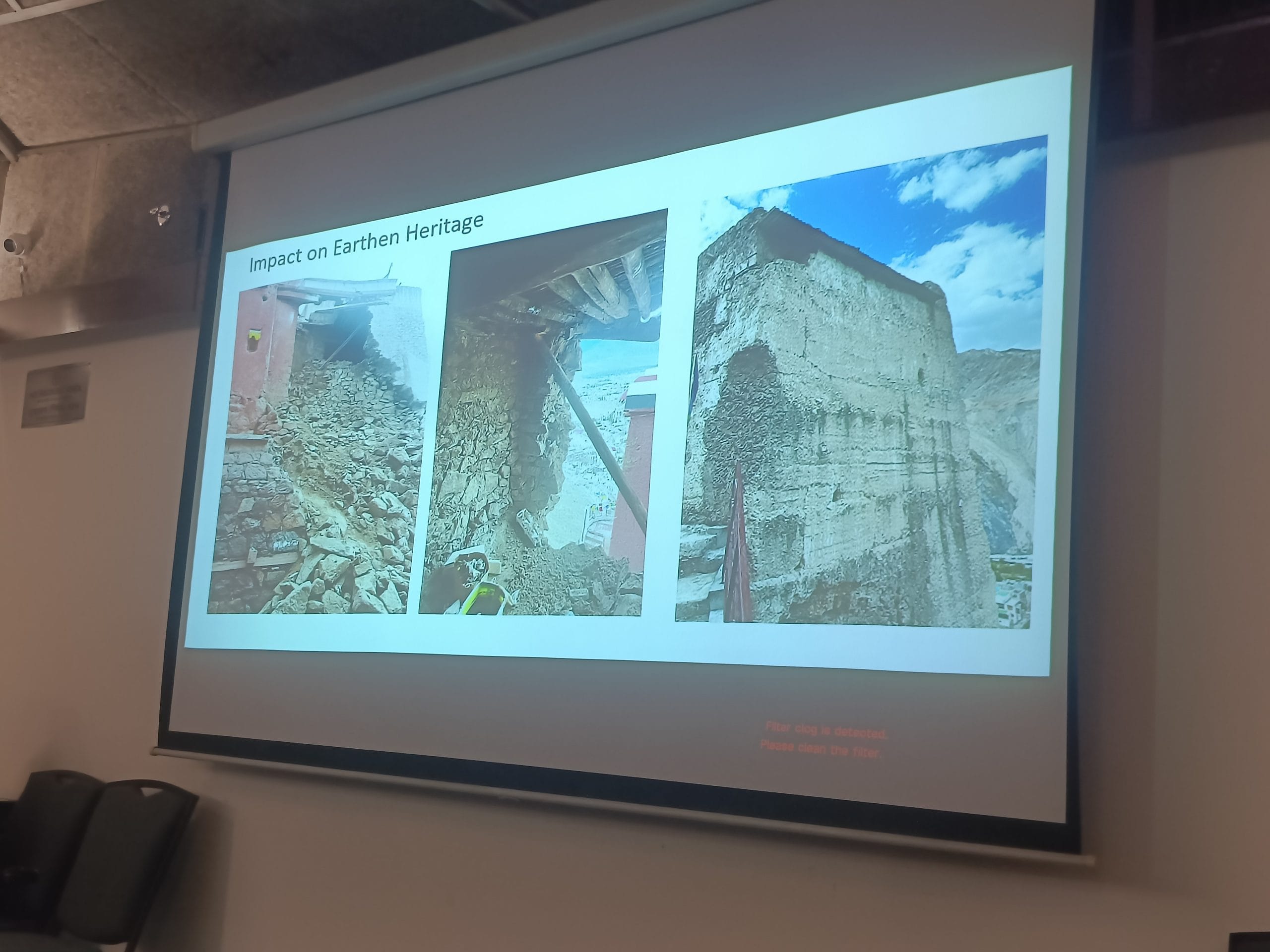
In the last decade, Ladakh’s urban infrastructure has changed and people now use tin sheets on their roof to protect from rain.
“Till now ASI is telling people to stick to their traditional wisdom and methodology of conserving these structures but this tussle is going on,” said Paul.
One of the people in the audience asked what would happen if Ladakh residents used asbestos instead of tin roofs. Shrivastava interrupted and said asbestos is extremely harmful to human health.
“It actually causes cancer,” he said.
Paul said that traditional mud architecture is highly sustainable, energy efficient and well adapted to the cold-arid environment, and should be preserved at all costs.
“The situation is challenging but it is manageable through timely conservation using traditional methodology, climate resilience strategies, scientific studies and community participation. The traditional wisdom should never be overlooked,” he added.
(Edited by Janaki Pande)