





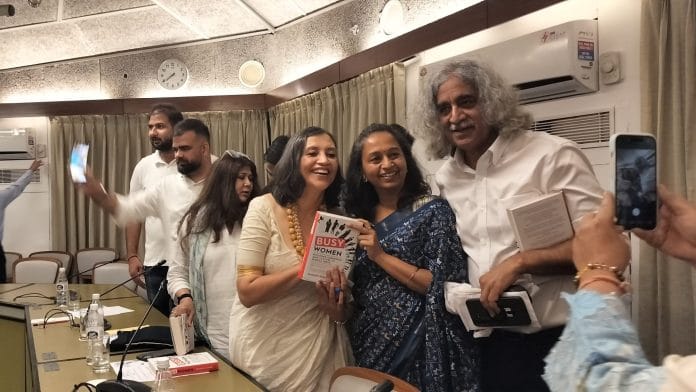

New Delhi: For a woman, there is only one secret to success — being able to laugh at the patriarchy, said author Shinjini Kumar, at the launch of her first book. The crowd erupted into laughter.
“People expect me to say it is the support of the man that makes a woman successful,” Kumar shook her head as she said, “The thing common between the 300 successful women that I met was that they could really laugh at it. If you cannot laugh at patriarchy, you cannot win.”
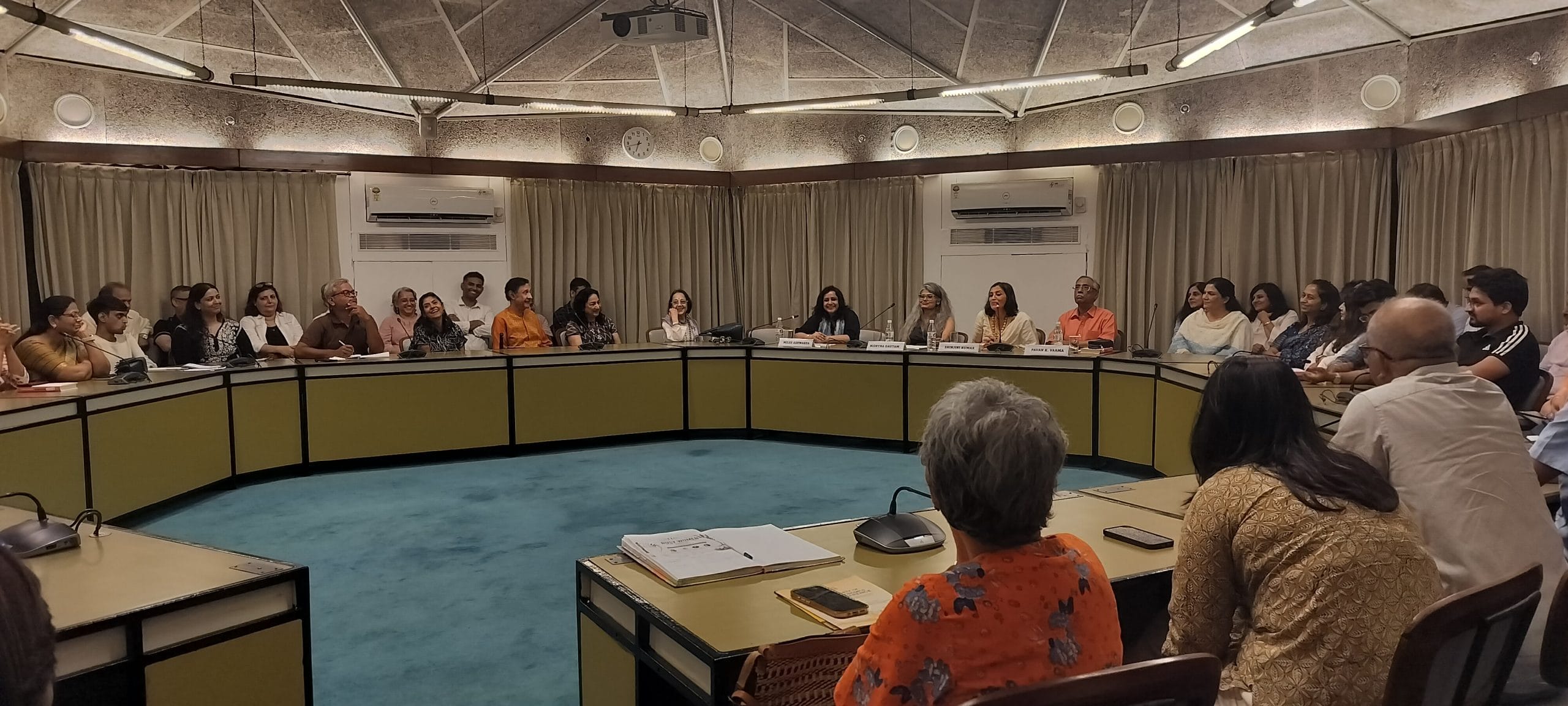
No seats were left empty at the doughnut-shaped table at the India International Centre’s conference room on 27 July. The rain was hardly a deterrent for the nearly 70-odd people who had gathered in that hall for the launch of Kumar’s first book — Busy Women, Building Commerce and Culture in Middle India.
The 20-year-old Kumar was essentially a lover of literature, looking to make her way into journalism, when her brother pushed her to join the Reserve Bank of India (RBI). Her life took a different direction. She has now spent 30 years in the world of finance — from approving Foreign Direct Investments (FDIs) at RBI in the 1990s, to setting up Paytm Payments Bank as its first CEO, and eventually co-founding personal finance startup mysaltapp, and now writing a book about women entrepreneurs from India’s Tier-II cities.
For women, wealth = agency
At the launch, the conversation went beyond just her book. Armed with her sarcastic humour, Kumar answered questions about who gets wealth, what women do with capital, and whether money really equals agency.
In all her years in the world of finance, surrounded by “men and their attitudes,” Kumar said she understood that real power lies in capital. “Having wealth for a woman is extremely important because that is the only way you can ever hope to capacitate yourself to do the things you want to,” said Kumar.
But as she probed women with money, she realised that a significant transfer of wealth to women in metro cities was taking place because of inheritance. And even then, if a woman was “cursed” with a brother, that inheritance was unlikely to reach her.
“A very rich woman from one of India’s biggest families told me something very interesting — no girl is born rich because she might end up having a brother,” said Kumar.
But Tier-II cities had a different story to tell. As Kumar spent three years travelling through 30 of India’s Tier-II cities, she met over 300 women to understand how owning wealth affect them and their closed ones, and where do they prefer to spend it. “There is enough research to prove that when you put money in the hands of women, it has a force multiplier effect,” said Kumar, quickly adding a clarification.
“Not for rich women though. When you put money in the hands of rich women, it sinks into their emeralds,” she said, eliciting a mixed response from the audience.
Women in power
Kumar, however, does not blindly put women onto a pedestal. When Pavan Varma, a former diplomat and author, and the only man on the panel, asked if women are truly kind to other women, particularly when they find themselves in positions of power, Kumar was quick to shoot a rebuttal.
“I don’t want to believe that women are inherently better or more equal. Or if you hand over the leadership of an organisation or a country to women, you will automatically find a more humane ways to deal with things. Sadly, that’s not going to happen. But what does happen is that when more women have the money, the agency, there are more of them in power — who can then be either good or bad just like men in power,” she said.
As the event wrapped up, the crowd surrounded Kumar with freshly-bought books to get her autograph. “If there are mistakes in the book,” Shinjini Kumar joked, spotting her old English teacher in the audience, “It is because she didn’t teach me well enough.”
From the crowd, a conversation between two women stood out. “We women have to be angry,” one of them said, “What would we do without our anger, against everything?”
(Edited by Aakriti Handa)
That’s fine.
Quite unfortunately, when patriarchy laughs back at these ‘successful women’, they start crying. And accusing patriarchy of being the root cause of all evils facing humanity.
Diya Mirza, an ambassador of the ‘successful women’ community, recently held patriarchy responsible for global warming.