



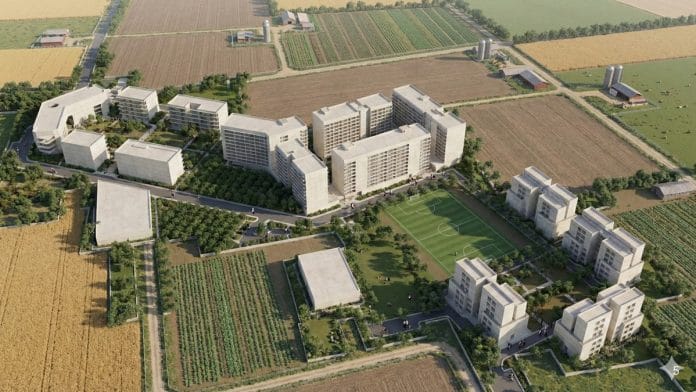
New Delhi: After the success of Ashoka University and the Indian School of Business, founder Pramath Raj Sinha is set to open a gleaming new-age private university in Bihar. And it won’t be in Patna. The institution is coming up in Loma village in Vaishali, renowned as one of the world’s first republics in the 6th century BCE.
In a state where higher education has languished for decades, and joblessness and youth migration have been running themes, the founders of the proposed Pravaha University are daring to imagine a new Bihar. They want to build an institution that convinces students they need not leave Bihar for high-quality education.
Pravaha plans to bring in faculty members who have studied or taught at top-tier universities such as Columbia, Yale, Harvard, Oxford and LSE, as well as experts who have held advisory roles in organisations like UNICEF and Infosys.
The brightest students in Bihar will aspire to get into an IIT or an AIIMS, or go to Delhi University, Oxford or Stanford. But they’ll say, ‘Look, while I’m applying to all these places, I think I should also apply to Pravaha.’
– Pramath Raj Sinha, founder of Pravaha University
While the university’s broader course structure is still being worked out, its initial offering, to be rolled out in August 2027, is a one-year postgraduate fellowship centred on quantitative reasoning, digital fluency, AI for business, human-AI collaboration and projects that allow students to solve local problems. The 20-acre campus is 62 km from Patna airport and construction has already started.
Driving the project is Sinha, chairperson of Ashoka University’s board of trustees and founding dean and member of the governing board of the Indian School of Business (ISB). He is building Pravaha with Ajay Kumar, a physician, diabetologist and chairman of the Bhuwaneshwar Educational and Social Trust, and Uday Shankar, vice chairman of JioStar. Together, they hope to create a mindset change in the state.
“One institution can’t solve the entire problem, but it can create a lighthouse effect,” Sinha told ThePrint. “You can create a lighthouse project that inspires everyone, instils confidence, and makes people say that—look, we don’t have to be left behind.”
Also Read: Built to fix cities, billionaire-funded, 16-yr vanvas—story of Bengaluru’s IIHS University
ISB, Ashoka, and now Pravaha
Pravaha University – much like Ashoka University did with Young India Fellows – will begin with a fellowship first.
Starting next year, the fully funded, year-long programme will focus on tech, data, design and strategy for its first cohort of about 50 students, nearly 70 per cent of whom are expected to have completed their undergraduate degrees in Bihar. The annual cost per fellow is estimated at about Rs 15 lakh.
The ambition is to become “Bihar’s first globally benchmarked multidisciplinary university” by 2029, at which point it plans to pursue UGC recognition. By 2036, it wants to have touched the lives of 5,000 students and to be catering to at least 1,500 every year.
The launch of Pravaha University has created a buzz, fuelled partly by the success of Ashoka University in Sonepat, Haryana, and ISB in Hyderabad.
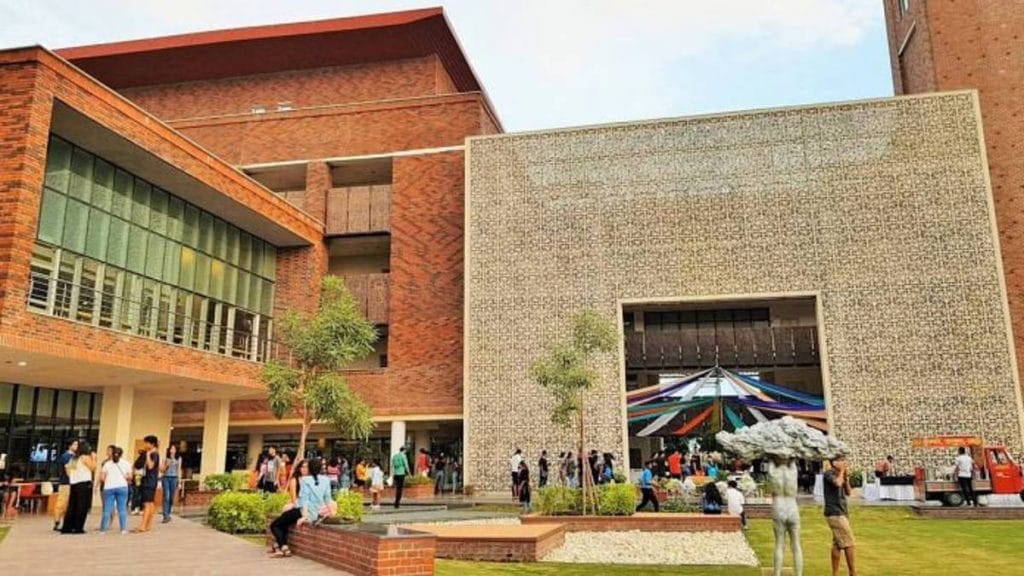
Ashoka, launched in 2014, is widely regarded as one of India’s top liberal arts and sciences institutions. Its 2025-26 graduating batch recorded 100 per cent placements, with 425 offers from 153 organisations, including 73 new recruiters, according to a post on X by co-founder and founding trustee Sanjeev Bikhchandani. The highest domestic offer of Rs 42.5 lakh per annum went to a computer science undergraduate, while the average package rose 16.3 per cent from Rs 11.6 lakh in 2024 to Rs 13.5 lakh. About 60 per cent of those placed joined four sectors—BFSI, consulting, technology, and data, research and analytics.
ISB, which began in 2001 with a one-year residential management programme and 128 students, has since graduated more than 14,000 professionals. Its MBA programme was ranked 12th globally and first in India in the Financial Times Global MBA Rankings 2026.
For Pravaha, the measure of success will not just be placements and rankings, but how its graduates change the trajectory of Bihar.
“Five years down the line, what do we expect? That graduates coming out from Pravaha become the mainstream in terms of government administration, business leadership, in setting up their own ecosystem of new ventures, what we call start-ups in the modern language,” said Ajay Kumar.
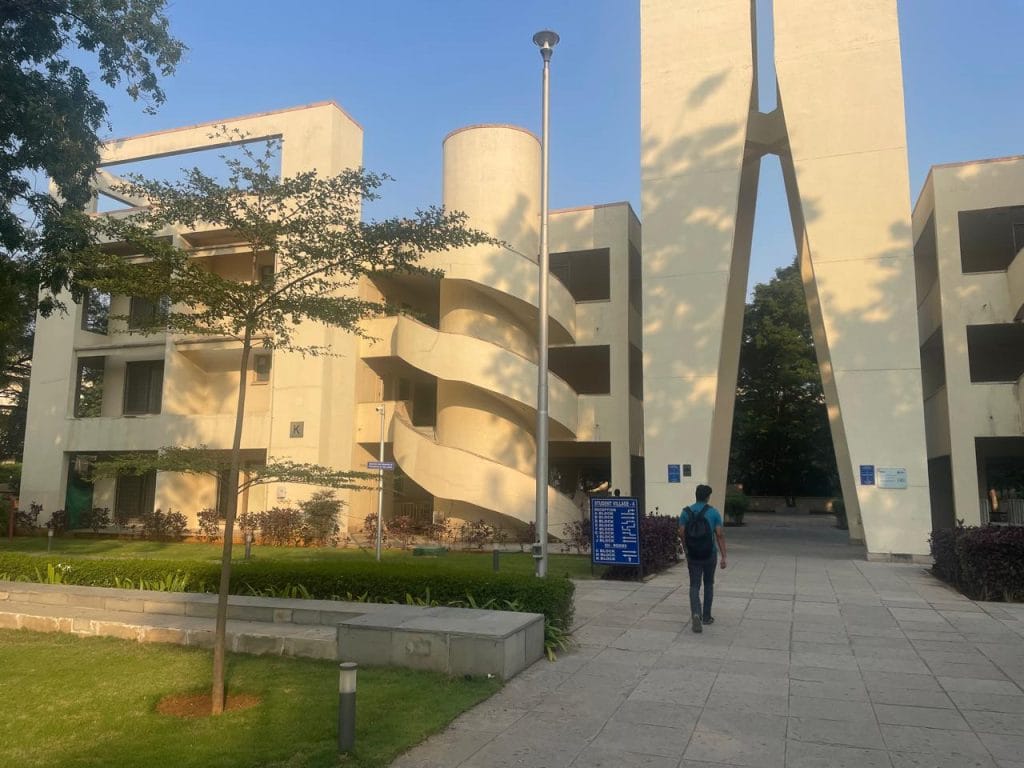
Also Read: Indian School of Business isn’t competing with IIMs. ‘We wanted to be globally top-ranked’
A reason to stay in Bihar
For Ajay Kumar, Bihar has all the right genes, but they have not found full expression because of its flagging education system.
“Bihar certainly does not lack talent. It lacks opportunities. Bihar does not lack ambition, there is a problem with direction. Why? We do not have higher educational institutions of uncompromising quality – institutions which are built with real intent on a long-term basis to basically transform what I call in my medical language their genotypic potential into phenotypic realities,” said Kumar, who is from Loma village.
Bihar is home to over 130 million people, accounting for nearly 10 per cent of India’s population, and yet the state’s gross enrolment ratio in higher education is as low as 17.1 per cent, according to the Economic Survey 2025-26. The state has barely 2.5 per cent of the country’s universities and just about seven colleges per 100,000 eligible students, compared with the national average of 30. Only 25 lakh of the nearly 1.5 crore young adults aged 18 to 23 in Bihar are enrolled in local institutions.
If there’s one thing I’d want students to take away, it’s this: where you start doesn’t determine where you can go. Being from Bihar is not a limitation. The goal isn’t to leave Bihar behind in order to succeed—the goal is to show that world-class work can emerge from Bihar itself
– Nishith Prakash, head of global partnerships at Pravaha University
Even when students migrate to cities like Delhi in search of a better education, the ‘Bihari’ tag can follow them, used as derogatory shorthand for backwardness.
When he moved to Delhi after 12 years of schooling in Bihar, even Professor Nishith Prakash found the ‘Bihari’ label hard to escape at first. Now dean’s professor of economics and public policy at Northeastern University in Boston, he is joining Pravaha as its head of global partnerships.
“I think Bihar has far more talent than it gets credit for, but students have limited access to mentorship, research opportunities, and exposure to people who’ve walked similar paths,” said Prakash. “I’ve seen how transformative it is when someone opens a door for a student: advice, mentorship, a single introduction.”
Prakash does not consider the opportunity a “return” to Bihar because in many ways he never left. As a researcher, he has often worked in South Asia, with most of his projects based in India. He has worked with the Patna Municipal Corporation on sanitation and climate issues and conducted gender-sensitivity training for 3,500 police officers across 422 stations in the state.
He pointed out that whenever he engaged with faculty from Patliputra University or researchers from IIT Patna, he found that they stood on par with international scholars. Enthusiasm and curiosity were not lacking at such conferences, he added, but Bihar had few institutions capable of sustaining that energy beyond seminar halls.
For Prakash, the main mandate at Pravaha is to connect Bihar’s youth to global academic and policy networks without requiring them to leave the state.
“If there’s one thing I’d want students to take away, it’s this: where you start doesn’t determine where you can go. Being from Bihar is not a limitation. The goal isn’t to leave Bihar behind in order to succeed — the goal is to show that world-class work can emerge from Bihar itself,” said Prakash.
A ‘lightning rod’—with conditions
Pramath Raj Sinha, like Prakash, is also someone who never really left Bihar. He has often returned to his home in Patna and his ancestral village in Rohtas district, where people would jokingly ask why the man who built institutions across India had never built one in Bihar. Pravaha University is his answer to that question.
The “lighthouse effect” it could have is a recurring theme when Sinha talks about Pravaha. He has seen it before with ISB and Hyderabad.
“That whole area called Gachibowli suddenly had a lightning rod because it had this institution which everybody was talking about. When Bill Gates came to Hyderabad he said I want to be next to ISB. Infosys said I want to put our campus next to ISB. And suddenly that whole area developed,” recalled Sinha.
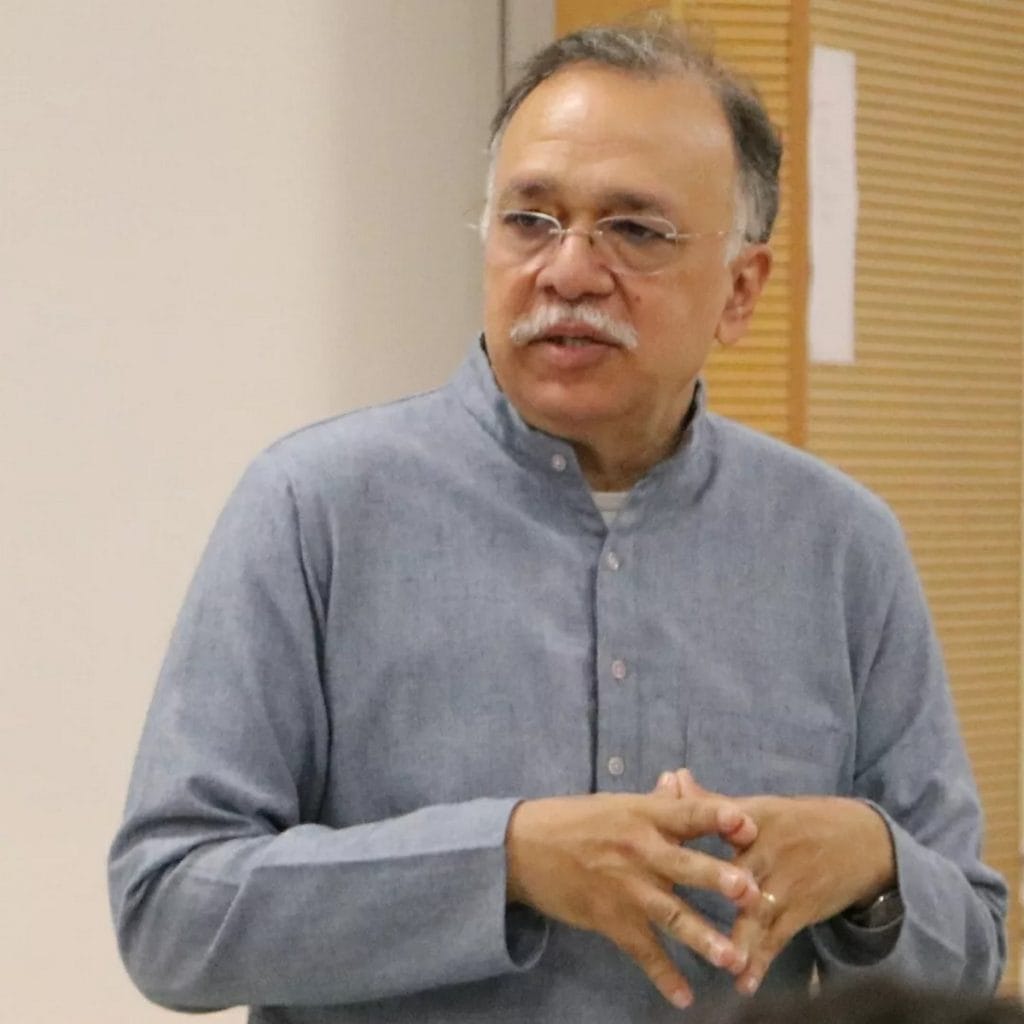
However, he cautioned that an institution cannot pull off such a transformation by itself. In ISB’s case, several other factors had already fallen into place. When Atal Bihari Vajpayee inaugurated it in 2001, Andhra Pradesh had a dynamic chief minister, Chandrababu Naidu who was simultaneously building Hyderabad into an IT hub.
“An institution is just a way of telling the industry that a source of local talent exists,” added Sinha.
A hurdle race
Having set up several institutions, Sinha is well-versed in the herculean effort it takes. Education is a heavily regulated arena and doing things by the book means navigating a maze of rules.
“The rules have been made to curb the worst offenders. So even if you have good intent, you have to conform to those rules that were made for institutions with the worst intentions. There have been lots of fly-by-night operators, if I may call them, who are not really focused on education but more on the commercial gain from education,” he said.
Sinha’s way of jump-starting the process is to begin with a fellowship instead of waiting months and years for approvals—the Ashoka model he’s now replicating for Pravaha.
In such an institution, you should not be taking a lot of bank loans. You should not be inviting investors who will eventually make a profit out of the institution. You need either your own seed money or philanthropists who are ready to donate their money to build such an institution.
– Ajay Kumar, co-founder of Pravaha University
The fellowship allows the team to offer a one-year programme without a degree even if they don’t have the approvals and regulatory compliances yet. Once the ball gets rolling, the students are proof of whether the project works or not— their integration into industry becomes a form of word-of-mouth marketing which attracts others even before the “university” tag is officially approved.
But Pravaha is hardly the first university to be launched with lofty ambitions in recent years. Nalanda University has grappled with leadership disputes and criticism over the slow pace of its revival, while South Asian University has been mired in funding issues and controversies.
Kumar doesn’t anticipate similar issues befalling Pravaha University.
“We are nobody to judge the competence or success of institutions. But there are two types: some are built by those who have a dream and a passion to create the best of institutions. Others are nobody’s babies,” he said.
For Kumar and Sinha, philanthropy is crucial to ensuring that Pravaha does not become one of the latter types of institutions. Where the Tatas and Birlas were once the only names in Indian philanthropy, several new players have emerged, especially tech billionaires and start-up founders. These benefactors are more willing to support students, scholarships, donations, and grants. And that kind of money allows an educational institution to operate differently from one that relies on bank loans or investor capital.
“In such an institution, you should not be taking a lot of bank loans. You should not be inviting investors who will eventually make a profit out of the institution. You need either your own seed money or philanthropists who are ready to donate their money to build such an institution. That makes a huge difference and ensures that the student’s career and future are not put in any jeopardy,” said Kumar.
As a philanthropist from Bihar, Kumar is keen to give back to his state.
“Back in the early 2000s, I used to go to my village almost every week for one reason or another, and I used to talk to people about wanting to do something. A majority of people said, ‘We don’t have a good school here.’ Students from nearly 75 per cent of families might get admission to a government school, drop out after two or three years and get engaged in agricultural work,” he said.
Also Read: A shining 12-acre West Delhi campus was built for teacher training. An empty shell now
Wooing the right faculty
Sinha’s past experiences have taught him that even more important than the curriculum or programme is getting the right faculty. And he has his trade secrets about how to convince an inspiring teacher to travel all the way from London or Boston to a remote village in Vaishali district.
One model he has used is parachuting faculty in for short, intensive teaching stints rather than asking them to relocate. He did it for the Naropa Fellowship, a one-year entrepreneurship programme he helped establish in Leh in 2018, and now he is doing it for Pravaha.
We fly you down to Patna, we pick you up from the airport, we drive you there in a safe, air-conditioned car, we keep you in a clean place. We take care of all your needs, you don’t fall sick, you get all the support that you need. But in that one week, we take every bit of teaching and inspiration out of you for our students.”
– Pramath Raj Sinha
Sinha does not try to convince people to leave their jobs and head to Loma village. He eases in by asking whether they are excited by the thought of teaching a short course to students in Bihar who need it most. If they can spare some time, Sinha convinces them to come for a brief duration for a good cause.
“My curriculum becomes a collection of people rather than the curriculum defining who I bring in. If you create this kind of a model, access to faculty is limitless, and so is the number of Biharis who are willing to do this,” said Sinha.
Then, out comes the red carpet.
“We fly you down to Patna, we pick you up from the airport, we drive you there in a safe, air-conditioned car, we keep you in a clean place. We take care of all your needs, you don’t fall sick, you get all the support that you need. But in that one week, we take every bit of teaching and inspiration out of you for our students,” Sinha added.
From fellowship to university
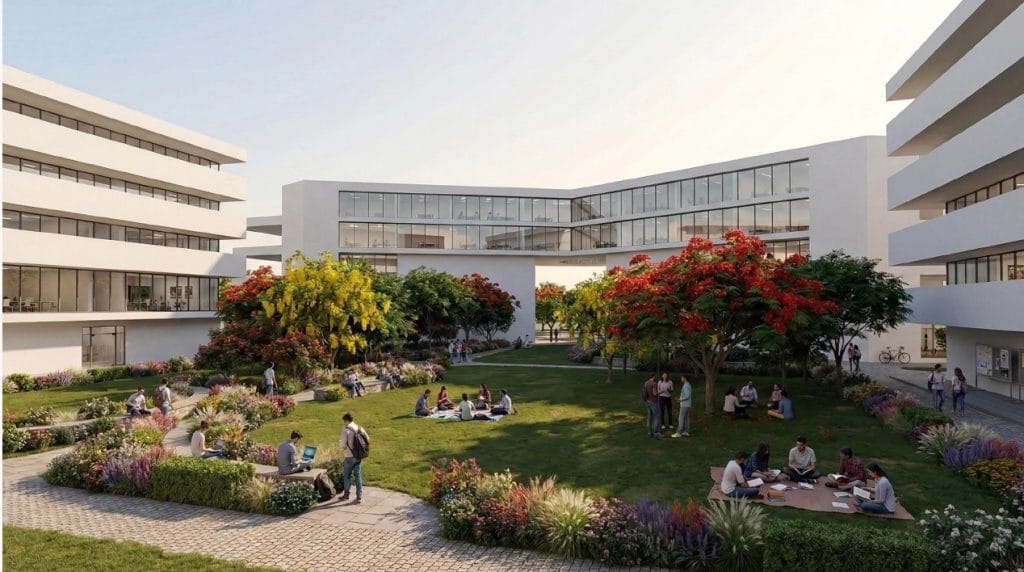
Right now, Pravaha is still a campus in the middle of nowhere. The first phase of construction, covering around 50,000 sq ft, is underway and expected to be completed next July, with the first cohort arriving the following month. Surrounded by pastoral greenery, the institution will have a mango orchard separating its academic and residential areas.
The bucolic campus will ride the AI wave from day one, according to Sinha.
“AI will be in everything. We’ll use AI to scan applications, answer queries from prospective applicants and for other university administration tasks,” he said. Students will be encouraged to make the most of AI too. “Today, people are using AI for gimmicky stuff, right? They’re having fun with it, or they’re using it to clean up an email, summarise a paper or do their assignments. But these students have to understand that this is such a powerful tool that you can actually take some real problems that the world is facing and use these tools to solve them.”
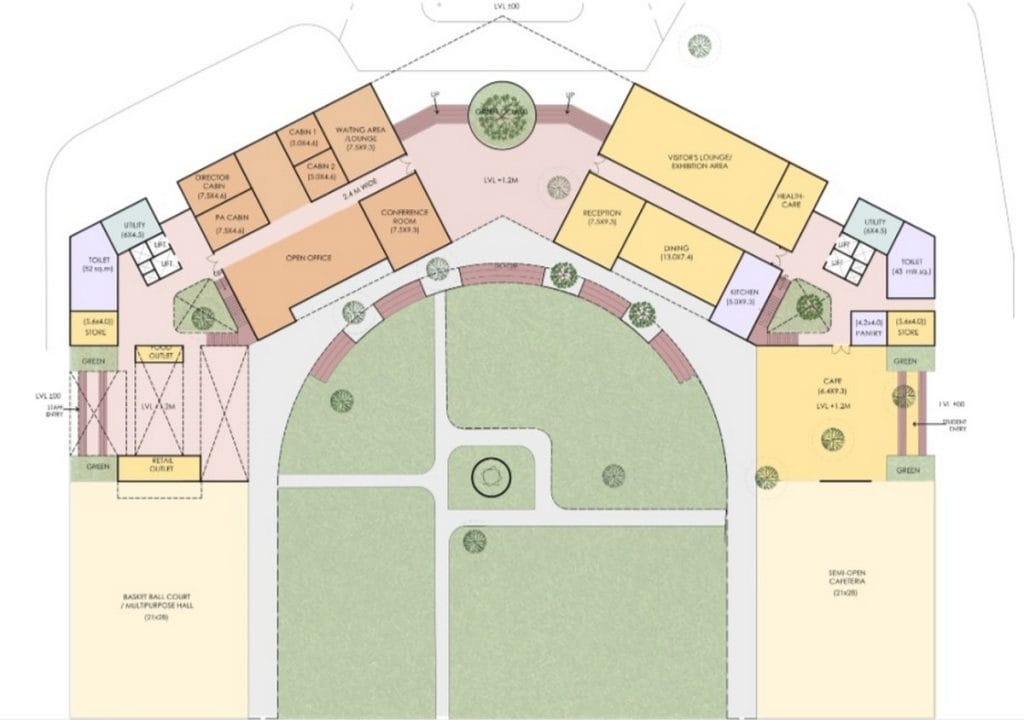
Whether the problem is transport, agriculture or management, students will be taught to use new tools to tackle it. The university’s “incubation centres” will help spur that research, according to the founders, while work with the local community will count toward academic credit.
With a corpus fund of Rs 25 crore, the institution plans to build five major schools over the years: enterprise and leadership; technology and intelligent systems; finance, economics and policy; design, innovation and emerging fields; and society, sustainability and public systems. Pravaha will be philanthropy-led for its first three years, after which tuition revenue is expected to help it become self-sustaining. It plans to seek UGC recognition in 2029.
“The brightest students in Bihar will aspire to get into an IIT or an AIIMS, or go to Delhi University, Oxford or Stanford. But they’ll say, ‘Look, while I’m applying to all these places, I think I should also apply to Pravaha,’” said Sinha.
(Edited by Asavari Singh)