



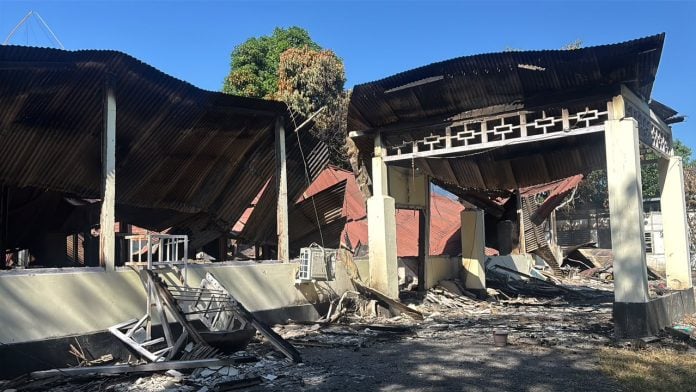
Siang, Arunachal Pradesh: Pasighat is still recovering from the bandh and the violence that followed it late on Friday. Shops remained shut on Tuesday, the streets were quieter than usual, and residents moved about cautiously under restrictions imposed after three days of unrest. CRPF personnel were deployed outside the premises, while officers were posted at undisclosed locations across the town as part of a wider security build-up in the Siang belt.
At the National Hydroelectric Power Corporation (NHPC) office, the smell of burnt material still hung in the air. The office was targeted during protests against the proposed 11,200-MW Siang Upper Multipurpose Project (SUMP). The Siang project has not moved much on the ground since 2008, when then Manmohan Singh-led United Progressive Alliance (UPA) government declared it a national project.
For years, the Siang dam project has faced protests from the Adi and Galo tribal communities but they were largely confined to villages directly affected by it, where residents fear the loss of homes, farmland and community spaces. What happened in Pasighat on Friday marked a shift: the anger spilled over from the affected countryside into the district headquarters.

An NHPC employee from Pasighat, who was present at the site, said they were still trying to assess the damage that was done.
“We understand why the anti-dam sentiment has built up. This land is culturally relevant for the communities. But they should understand that NHPC doesn’t decide if the dam is build or not. If they attack us, the government will just bring some other companies. All the protest did was scare the employees who have come from outside to work,” the employee told ThePrint, requesting anonymity.
A Gen Z protest
The community at the centre of the movement is the Adi tribe, the second-largest tribe in Arunachal Pradesh.
Sunny Tayeng, a lawyer practising in Pasighat, said the Gen Z protest that began in the town was not anticipated to become this big. The demonstration, led largely by young people, was initially a sit-in against three things — the survey for the dam project, the presence of security forces, and the detention of anti-dam activists. But it grew into one of the largest protests Pasighat has seen in recent memory.
“The protests are a result of brewing tensions. There is a major lack of communication from the government’s end due to which, the villagers feel there is no other option but to protest. If there was a dialogue on the project and consent was taken from the affected stakeholders, maybe the situation would not be this volatile,” Tayeng said.
The trouble did not begin in Pasighat. The confrontation first broke out near Ditte Dime in the Geku area of Upper Siang district, where police fired tear gas to disperse protesters during a 12-hour bandh on 23 October. Protesters alleged that several women suffered breathing difficulties; whereas the police claimed that demonstrators pelted stones and attacked security personnel.
As the day wore on, anger travelled to Pasighat, over 100 kilometers from Ditte Dime, where a Gen Z-led protest entered the town from the Mebo side. By Friday night, the demonstration had spiralled into arson and vandalism. The remains of the violence are still visible across the town: torched and upturned vehicles near Pasighat bridge, damaged property and security personnel stationed at key locations.
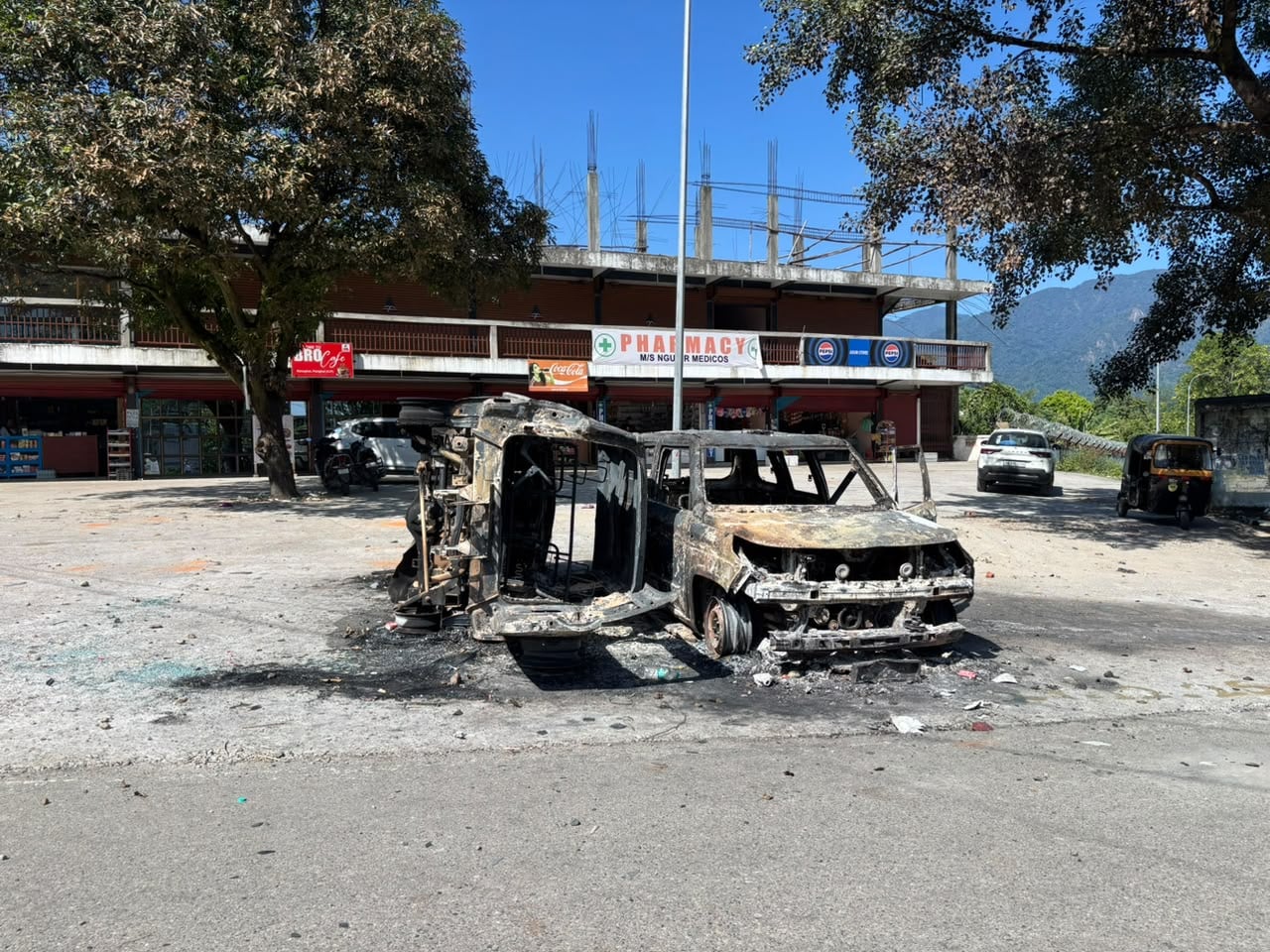
Protesters allegedly torched police vehicles near Raneghat Bridge, set fire to the NHPC office and targeted the Pasighat police station. The Adi Bane Kebang office near Pasighat airport was ransacked, with files and documents burned. Residences of state BJP president Kaling Moyong and MLAs Ninong Ering and Oni Panyang were also vandalised and looted, according to police and local reports.
The East Siang administration has imposed restrictions under Section 163 of the Bharatiya Nagarik Suraksha Sanhita in Pasighat, Mebo and Ruksin. The order prohibits gatherings of more than five people, processions without permission, and the carrying of weapons. District Magistrate Jayanti Pertin said the restrictions would remain in force until further orders.
State Action
The state government has deployed 30 companies of Central Armed Police Forces (CAPF) across East Siang, Siang and Upper Siang districts, including 15 CRPF companies, four of them from the Rapid Action Force. The Centre also flew in two additional RAF companies after the Pasighat violence.
East Siang Police arrested 26 people, including five minors, in connection with the violence during the October 23 anti-SUMP protests in Pasighat. Among those in custody are advocate and human-rights activist Ebo Mili and Pasighat youth leader Otul Jerang, who surrendered at the Pasighat police station on Saturday. Both have distanced themselves from the violence. Jerang said the protest was intended to remain peaceful and that the vandalism was contrary to the movement’s democratic agenda.
Mili and Jerang have reportedly begun a hunger strike in custody on Monday.
For residents, the immediate concern is not only the damage to property but the uncertainty over what comes next. Anti-dam groups say the survey for the project, the presence of security forces and the detention of activists have deepened mistrust. They are demanding a halt to the survey, withdrawal of central forces, release of detainees and withdrawal of cases.
Pasighat is quiet for now. But with shops shut, forces stationed across the town, the NHPC office still smelling of smoke, and the remains of Friday night’s violence scattered across the streets, the calm appears to be temporary, short-lived.
(Edited by Aakriti Handa)
These tribes – Adi, Galo, etc. – have never really considered themselves to be Indian. They look at New Delhi as a provider – of food, oil, money, security, etc. – to whom they owe no obligations. They want all the benefits of being a part of India but refuse to consider themselves Indians.
The only time ‘Indian patriotism’ wakes up inside them is when the Chinese troops come calling in their vicinity. The sound of Chinese boots turn them into ‘proud Indians’.
And I say this after having lived for over two decades in various north-eastern states.