







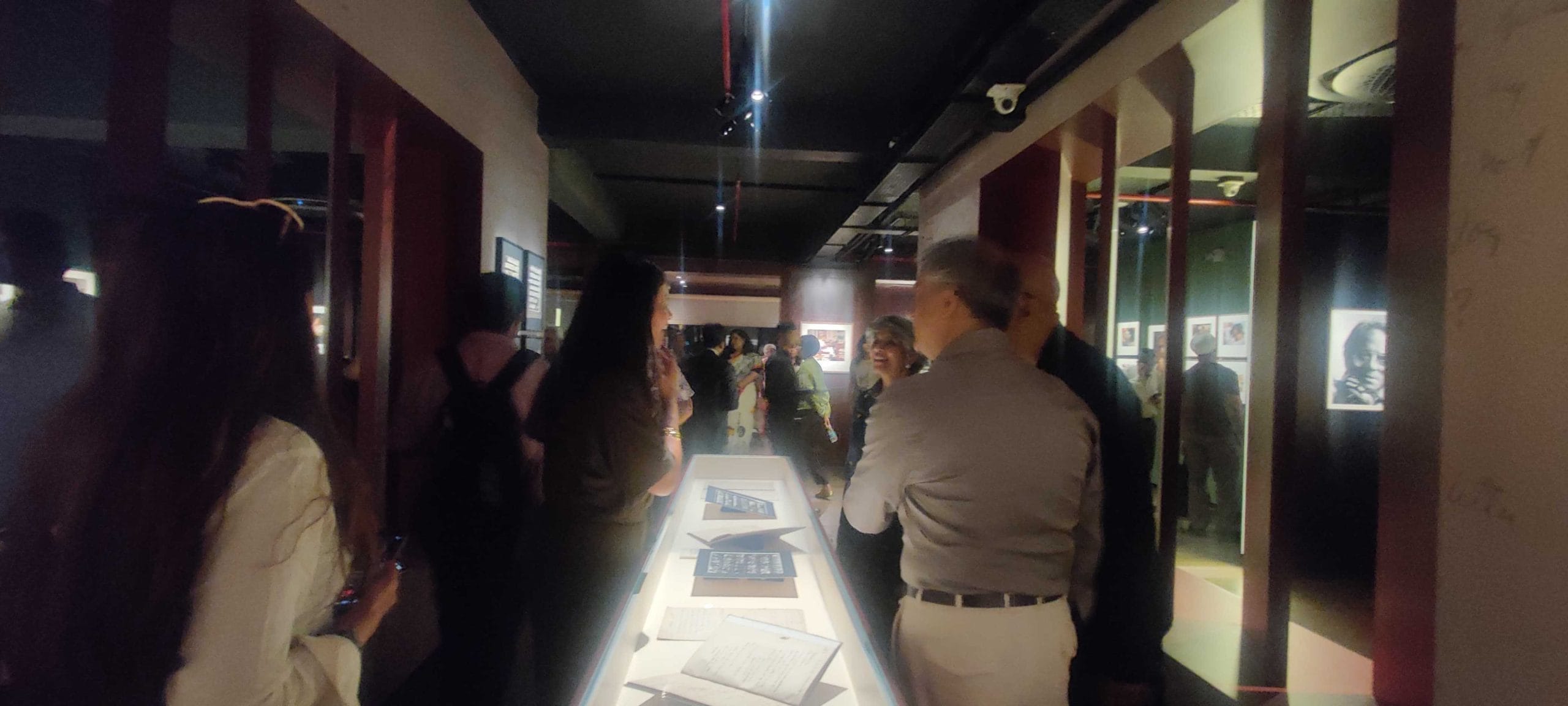
New Delhi: On a warm Friday evening in Delhi, the crowd inside DAG’s Janpath gallery moved slowly beneath large colour photographs of polymath Satyajit Ray. Wine glasses clinked softly as young visitors posed for photos beside stills from Sikkim and Sonar Kella. Elderly Bengalis lingered longer, silently, before portraits of Ray at work. Near a glass case displaying his handwritten notes, visitors bent low, trying to decipher Bangla scribbles that once lived inside the filmmaker’s notebooks.
“This is actually his handwriting?” one asked aloud, trying to read Bangla. “It’s the script for Ghare Baire,” his friend explained.
Nearly 34 years after Ray’s death, the filmmaker still seems capable of pulling admirers into orbit around him.
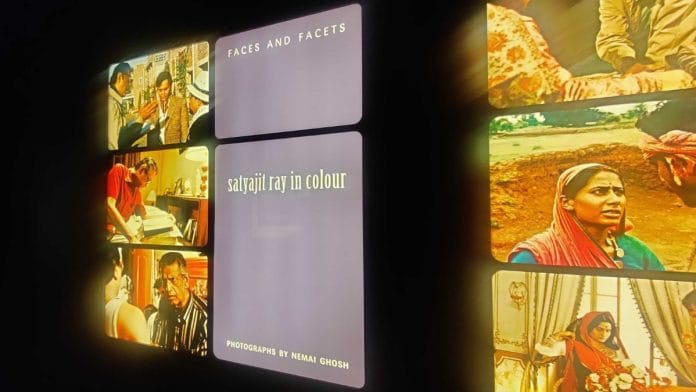
The month-long exhibition at DAG, titled ‘Faces and Facets: Satyajit Ray in Colour’, brings together 127 colour photographs shot by Ray’s longtime photographer Nemai Ghosh between 1969 and 1991. Originally meant to open in 2019 alongside the publication of the accompanying book, the exhibition was delayed by the Covid-19 pandemic and has finally arrived in Delhi years later.
Most images of Ray in public are in black-and-white: austere, intellectual, and almost monumental. But Ghosh’s colour photographs restore warmth and immediacy to the master and his craft.
Rajasthan’s desert light in Sonar Kella (974) glows amber, and cigarette smoke hangs visibly in yellow-lit rooms. Ray’s red kheror khata, a ledger notebook historically used by North Calcutta traders and merchants to keep accounts, sits thick in his hands. The director famously repurposed the ledger for scripts, sketches, shot divisions, notes, and doodles.
In Ghosh’s pictures, Ray suddenly appears strikingly contemporary.
Satyajit Ray’s handwritten notes, drafts
Ghosh first met Ray in 1968 during the making of Goopy Gyne Bagha Byne (1968). From then until Ray’s death in 1992, he followed the filmmaker obsessively through sets, homes, rehearsals, recording sessions and travels. Ray once described Ghosh as “a sort of Boswell working with a camera rather than a pen”.
The exhibition reveals why.
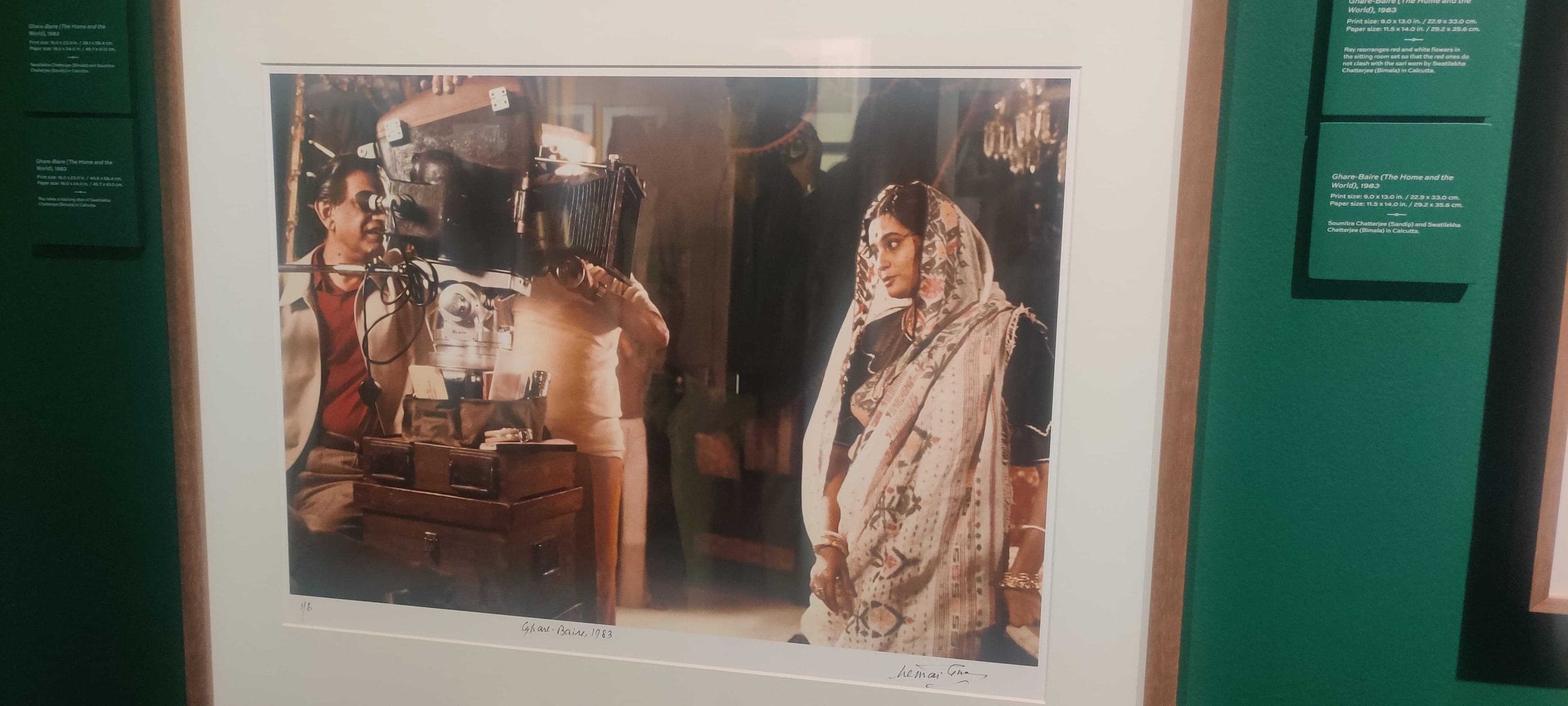
Divided broadly into two sections, the show traces both Ray’s personal life and his filmmaking process. One section follows him at home in Kolkata: writing, sketching, smoking, playing the piano, sitting with family, and reading in solitude. Another moves through film sets from Sadgati (1981), Ghare Baire (1984), Shakha Proshakha (1990), Agantuk (1991) and Sonar Kella, capturing Ray directing actors, framing shots, discussing scenes and working through details with technicians.
The photographs consistently return to labour.
Ray is rarely still. In one image, he bends over notes while rehearsing with actors in Jodhpur during the shooting of Sonar Kella. In another, he gestures mid-conversation while discussing a shot. Elsewhere, he studies locations, adjusts frames, or sits in concentration before filming begins. There is his goofy side, too, smiling and making faces.
Many shots reveal how some of Ray’s most iconic scenes were made. The exhibition deconstructs the magic of those frames in viewers’ minds, dismantling the romantic myth of the effortless genius. It’s a portrait of relentless artistic discipline and the process of filmmaking, beyond the idea of Ray as a visionary.
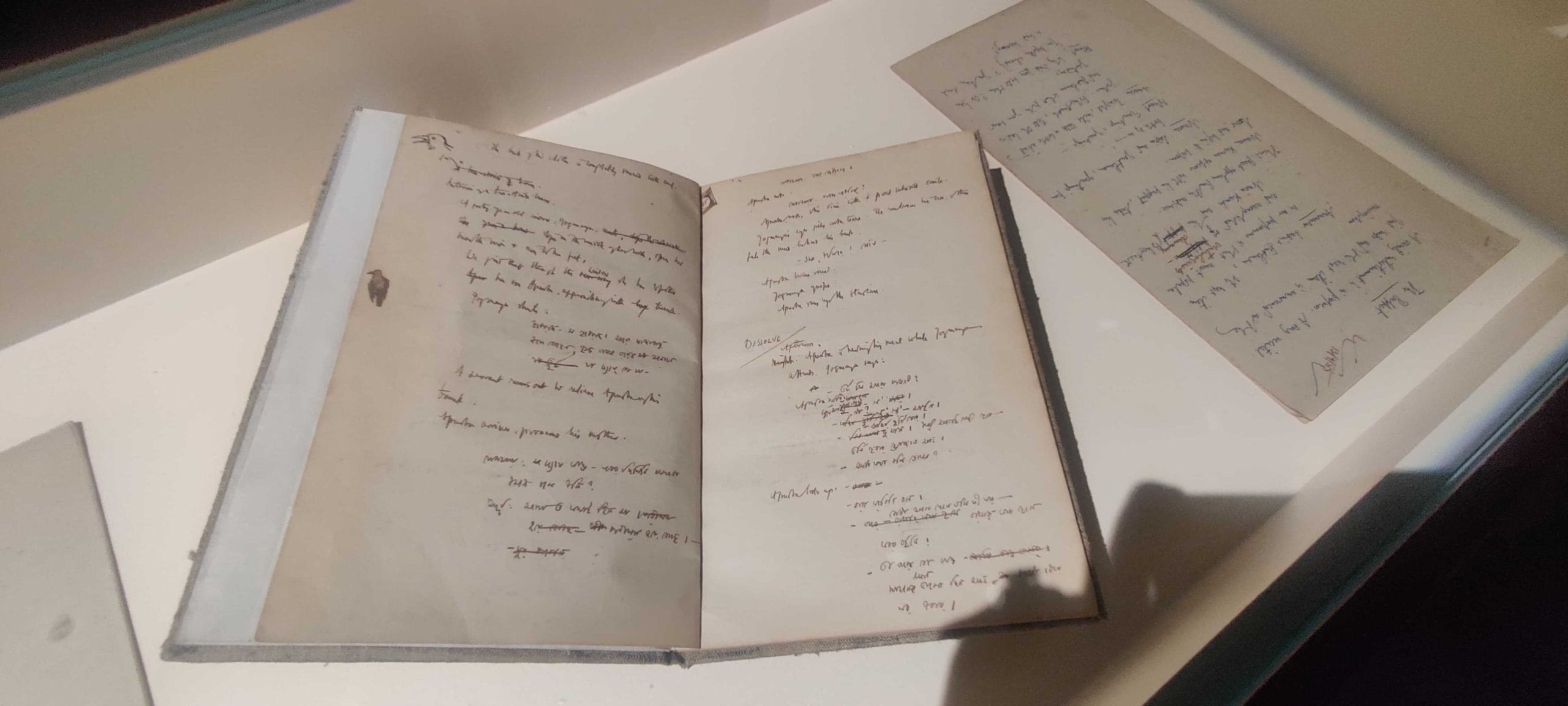
A smaller section featuring Ray’s handwritten notes drew some of the biggest crowds.
Displayed under glass were drafts, sketches, and pages from scripts. People stared at the pages longer than they did at some of the photographs.
Through his handwriting, the mythic auteur becomes tangible—a man scratching out ideas with ink, revising lines, and circling words.
Also read: Meghalaya doesn’t want samosa tourists. It needs slow, phased development: CM Conrad K Sangma
Ray as persistent, ageing, alive
Among those drifting through the gallery were Kumarjit, an advocate from Kolkata now living in Delhi, and his Japanese wife, Sakura.
Standing before a still from one of Ray’s film sets, Kumarjit described the filmmaker as “an all-rounder”.
“He knew everything,” he said. “There’s nothing he could not do.”
Sakura’s favourite Ray film is Goopy Gyne Bagha Byne. She has also stayed in the fort in Rajasthan’s Jaisalmer, where Sonar Kella was filmed. In Japan, she said, Indian cinema remains overwhelmingly associated with Bollywood spectacle, while Ray is still less widely recognised among younger audiences than he deserves to be.
“There are many similarities between Indian and Japanese culture,” she said. “But Ray’s films have messages that survive time.”
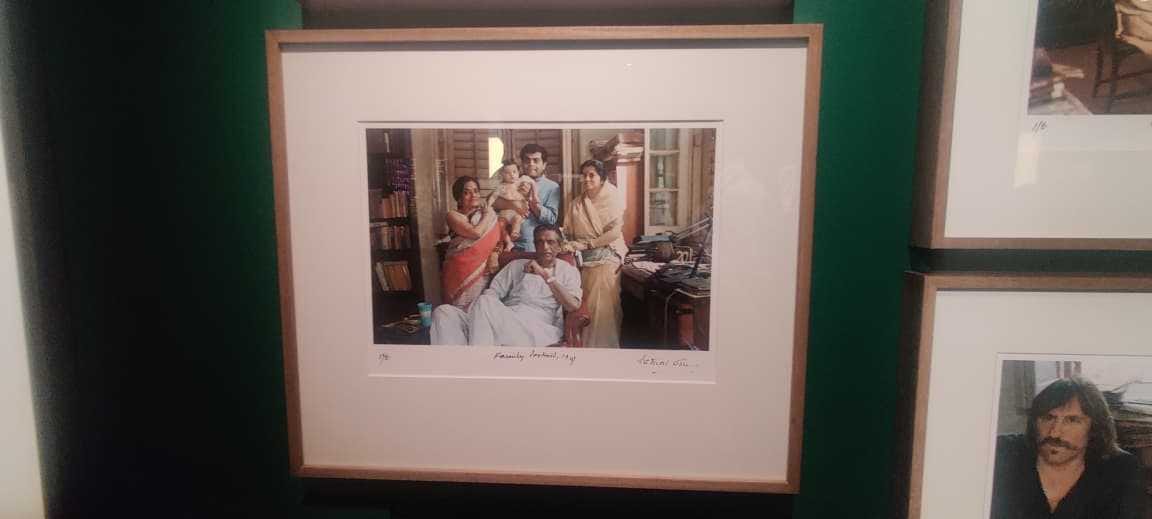
The photographs also document Ray’s physical decline. After suffering a severe heart attack in 1983 during the making of Ghare Baire, the honorary Oscar winner’s mobility became increasingly restricted. In later images, his body appears visibly frailer. Yet, Ghosh’s camera captures his persistence. Even in illness, Ray continued directing, supervising, composing, and writing.
By the end of the evening, the crowd still had not thinned. Elderly cinephiles stood beside students who knew Ray mainly through streaming platforms and film-school recommendations.
Through Nemai Ghosh’s photographs, Ray ceases to be the towering figure of film society discussions and becomes visible again as Manik Da: restless, meticulous, amused, ageing, and alive.
The exhibition ends on 4 July.
(Edited by Prasanna Bachchhav)