



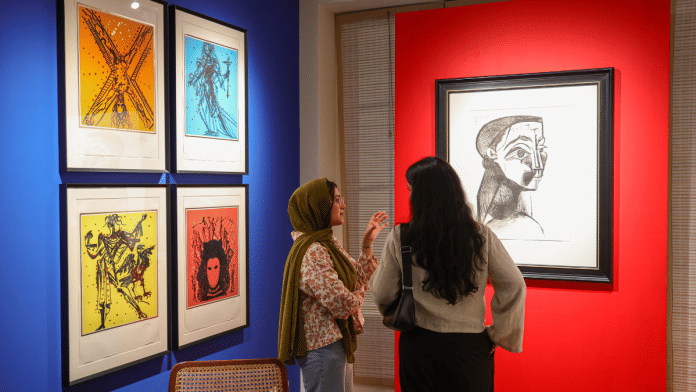
New Delhi: You know Pablo Picasso the painter, the provocateur, the man who could dismantle a face and put it back together in a handful of lines. But at a Delhi bookstore on 25 September, it was Picasso the printmaker who came into view — his work with stone, metal, ink and pressure instead of the usual canvas and cubes. Salvador Dalí and Joan Miró, too, were there in unfamiliar guise: as impressions, editions and etchings, each bearing the trace of a slower, more physical form of art.
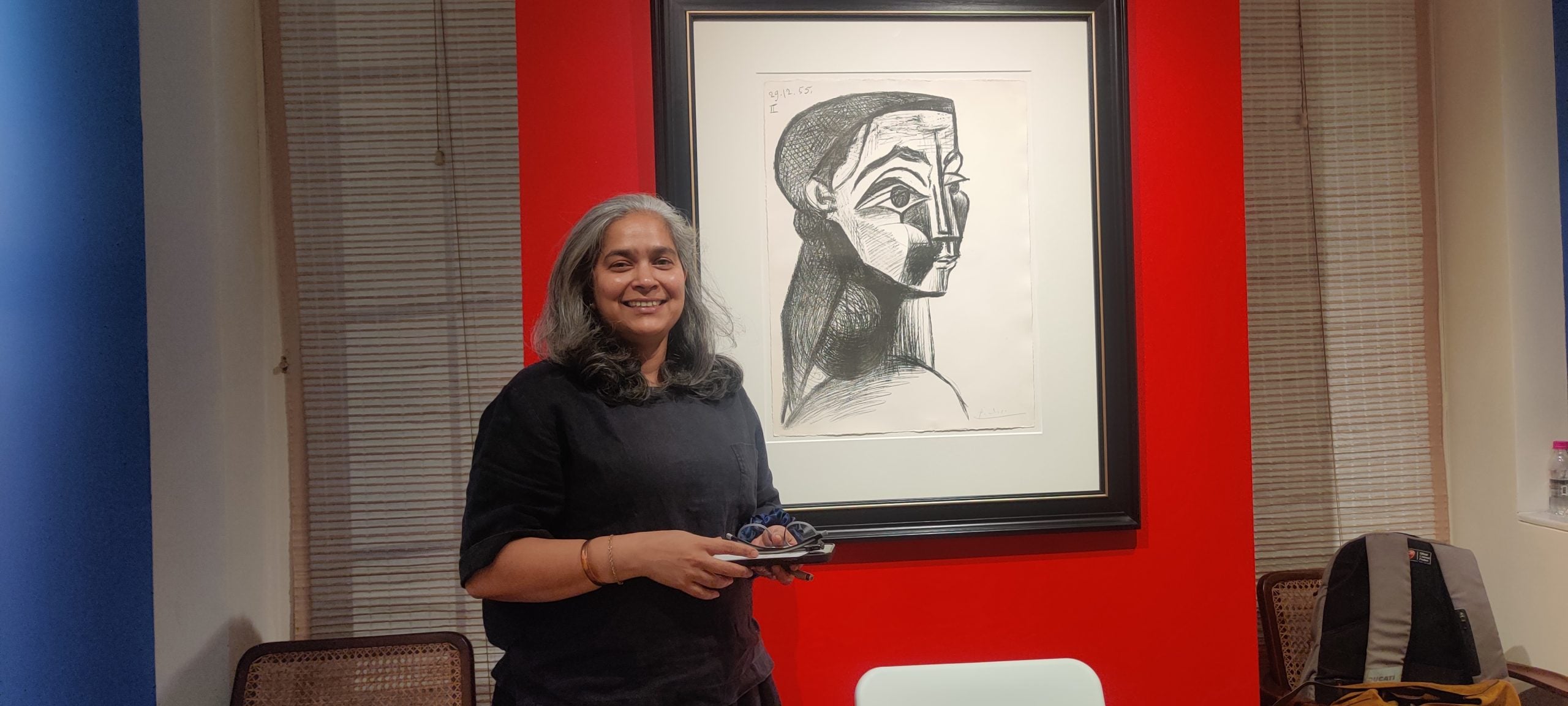
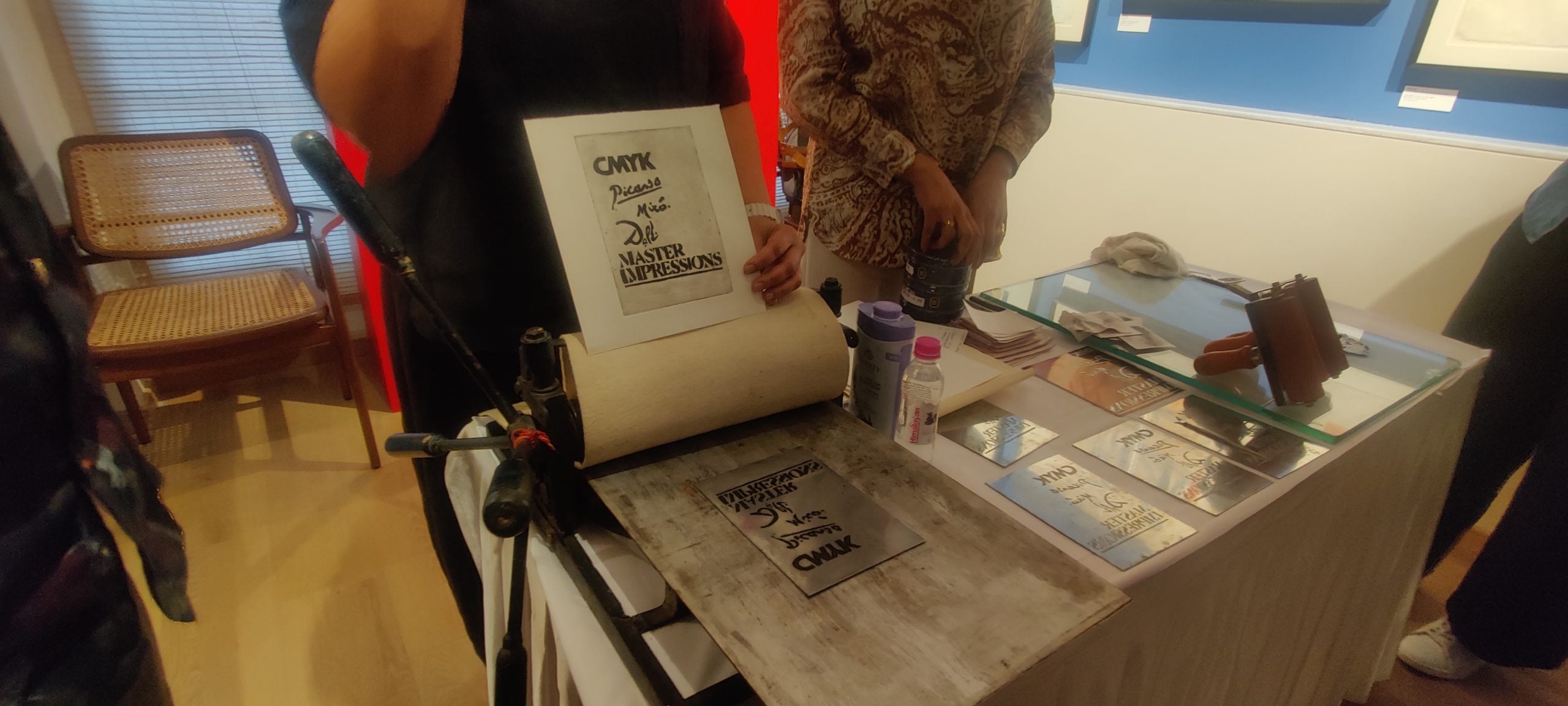
A few dozen people gathered around artist and printmaker Radhika Dhumal for an interactive workshop accompanying CMYK’s exhibition Picasso, Miró, Dalí – Master Impressions, Original Lithographs and Etchings, displaying more than 60 original graphic works of the masters.
The audience watched Dhumal demonstrate how a mark becomes an impression, before encouraging them to pick up the tools themselves — writing their names backwards, making drawings and trying their hand at etching.
For an audience accustomed to seeing the finished works of Picasso, Miró and Dalí behind glass, it was a rare glimpse of the messy, technical life that precedes the immaculate sheet.
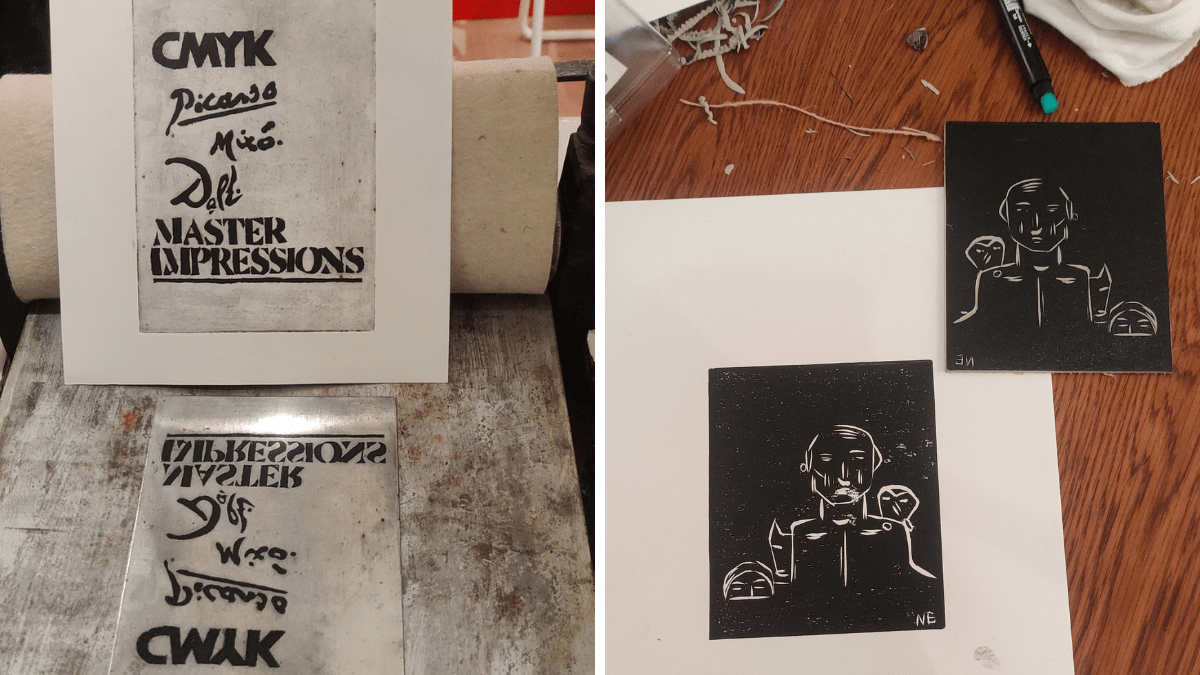
Dhumal began with a misconception. A print, she explained, is not necessarily a reproduction.
“These are editioned works. That means that the matrix that they use, if they use a zinc plate or a stone or a screen, is called the matrix,” she said.
The artist decides the number of impressions that will constitute the edition, and each final work is signed and numbered with pencil. The matrix itself may eventually be altered or destroyed, closing the edition and preventing further impressions.
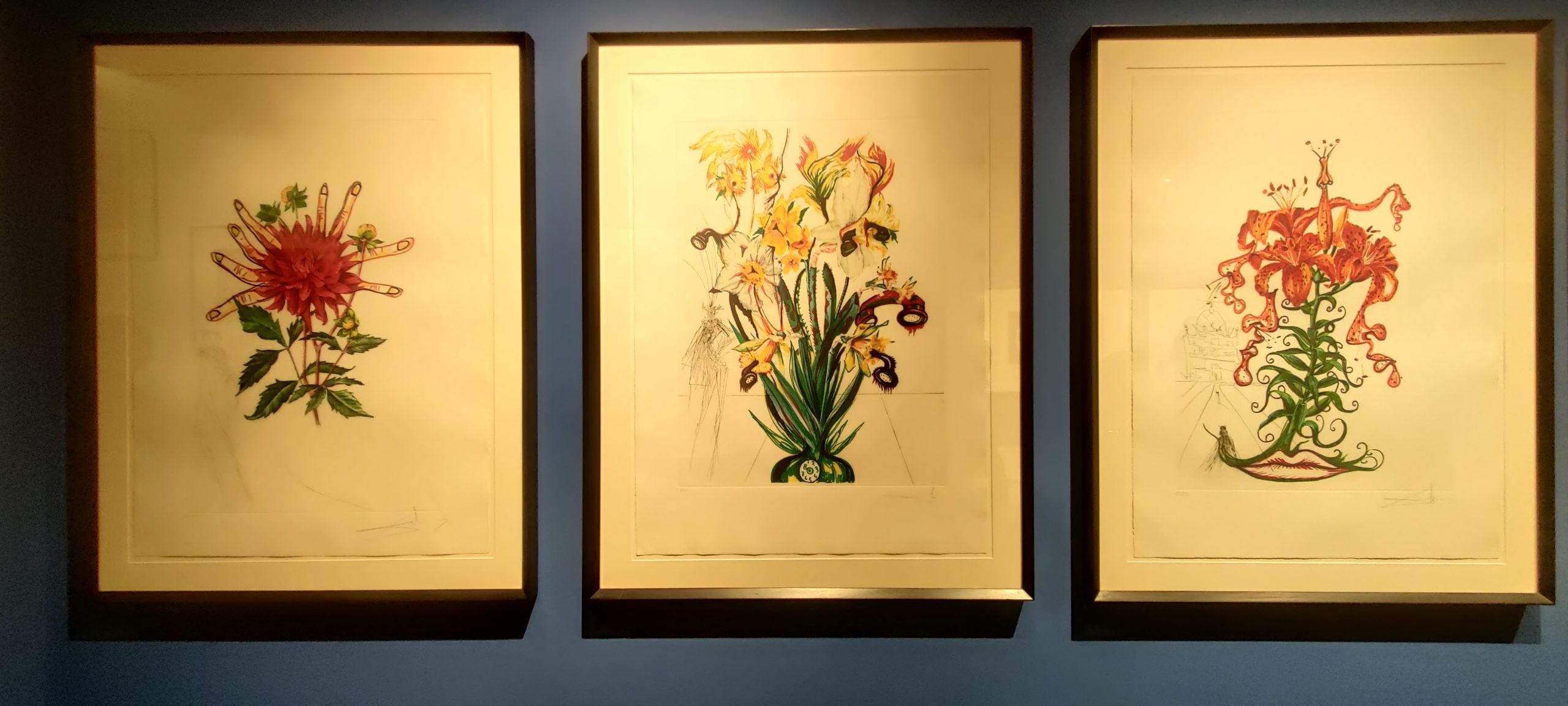
“So they are editioned in the sense that they are closed-ended,” she explained, pointing to Dalí’s Tiger Lillies (1972). “So only 350 of this one exists, and this is the 125th edition that is on display.”
The paradox at the heart of printmaking is that an image can be multiplied without becoming a reproduction. A drawing could be transferred through a matrix and emerge as a print; the same image could exist in a finite number of impressions, each one an original print rather than a copy of a single work.
It is also what makes these art forms and works so easily overlooked. Picasso, Miró and Dalí are so firmly lodged in the popular imagination as painters that their prints have become a footnote in their artistic legacy. Yet, printmaking was not a peripheral detour for any of them. It was, instead, another surface on which they could experiment, revise and, occasionally, misbehave.
All three worked extensively with graphic media, experimenting with the possibilities of lithography, etching, silkscreen and mixed techniques, often alongside specialist printers who became collaborators in the process.
“This is an important show that CMYK has brought. It’s a rare show and we are lucky to see the masters, the best of the best in the world. The modernists, the contemporary, the postmodernists, all the artists delved in printmaking,” Dhumal said.
Making an impression
Printmaking is an old technology that modern artists repeatedly make strange again.
Etching, one of the techniques represented at the workshop, begins with a metal plate. The artist works into a ground covering the plate; acid then bites into the exposed lines. Ink settles into those recesses and, under pressure, transfers the image to paper.
The printed image could be altered, pulled apart, reworked and printed again. Picasso was particularly fascinated by this.
His famous Portrait de Femme II (1955), for example, on display at CMYK alongside the other works in the exhibition until 22 November, is one such example. His lithographic portrait of his wife, Jacqueline Roque, was produced in an edition of just 50. New York’s Museum of Modern Art also houses an impression of the work, and its records describe Picasso as arguably the greatest printmaker of the 20th century, with more than 2,000 printed images made across his career.
Miró similarly made printmaking a major part of his practice, producing thousands of prints and pushing lithography and intaglio into the territory of his floating signs and biomorphic forms.
Dalí brought something different: the unnerving precision of his draughtsmanship, now given the textures and peculiarities of graphic media, with stunning hues of colour.
Dhumal sees this experimental impulse of artists as central to the medium itself.
“Sometimes they collaborated, sometimes the printmakers are artists, sometimes the artists learn printmaking and make their own. It is an expression depending on what the temper or the wish of an artist is to express,” she said.
Also Read: Sudhir Patwardhan’s archive of ordinary lives — a tired mother, a pair of eyes, a cup of tea
The stone remembers
Printmaker and painter Priyoum Talukdar’s lithography demonstration made the process look almost absurdly elaborate.
The basic principle is simple enough: grease and water repel each other. The practice, however, is anything but.
“Lithography is done on limestone,” Talukdar explained, describing how the artist draws on the stone with a greasy medium.
The greasy drawing attracts the ink, while the treated background does not. With colour lithography, the image is built in successive stages.
“First, it is black. Then, we add the colour step by step,” Talukdar said, pointing to Dalí’s La Lumière de la Guérison (1980), a riot of colours bursting out through the frame.
Picasso, too, found this technique irresistible. The medium suited his restless mind and allowed the image to remain unfinished long enough for the artist to change it.
At the l’Atelier Mourlot in Paris, Picasso worked extensively with the printer Fernand Mourlot in the 1940s. He repeatedly pushed against the rules of the medium, testing what the printer, the stone and the process would allow.
Georges Mourlot, records printer at the National Gallery of Australia, recalled that Picasso “did everything the wrong way”, using gasoline, glue, and gouache with ink.
“Everything that was anti-lithography,” he said.
His famous Bull (La Taureau) (1945-1946) series shows the possibilities: the image moves through successive states, beginning with a recognisable bull and gradually stripping itself down to a few essential lines.

But, as Georges pointed out, it was physical requirements for lithography that made it formidable.
“You need a big press, you need a big stone, you need a big screen. You need manpower. You need the right inks,” Talukdar said.
There is nothing instantaneous about this kind of work. It is tedious, and perhaps, that is why it has not survived the years.
But Dhumal is careful not to call the practice lost. It survives in Indian art schools, studios and institutions. Lalit Kala Akademi has hosted a print biennale every few years since the inaugural edition in 2018.
But printmaking has moved from the centre of mass reproduction to the margins of a digital world. And it is expensive.
“You need a studio space, you need a press, you need inks, you need instruments. It is expensive. Even the specialised paper. It is expensive, totally,” she said.
(Edited by Insha Jalil Waziri)