



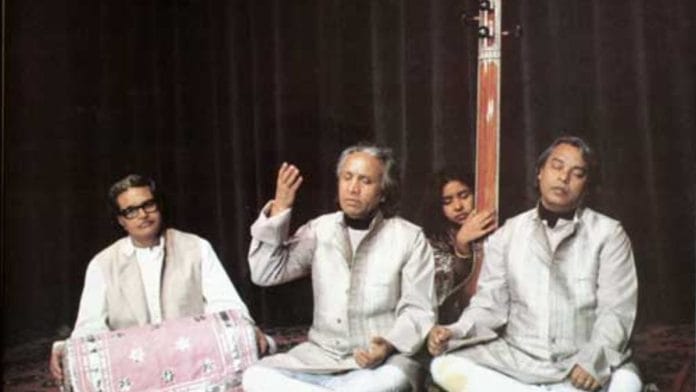

New Delhi: Every May, a small but devoted audience gathers in New Delhi for an evening unlike most classical concerts. Held in memory of Ustad Nasir Zahiruddin Dagar, the programme moves with unhurried grace and carries the meditative spirit of dhrupad through performance, remembrance, and teaching.
Organised with the Dagar Brothers Memorial Trust and often hosted at the India International Centre, the memorial draws disciples, scholars, and listeners. This year it took place on 7 May at IIC, Delhi.
Ustad Nasir Zahiruddin Dagar, one half of the renowned Junior Dagar Brothers, was among the most influential figures in the 20th-century revival of dhrupad. Alongside his brother, Ustad Nasir Faiyazuddin Dagar, he helped bring a form once associated primarily with temples and royal courts into modern concert halls and international festivals. Their performance introduced generations of listeners to a style of music that valued introspection and patience.
The annual memorial evening preserves that spirit.
Students of Ustad F Wasifuddin Dagar, son of Nasir Faiyazuddin Dagar, performed before their guru with visible intensity and devotion. When Wasifuddin Dagar himself began singing, the atmosphere in the room changed completely. Audience members swayed gently to the music, hands tapped instinctively against knees, heads moved in rhythm, and smiles spread across faces. As the performance deepened, more people, young and old, entered the hall, unwilling to let the evening end.
Over the years, the memorial has welcomed some of India’s most celebrated classical musicians, many of whom come to offer their homage to the Dagar legacy.
“Over the years, many great musicians have come to perform and pay tribute—TN Krishnan, Hariprasad Chaurasia, Savita Devi, Udwara Murali Krishnanji, TR Vyasji, Debu Chaudhary, Shubha Mudgal. So many people have been part of it,” said Wasifuddin Dagar.
Also read: ‘Abbaji’ Alla Rakha changed the sound of Indian music—Jammu to NYC
Dhrupad and the Dagar gharana
Widely regarded as the oldest surviving major form of Hindustani classical music, dhrupad predates the khayal style that dominates most North Indian classical concerts today. Its roots stretch back centuries, evolving through temple traditions, devotional singing and court patronage.
Dhrupad is regarded as contemplative and is defined by its austerity, precision, and intense emotional depth. Among the many dhrupad traditions, the Dagar gharana occupies an important position. Often referred to as Dagarvani, this lineage is celebrated for its meditative approach to the alap.
Wasifuddin Dagar started his performance with the alap—a long, unmetered exploration of a raga. He let the notes come out slowly, patiently revealing the raga’s emotional depth. Only later was the composition entered, accompanied by the pakhawaj drum.
Over time, the Dagar family became synonymous with the preservation and revival of dhrupad. In the 20th century, especially, members of the family played a decisive role in ensuring that the tradition survived periods when public interest in dhrupad had sharply declined.
The Junior Dagar Brothers played a major part. They performed in a duo and combined traditionalism with an openness to modern concert culture. Their recitals introduced dhrupad to urban Indian audiences as well as listeners abroad, which helped establish its reputation internationally.
Also read: Shubha Mudgal has a complaint. Industry reduces classical music to a relic
A rich family history
The memorial concert began as a deeply personal act of remembrance. Wasifuddin Dagar said that it grew out of the loss of his father, Ustad Nasir Faiyazuddin Dagar, who passed away on 7 February 1989, and his uncle, Ustad Nasir Zahiruddin Dagar, who passed away on 7 May 1994.
The Trust and its annual concerts were established around these dates as a way of marking their death anniversaries.
Reflecting on this tradition, Wasifuddin Dagar traces its roots to the four major schools of the genre.
“There are four main schools of Dhrupad—Nauharwani, Khandarwani, Gauharwani, and Dagarwani. We belong to the Dagarwani tradition, which is why we are known as the Dagars,” said Wasifuddin Dagar.
He explained that the family originally belonged to a Brahmin background, but, after being outcast, his forefathers converted to Islam. He also said that their musical lineage traced back to the time of Muhammad Shah Rangila, the 13th Mughal emperor.
The family moved through shifting political landscapes. Wasifuddin Dagar said that his ancestors served as court musicians across several royal courts, including those of Mughal emperors Muhammad Shah Rangila and Bahadur Shah Zafar, and later under Maharaja Ranjit Singh of the Sikh Empire, the Holkars, as well as in Alwar, Jaipur, Udaipur, and Jodhpur.
While Dhrupad remains at its core, the memorial has opened itself to other classical traditions, creating space for artistic exchange.
“We organised the Dhrupad Samaroh for years. The Trust was later formed to include other forms as well—khayal, instrumental music—to create space for more artists. And it was decided that I would be there every year, whether I sing for a shorter time or longer. My homage will always be there,” he said.
(Edited by Theres Sudeep)