








New Delhi: Two brothers walk into a 300-acre crumbling tea estate in Darjeeling. Instead of selling it off, they decide to make it the epicentre of one of India’s largest enhanced rock weathering experiments. AltCarbon, a climate tech start-up, claims it will remove 5 million tonnes of CO2 from the atmosphere by 2030.
For Sparsh Agarwal, a student of political philosophy and international law, and his brother Shrey — the family’s ‘tech bro’, fascinated by chemistry and engineering — their nearly bankrupt ancestral tea estate was an unlikely opening for a real-life chemistry experiment. They founded AltCarbon in August 2023, built on a simple idea: rock weathering, sped up artificially. It’s the natural geological process by which land absorbs carbon from the atmosphere — only AltCarbon does it on a timescale of years, not millennia. The start-up is young, but it already counts Microsoft and Google among its clients.
“We had fallen in love with the estate. We’d grown up around it, and the time that we spent there during the lockdown really made us feel that if we could revive this place, it would be a life well lived,” said Sparsh, one of the founding brothers of AltCarbon.
When your children tell you they want to sprinkle concrete on your ancestral land, it might be natural for you to hesitate.
“My dad refused to apply this on our own family land. He said, ‘You’re telling me to put concrete on my farm and that’s supposed to improve crop yields?’” Sparsh recalls with a laugh.
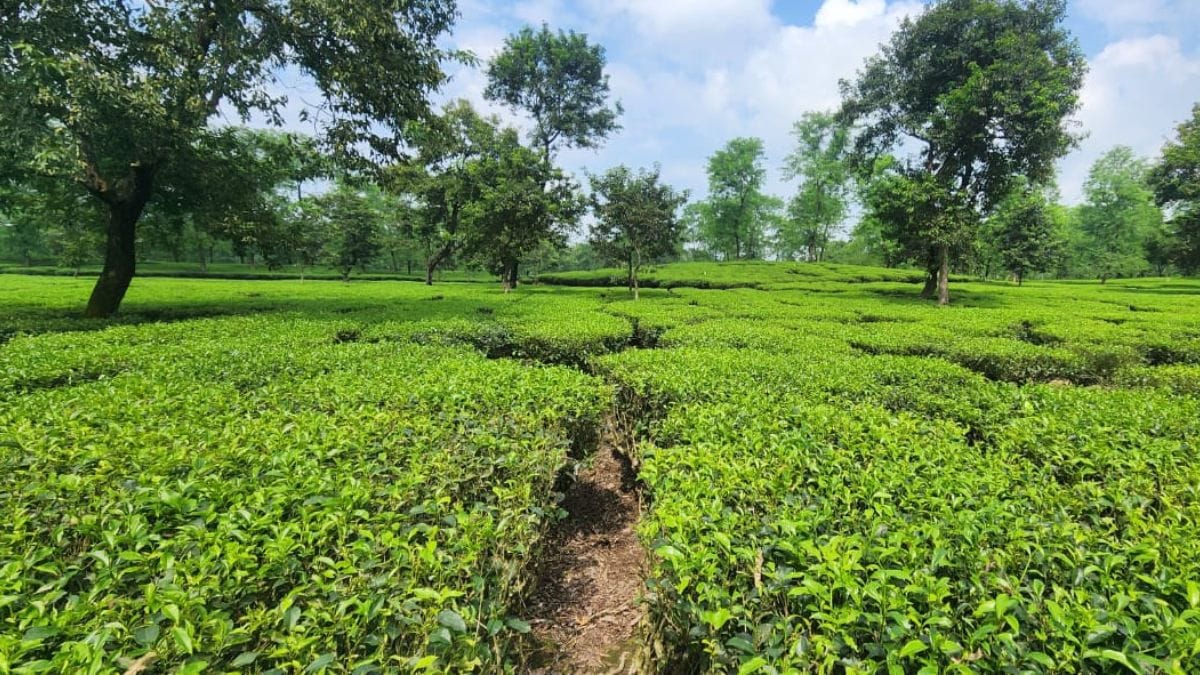
This came at a time when Darjeeling’s tea estates were already struggling. Nepali tea was being smuggled in illegally, estate owners were stuck depending on middlemen, and climate change was cutting harvest cycles short — hailstorms in summer, forest fires in spring.
“I felt that climate finance through carbon markets could be an interesting way to bring in money and capital for climate adaptation. And in developing economies like India, especially in vulnerable regions like the foothills of the Himalayas, you need a lot of capital to be able to adapt to the deluge that is coming,” said Sparsh.
‘No scientific infrastructure to speak of’
As Sparsh went around speaking to people in the Indian market for carbon credits, he got a harsh reality check.
“I realised carbon credits were a complete scam. And every person I spoke to, it was like different shades of a scam. I don’t even know how to describe how fraudulent it felt,” said Sparsh.
But when his brother came across the idea of silicate weathering in a chemistry class at BITS, the duo decided to try engineered carbon removal themselves. But they soon realised that the biggest challenge wasn’t just funding or the availability of land.
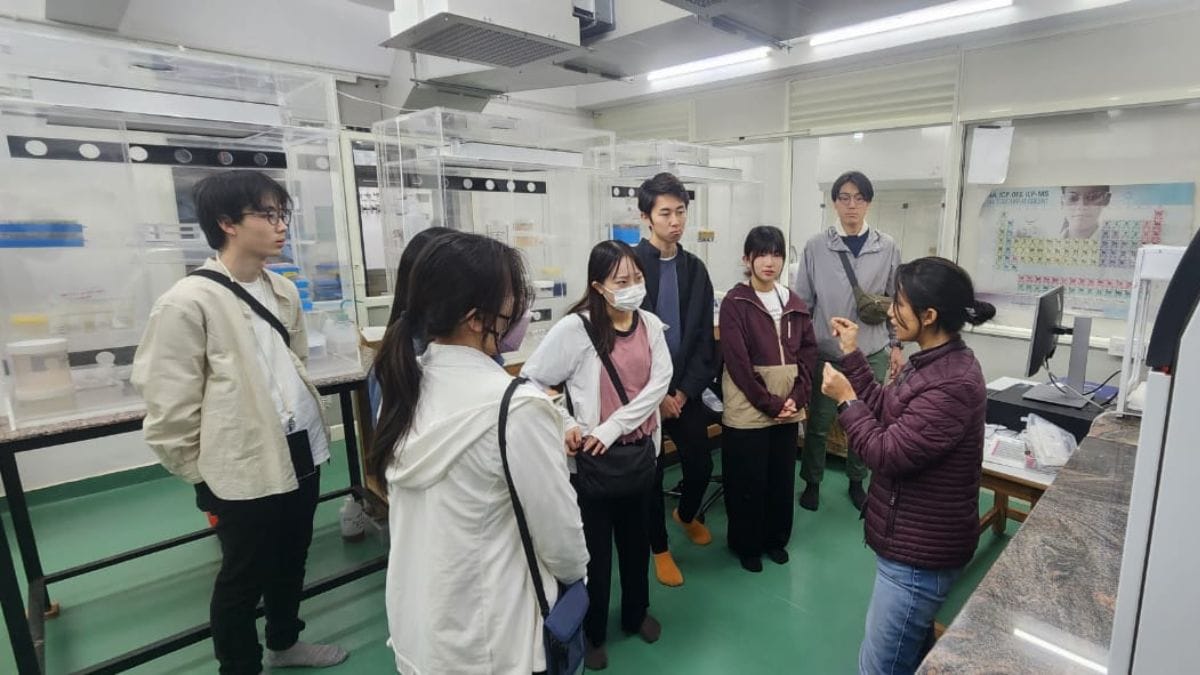
“We got a rude shock that India just does not have scientific infrastructure,” Sparsh said. The company had to set up its own geolaboratories — one at the IISc Bangalore campus, called Shonku Labs after Satyajit Ray’s fictional scientist, and another in Darjeeling, called the Darjeeling Climate Action Lab.
Now, nearly half of AltCarbon’s 45-member team is made up of scientists, many trained at IISc before heading to the Darjeeling labs. The start-up also hires local graduates from North Bengal and Sikkim, along with community workers who manage the company’s relationship with farmers.
“We went from the lab to field trials very quickly, and in the last two-and-a-half years, we’ve gone from a pilot on 300 acres of our family’s tea-estate land to now scaling up to about 60,000 acres of land, working with over 35,000 farmers in the North Bengal region,” he said. The aim now is to expand to more crop types, agro-climatic zones, and soil geographies.
And yet, Sparsh admits that projecting what this science could do in the future is difficult, given how young AltCarbon is and how new the technology still is.
What AltCarbon does
At its core, AltCarbon spreads a mixture of crushed basalt, which they call ‘Hari Mati’, across hundreds of acres of agricultural land. The mixture reacts with rainwater and atmospheric CO2 to lock away carbon and send it off to the Bay of Bengal, where it can stay stored in the ocean for thousands of years. The science of silicate weathering itself isn’t new, but it’s never been attempted at this scale before.
When it comes to enhanced rock weathering, India’s tropical climate, especially around the Himalayas, might be uniquely suited to it, if the science holds up.
“One company can’t stop global warming. But we can slow it down. We’re on a slippery slope right now, and enhanced rock weathering could be a sustainable way to slow down climate change without any serious side effects,” said Sambuddha Misra, associate professor at the Indian Institute of Science, and one of the key scientists working with AltCarbon.
Testing the science
Rock weathering is a concept rooted in a natural geological process which has kept the Earth’s climate in check for millions of years.
“When dinosaurs went extinct, there was a lot of carbon in the atmosphere too. Slowly, it disappeared because of rock weathering,” said Sambuddha Misra.
Misra says the science behind rock weathering isn’t as new as people assume; it’s a niche only now drawing public attention. Silicate weathering was studied even in the 2000s and 2010s, but by a dozen researchers across the globe at most.
“It is intellectually rigorous, but most researchers did not think it would be commercially viable,” he said.
Responding to scepticism around rock weathering as a science, Misra says he never doubted the underlying chemistry — his worry was whether they could scale the project up without compromising the quality of the research.
“But we have gone from studying 300 samples in five years to now studying 3,000 samples in five months,” he said.
Misra has spent the past 20 years studying how the chemical weathering of continents shapes ocean chemistry. At the lab, researchers first characterise the soil and analyse its mineral composition. After the rains, they test the soil again, to measure how many minerals have dissolved in the rain’s carbonic acid.
“You can’t put these rocks (basalt) in Rajasthan and expect it to weather away. If there is anywhere to do it, it is at the foothills of the Himalayas,” he said.
AltCarbon has already scaled the project from its original pilot on the family’s own tea estate to nearby tea estates and even rice fields. The company supplies the basalt mixture for free, and field trials so far suggest it can improve both crop yields and overall soil health.
A market waiting to happen
Climate change has made itself hard to ignore in recent years — shrinking harvests, forest fires, erratic weather, and increasingly severe heatwaves worldwide. The AI boom has added to the pressure too, with data centres driving up global carbon footprints. Clean energy is one answer to this. Carbon removal, AltCarbon’s bet, is another.
Enhanced rock weathering remains an emerging science, but Sparsh is confident there’s a real market for climate tech solutions like his. Sectors such as aviation and steel can’t cut or eliminate emissions overnight, which is why companies in those industries are buying carbon credits to fund projects like AltCarbon that physically pull carbon out of the atmosphere.
Frontier, the carbon removal advance market commitment backed by major tech firms, recently expanded after the AI company Anthropic joined the initiative. Frontier connects buyers investing in carbon removal with suppliers running the physical projects.
Tech companies, financial institutions, and sectors like shipping, aviation, and petrochemicals are all bracing for climate-related regulation; some are already facing it.
Still, Sparsh is careful not to oversell enhanced rock weathering. A lot is yet to be studied — rainfall patterns, soil chemistry, rock composition, and how local climate will affect carbon removal over time. He says it will take another five to six years at least before they really understand how far this technology can go in the fight against climate change.
(Edited by Prashant Dixit)