





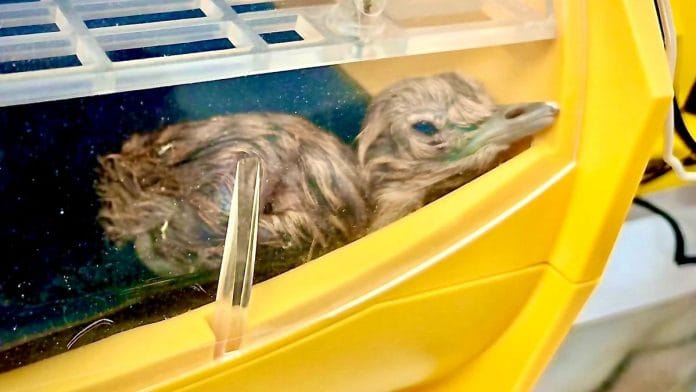

Delhi: Two Great Indian Bustard chicks were welcomed at the Conservation Breeding Centre in Jaisalmer’s Sam village this week, one through natural mating, the other through artificial insemination. They bring the total count of the critically endangered species in India’s two breeding centres to 70, up from just 16 four years ago. What’s more, 2026 is now expected to be the first year that captive-bred GIBs are released into the wild.
“In an important milestone for the species’ conservation efforts, some of this year’s captive-bred chicks will be soft released in the wild, marking a new challenging beginning for the project,” Bhupendra Yadav, Union Minister of Environment, Forests and Climate Change, posted on X Friday.
Large birds that look rather like ostriches, Great Indian Bustards have declined from about 1,260 birds in the wild in 1969 to just about 150 across five states.
“Initially, we began captive breeding by collecting GIB eggs from the wild – where there are a lot of threats to them – and helping them hatch at the Centre,” said Sutirtha Dutta, scientist at the Wildlife Institute of India (WII), working with Project GIB. “It took us a few years before the birds hatched and began breeding.”
After the programme began, Great Indian Bustard eggs were collected from nests in the wild and brought to the breeding centre for artificial incubation. After the wild eggs hatched into chicks, the conservation breeding centre hand-reared the birds. Once the birds matured, the team began breeding them in captivity, using both natural mating and artificial insemination.
The Great Indian Bustard is listed in Schedule I of the Wild Life (Protection) Act, 1972, which accords the species the highest level of legal protection from hunting.
Also Read: Assam went to war on Kaziranga poachers. Rhinos are winning
Captive breeding milestones
The first captive-bred GIB chick in India hatched in April 2023, after artificial insemination. It was a first for the species, which also has a small population in Pakistan.
The two chicks that hatched this week are healthy and under the care of the Centre’s staff, confirmed Dutta. The Conservation Breeding Programme is one part of the larger Project GIB, which also works towards habitat restoration of these land-breeding birds.
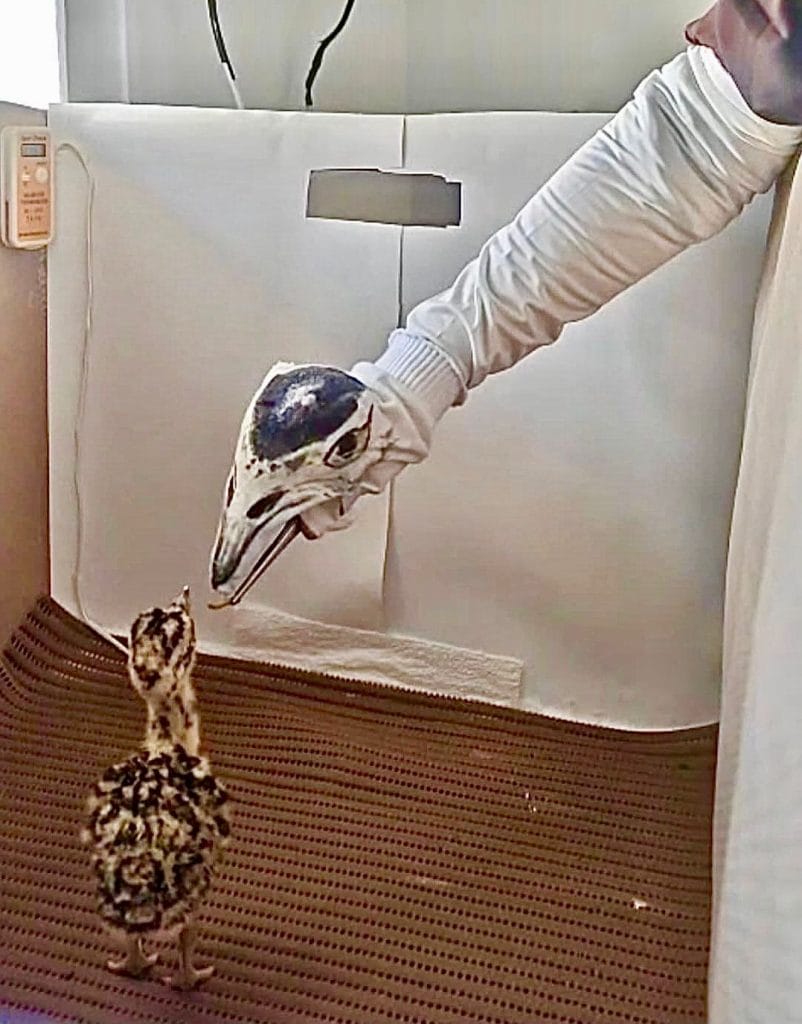
The breeding centres are maintained in collaboration with the Wildlife Institute of India, and the project is also supported by the Union Ministry of Environment, Forests and Climate Change. The goal is to create a secure population of GIBs to eventually release into the wild.
After four years of breeding, 2026 will be the first year that the population will be ready for release.
Along with conservation breeding, Project GIB also focuses on identifying and protecting core habitat areas for GIBs in Rajasthan through intensive patrolling in the region. The state government also initiated the GIB Mitra programme to involve the local population of Jaisalmer and other GIB habitats in protecting the birds from their main land-based predators, such as stray dogs, foxes, monitor lizards, jackals, hyenas, and crows.
(Edited by Asavari Singh)