





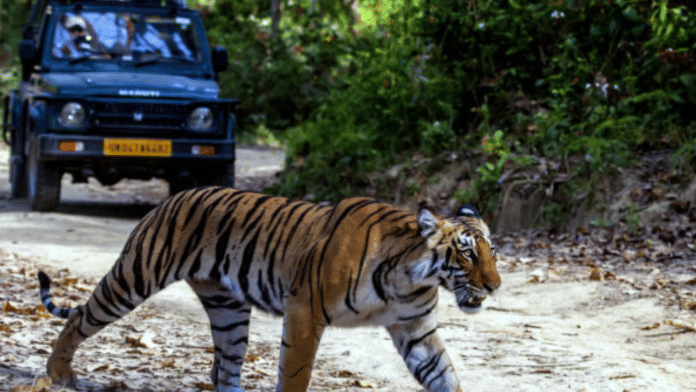


New Delhi: An eight-year-old tigress and her cub died on Wednesday in Madhya Pradesh’s Kanha Tiger Reserve, barely a week after three of her other cubs were found dead in the reserve. An initial post-mortem of the bodies revealed that the animals were suffering from a lung infection, however, local sources point to a more serious cause — canine distemper virus.
“All five of the tigers died within a week, and they were all so weak and frail. This is no ordinary lung infection, it is canine distemper virus which makes an animal lose all immunity,” said a source close to the forest department.
On 21 April, a male tiger cub’s corpse was found in Kanha Tiger Reserve’s Sarhi range, with no external injuries or markers. On 23 April, another cub was found dead in a similar condition, and a third corpse — a female cub — was found on 25 April. The initial cause of death of the cubs, aged between 12-18 months, was suspected to be starvation, until the post-mortem of the third cub revealed acute respiratory issues.
The three successive deaths led forest officials to monitor their mother, the tigress T-141, and her last remaining cub, in quarantine on Sunday, 26 April. Officials said that the tigress was weak and showed signs of sickness when they brought her in, indicating that she might not be strong enough to feed her cubs.
However, according to Prakash Kumar Verma, Deputy Director, Kanha Tiger Reserve, the tigress’ condition started turning critical on Tuesday, 28 April. She died early Wednesday morning, and her last remaining cub died in the afternoon.
“The bodies have been sent for post-mortem, and while we cannot say anything for sure, we also cannot rule out Canine Distemper Virus,” Verma told ThePrint. “The lesions in the lungs, and signs of pneumonia found in the tigers could be indicative of CDV.”
What is canine distemper virus?
Canine distemper virus is a contagious disease that mainly targets dogs, attacking their respiratory, gastrointestinal, and nervous systems, according to the American Veterinary Medical Association. Through dogs, the disease often spreads to other wild animals, including tigers. Once infected, CDV can weaken the immune system of an animal, eventually killing it.
“If true, this would be the first time that canine distemper virus is affecting Kanha’s tigers in more than a decade,” said Ajay Dubey, a wildlife activist based in the region. “I haven’t seen or heard of CDV cases around here for a while.”
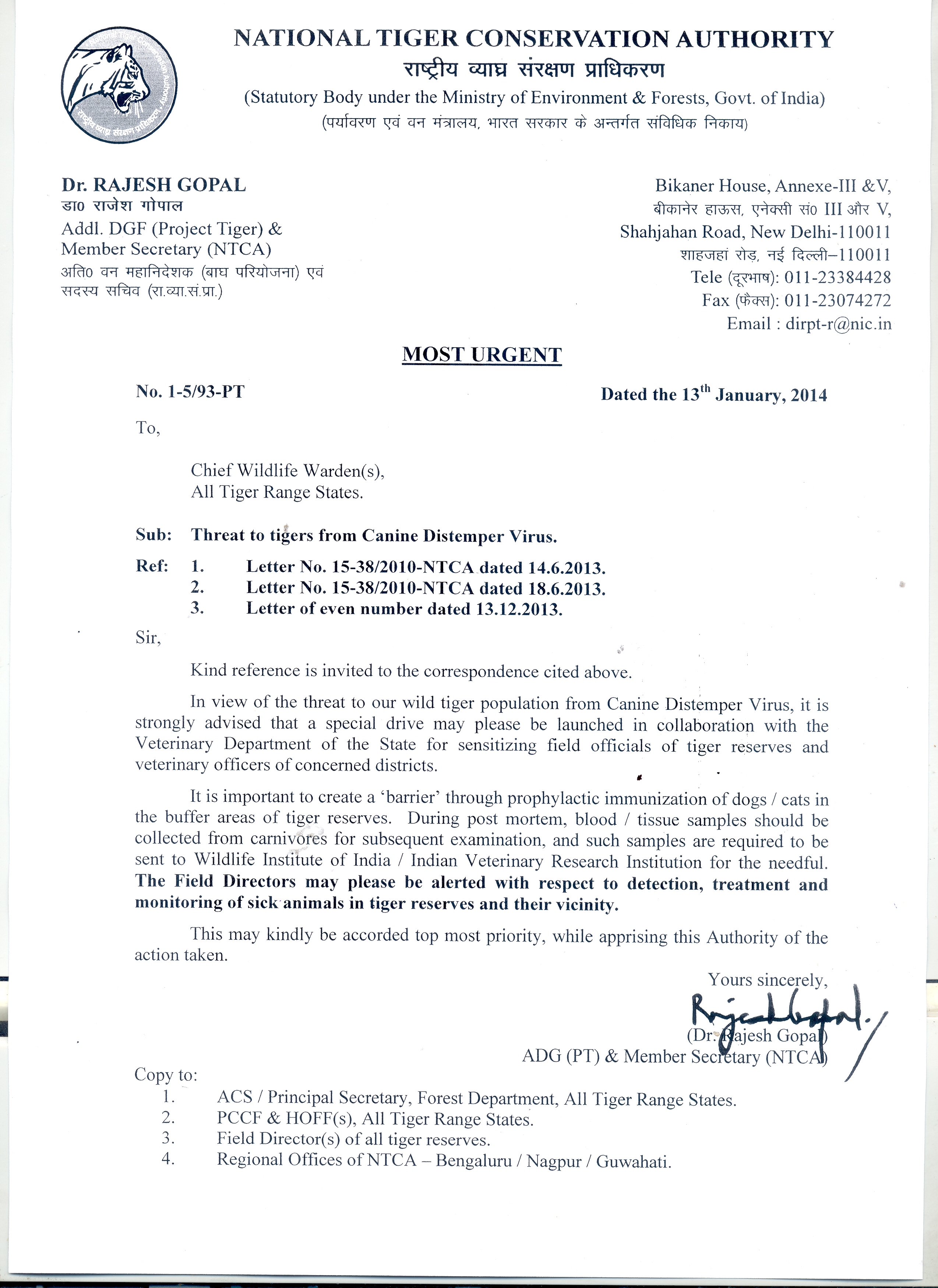
The National Tiger Conservation Authority (NTCA) has multiple advisories on the threats to tigers from CDV, and ways to prevent it from spreading in India’s tiger reserves. The virus spreads through contact with stray dogs, cats, or cattle, and the NTCA mandates that any stray animals within a 5–km radius of a tiger reserve must be vaccinated against canine distemper virus.
“The only way to protect tigers against this disease is to protect the source — stray animals. Once infected, a tiger cannot be saved from CDV, so it is best to ensure they are never infected in the first place,” explained Dubey.
Earlier too, there have been cases of CDV breakouts in India’s wildlife reserves, such as in Gujarat’s Gir Lion Sanctuary. In 2018, around 28 lions in Gujarat died within two weeks, leading authorities to investigate. Later, CDV was found as the cause of death. Since the lions in Gir were an isolated population, a study in 2019 found, it was easier for the virus to spread amongst the animals and kill them.
Also read: Kanha tiger cub died of respiratory failure. Forest officials rule out starvation
27 tiger deaths in MP
This year, Madhya Pradesh has seen 27 tiger deaths including T-141 and her four cubs, with the first tiger dying in Bandhavgarh Tiger Reserve on 7 January. However, Verma said, none of the tiger deaths until now have been suspected to be due to canine distemper virus.
“There are mutliple reasons — territorial fights, natural causes, one or two even died due to electrocution. CDV as yet has not been a reason,” said Verma.
The NTCA recommends that any animal corpse suspected of CDV must be removed immediately and disinfected with bleach, to remove remnants of the virus. Currently, all carcasses of the five tigers in Kanha have been removed and cremated. And since they belonged to the same family, it is unlikely that other tigers in the reserve could have been infected.
“Tigers are territorial animals. Usually they don’t interact with other tigers unless for mating or fighting. Since there isn’t evidence of either in T-141’s case in the recent past, and since all her children have died with her, it is unlikely the virus was passed to other tigers in the reserve,” said Dubey. “However, we can’t say anything for sure. The officials still need to be careful.”
(Edited by Aamaan Alam Khan)