



New Delhi: Oil pollution in the ocean finds itself in the spotlight only during disasters where large ships leak galleons of oil into salty waters. But the pollution is far larger and more persistent than these isolated events, found a new report by SkyTruth, an environment-technology non-profit.
Satellite observations from 2023 to 2025 have shown that nearly 1.58 million square kilometres of the ocean’s surface is covered by oil slicks every year. This is nearly 48 per cent of India’s land area, and about three times the size of France. SkyTruth directly verified 3,152 oil slicks between 2023 and 2025 which covered approximately 22,805 square kilometres.
Using the European Space Agencies’s Sentinel-1 synthetic aperture radar (SAR), SkyTruth found that most oil slicks are closer to the shore, mainly because vessel traffic is concentrated along the coast. Unlike conventional satellite cameras, the radar can observe the oceans even at night and on cloudy days.
Among the most affected regions of the planet are the seas around Indonesia, which saw 832 observed oil slicks, the coasts of Malaysia and Romania with over 200 oil slicks, and Nigeria and Bulgaria with over 150 observed slicks.
Also read: China has outperformed the US consistently in the clean energy race, says new report
Persistent pollution
Often, the media only puts a spotlight on oil spills during events like the Caroline Bezengi tanker attack in August where a tanker carrying around 800,000 barrels of oil came under attack off the coast of Oman creating a massive spill spreading across 200km towards the Omani mainland.
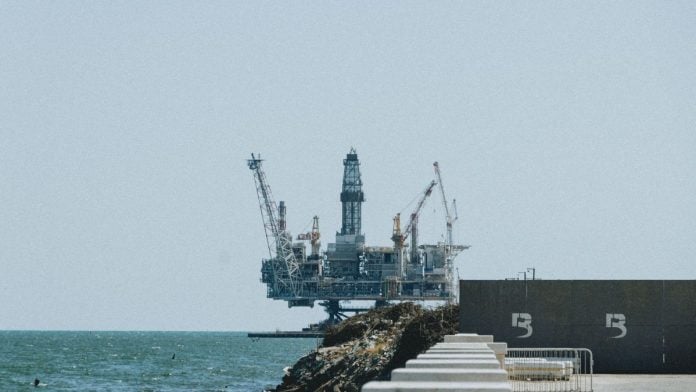
While oil spills are the actual discharge of liquid petroleum or crude oil into the environment, the SkyTruth report highlights a different type of oil pollution — ships discharging oily waste water and other such pollution from vessels or offshore industrial facilities.
The SkyTruth analysis found that about 80 per cent of this oil pollution was related to ships and the rest was caused by off-shore oil infrastructure. Even protected zones are hardly spared because the oceans are a constant churn and oil slicks drift from ships and travel far beyond. However, 75 per cent of these marine protected areas had lower oil-slick concentrations compared to the waters around.
An alarming finding is that the Black Sea, the Persian Gulf, and the Gulf of Mexico have some of the highest concentrations of oil slicks. This exposes the region’s porpoises, dolphins, and the endangered Rice whales to such chronic pollution. Marine biologists say this is likely to stress out the marine animals and will also impact their behaviour patterns and habitat quality over the years.
Much of these findings comes from the observed parts of the Earth’s oceans. But the high seas, the parts of the ocean that do not belong to any country’s territorial water, are far less monitored. Furthermore, there is not enough information about the owners of the polluting vessels. SkyTruth highlights the importance of first detecting such ocean pollution and then finding vessel operators and holding them accountable.