



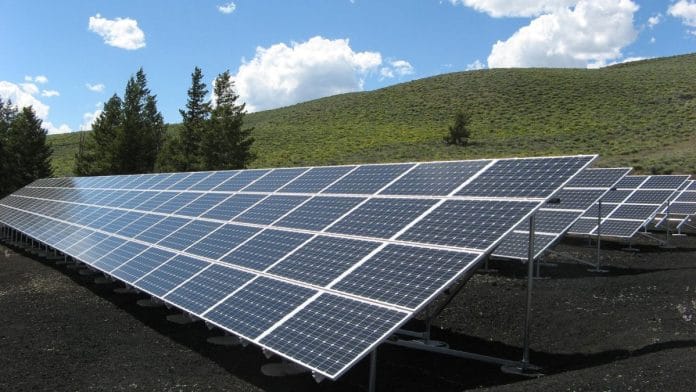
New Delhi: In the first half of 2026, 49 per cent of all installed solar capacity globally was in China, according to a new report by US-based Atlas Public Policy.
The report, The Next Phase of the Clean Energy Race, published ahead of Chinese President Xi Jinping’s visit to the White House, found that China’s renewable energy deployment, investment, and exports are far greater than that of the United States, and are a main reason why it has managed to ride through the global oil shocks following the Iran War.
Since 2019, the US has cumulatively invested $249 billion in clean energy, while China has invested more than double — $673 billion. Additionally, as of June 2026, 49 per cent of all installed solar capacity, 50 per cent of all installed wind power capacity, and 50 per cent of all EV sales globally were in China.
It is also expanding clean energy exports, led by electric vehicle exports, which are already at $43 billion as of June 2026. This is almost double of the $24 billion exports that China recorded in the first half of 2025.
Even as Xi Jinping makes his first state visit to the US in more than a decade, the report underscores how unevenly placed both countries are in the global clean energy market, and especially how China has outperformed the US consistently in production and exports.
Overall, Chinese companies have also dominated all announced clean energy manufacturing investments in 2026 — capturing 57 per cent of the entire global market.
However, despite China’s dominance of the clean energy export market, there are concerns about importing Chinese products in multiple countries, including the US and Europe.
“In the United States, for example, a bipartisan bill introduced in the Senate would ban all Chinese vehicles and connected components from the U.S. market by 2030,” said the report.
Similarly, Mexico and Europe too are planning on increasing tariffs on Chinese products, as well as controlling foreign direct investment in batteries, EVs, and the solar sector. These new policies could change the trajectory of clean energy investment growth in China but currently, the country dominates global markets.
Also read: Super El Niño projected to cause 450,000 heat deaths worldwide, says study
China’s clean tech manufacturing push
An important section of the report covers the state of clean technology manufacturing and China’s expansive manufacturing push — while most investment in batteries and solar is concentrated in China, Chinese companies also lead in net investments globally.
In the first half of 2026, China’s net investment in clean energy was at $16 billion, while the US reached only $5 billion, yet was second in line after China in terms of size of investment. Other countries around the world, such as Germany, Sweden, and France in fact saw cancellations of major clean energy projects, resulting in net negative investments and setting the European Union back in comparison to other countries.
“Supply appears to be outstripping demand, and our research corroborates the finding that overcapacity and U.S. policy-driven cancellations are driving the investment slowdown,” said the report.
For the long run, the report said that increasing power demand, especially for data centres, could push the world to invest in green energy, which will be led by China. However, for other countries such as the US or India, looking to expand their own production and import of solar, wind and EVs, the strategy would be to balance supply chains and focus on manufacturing — a trick that China has learned well.
(Edited by Aamaan Alam Khan)