





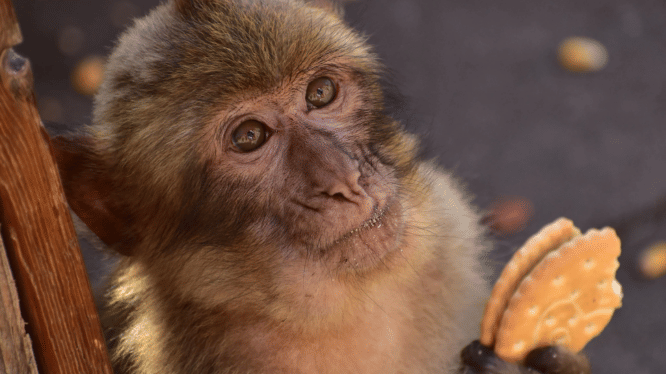


New Delhi: It’s not just humans, but also monkeys who need help digesting junk food. A new study by the University of Cambridge reveals that monkeys have developed a method to medicate their stomachs with soil after overconsuming junk food.
The study titled “Geophagy in Gibraltar Barbary macaques is a primate tradition anthropogenically induced” was published in Scientific Reports. The research found that troops of macaques living on Gibraltar, the only free-ranging monkey European population, have been observed for the first time regularly engaging in geophagy, the practice of intentionally ingesting soil.
Led by Sylvain Lemoine, a biological anthropologist at Cambridge’s Department of Archaeology, researchers noted that eating soil may help the animals tolerate high-calorie foods and is an example of primate culture adapting to anthropogenic landscapes.
The study monitored the monkey groups across the Rock of Gibraltar and tracked instances of geophagy.
“Animals in frequent contact with tourists eat far more dirt, and that dirt-eating rates are higher during peak the holiday season,” the study found.
Chocolates, crisps and ice cream, often offered by or stolen from tourists, are a substantial part of some of Gibraltar macaques’ diet and are disrupting gut microbiome composition.
“Eating soil may help rebalance monkey stomachs by providing bacteria and minerals absent from junk food,” the researchers said, adding that it lines the gut and soothes irritation caused by too much sugar and fat.
Also Read: Northeast Hoolock gibbons are facing extinction. The lesser apes are being counted now
How geophagy emerged
The study found that this behaviour is transmitted socially, as different troops have preferences for certain types of soil.
“Foods brought by tourists and eaten by Gibraltar’s macaques are extremely rich in calories, sugar, salt and dairy,” Lemoine said.
He added that humans, on the other hand, evolved to seek out and store energy-dense fats and sugars to survive periods of scarcity, leading us to crave high-calorie junk food.
Lemoine added: “Availability of human junk food could trigger this same evolutionary mechanism in macaques. Soil-eating may allow them to keep consuming food that has negative digestive effects, but is as delicious for them as it is for us.”
The biological anthropologist said that the consumed soil acts as a barrier in the digestive tract, limiting the absorption of harmful compounds and could alleviate gastrointestinal symptoms from nausea to diarrhoea.
According to the study, dairy is known to cause digestive issues in monkeys, and ice cream is hugely popular with Gibraltar’s tourists and consequently its macaques.
The researchers also recorded the types of dirt and the timing of consumption to understand whether geophagy has become part of the macaque’s cultural repertoire.
They found that 30 per cent of geophagy occurred in groups with multiple animals eating dirt together from the same outcrop, and 89 per cent of all incidents took place in the presence of other macaques who were often watching, suggesting this behaviour is socially learned.
Monkeys eat terra rossa or red clay earth found across Gibraltar, which made up 83 per cent of all geophagy incidents.
“The range of human interaction across Gibraltar’s macaque groups creates a natural experiment for understanding how anthropogenic landscapes affect primate behaviour and culture,” Lemoine said.
(Edited by Insha Jalil Waziri)